
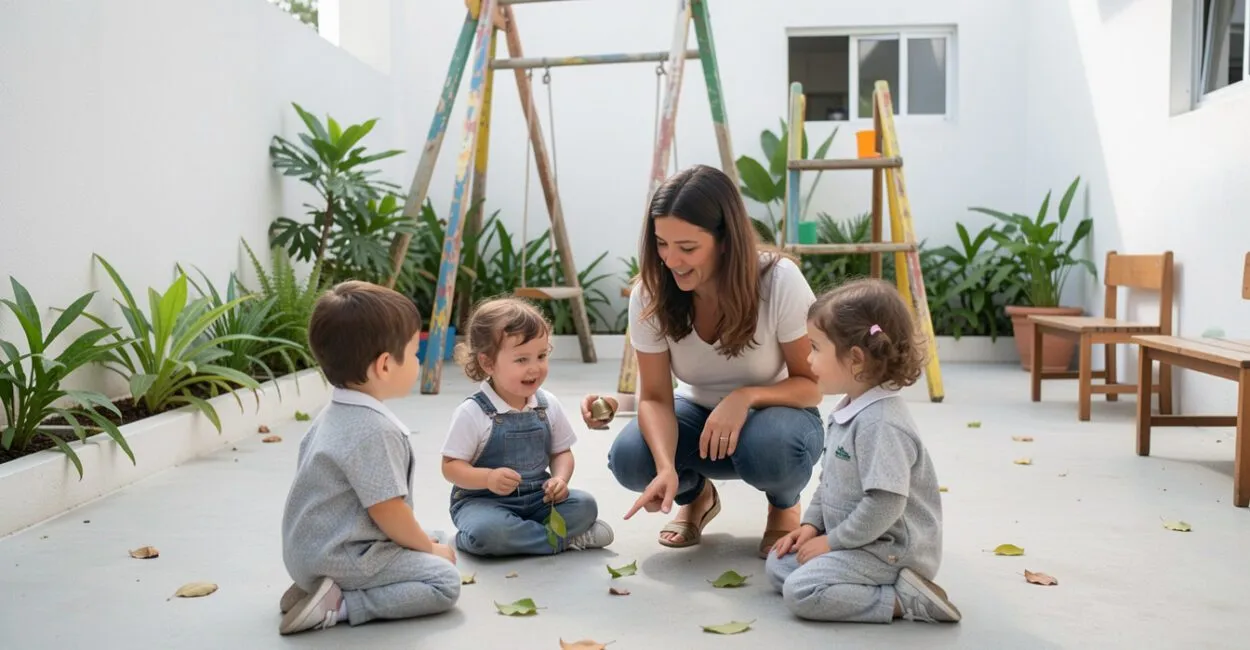
A class discussion can turn into an investigation of sounds when a teacher notices the children’s interest in a noise in the schoolyard. Pedagogical practices in early childhood education intentionally organize these kinds of experiences: they connect learning goals to play, interactions, and daily routines without turning every moment into a rigid task. To plan, educators consider what children are already showing, decide what they hope to foster, and prepare the space, materials, and ways to observe. The activity should make sense for the age group and the children in that particular class. Planning guides the work, but it can change in response to the children.
Set These Priorities Before You Plan
- What you observed in the group: an interest, question, challenge, or initiative.
- What learning you hope to support and how it relates to the BNCC.
- What materials and spaces are available and safe.
- How to accommodate different paces, ways of participating, and support needs.
- What you will observe to decide what to do next.
What Are Pedagogical Practices in Early Childhood Education?
Pedagogical practices are the intentional actions that shape the conditions for children’s learning and development. They include planning, guidance, interactions, play, and assessment. In early childhood education, they connect everyday experiences to the goals set for this stage, recognizing children as active participants in the process.

In simple terms, it’s how an educator turns an intention into a hands-on experience. If the goal is to help children explore quantities, for instance, the class might compare collections of leaves during a walk instead of simply filling out a worksheet with numbers.
A single activity doesn’t determine the quality of the work. What matters is the connection between purpose, context, and participation: children need room to act, test ideas, and communicate what they notice, while the teacher observes and intervenes with intention.
What Principles Guide Effective Activities?
Listening, participation, interaction, play, and respect for each child’s pace are the foundation of planning. This means noticing what engages the group, offering meaningful choices, and creating opportunities for children to collaborate, explore, and express their ideas.
Teacher guidance doesn’t mean directing every move. A brief prompt, such as “What changed when you put this piece here?” can help a child compare results without giving away the answer. At other times, the best support is to provide enough time, space, and accessible materials.
A learning activity becomes meaningful when the educator’s purpose leaves room for the child’s initiative.
General guidance has its limits. An activity that works well with one group may frustrate another because of differences in attention span, support needs, or cultural experiences. Observe the group and make adjustments rather than expecting every child to respond in the same way.
How Does the BNCC Guide Pedagogical Practices?

Brazil’s National Common Core Curriculum (BNCC) organizes early childhood education around learning and development rights and fields of experience. It helps teachers plan experiences that bring together different areas of learning instead of dividing the daily routine into separate subjects and exercises.
The six rights are to live together, play, participate, explore, express oneself, and know oneself. The fields of experience are “The self, others, and us”; “Body, gestures, and movement”; “Traces, sounds, colors, and shapes”; “Listening, speaking, thinking, and imagination”; and “Spaces, time, quantities, relationships, and transformations.” A single activity can draw on more than one field.
Read also: Neuropedagogical Practices: Methods, Limitations, and Applications
When planning, educators can consult the BNCC, published by Brazil’s Ministry of Education, to connect an experience to the learning and development goals for the relevant age group. Consulting the framework helps give direction to the work; it doesn’t replace knowing the children or require fitting every game into a single category.
How to Plan a Pedagogical Activity Step by Step
Planning starts with a specific observation, moves to a learning goal, and then takes shape as an organized experience. Afterward, the educator records what happened and uses that evidence to decide whether to keep, expand, or change the activity.
Read also: Neuroplasticity in Education: What Changes in Practice?
- Start with the group: Note a question, interest, or situation you observed without assuming every child shares the same interest.
- Set an intention: Choose what you hope to support, such as comparing sizes, recounting events, or trying out movements.
- Plan the experience: Choose the materials and space, estimate how long it will take, and make participation accessible. Prepare alternatives in case the materials or activity don’t engage the children.
- Plan how you’ll guide: Think about questions, demonstrations, and support, but avoid scripting every response from the children.
- Observe and record: Note comments, choices, strategies, and interactions that can help you assess the activity.
A sign that the plan is working isn’t silence or identical results from everyone. Notice whether children can engage, make choices, explore possibilities, or make progress toward the intended goal. If the experience involves long waits or requires repeated instructions, you may need to reorganize it.
Examples of Pedagogical Practices in Early Childhood Education
The examples below are starting points, not recipes. The same activity can look very different depending on the children’s ages, available materials, group makeup, and interests that emerge during exploration.
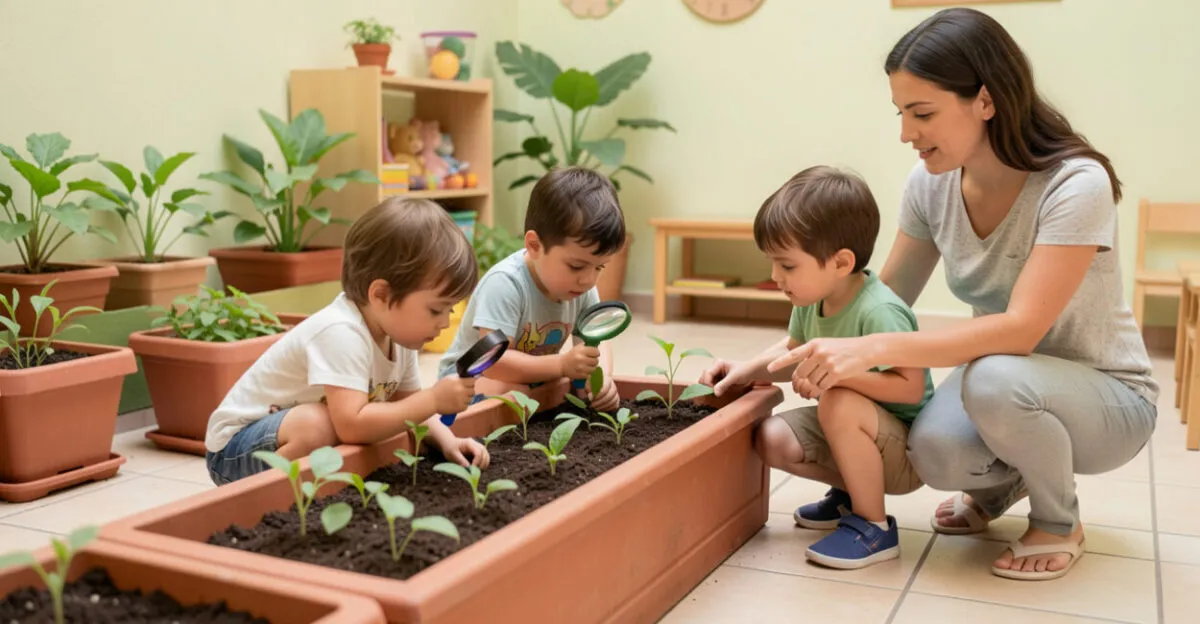
Activity Goal and guidance Possible adaptation Exploring sounds Compare sounds made by different objects. The educator provides safe materials and invites children to notice differences in volume and rhythm. For younger children, offer a few objects at a time and support exploration with gestures and words. Building with blocks Explore balance and shapes. The teacher observes children’s attempts and asks what might support a taller tower. Provide large blocks and open space for children who need more motor support. A story with objects Encourage storytelling and imagination. Children choose objects to create characters or continue a story. Allow children to participate with gestures, sounds, or picture choices without requiring them to speak in front of the group. Observing plants Notice changes and care for the environment. The class observes leaves and records what they notice through drawing, discussion, or photographs. Choose accessible plants and consider allergies, safety, and the conditions of the space.
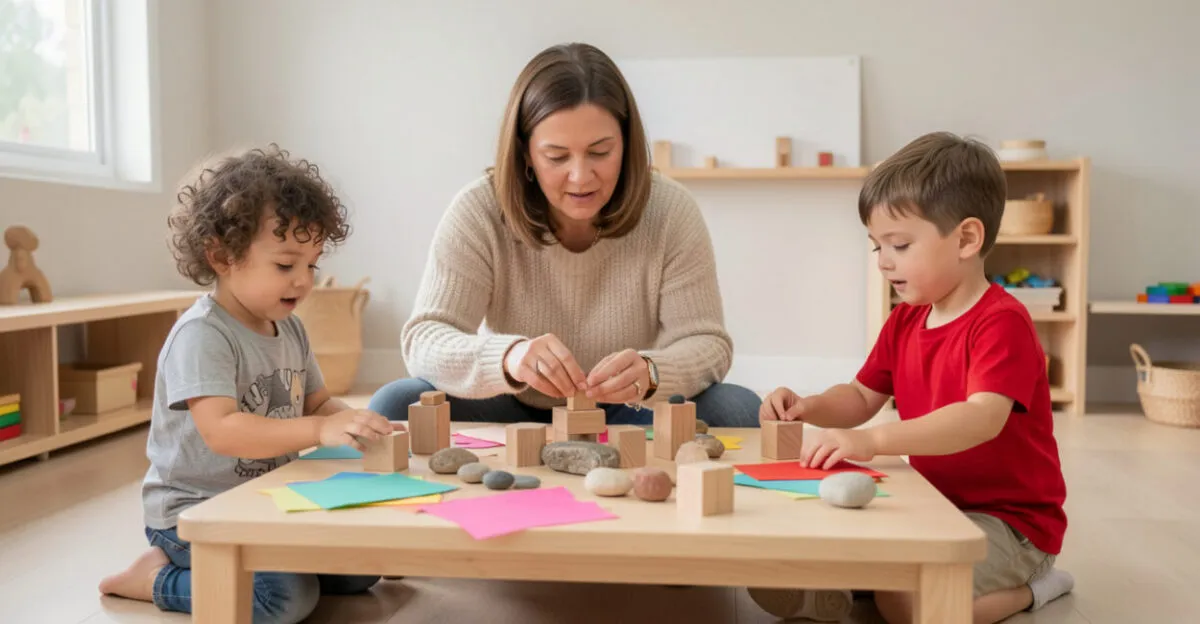
Here’s one example: During block play, several children watch a tower fall and start building again. The educator notes which bases they try and how they negotiate space. At another time, the educator offers blocks in different shapes to extend the investigation without providing a model to copy.
For movement activities, a motor skills course using everyday objects can inspire different routes and challenges. An activity with plants can also connect with exploring materials in an art workshop, as long as the learning goal is clear and the materials are appropriate for the group.
How to Incorporate Activities Into the Daily Routine
The daily routine offers learning opportunities without turning every moment into a teacher-led activity. During morning arrival, talking about how each child got to school can support self-expression and relationship-building. At mealtimes, serving themselves with support can help children explore independence, shared expectations, and quantities.
During free play, the teacher observes and can enrich the environment with materials or occasional prompts. A spontaneous discovery during time outside can lead to an investigation that continues another day. Cooperative play can also encourage group participation, as long as the rules are clear and flexible enough to include different ways of getting involved.
These moments require thoughtful organization. For example, a conversation during a meal shouldn’t interfere with eating or pressure a child to try certain foods. For more on this topic, see the site’s content about nutrition in early childhood education, which connects care and learning without turning the table into a formal classroom.
How to Observe Outcomes and Adjust Activities
Assessment in early childhood education tracks children’s progress without grading them or comparing their performance. Brief notes on comments, choices, work, and interactions help educators understand what each activity made possible and what support children may need.
After the experience, ask yourself: Did the children’s actions reflect the intended goal? Who participated in a different way? Were there long waits, challenges with the materials, or a need for more time? Based on the answers, educators can simplify steps, switch materials, reorganize groups, or revisit the activity in a different context.
A common mistake is to interpret low participation as a lack of interest on the child’s part. Sometimes the space is noisy, the instructions are too long, or the materials don’t allow children to act independently. To explore this further, connect projects and play to clue-based investigations and topics in environmental education, always checking that the activity fits the reality of the class.
Choose one moment in this week’s routine and record what the children do, say, and try. Use that evidence to set a small goal and plan an experience you can adjust as it unfolds. This cycle makes planning more responsive to the group and less dependent on ready-made activities.
Continue reading this series
Frequently Asked Questions
What’s the Difference Between an Activity and a Pedagogical Practice?
An activity is a specific experience; pedagogical practice includes the intention, organization, guidance, and assessment that give it meaning. For example, a painting activity can have different goals and ways to participate depending on how it is planned.
How Can You Turn a BNCC Goal Into an Experience for Young Children?
Start with what the goal calls for and look for a concrete situation in which a child can take action. To explore quantities, for example, a child can distribute objects during a game, using safe materials and support suited to their age group.
Does Every Activity Need to Connect to a Single Field of Experience?
No. An experience can involve several fields and rights at the same time. Planning should have a clear purpose without forcing an artificial classification.
How Can You Tell Whether an Activity Is Age-Appropriate?
Notice whether the materials, timing, space, and type of support allow children to participate meaningfully. Age is a guide, not a guarantee that all children will have the same abilities or interests.
How Can You Document Learning Without Giving Tests?
Use brief notes, photos of children’s work when authorized, drawings, and records of comments or interactions, in line with your institution’s guidelines. Documentation should help you understand children’s progress and plan future experiences, not label a child.
Artigos Relacionados
 The Montessori Method: What Does It Look Like in Practice?
 A Guide to Early Childhood Education: Best Practices, Play-Based Activities, and Innovative Approaches to Whole-Child Development
 Early Childhood Education: Essential Practices for Development
 What Creative Early Childhood Education Means
 School Adjustment in Early Childhood Education: How to Help
 Recycled Toys for Early Childhood Education: How to Make Them
