
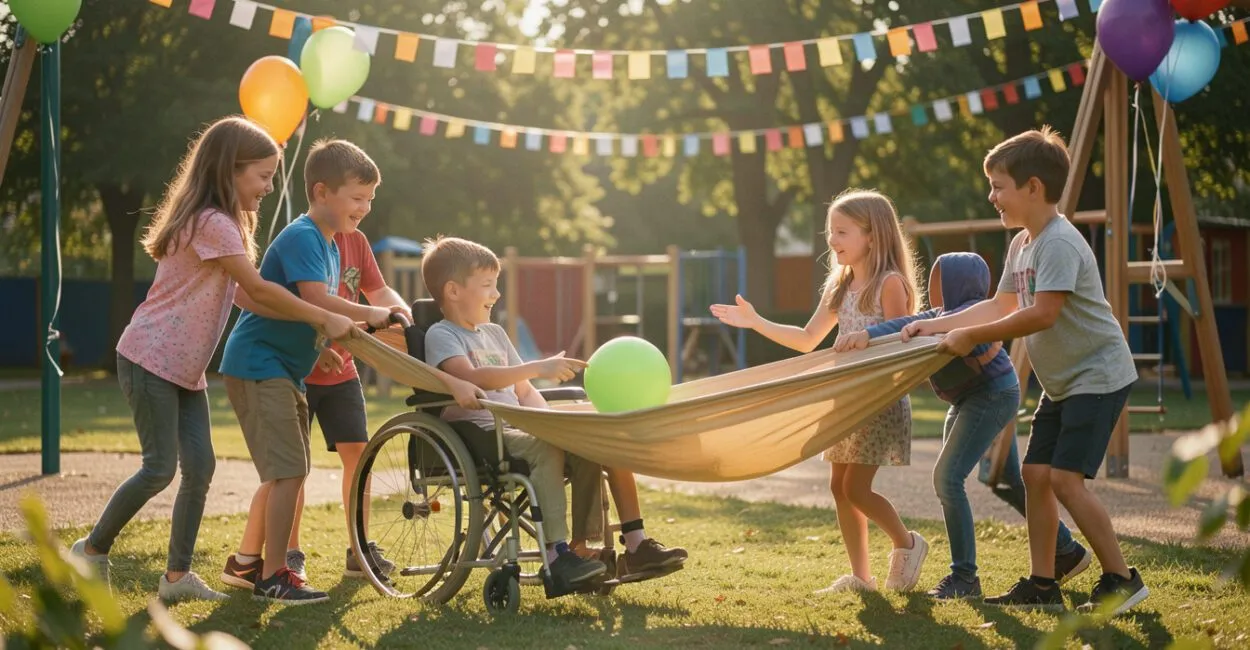
Cooperative Games on Kids’ Day Bring Everyone Together
With shared goals and flexible rules, the celebration makes room for children of different ages and abilities to play together.

In cooperative games, the group works toward a shared goal without eliminating players. To get started, try passing a ball among everyone, completing a team obstacle course, or making up a story together. You can adjust the rules to suit the children’s ages, the space, and the ways each child wants to participate.
Complete guide: Kids’ Day in Early Childhood Education: Ideas by Age Group
The fun is in completing the mission together: one child can carry, another can give directions, and a third can keep the rhythm. The important thing is to agree on the goal beforehand and make it clear that watching or offering suggestions counts as participating, too.
1. Cooperative Games Start with a Shared Goal
Cooperative games are activities in which participants work together toward a shared goal instead of competing for an individual win. At a party, that might mean getting a ball into a basket without dropping it or helping the whole group make it through a course. A shared mission with no eliminations gives every child more than one way to contribute.
Read also: Nature Games: 10 Ideas for Early Childhood Education
Before you begin, explain the task in one sentence and ask the group how they want to tackle it. Avoid rules that turn teamwork into a disguised competition, such as keeping score of who helped the most. This approach also fits creative early childhood activities, which value children’s exploration and ideas.
When everyone shares the goal, each contribution can help move the game forward.
2. Three Simple Ideas for Any Party
- Team transport: The group moves a ball or balloon from one spot to another using a stretched-out towel or a chain of hands. If it falls, everyone starts over together, without pointing fingers.
- Group obstacle course: Set up a short course with chairs, cushions, or floor markers. The goal is for the whole group to complete it; each child can go through the course, point the way, or help decide the order.
- Round-robin story: One person starts a story with a sentence, and each participant adds an idea. Anyone who prefers can choose between two suggestions, draw a scene, or simply listen.
Use objects you already have on hand, and keep the route clear of hazardous obstacles. For younger children, choose short tasks and show them what to do. For games involving shapes or paths, ideas from geometry activities with shapes and space can inspire simple courses.
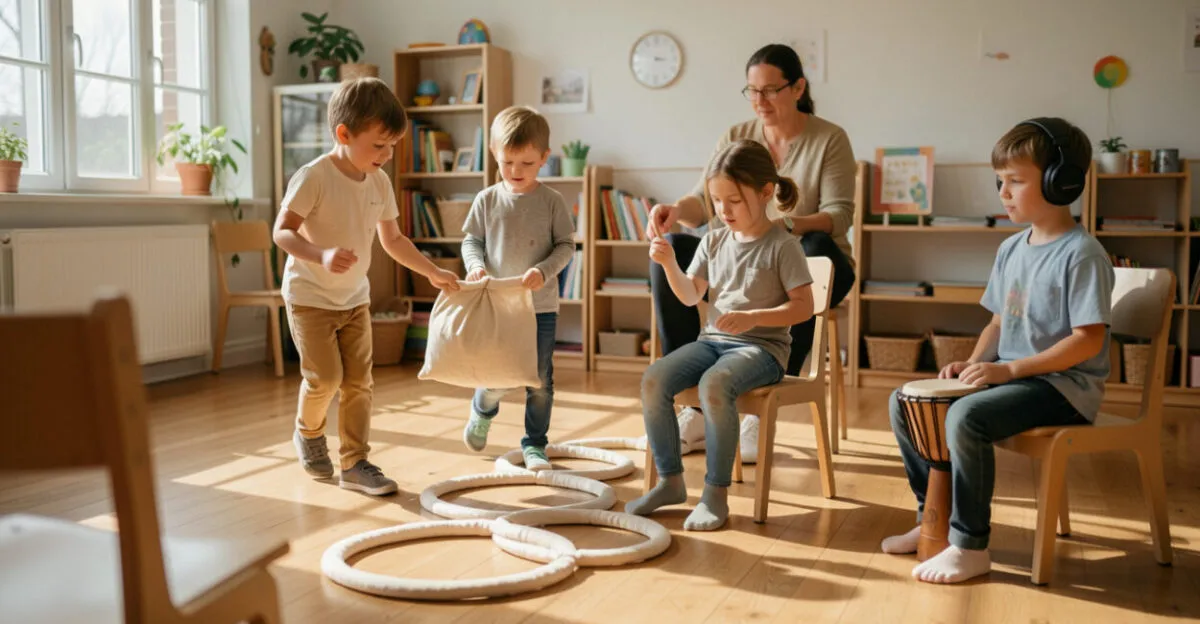
3. Adjust the Rules to Include Everyone and Preserve Their Independence

Adapt the game to the group’s ages, the space, and everyone’s needs. Older children can suggest strategies, map out the course, or come up with an extra challenge, as long as they don’t make every decision for the younger kids. If space is limited, everyone can sit for a group story; if the group has lots of energy, a team transport activity offers movement without requiring anyone to run.
It also helps to offer different ways to participate: moving around, watching, giving clues, or keeping the rhythm. Don’t assume every child wants to take part in the same way. Brazil’s Child and Adolescent Statute, which sets out the rights of children and teens, recognizes the right to play; respecting breaks and choices at the party helps make that right more tangible. To support different needs, activities using multisensory resources can offer other ways to get involved.
There’s no one-size-fits-all rule: noise, fatigue, sensory sensitivities, and individual preferences all affect what works. Pay attention to the group and offer alternatives without pressuring anyone who needs a break. Before the party, choose a mission and think of two ways each child can contribute. Sometimes all it takes is changing “Who gets there first?” to “How can we get there together?”
Does a Cooperative Game Need a Winner?
No. The group can celebrate when it completes the task without naming one child the winner.
How Can You Adapt Games for Children of Different Ages?
Keep the goal the same and vary the ways children can contribute. Older children can help plan, while younger ones take part with shorter tasks or suggestions.
What If a Child Prefers to Just Watch?
Respect their choice and invite them to participate another way, such as giving clues or keeping the rhythm. They can also join the game later.
Artigos Relacionados
 Cultural Projects That Bring Communities Together in 4 Steps
 Mental Math Games: Challenges to Build Speed and Fluency
 Multiplication Games: How to Practice Times Tables in Class
 Fraction Games: Fun Activities for Learning
 Math Games: A Guide for Teaching Grades 1–9
 Syllable Games for Dyslexia: 7 Ideas to Build Reading Skills
