
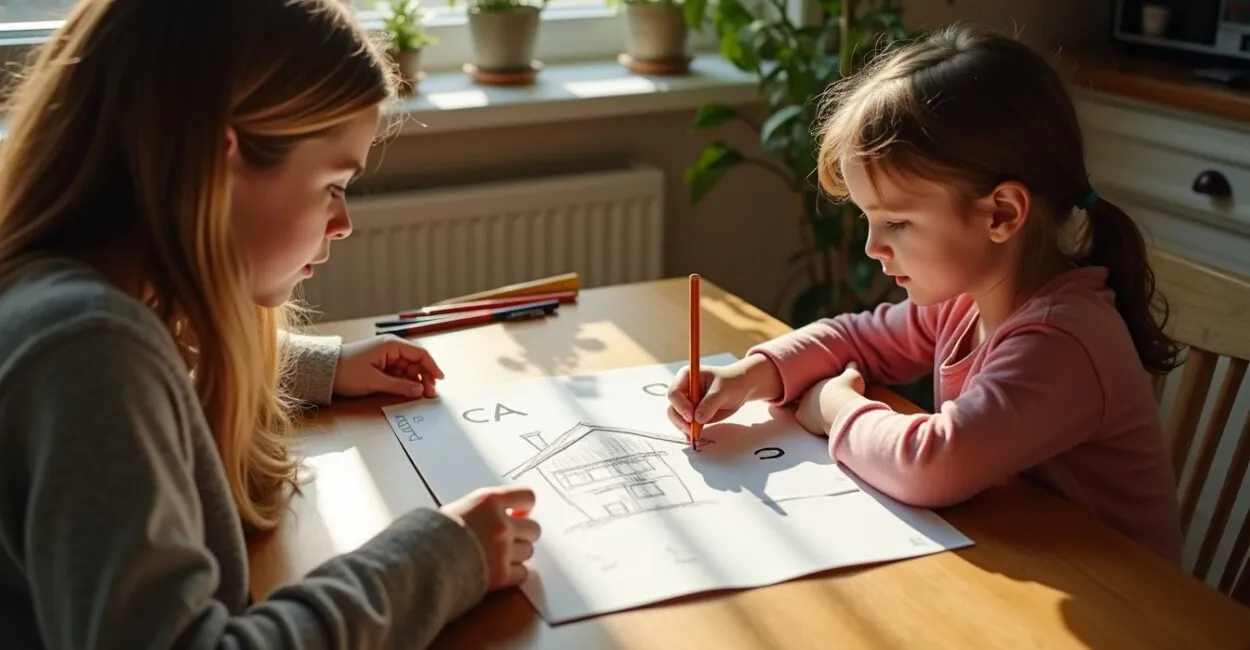
A child may easily put “CA” + “T” together to read “CAT,” yet still stumble over “SPL” in a word. Syllable games help children recognize, combine, and read these sound and spelling units through short activities that work at home or school.
To get started, all you need are homemade cards, familiar words, and a progression that respects the child’s pace.

The goal isn’t to race through a game board. It’s to give children opportunities to look at letters, say syllables, and notice how they form words. Below are seven activities with instructions and variations, plus dyslexia-friendly adaptations, printable ideas, and digital options.
At a Glance
- Search intent: informational, with practical activities and guidance on choosing them.
- Materials: paper and pencil are all you need; printing and screens are optional.
- Progression: start with simple syllables and move on to more complex structures.
- Suggested duration: short rounds that end before the child gets tired.
- Use: at home, in the classroom, or as a supplement to literacy instruction.
How to Choose Syllable Games for Each Stage of Learning to Read
Syllable games are structured activities in which children identify, compare, combine, or read units made up of one or more letters, usually organized around a vowel. To choose a game, consider what the child can already do: recognize letters, hear sounds, read syllables, or put syllables together to make words. The challenge should be engaging without requiring several new skills at once. At the early stage, use simple syllables such as MA, PE, LI, BO, TU and familiar words such as “mama” and “pot.” Later, introduce structures such as PL, BR, SH, CH and syllables ending in a consonant, as in “sun” and “car.” Letter knowledge and phonological awareness—the ability to notice and manipulate speech sounds—can help guide your choice.
One useful clue is when a child can identify a word by hearing it but gets lost when they see it in print. In that case, reduce the number of cards and ask the child to follow each part with a finger. Too many options on the table can turn reading into a visual-search task.
To see how this work fits into the broader process, also read about early literacy and its first steps.
Seven Games for Recognizing and Combining Syllables
The activities below practice different skills: breaking words apart, finding a syllable, building combinations, and reading the result. Play one round at a time.
If the child still needs support, say the word aloud before asking them to find its written parts.
- Syllable path: Write syllables on sheets of paper on the floor or in a line on the table. Say a word, such as “mommy,” and invite the child to move through the syllables, saying each part aloud. To vary the game, use a shorter path with two options per round, then add three-syllable words.
- Syllable hunt: Choose a syllable, such as MA, and spread out cards with familiar words or pictures. The child finds “mama,” “mammal,” or another option that includes that sound. At first, use pictures and say the word aloud; in a later round, show the written word too.
- Matching dominoes: Make cards with a picture on one end and a syllable on the other. To continue the sequence, the child matches the picture to the beginning or end of the corresponding word. A beginner version uses two-syllable words; another lets the child connect written syllables, such as CA and T, to make “cat.”
- Syllable bingo: Draw a small grid with syllables repeated in different spots. Say a syllable or show a picture whose name contains it; the child marks the matching square. To keep the game from turning into guesswork, say the whole word and ask the child to repeat it before searching.
- Word puzzle: Write each syllable on a separate piece of paper and mix up the pieces. The child arranges them to make a familiar word and reads it aloud. If the order is still challenging, offer the first syllable as a clue, then remove that support in the next attempts.
- Picture-and-word memory: Make pairs, with a picture on one card and the matching word on another. When the child finds a pair, they read the word and identify its syllables by clapping or placing tokens. To make the game harder, replace the pictures with syllable cards.
- Syllable spinner: Draw a circle divided into sections, each with a syllable. The child spins an arrow and looks for a word that starts or ends with the selected combination. Accept spoken words before asking the child to read; at the next stage, they can write or build the word with cards.
A reading game works best when the child can explain how they found the syllable, even if they still need clues.
These ideas can also be part of a broader routine of educational games that make learning fun. There’s a clear sign that it’s time to adjust the game: if the child guesses randomly or gets frustrated each round, reduce the options, model an answer, and try again later.
From Simple Syllables to More Complex Combinations

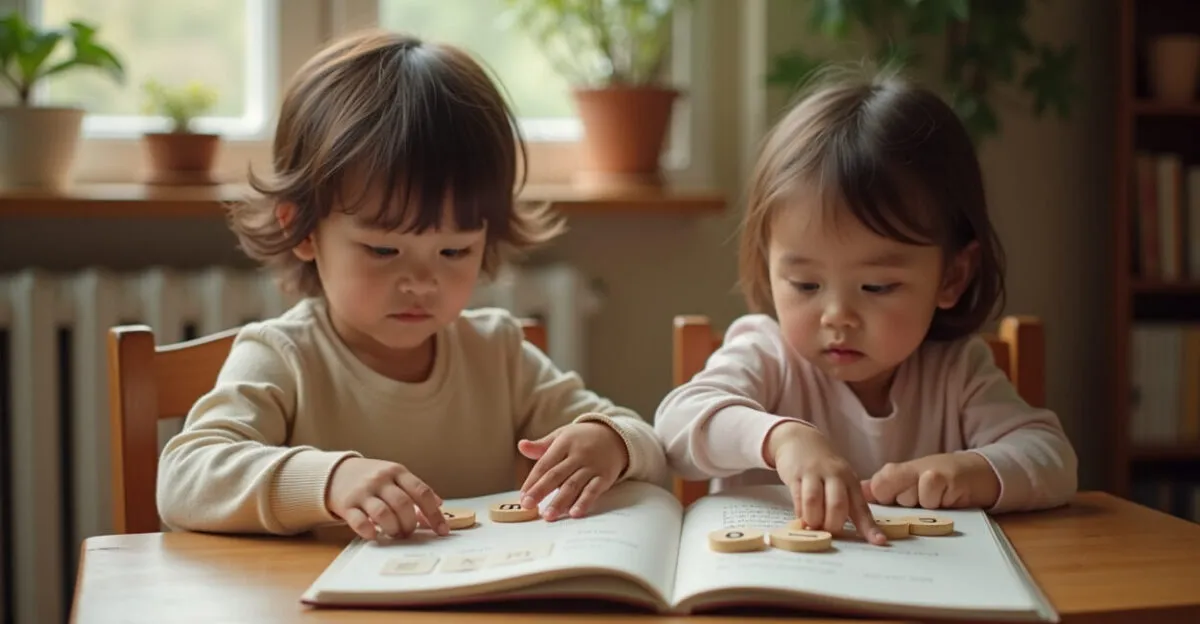
With simple consonant-vowel syllables such as LA and PO, children usually work with a short sequence of letters. To move forward, add one challenge at a time: first, words with more syllables; then consonant blends such as PL in “plant,” digraphs such as SH in “ship,” and syllables ending in a consonant, as in “corn.”
Read also: Literacy Games: How to Use Them in Third Grade
A simple syllable game can become a next-level activity without changing the materials. Instead of only combining PA and TO, introduce PR and A to make “pra” within a word, or compare “pat” and “prat” to notice the extra sound and letter. Avoid introducing several new structures at once: if the child is learning SH, keep the other words familiar.
Children can hear syllable divisions in spoken words by clapping, but reading also depends on connecting letters with sounds. Clapping helps them hear the parts, while cards and printed words support reading. Oral and written activities complement each other; one does not automatically replace the other.
Complete guide: Activities for Dyslexia: 12 Literacy Practices
Adaptations for Children with Dyslexia
For a child with dyslexia, keep the rules simple and reduce visual clutter. Show only a few cards at a time, use a readable font with good contrast, leave space between options, and let the child follow along with a finger or ruler. These strategies may make the activity more accessible, but they are not treatment and do not guarantee that reading difficulties will go away.
It can also help to break the practice into steps: in one round, the child identifies a syllable; in another, they combine the parts; only then do they read the whole word. If they mix up the order of the pieces, show them a model to compare. If they recognize the spoken word but take longer to sound it out, give them time and avoid turning the answer into a race against the clock.
Dyslexia affects each child differently, and an adaptation that helps one child may not work for another. Games should supplement instruction and support from qualified professionals, not replace an evaluation or recommended intervention. For general information about developmental stages, consult the official website of Brazil’s Ministry of Education, the federal agency responsible for education, and talk with the school about the student’s specific needs.
How to Create or Find Printable Activities
A printable syllable game in PDF format can be convenient, but it’s not required. To make one, choose six to ten syllables the child is already learning, write them on cards of similar size, and make a second set with pictures or words that use those combinations. Before printing a lot of pages, try a round on plain paper. That makes it easy to see if there are too many options or if the letters are too small.
When looking for a printable syllable game, check that the instructions explain how to use the pieces and that the materials distinguish simple from complex syllables. A colorful printable game may catch a child’s eye, but colors and illustrations shouldn’t compete with reading. To reduce visual stimulation, a black-and-white version or handwritten cards may work better.
If the material doesn’t show how to progress, adapt it: cover some cards, choose only familiar combinations, and add new ones gradually. The most important thing is for the child to be able to read or hear the word used in the game. For more ideas on choosing and adapting activities to a child’s needs, see this article on teaching methods tailored to each child.
Digital Resources and Wordwall Activities
Wordwall lets educators use interactive activities such as matching games, spinners, and quizzes. When searching for “Wordwall complex syllables,” review the content before sharing it with a child: check that the words suit their skill level, the instructions are clear, and the exercise doesn’t mix too many spelling patterns at once.
A screen can provide immediate feedback, but getting an answer right online doesn’t by itself prove that a child can read the same combination in a book or an unfamiliar word. Alternate digital activities with cards or printed words, and stop if the child starts clicking without paying attention. The game should continue to support the reading goal.
How to Practice Without Making Reading Feel Like a Chore
Set a clear beginning and end: one short round, a word the child chooses, or a small number of cards. If the child makes a mistake, say the word slowly, point out the syllable in question, and offer another try without asking them to repeat it until they get it right. The most helpful encouragement focuses on the strategy, such as “you compared the two syllables,” rather than labeling the child as fast or slow.
At home, a word on a food package can inspire a quick syllable hunt; at school, the same idea can work in pairs. Keep track of which combinations the child reads independently and which still need support. This simple check-in helps you choose the next challenge without turning every reading activity into a test.
Choose one of the seven activities, set out a few syllables the child already knows, and observe how they arrive at the answer. Then change just one part of the game: the number of options, the type of word, or whether it includes complex syllables. This thoughtful adjustment is usually more informative than making practice sessions longer.
Which Game Is Best for Starting with Simple Syllables?
A syllable path or word puzzle is a good choice because it makes the order of the parts visible. Start with familiar combinations and just a few options.
Can I Teach Syllables Using Only Clapping?
Clapping helps children hear the sound parts in words, but it doesn’t teach the relationship between letters and sounds by itself. Pair it with cards or written words when the goal is reading.
Where Can I Find a Simple Printable Syllable Game?
You can look for PDF materials on educational websites and activity repositories, checking the author, instructions, and whether the content suits the child’s level. You can also make cards at home without a printer.
How Often Should I Suggest These Games?
Choose brief sessions that fit the child’s attention span and energy instead of insisting on a set length. If they get tired or frustrated, stop and try again later.
Artigos Relacionados
 Simple Syllable Activities: How to Build Reading Fluency
 How to Improve Reading Skills in Elementary School: Practical, Proven Ways to Build Fluency and Comprehension in the Classroom
 Early Writing: 7 Activities to Build Spelling Skills
 Nature Games: 10 Ideas for Preschoolers
 Creative Education: Building Skills
 A Complete Guide to Entrepreneurial Education: Build Leadership Skills, Create an Effective Business Plan, and Start a Successful Career
