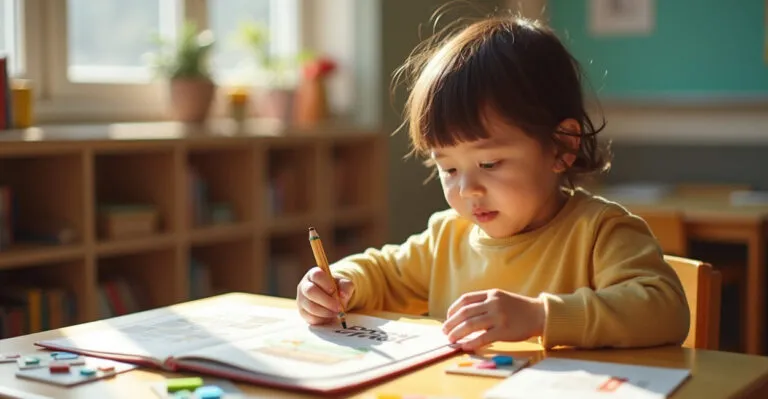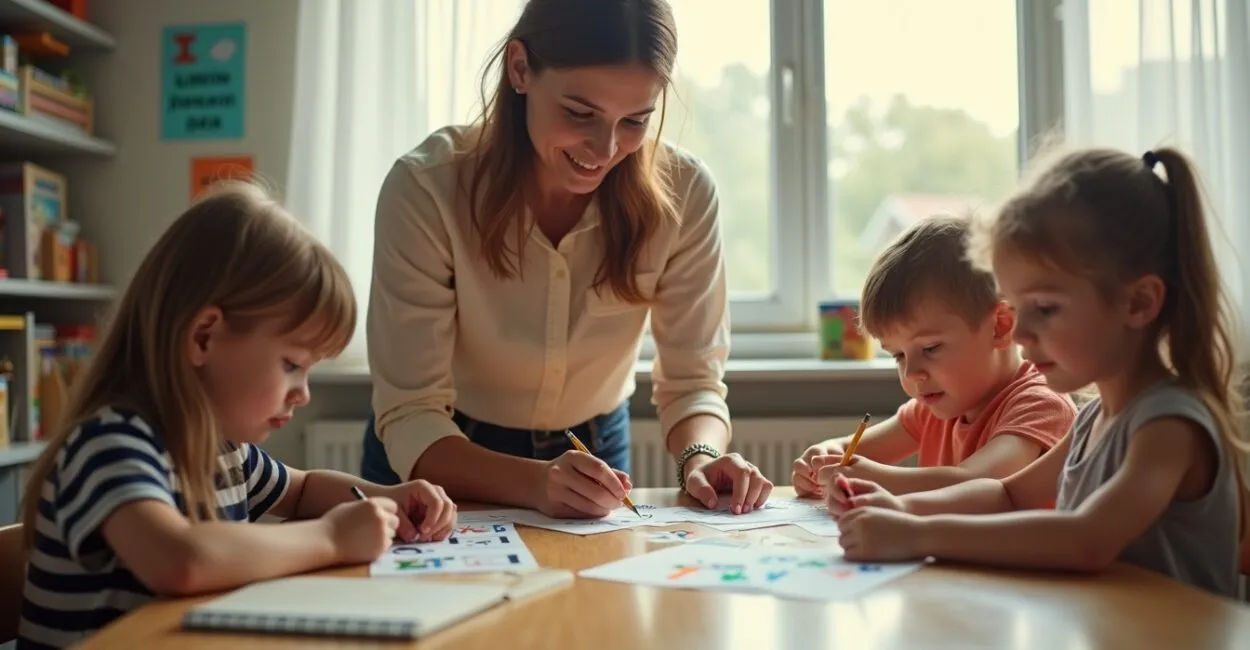
In early writing, the right exercise can break through weeks of struggle—and spelling often improves before writing speed does.
Early Writing: 7 Activities to Build Spelling Skills

When children first start putting their ideas on paper, mistakes aren’t a sign of failure. They’re a sign of growth. The real problem is that many activities expect children to “get it right” before giving them the background, listening practice, and word comparisons they need. Then writing becomes guesswork.
In practice, what works is combining phonological awareness, visual memory, vocabulary development, and reflection on language. Strong early writing grows out of this combination.
And yes, you can work on these skills in ways that are low-pressure, thoughtful, and even fun.
1. Reflective Spelling Practice: Turning Mistakes Into Clues
Reflective spelling practice is one of the most effective ways to strengthen early writing because it gets children out of autopilot. Instead of just listening and copying, they compare sounds, think about letters, and explain their choices. This can reduce common mistakes such as letter substitutions, omissions, and confusing word boundaries.
Here’s how it works: dictate short, familiar words, then ask the child why they spelled each one that way. The goal isn’t to trick them. It’s to get them thinking. When children explain their spelling, they start to notice patterns.
At home or in the classroom, try pairs of similar-sounding words, such as “cap,” “cat,” “ball,” and “bell.” The differences may seem small, but noticing them builds both listening and visual attention. That’s where spelling starts to take shape.
2. Everyday Word Hunts to Build Vocabulary
Good writers recognize words before they try to write them. That’s why vocabulary is a key part of early writing. The more words children encounter in real-life contexts, the less they have to rely on trial and error.
Make a word box with labels, classmates’ names, household items, foods, animals, and frequently used words. Then ask the child to sort, copy, compare, and use the words in sentences. Writing becomes more than an exercise—it becomes a choice.
- Cut out labels from grocery items.
- Write the names of favorite toys.
- Sort words by topic: school, kitchen, neighborhood.
- Ask the child to choose three words and write a sentence.
This activity may seem simple, but it can make a big difference. Spelling doesn’t develop through correction alone; it grows from repeated exposure to correctly spelled words.
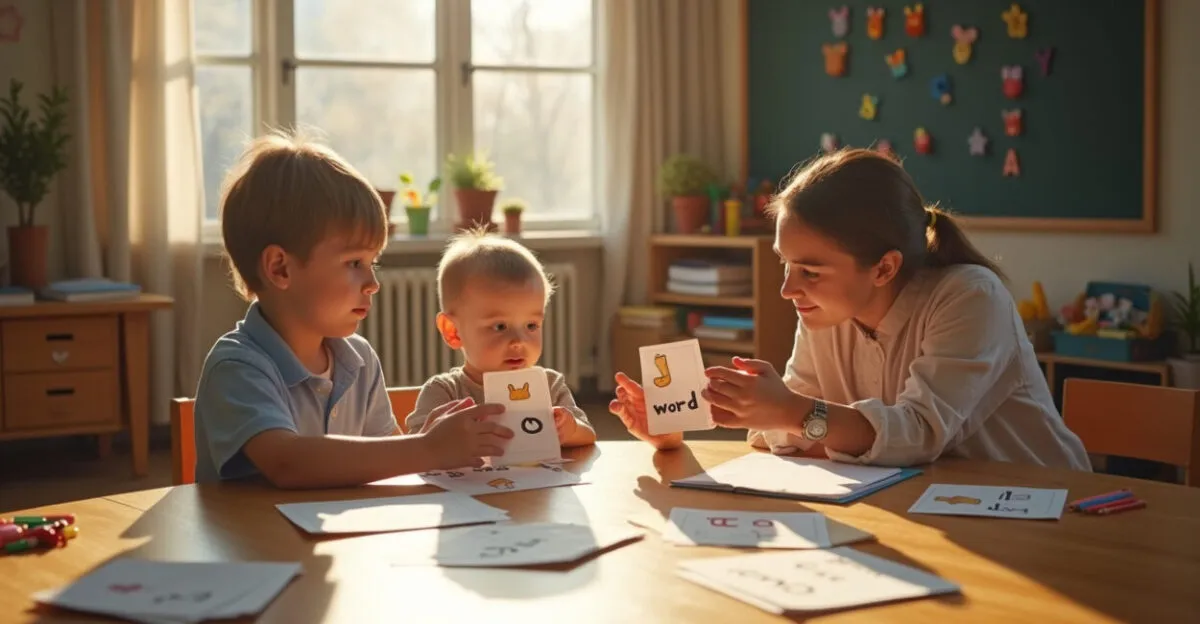
3. Writing With Visual Support: The Eyes Help Children Learn to Read and Write

Visual memory is a big help in early writing. Children need to see words, compare spellings, and realize that words aren’t always spelled the way they sound. This is especially useful when they confuse similar-looking letters or spell words exactly as they hear them.
One good strategy is to use cards with a picture and its matching word. Then cover the word and ask the child to write it from memory. Afterward, they can check and correct their spelling. Moving back and forth between looking and writing helps build confidence.
Read also: Reading and Writing Words: 8 Classroom Exercises
According to resources from Brazil’s Ministry of Education, children learn to read and write more effectively when they reflect on how the writing system works instead of simply repeating strokes and sounds.
4. Rewriting Short Texts: Clarity Before Perfection
Rewriting a note, caption, or short rhyme is a great way to build spelling skills. Children see a complete sentence, understand its structure, and try to recreate it. This can ease the fear of a blank page that holds many early writers back.
Here’s a short example: one student kept spelling words like “shirt,” “house,” and “make” incorrectly. Instead of having her copy words over and over, her teacher asked her to rewrite short notes, read them aloud, and then review them. After three weeks, the girl began to notice on her own when she was making up spellings. It wasn’t magic. It was guided observation.
Children who learn to revise early make fewer mistakes later.
5. Word-Breaking Games: Words Aren’t One Big Block
A common early writing mistake is running words together or splitting them up too much. This happens because children are still learning that sentences are made of words, and words are made of sounds and letters. Word-breaking games can help them make this connection.
You can clap for each syllable, use small objects to represent each word in a sentence, or draw boxes to organize the writing. It feels like play—and it is. But it’s play with a purpose. Children learn that writing also means organizing ideas on a page.
This method works well in the early stages, but it falls short if used on its own. It doesn’t replace reading, conversation, or writing. It’s a foundation.
6. A Word Bank for Tricky Spellings: A Practical Shortcut
Children don’t need to figure out every word from scratch. In any early writing process, some spellings are worth keeping as a go-to reference: names, frequently used words, and terms children use all the time.
Create a word bank on a poster or in a notebook. Then ask the child to check it before writing. This doesn’t “give away the answer”; it teaches independence. It also cuts down on repeated mistakes—the kind that show up in the same place week after week.
For a broader look at reading and writing habits in Brazil, check out the Literacy Census, which shows how regular exposure to reading affects academic progress.
7. Short Writing Assignments With Guided Revision
The most important part of early writing is bringing everything together: vocabulary, sounds, form, and meaning. That’s why writing short texts and revising them with guidance is so effective. Notes, lists, invitations, and captions work better than overly long assignments.
Ask children to follow three steps: think, write, revise. During revision, have them check one thing at a time: capitalization, punctuation, familiar words, and sound-letter matches. The secret isn’t writing more; it’s revising with purpose.
According to the IBGE, Brazil’s national statistics agency, access to reading and schooling has a strong influence on educational outcomes. At home or in school, the more children use writing for real purposes, the less mechanical it feels—and the more it becomes a way to communicate.
Here’s the best part about early writing: children don’t have to get everything right to make progress. They need activities that encourage them to think, compare, revise, and try again. Spelling improves when writing stops feeling like a test and becomes a discovery.
Good writing begins when children realize that every word involves a choice—and every choice can be learned.
Frequently Asked Questions
What’s the Best Activity to Start With for Early Writing?
The best activities usually combine sounds, reading, and short writing. Reflective spelling practice and word-breaking games work well because they help children understand how words are put together. If the goal is to improve spelling, start with familiar words and quick activities, without trying to do too much at once. Most importantly, keep the task low-pressure and provide guidance during revision.
How Can I Reduce Spelling Mistakes Without Making Children Memorize Everything?
The most effective approach is to expose children to words in context and ask questions that get them thinking about how words are written. Reading notes, comparing correct spellings, and revising short texts help more than long lists of words to copy. Memorization develops as a result of meaningful repetition. This is especially useful in early writing, when children are still building a reliable mental reference for spelling.
Does Rewriting Texts Make the Activity Repetitive?
No, as long as the activity is short and has a clear goal. Rewriting rhymes, notes, and captions helps children notice structure, spelling, and punctuation without getting lost in long texts. When guided well, the activity shows them how words fit together in a sentence. The key is to vary the topics and review one thing at a time instead of having children copy mechanically.
What’s the Difference Between Copying and Real Writing?
Copying involves visual recognition and motor skills, but it requires very few language decisions. Real writing asks children to choose words, think about order, listen for sounds, and try out spellings. In early writing, both activities can have a place, but copying is no substitute for original writing. That’s why short sentences and visual support often lead to more progress.
Are These Activities Right for Every Child?
They work for most children, but adapting them makes a difference. Some children need more visual support; others do better with listening and speaking; still others need more time to revise. There’s no one-size-fits-all solution because development, vocabulary, and reading experience vary widely. The best results come when the activity matches the child’s current level.
.