
When reading hits a wall, the problem is rarely a “lack of attention.” More often, it’s poorly taught reading comprehension.
In elementary school, this becomes clear: a child can read without connecting clues, making inferences, or supporting an answer with evidence from the text. The result is frustration—for the student, family, and teacher.

What Reading Comprehension Really Is
Technically, reading comprehension is the ability to make meaning from a text by combining explicit information, inferences, context, and prior knowledge. Simply put, decoding words isn’t enough; you have to understand what they mean together.
This is the key to making a difference in elementary school. Mechanical reading answers “What does it say?” Comprehension answers “What does this mean, why was it said, and what can I conclude from it?” Anyone who works with students knows the difference shows up quickly: a child may read aloud smoothly and still miss simple questions about the main idea.
Why Reading Comprehension So Often Falls Short in Elementary School
The most common mistake is treating comprehension as an exercise in “finding the answer in the text.” That helps at first, but it doesn’t build strong reading skills. Children need to learn to locate, compare, infer, and explain.
In practice, many students focus on individual words and ignore how the parts fit together. It’s like putting together a puzzle while looking at only one piece. Reading comprehension instruction improves when teachers guide students toward the overall meaning, not just isolated details.
Good reading isn’t repeating the text. It’s understanding it.
Strategies by Grade: From 1st to 5th Grade

Strategies should match students’ reading development. In 1st and 2nd grade, the focus should be on oral language, pictures, sequencing, and simple inferences. Students learn to answer “Who?”, “Where?”, and “What happened?”
In 3rd grade, students can move on to comparing information, cause and effect, and reading short paragraphs more independently. In 4th and 5th grade, they can work on themes, the purpose of a text, the author’s opinion, and more nuanced interpretations of prompts. According to Brazil’s Base Nacional Comum Curricular (BNCC), the national curriculum framework, reading should be taught progressively, with skills developed throughout students’ education.
- 1st and 2nd grade: retelling, pictures, predicting, and vocabulary.
- 3rd grade: main idea, logical sequence, and simple inferences.
- 4th and 5th grade: interpreting prompts, opinions, intent, and summaries.
Activities That Really Work in the Classroom and at Home
The best reading comprehension activities make students think, not just fill in a bubble. A good exercise asks them to find evidence, explain their choices, and connect different passages.
Here are some practical examples:
Read also: Elementary School Teaching Methods: Effective Practices
- short-answer questions that require explanations;
- oral retellings in chronological order;
- comparing the title with the content;
- looking for clues in the text;
- changing the ending to check understanding.
A familiar classroom scene: the teacher hands out a short text, and the whole class gets the literal question right. Then the teacher asks, “What makes you think that?” and half the class freezes. That’s when reading comprehension stops being a copying exercise and becomes real understanding.
The Role of Asking the Right Questions in Reading Comprehension
Ask poor questions, and you’ll get poor answers. It sounds obvious, but it’s where many activities fall short. Questions that only ask for literal information train short-term recall. Well-crafted questions build deeper reading skills.
Read also: Literacy Activities in Elementary School
A good sequence combines three levels: literal, inferential, and critical. Students first identify what’s written, then figure out what’s implied, and finally evaluate the author’s intent, point of view, or effect. This progression is one of the foundations of elementary school reading comprehension and aligns with what PISA has shown about reading and comprehension. For more information, see the OECD’s PISA reading data.
Common Mistakes That Slow Student Progress
Some habits may seem helpful but actually hold learning back. The biggest is turning reading into a copying exercise. Another is using texts that are too long without preparing students with the necessary vocabulary or context.
- focusing only on decoding;
- asking repetitive questions;
- not teaching inference;
- correcting answers without pointing out textual clues;
- skipping steps between grade levels.
Reading comprehension improves when students understand why they answered the way they did, not just what they answered. This shifts the focus in the classroom from getting the right answer to explaining the reasoning. And that reasoning takes short, frequent, varied practice.
How to Build a Simple, Effective Routine for Lasting Progress
A consistent routine is more valuable than a “perfect” activity done once in a while. Five to ten minutes a day with a short text and a well-chosen question can lead to noticeable progress.
The best approach is to alternate genres: comic strips, notes, fables, short news stories, poems, and informational texts. This broadens students’ experience and keeps them from thinking comprehension is just about answering book questions. When reading becomes part of the routine, reading comprehension stops being an isolated topic and becomes a lasting skill.
Here’s a practical way to measure progress: students start using the text as evidence. They don’t guess. They point to details, compare information, and explain their answers. That changes everything.
How to Tell Whether a Student Really Understood the Text
The most reliable sign isn’t reading speed; it’s the quality of the response. When students can retell events in order, explain an inference, and identify the main idea, they truly understand what they’ve read.
Not every student follows the same path: students with language, attention, or early literacy difficulties may need more intensive support. Reading comprehension is a skill built over time, not a switch that flips all at once. When instruction respects that process, progress is much more solid.
Comprehension means seeing what’s written and what’s between the lines. Students who learn this early read better, think better, and answer more independently.
Frequently Asked Questions
What’s the Difference Between Reading and Reading Comprehension?
Reading is the act of decoding words and sentences. Reading comprehension is the next step: understanding meaning, noticing connections between ideas, and drawing conclusions based on what you’ve read. A child can read fluently and still struggle to understand a text because comprehension depends on more than pronunciation or speed. That’s why comprehension activities need to go beyond reading aloud and include questions that require reasoning.
In Which Grade Should Reading Comprehension Instruction Begin?
Instruction begins at the start of literacy learning, even if it’s simple and concrete at first. In 1st grade, children can already answer questions about pictures, characters, and short events. The complexity increases gradually as their reading skills develop. The sooner reading comprehension becomes part of the routine, the more naturally students learn to use clues in the text instead of guessing.
What Types of Text Work Best for Elementary School Students?
Short texts with accessible language and clear context usually work best at first. Comic strips, fables, notes, short poems, adapted news stories, and brief narratives are helpful because their structure is easier to see. Later, students can move on to informational and opinion pieces. Ideally, vary the genres to build different reading comprehension skills and keep students from relying on a single format.
How Can You Help a Child Who Can Read but Doesn’t Understand?
First, shorten the text and work on vocabulary, sequencing, and explicit clues. Then ask short questions and have the child support their answers with passages from the text. Reading in sections can also help a lot. This difficulty is common and doesn’t mean a child lacks ability; often, they simply haven’t learned how to approach a text strategically.
What Most Often Gets in the Way of Reading Comprehension in School Activities?
The main obstacles are poorly worded questions, too much copying, and a lack of guidance during reading. When an exercise asks only for literal answers, students don’t develop inference or analysis skills. Another problem is using overly difficult texts without support. To improve, activities need to guide students’ thinking and show them that comprehension means finding evidence, connecting information, and explaining an answer.
Artigos Relacionados
 Reading Comprehension Strategies for Children: Guided Questions, Mind Maps, and Summaries to Improve Interpretation and Retention in Elementary School
 How to Improve Reading Skills in Elementary School: Practical, Proven Ways to Build Fluency and Comprehension in the Classroom
 Building Reading Fluency in Children: Daily Routines and Activities to Improve Speed, Expression, and Comprehension in Elementary Students
 Why Reading Matters in Early Childhood and Elementary School
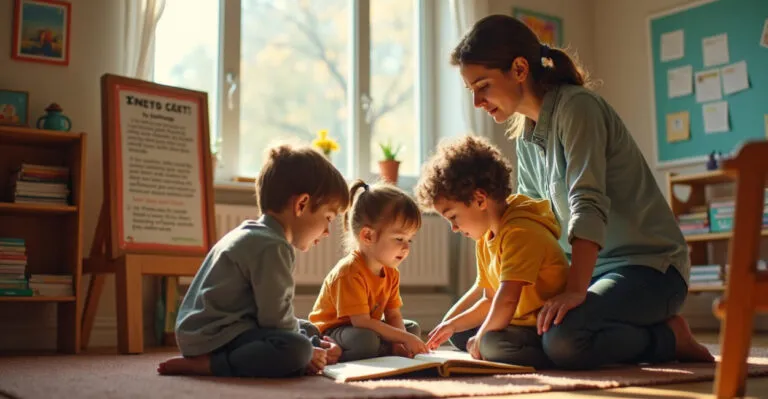 Reading Strategies for Elementary and Middle School: 7 Practical Techniques
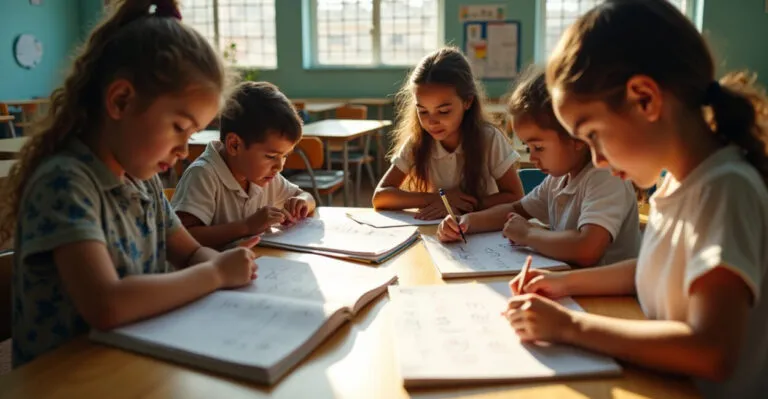 Elementary School Literacy: 9 Practical Strategies
