

When a question is direct, details become the answer—and literal reading at school often separates students who merely guess from those who find the answer.
A short exercise can seem easy until you miss a single word. That’s when attention, scanning, and accuracy start to make a real difference.

The trick isn’t to read faster. It’s to read with purpose.
What Literal Reading at School Means, Plain and Simple
Literal reading is the skill of finding information that is explicitly written in a text. Instead of interpreting what’s implied, you look for a name, date, place, action, cause, or sequence exactly as it appears.
In school, this comes up in questions like “Who did it?”, “Where did it happen?”, “What was the first step?” and “What does the text say?” Students who are good at literal reading don’t guess. They scan the text with purpose and find the right passage.
The difference may seem small, but it changes everything. A student can understand the general topic and still miss an easy question by swapping one word for another that sounds similar. That’s the classic trap in a direct search.
Why One Wrong Detail Can Derail the Right Answer
In literal reading at school, a lapse in attention can cost more than a lack of knowledge. The brain tends to fill in gaps. That’s helpful in conversation, but not on tests or reading comprehension assignments.
A common example: the text says “on Tuesday,” but the child answers “last week.” It sounds close. It isn’t. A literal question calls for an answer faithful to the text, not a plausible version of what “must have” happened.
Here’s the key point: in literal reading, the best answer isn’t the prettiest one; it’s the most accurate. When students learn that early, they stop losing points to careless mistakes. The next step is to practice that precision with short tasks.
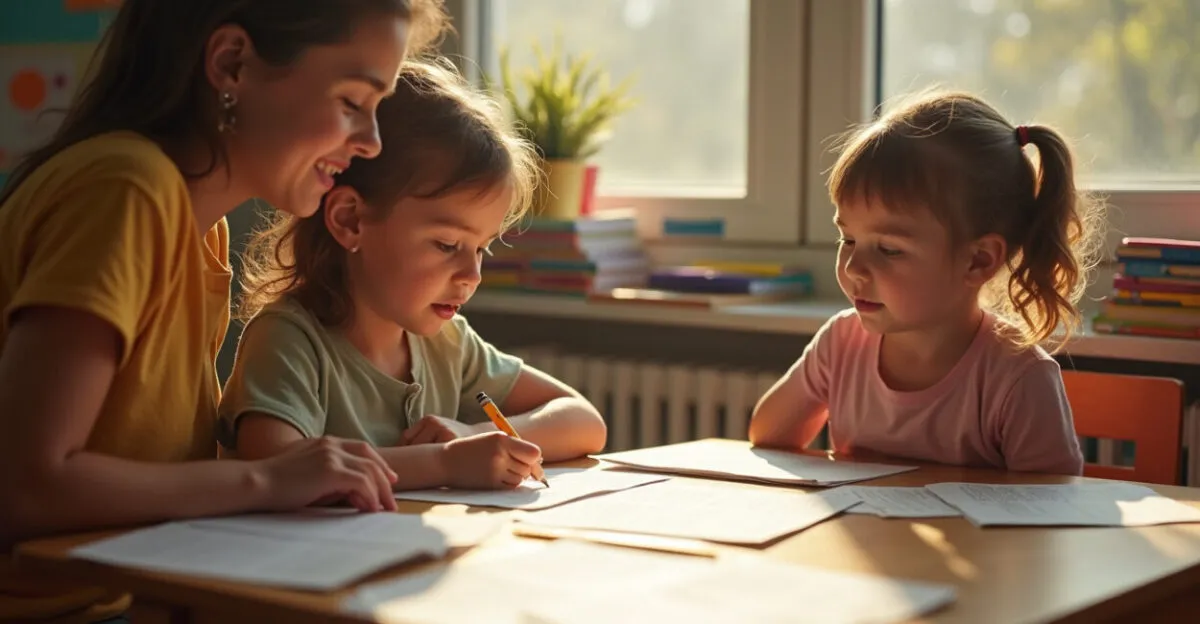
3 Quick Exercises to Practice Attention, Scanning, and Accuracy

You don’t need a long activity to improve literal reading at school. Three focused minutes are worth more than filling in ten lines on autopilot.
- Word hunt in the text: Ask students to find proper names, dates, places, and action verbs.
- Question and evidence: Students answer, then underline exactly where the answer appears.
- Spot the changed detail: Present two similar sentences and ask which one matches the text.
These exercises build visual scanning, short-term retention, and checking skills. Anyone who works in literacy instruction or tutoring knows progress shows when students stop answering based on what “seems right” and start answering based on what’s “written in the text.”
The Most Common Mistake: Answering Based on What Seems Right
This is the habit that most often gets in the way of literal reading at school. Students read a sentence, get the general idea, and answer with something close. But the question calls for accuracy based on the text.
Read also: Reading and Writing Words: 8 Classroom Exercises
The mistake usually takes one of three forms:
- swapping in synonyms without checking the context;
- skipping small words like “not,” “before,” and “after”;
- answering before finishing the whole sentence.
A short story makes this clear. In a tutoring group, one student got everything right when she read slowly but made mistakes when she tried to “save time.” All it took was marking the question’s keywords in pencil and having her go back to the text before answering. Her performance improved right away. A small change, a big turnaround.
Scanning, Clues, and Checking: A Reliable Trio
Literal reading at school gets much easier when students follow a simple method. First, they look for the clue in the question. Next, they scan the text for the matching passage. Finally, they check that the answer matches the wording in the text.
The process is almost mechanical, and that’s what makes it reliable. Instead of relying on a “good memory,” students follow a repeatable approach. With short activities, this builds confidence and cuts down on guesses disguised as answers.
Readers in a hurry catch the idea; readers with a method find the answer.
To make this even more effective, use short-answer questions, passages of two to four paragraphs, and prompts that ask students to find specific information. This is where literal reading really pays off.
How to Create Short Activities That Really Teach
Not every short exercise is useful. To work well, it needs to ask students to look for something specific, have a verifiable answer, and avoid vague directions. In literal reading at school, less confusion means more learning.
Use this simple approach:
- a short text;
- one question at a time;
- an answer that can be checked in the passage itself;
- a required reread before turning it in.
This method works well in the classroom, in tutoring, and for homework, but it falls short when the text is too long for the class’s level. It doesn’t work the same for every student: children just beginning literacy instruction need even shorter texts, with visual support and familiar vocabulary.
According to the BNCC, Brazil’s National Common Curricular Base, reading comprehension should progress from recognizing explicit information to more complex levels of interpretation. That makes sense: first comes the answer on the page; then comes the one between the lines.
The Real Improvement Comes When the Question Is Clearer
Literal reading at school isn’t just a basic step. It’s the foundation for everything else. If students can’t find what’s written, their interpretation is built on shaky ground.
Quick exercises help build a habit: look, locate, check, answer. It sounds simple. It is simple. And that’s exactly why it works.
According to the Brazilian government’s official education portal, focused reading practices improve performance across subjects because understanding directions affects every class. In the end, the whole school depends on this skill more than it admits.
Literal reading isn’t about reading less; it’s about staying true to what’s written.
Frequently Asked Questions
Is Literal Reading at School the Same as Interpretation?
No. Literal reading means finding information that appears explicitly in the text, while interpretation requires going beyond what’s written. The two skills complement each other, but they aren’t the same. If a student still misses direct questions, it’s worth strengthening literal searching before moving on to inferences and critical reading.
How Can I Tell if My Student Is Making Mistakes Because of Inattention?
Notice whether the student gets the general idea right but mixes up dates, names, the order of events, or negative words. This often means they understood the topic but didn’t check the text carefully. This is a common pattern in literal reading at school when children answer before finishing the passage or rely too much on memory.
Which Exercises Work Best for Practicing Literal Reading?
The most effective ones are short and easy to check: finding information, underlining the exact answer, and comparing similar sentences. They help because they make students return to the text instead of guessing. To get started, choose short passages and clear questions with answers that can be checked word for word.
Is Literal Reading at School Only for Young Students?
No. It’s essential in the early grades, but it remains important at every stage. Older students also miss direct questions when they read too quickly or interpret before checking the prompt. What changes is the complexity of the text, not the need to find information accurately.
How Much Time a Day Is Enough for Practice?
Ten well-planned minutes can make a difference if the practice is consistent. It’s better to work through a few questions and require students to check their answers in the text. In practice, consistency matters more than duration. Short, frequent sessions build attention without tiring students.
Artigos Relacionados
 Reading Strategies for Elementary and Middle School: 7 Practical Techniques
 Reading at Home and Family Engagement: Build Routines, Choose Books, and Motivate Kids to Improve Reading Habits and School Performance
 Reading Comprehension Strategies for Children: Guided Questions, Mind Maps, and Summaries to Improve Interpretation and Retention in Elementary School
 Phonological Awareness in Early Literacy: Playful Techniques and Exercises to Build Sound Recognition and Reading Fluency in Children
 How to Improve Reading Skills in Elementary School: Practical, Proven Ways to Build Fluency and Comprehension in the Classroom
 Self-Awareness: Quick Exercises and Useful Apps for 2025
