
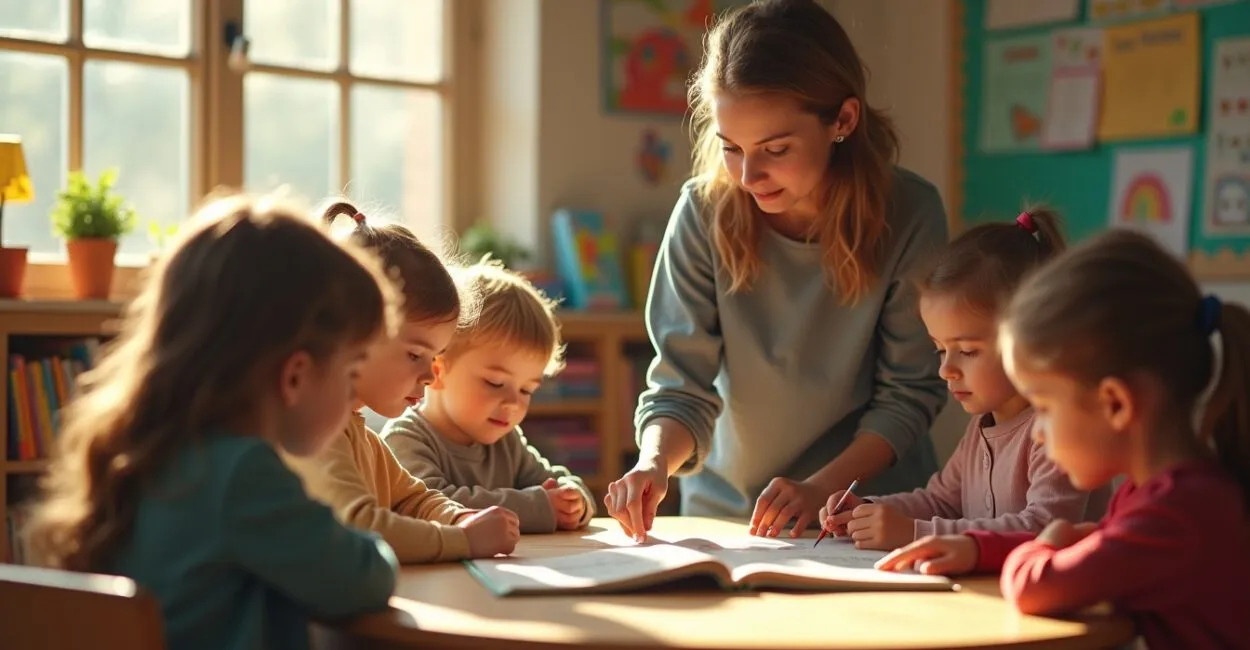
When guided reading clicks, students read more, understand more, and gain the confidence to keep going on their own.
In early literacy, the problem is rarely a “lack of motivation.” It’s a lack of guidance at the right moment. Guided reading addresses that by making the teacher a bridge: the teacher models, asks questions, adjusts the pace, and gradually lets go until students can move forward independently. It sounds simple. In practice, that’s where the difference shows.

If you want fluency, comprehension, and genuine participation, guided reading is one of the most effective strategies for getting there—provided it’s intentional, not an improvised read-aloud.
What Guided Reading Does That Independent Reading Doesn’t
The technical definition is straightforward: guided reading is an instructional practice in which the teacher works with small groups or the whole class, providing strategic support before, during, and after reading. The goal isn’t simply to “read the text,” but to build a pathway that helps students read better than they could on their own at that point.
When reading independently, students often stumble, guess, and lose their place. In guided reading, they hear a strategy modeled, anticipate meaning, check their predictions, and adjust when needed. That changes everything, because the child sees how a reader thinks.
The 3 Stages of Guided Reading in the Classroom
Anyone who works in early literacy knows that guided reading works because of its sequence. It isn’t improvised. It’s structured.
- Before reading: Activate prior knowledge, show the cover, title, and images, and ask students to make predictions.
- During reading: Pause at key points, ask brief questions, and ask students to explain their thinking.
- After reading: Review the overall meaning, highlight vocabulary, and discuss inferences.
In practice, children move beyond simply decoding words and begin to build meaning. That’s invaluable in early literacy, because fluency without comprehension is just empty speed. The next step is learning how to guide students without turning the activity into an interrogation.

How to Guide Students Without Making the Class Feel Rigid

Guided reading works best when the teacher says less than they think they need to and observes more than they usually do. The guidance should be clear but relaxed. You guide students; you don’t take over their reading.
A simple plan can help:
- set a reading goal;
- choose a text that matches the class’s level;
- pause briefly to check for understanding;
- resume reading without disrupting the flow;
- end with a brief, meaningful task.
Guided reading isn’t about asking a thousand questions; it’s about asking the right questions at the right time. When teachers step in too often, children wait for the answer. When they step in too little, children get lost. The balance comes from noticing how much effort a student is making and offering only the support they need.
Read also: The Role of Families in Children’s Early Literacy
The Mistake That Gets in the Way of Fluency Most
The most common mistake is treating guided reading like choral reading with comments sprinkled in. It may seem helpful, but it often disrupts the flow and confuses students. Fluency depends on continuity; comprehension depends on strategic pauses. If you interrupt every line, the text loses its rhythm.
Here’s the difference:
Read also: Reading Questions: How to Create Effective Activities
Weak practice
Strong practice
Interrupts the text constantly
Pauses at meaningful points
Asks for ready-made answers
Asks for predictions and explanations
Corrects everything right away
Chooses what needs teacher support
This adjustment may seem small, but it often helps the whole class move forward. I’ve seen groups of slow readers make progress because the teacher stopped interrupting at every stumble and focused instead on the passages that really carried meaning.
How to Adapt Guided Reading to Your Class’s Pace
Not every student needs the same kind of help. That’s what makes guided reading so effective. In the same classroom, you may have beginning readers, children who can decode with some confidence, and others who need support with making inferences.
One practical approach is to vary the level of support:
- more support: short sentences, accessible vocabulary, and more teacher modeling;
- moderate support: inference questions and brief opportunities to predict what comes next;
- more independence: an initial silent reading, followed by a guided discussion.
The same text can work for students at different levels, as long as the task changes. This approach works very well in early literacy, but it falls short when the text is far beyond the class’s level. Adaptation starts with choosing the material, not just deciding how to guide students.
A Real Example of Guiding a Short Lesson
Imagine a short text about a trip to the park. Before reading, the teacher shows an image and asks, “What do you think will happen?” During reading, the teacher pauses only at one key point: “Why did the character change their mind?” Afterward, students retell the sequence in their own words.
The effect is immediate. Children aren’t focused only on sounding out words; they organize the story, recognize cause and effect, and help build its meaning. And when this happens throughout the week, guided reading stops being a one-off activity and becomes part of the learning routine.
How to Choose Texts That Really Help
Not every text is right for guided reading. If it’s too long, too difficult, or dull, the lesson becomes hard work with little payoff. Look for texts with a clear beginning, middle, and end, language that suits the class, and something that sparks interest—a character, a problem, a surprise, or new information.
To help guide your choices, consider two reliable sources: materials from Brazil’s Ministry of Education (MEC) and guidance from the National Fund for Education Development (FNDE) on instructional materials, which can inform planning and instructional fit. Reading and literacy research, including work compiled by UNESCO, also emphasizes the importance of intentional guidance in developing reading comprehension.
If your guided reading sessions leave students more confident about taking risks, asking questions, and rereading, they’ve done their job. Success doesn’t mean absolute silence. It means a class that starts out dependent and ends up thinking like a group of readers.
The best result of guided reading isn’t getting the right answer in the moment; it’s a child who knows where to start on their own the next time they read.
Frequently Asked Questions
Is Guided Reading the Same as Shared Reading?
Not exactly. In shared reading, teachers and students take part in the experience together, often focusing on following a text read aloud. In guided reading, the teacher’s support is more carefully planned and strategic, with pauses, questions, and guidance to gradually develop fluency and comprehension.
What’s the Best Type of Text for Guided Reading?
Short texts with a clear narrative, accessible language, and some interpretive challenge tend to work best. In early literacy, consider short stories, rhymes, simple informational texts, and notes, as long as they match the class’s level. The text should encourage thinking without becoming a barrier.
How Often Should Guided Reading Take Place?
Ideally, it should happen regularly rather than as a rare event. In many classrooms, it works well to include guided reading a few times a week, varying the text type and level of support. Consistency helps students recognize the routine and make progress with greater confidence.
How Can You Tell if Guided Reading Is Working?
You can tell by the way students participate. They begin to anticipate meaning, explain their answers, reread more independently, and make fewer errors that disrupt understanding. Another strong sign is when a child starts using strategies modeled in previous lessons on their own.
Is Guided Reading Only for Beginning Readers?
No. Guided reading is especially valuable in early literacy, but it can also be adapted for later grades, particularly when the goal is to develop comprehension, vocabulary, and critical reading skills. The text, the kinds of questions, and the expected level of independence change—not the underlying approach to guidance.
Artigos Relacionados
 Phonological Awareness: 10 Activities for Better Reading Instruction
 Phonological Awareness in Early Literacy: Playful Techniques and Exercises to Build Sound Recognition and Reading Fluency in Children
 Early Literacy: Benefits and Risks
 Brain Development: Practices for Early Literacy
 Low-Cost Educational Games for Early Literacy
 Distracted Reading: How to Keep Students Focused in Early Classes
