

Brain development is the dynamic process through which neural structures form, become more refined, and integrate from pregnancy through childhood. It involves neurogenesis, neuronal migration, synaptogenesis, synaptic pruning, and myelination—processes that shape how children perceive, learn, and use language. These mechanisms are not purely biological: social interactions, nutrition, sleep, and environmental stimuli influence neural pathways and literacy skills.
Understanding brain development is essential for early literacy because sensitive periods create windows of plasticity for acquiring phonology, vocabulary, and comprehension skills. Interventions that are poorly timed may be less effective if they do not account for a child’s neurological stage. Public policies and educational practices are more effective when grounded in neuroscience research and child health guidelines.

Key Takeaways
- Brain plasticity in early childhood creates critical windows for language acquisition and pre-literacy skills.
- Effective literacy instruction combines oral language stimulation, phonological awareness, and socioemotional support, aligned with a child’s myelination and executive development.
- Practical activities—interactive shared reading, phonological games, and consistent sleep and meal routines—can accelerate progress when used during sensitive periods.
- Long-term efforts require ongoing monitoring, educator training, and policies that support nutrition, health, and the reduction of toxic stress.
Why Brain Development Shapes Early Reading Success
Early reading success depends on neural circuits that connect auditory perception, visual processing, and executive function. The intense synaptogenesis of the first 3 years creates an excess of connections that are later selected through use. Areas such as the fusiform gyrus, which processes written words visually, and the superior temporal cortex, which processes phonology, mature at different rates. Learning to read requires these areas to synchronize; delays in any component can reduce efficiency. For this reason, literacy practices should engage multiple sensory and cognitive domains at the same time.
The Connection Between Neural Maturation and Reading Skills
Myelination improves the speed and synchronization of signals between sensory and language regions. Children with more advanced myelination in frontotemporal pathways tend to develop phonological awareness earlier. This helps explain why training that focuses exclusively on visual or auditory skills has limited effectiveness. Multisensory integration supports phoneme-grapheme mapping and working memory, which are critical for decoding and comprehension.
Sensitive Periods for Literacy and What Each One Makes Possible
Sensitive periods are times when stimuli shape neural circuits more efficiently. From pregnancy to age 3, children make substantial gains in receptive vocabulary and in distinguishing speech sounds. Between ages 3 and 6, phonological awareness and working memory improve. Between ages 6 and 8, decoding and fluency develop rapidly. Interventions should prioritize vocabulary and shared reading before age 3, phonological skills between ages 3 and 6, and systematic decoding practice beginning at age 6.
Practical Implications for Each Sensitive Period
Before age 3, emphasize rich language and repetition; between ages 3 and 6, use phonological games and structured storytelling; after age 6, provide decoding and fluency practice with immediate feedback. Identifying delays early allows intervention while these windows are still open. Programs that overlook these periods may direct effort toward skills when plasticity is lower, reducing the return on educational and clinical investment.

Practical Activities Aligned With Neurological Development: Pregnancy to Age 3

From pregnancy through age 3, the focus is on regular exposure to language and prosody, along with nurturing relationships. Recommended practices include reading simple books every day, speaking to the baby in short sentences, and singing repetitive songs. Predictable routines and eye contact help regulate stress and support healthy synaptogenesis. A diet rich in iron and omega-3 fatty acids also supports myelination. Together, these actions expand receptive vocabulary and improve auditory processing—both prerequisites for literacy.
Read also: Literacy in Brazil’s BNCC: What Teachers Need to Know
Examples of Activities in Detail
- Interactive reading for 5–10 minutes, pointing to pictures and repeating words.
- A simple rhyming game during diaper changes to strengthen sound discrimination.
- A consistent sleep routine to support memory consolidation and learning.
These activities require few materials, but consistency matters. Tracking progress with vocabulary and attention checklists can help identify the need for additional support.
Activities for Ages 3–6: Phonological Awareness and Vocabulary
At this stage, children become better able to segment sounds and manipulate syllables. Effective activities include sound-based games and guided storytelling. Games such as “What sound does this start with?” and hopping once for each syllable help children internalize phonological units. Telling stories and asking open-ended questions encourages language comprehension and production. According to meta-analyses of pre-literacy interventions, 10–15 minutes of daily practice can produce measurable gains in three months.
Protocols and Progressions
Start with rhymes and alliteration, move on to syllable segmentation, and then introduce individual phonemes. Use concrete objects, such as cards and blocks, and movement-based activities to reinforce multimodal representations. Professionals should use standardized assessments, such as the CELF-Preschool, or locally available tools to monitor progress and adjust the intensity of instruction.
Activities for Ages 6–8: Decoding, Fluency, and Comprehension
Starting at age 6, the focus shifts to systematic decoding, automaticity, and text comprehension. Synthetic phonics methods that connect phonemes to graphemes through spaced practice and immediate feedback have the strongest evidence of effectiveness, especially for children at risk for dyslexia. Guided, repeated oral reading focused on accuracy reduces cognitive load and frees up resources for comprehension.
Specific Strategies and Sample Sessions
Structure short sessions (15–20 minutes) in three parts: grapheme-phoneme practice, supported oral reading, and a discussion of meaning. Use books with gradually increasing spelling complexity. Frequent monitoring and semiannual assessments allow you to adjust instruction. For children who are behind, intensive phonological intervention and working memory practice can improve outcomes.
Systemic Support: Health, Training, and Policies
Brain development is shaped by more than the classroom environment. Nutrition, immunization, stress management, and access to health services all affect a child’s ability to respond to instruction. Ongoing teacher training in applied neuroscience promotes evidence-based practices. Public policies that coordinate health, education, and family support—with measurable goals—have a greater impact than isolated initiatives.
| Component | Intervention | Expected impact |
|---|---|---|
| Nutrition | Iron supplementation and dietary anchors | Improved attention and processing speed |
| Mental health | Family stress reduction programs | Greater capacity for socioemotional learning |
| Teacher training | Phonics-based literacy instruction | More effective instruction and progress monitoring |
For data and guidelines, consult the WHO on child nutrition and development policies, and UNESCO reports on literacy. In Brazil, data from the IBGE, Brazil’s national statistics agency, can help identify high-risk regions.
How to Evaluate and Adjust Practices at School and at Home
Assessment combines universal screening with progress monitoring. Simple tools such as vocabulary lists, phonological awareness tasks, and reading fluency measures every 6–8 weeks provide actionable data. Interpretation should take socioeconomic context and health into account. Adjustments may include increasing the intensity of instruction, switching to a more explicit phonics-based approach, or involving speech-language pathology and educational psychology services. Documenting results makes it easier to scale effective practices.
Next Steps for Implementation
Develop a 12-month plan that integrates age-appropriate activities, teacher training, and health indicators. Prioritize shared reading beginning during pregnancy, phonological games for ages 3–6, and systematic decoding practice starting at age 6. Set measurable goals and establish monitoring routines. Policies that connect education and health reduce disparities and increase returns on investment. Coordinated action grounded in sensitive periods can make a real difference in early literacy.
How Does Sleep Hygiene Affect Language Acquisition?
Sleep consolidates memories and supports selective synaptic pruning, both of which are essential for retaining vocabulary and phonological rules. Fragmented sleep patterns reduce performance on attention and working memory tasks. Studies show that children who get adequate sleep make greater gains on language tests after educational interventions. A regular sleep schedule and well-managed naps are therefore simple strategies that directly improve the effectiveness of literacy programs.
When Should a Child Be Referred for a Specialized Evaluation?
Refer a child if delays persist despite 3–6 months of basic intervention. Signs include not responding to their name, consistently struggling to distinguish sounds, receptive vocabulary well below the age range, and highly inaccurate reading after systematic instruction. A multidisciplinary evaluation involving speech-language pathology, psychology, and otolaryngology can identify medical, hearing, or neurological causes and guide a targeted intervention plan.
What Evidence Supports Early Shared Reading?
Meta-analyses indicate that interactive shared reading increases expressive vocabulary and comprehension by clinically meaningful amounts. It exposes children to rich, complex syntax, encourages turn-taking, and builds narrative awareness. The effects are greater when shared reading includes responsive interaction and open-ended questions. The research also includes longitudinal studies linking early reading to stronger academic performance throughout elementary school.
How Can Practices Be Adapted for Bilingual Children?
Encouraging bilingual children to use both languages benefits neural development and their overall vocabulary. Activities should provide balanced, high-quality exposure to each language. Strategies such as shared reading in both languages, phonological games tailored to each sound system, and tracking vocabulary across both languages offer better estimates of risk. Avoid reducing exposure to one language out of concern about delays; bilingualism does not cause cognitive deficits when children receive appropriate support.
What Common Mistakes Reduce the Effectiveness of Literacy Programs?
Common mistakes include relying only on visual materials without phonological training, holding long and infrequent sessions, and failing to monitor progress. Overlooking health conditions, such as anemia or hearing loss, undermines educational gains. Another mistake is training teachers without a practical focus on phonics instruction. Addressing these shortcomings requires integrated programs, hands-on training, and regular assessments using clear protocols.
Artigos Relacionados
 Early Childhood Education: Essential Practices for Development
 Practical Early Literacy Strategies for Preschool Success
 Early Literacy Milestones and Games for Preschoolers
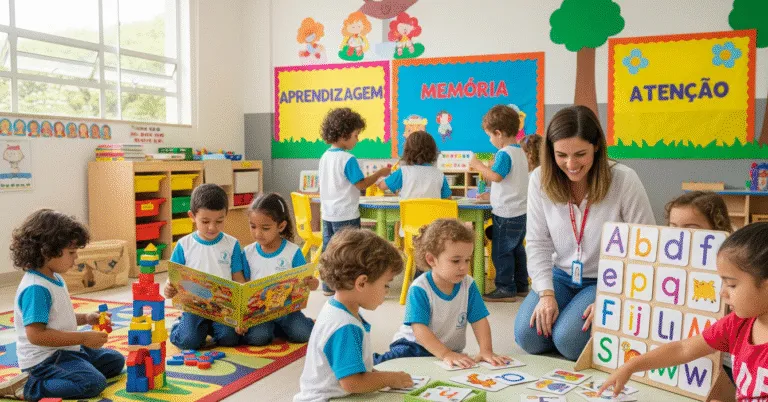 Effective Brain Stimulation in Early Childhood Education
 Literacy Difficulties and Early Intervention: How to Identify Them
 How to Introduce Literacy in Early Childhood Education
