
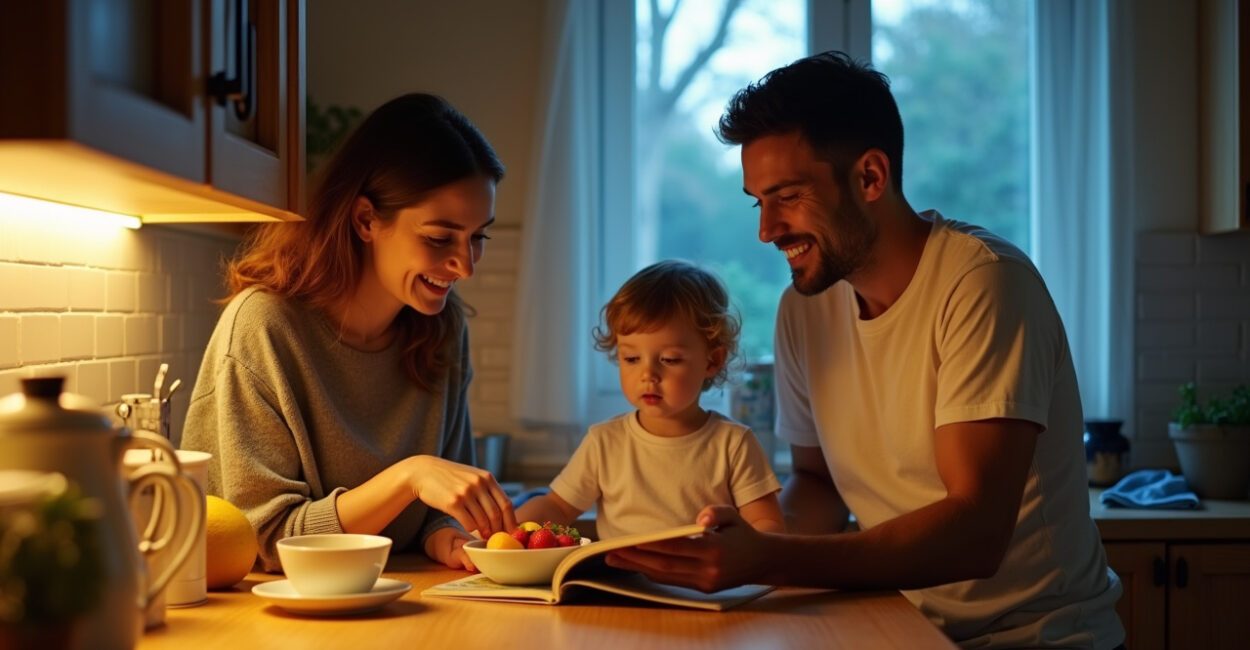
Parents and speech: this topic seems simple until you pay attention to what everyday life is really like. It’s not about “teaching a child to talk” through drills. It’s about how conversations between adults and children become the main drivers of vocabulary, storytelling, syntax, and confidence in self-expression. When the back-and-forth is rich, language grows. When interactions consist mostly of commands, corrections, and yes-or-no questions, progress tends to be slower.
In practice, what works best isn’t speaking louder or correcting every mistake. It’s creating frequent opportunities for conversation, naming what’s happening, building on what the child says, and making room for genuine back-and-forth. Here’s what that looks like in everyday life, which common mistakes get in the way, and how to use strategies that make a difference without turning your home into a classroom.

What You Need to Know
- Rich, back-and-forth interactions between adults and children build vocabulary more effectively than stand-alone direct instruction.
- Conversations, shared reading, and comments about everyday activities create more opportunities to use language than short, occasional formal sessions.
- Keeping the conversation going matters more than “getting it right”: expanding on what a child says often works better than interrupting to point out a mistake.
- Open-ended questions, narrating routines, and longer conversational turns support more complex sentences and stronger communication skills.
- A home language environment has a greater impact when it is frequent, varied, and responsive—not merely “educational.”
Parents and Speech: How Everyday Interactions Shape Language
Technically speaking, spoken language development is the process by which children turn exposure to language into comprehension, vocabulary, grammar, and social communication skills. Put simply, children learn to talk by listening, trying, making mistakes, getting a response, and rejoining the conversation. This cycle starts long before literacy and continues to influence their school experience.
The key is adult responsiveness. When a child points to a toy and hears, “That’s a red truck,” their brain takes in the word, its meaning, and its context all at once. When the adult responds only with “That’s a truck,” the interaction is still there, but it offers less. It may seem like a small difference, but it isn’t.
What accelerates language development isn’t the number of individual words a child hears, but the quality of interactions that turn speech into shared meaning.
Helpful reviews on language exposure and child development are available from organizations such as the U.S. National Institute of Child Health and Human Development (NICHD), which connects environment and interaction with speech milestones, as well as from the American Speech-Language-Hearing Association (ASHA), which offers resources on typical communication development.
Why Children Learn More from Conversation than Correction
Correcting every sentence interrupts the flow and makes children less willing to keep trying. Expanding on what they say keeps the conversation going: if a child says, “Ball fell,” an adult can respond, “The ball fell on the floor” or “The red ball fell off the table.” This offers a model without making the child feel tested.
Anyone who works in child development knows that many children talk more when they feel listened to than when they feel judged. That difference matters at home, especially for shy children, bilingual children, and those going through a vocabulary burst.
Practical Ways to Encourage Conversation Without Pressure
Narrate What’s Happening Around You
Describing actions as they happen helps children connect words with events. Instead of staying quiet while you go about your routine, say what’s happening: “Now the water is filling your bottle,” “I’m cutting the banana,” or “You put the block on top of the box.”
Ask Open-Ended Questions
Yes-or-no questions call for short answers. Open-ended questions invite thought and language. Compare “Did you like it?” with “What did you like best about the drawing?” The second question usually gets children talking more, even if their answer is awkward or incomplete.
Expand on What They Say Instead of Interrupting
If a child says, “Dog ran,” an adult can respond, “Yes, the big dog ran fast.” This kind of expansion works because it provides a more mature model without shutting down the child’s attempt. It’s a way to teach without discouraging them.
- Talk about daily routines: bath time, meals, getting ready, errands, and the park.
- Wait a few seconds before responding; a brief pause gives the child room to continue.
- Repeat and build on what your child says instead of demanding perfect repetition.
- Replace strings of questions with observations that invite a response.
Here’s a real-life example: a mother told me her 3-year-old didn’t say much in the late afternoon, just when she was tired and rushing through everything. She changed their routine: instead of asking, “Did you have a good day?” she started commenting on what they saw on the drive home and waiting for a response. Within a few weeks, her child started narrating the walk from the car to their apartment door. It wasn’t magic. It was room to talk.

What Gets in the Way More Than It Helps

Three mistakes come up often. The first is correcting children too much and too directly. The second is asking a string of yes-or-no questions, which turns conversation into an interrogation. The third is cutting a child’s turn short before they’ve had a chance to develop their idea.
This approach works well when the goal is to teach a specific word, but it falls short when the aim is to encourage spontaneous language. Children learn to speak through real use, not pressure to perform. When adults take up all the conversational space, children become an audience.
At home, the biggest barrier to speech usually isn’t a lack of stimulation; often, it’s too much adult direction and too little room for genuine back-and-forth.
If you’re wondering, “So does that mean I can never correct my child?” the answer is: you can, but choose your moments. Instead of interrupting every time, focus on situations where it matters most, such as pronunciation that makes a child hard to understand or sentence structures that call for a clear model. There’s no one-size-fits-all approach—it depends on the child’s age, stage of language development, and sensitivity.
Shared Reading, Routines, and Play: The Most Effective Trio
Shared Reading Is More Than Reading Aloud
The benefits come when adults talk about pictures, guess what might happen next, ask questions, and connect the book to the child’s experiences. Reading without interaction does less than reading together through conversation.
Everyday Routines Are Ready-Made Language Opportunities
Bath time, lunch, packing a backpack, and trips to the grocery store are perfect opportunities to use language. These activities repeat, making them predictable, and introduce concrete vocabulary related to objects, actions, quantities, and sequences.
Free Play Encourages More Conversation Than Too Much Direction
During play, children take on roles, negotiate rules, and make up stories. That’s where metaphor, cause and effect, sequencing, and pragmatics—the social use of language—come in. When adults observe and join in without taking over, the conversation grows.
Resources on reading in early childhood are also available from the American Academy of Pediatrics, which emphasizes reading as a way to build connection and language, not just literacy.
When Quietness, Shyness, or Bilingualism Change the Picture
Not all children respond the same way. Some talk less because of their temperament. Others are in a phase of intense observation. Some children are bilingual and may switch languages depending on the context, who they’re talking to, and the words they know. That alone doesn’t mean they have a delay.
The mistake is comparing a child to a single, rigid standard. If you’re concerned about a significant delay, loss of skills, or a persistent lack of interest in communicating, the answer isn’t to put more pressure on your child at home. The safest next step is an evaluation by a speech-language pathologist and pediatrician, because language, hearing, and overall development are interconnected.
- Shy children need more time to respond and less pressure to speak in front of others.
- Bilingual children need consistency and context, not a ban on one language.
- Clinical concerns call for a professional evaluation, not an attempt to “make up for it” with more correction.
How to Tell Whether Your Interactions Are Really Helping
The best measure isn’t whether your child repeats memorized sentences. Look for signs that they’re starting more interactions, using more words to communicate, keeping conversations going, and trying to tell you about their experiences. These signs matter more than “speaking beautifully” once in a while.
For a practical measure, track four things for two weeks: how often your child starts an interaction, the variety of words they use, how long they keep a conversation going, and whether they make spontaneous comments. If they stick to short answers, try changing the way you interact before looking for a sophisticated method.
Sign
What It Shows
How to Interpret It
Starts conversations
Intent to communicate
They feel confident enough to try
Builds vocabulary
Exposure + use
Input is becoming part of their vocabulary
Keeps conversations going
Pragmatic skills
They understand the back-and-forth of conversation
Narrates actions
Organized thinking
They’re starting to tell you about their experiences
A Parent’s Role Isn’t to Teach Everything—it’s to Make Conversation Meaningful
The best way to make home a language-rich environment is less like teaching a class and more like being present and engaged. Children don’t need perfect adults; they need adults who notice, name, wait, and respond with a little more to say. Small adjustments like these can improve the quality of communication over time.
If you want to get started now, choose one daily routine and turn it into a conversation for seven days. Make comments instead of asking a string of questions, build on what your child says, and notice whether they start joining in more. The goal isn’t to speak for them. It’s to make room for them to really speak.
Frequently Asked Questions
What’s the Best Way to Encourage Speech at Home?
The most effective way is to talk during everyday activities: bath time, meals, outings, play, and shared reading. Descriptive comments, open-ended questions, and expanding on children’s responses usually work better than isolated drills.
Does Correcting a Child Get in the Way of Speech Development?
Constant correction can get in the way because it makes children less willing to try speaking. It’s best to correct sparingly, focusing on moments when the right model matters and without interrupting the flow of conversation.
Does Reading Help Even When a Child Doesn’t Speak Well Yet?
Yes, especially when reading is interactive. Pointing out pictures, commenting on scenes, and connecting the story to everyday life builds more language than simply reading the text aloud.
Does Bilingualism Delay Speech?
Not necessarily. Bilingual children may switch between languages and use different words depending on the context, which is common. If you’re concerned about a significant delay, a professional evaluation is best.
When Should You See a Speech-Language Pathologist?
Consider an evaluation if your child shows little interest in communicating, loses speech skills, has persistent difficulty understanding or producing sounds, or seems to be developing well below expectations for their age. The earlier an evaluation happens, the sooner you can get guidance on next steps.
Artigos Relacionados
 Child Language Development From Birth to Age 6: Stages and How to Encourage Speech
 Practical Early Literacy Strategies for Preschool Success
 Play-Based Learning: Practical Strategies for Teachers
 Improving Basic Education: Practical, Measurable Strategies
 Effective Teaching: Practical Strategies for Better Results
 Speech-Language Therapy: When and How to Begin Intervention
