
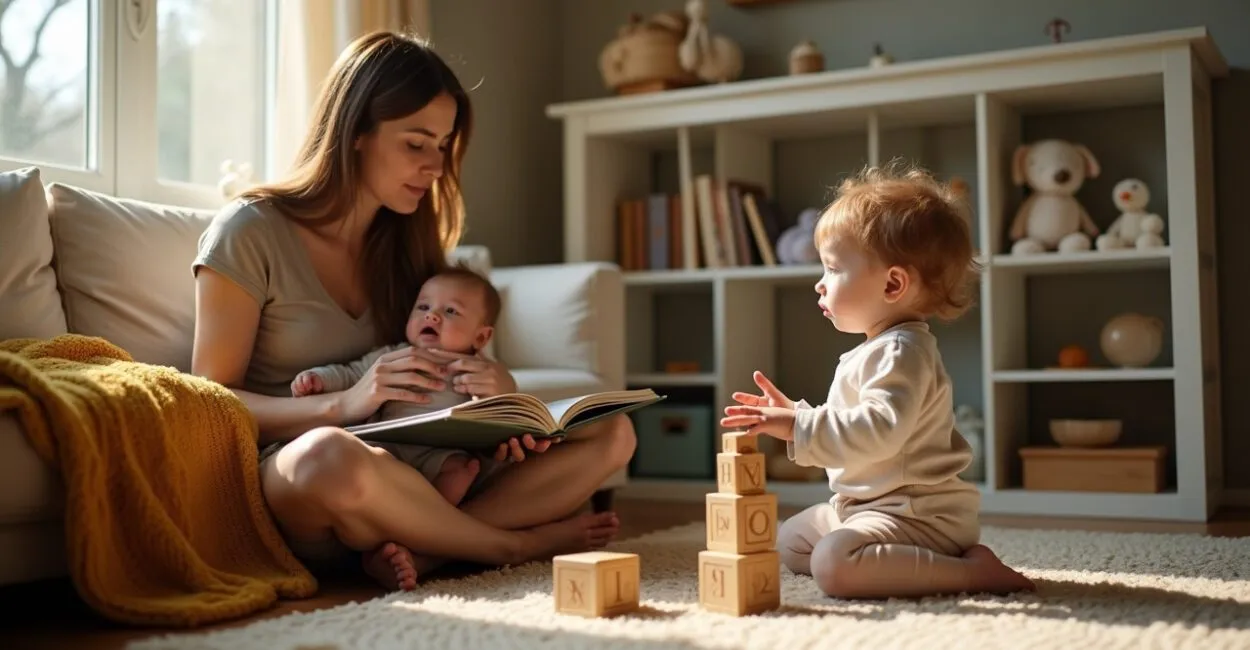
Child language development encompasses the skills that allow children to understand and produce sounds, words, sentences, and communicative interactions from birth until they start school. It includes auditory perception, vocalization, receptive and expressive vocabulary, morphosyntactic organization, and social pragmatics. This dynamic process depends on neurological maturation, social exposure, and caregiving practices. Clear definitions make it easier to identify delays early and guide evidence-based interventions.
Key Takeaways
- The typical sequence of child language development from birth to age 6 includes auditory, vocal, lexical, combinatorial, and discourse milestones that emerge in a predictable order; quantitative or qualitative differences warrant evaluation.
- Signs of delay include little babbling at 9–12 months, no intelligible words by 18 months, vocabulary below the 10th percentile at age 2, and limited word combinations at age 3.
- Effective language stimulation combines talking directly to the child, shared reading, communication-rich routines, and imitation games. Simple activities from birth can have a measurable impact on vocabulary and comprehension.
- Evaluation should combine clinical observation, standardized measures, and environmental history. Useful resources include pediatric and speech-language pathology guidelines for screening and referral.
Why Child Language Is a Key Marker of Development
Child language reflects multiple brain functions, including auditory perception, working memory, orofacial motor control, and social processing. These functions interact: for example, auditory discrimination influences how children segment words, which in turn accelerates vocabulary learning. That is why speech differences can point to broader risks, including hearing loss, neurodevelopmental disorders, and limited environmental input.

Evaluating language also means evaluating cognitive and social networks. Early interventions can alter developmental trajectories and reduce later difficulties with reading and learning at school.
Perception and Production: The Functional Difference
Perception (understanding) usually comes before production. Babies from birth to 6 months can distinguish speech sounds; between 6 and 12 months, they begin mapping the sounds of the language spoken around them. Production involves motor control: babbling, syllables, and then words. A delay in perception may not be obvious without a hearing screening. Clinical assessments should distinguish receptive comprehension (following simple directions) from expressive language (saying words), because interventions differ: auditory therapy and audiometry for hearing loss; language stimulation and motor training for apraxia.
Child Language Milestones From Birth to Age 6
Knowing age-based milestones makes objective screening possible. From birth to 3 months: attention to voices and the beginnings of vocalization; 4–6 months: babbling with intonation; 9–12 months: first intelligible words and communicative gestures; 12–18 months: a vocabulary of 5–20 words; 18–24 months: first two-word combinations; 2–3 years: a vocabulary of 200–1,000 words and simple sentences; 3–4 years: more complex sentences and short narratives; 4–6 years: more refined grammar and the beginnings of emergent literacy.
Milestone Comparison Table
| Age | Typical comprehension | Typical production |
|---|---|---|
| 0–6 months | Responds to voices, distinguishes intonation | Vocalizations, babbling |
| 6–12 months | Recognizes name and familiar words | First words, gestures |
| 12–24 months | Follows simple directions | 50–300 words, early combinations |
| 2–4 years | Understands complex sentences | Sentences, emerging grammatical use |
| 4–6 years | Narrative comprehension and inference | Coherent narratives, refined phonology |
How to Identify Signs of Delay and When to Refer

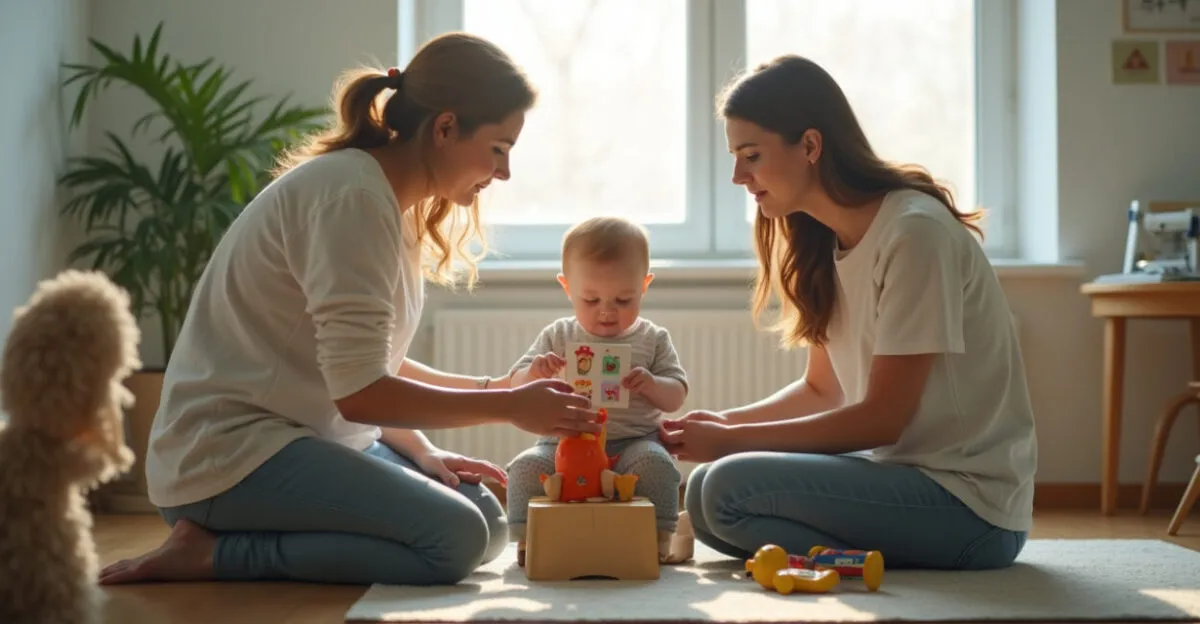
Not every delay is a disorder, but early screening is essential. Refer the child to a speech-language pathologist or an ear, nose, and throat specialist if there is no babbling at 9–12 months; no clear words by 18 months; vocabulary below the 10th percentile at age 2; limited word combinations at age 3; identified hearing loss; or regression of skills. A multidisciplinary evaluation may include audiometry, a standardized vocabulary test (e.g., the MacArthur-Bates), and functional observation. Prompt referral reduces academic and social impacts.
Distinguishing Signs: Delay vs. Disorder
The practical difference is that a delay tends to follow the usual sequence of milestones, just later, while a disorder involves atypical qualitative patterns, such as persistent echolalia, absent grammar, or limited social use of language. For example, a child with a language delay may have trouble distinguishing phonemes but still show communicative intent; autism spectrum disorders, by contrast, involve marked pragmatic deficits. Clinical evaluation should describe the pattern, not just the child’s age.
Read also: Parents and Speech: Practical Strategies to Encourage Conversation
Practical Activities to Encourage Speech From Birth
Regular stimulation built into daily routines produces measurable vocabulary gains. From birth, talk directly to your child (name objects and actions), sing songs and rhymes, share picture books with simple images, ask open-ended questions, model words and expand sentences, and play imitation games. Quality matters more than quantity: responsive interaction—responding to a baby’s vocalizations within 1–2 seconds—supports learning. Daily routines like bath time and meals are opportunities to use language in context.
Activities by Age Group
- 0–6 months: sing, take turns vocalizing, use expressive facial expressions.
- 6–12 months: comment on actions, point and name things, use rhymes.
- 12–24 months: read daily, offer choices, expand two-word phrases into sentences.
- 2–4 years: role-play, ask questions that call for a complete answer, tell stories in sequence.
- 4–6 years: make up stories, play question games, introduce letters and sounds.
After each activity, supervise and increase the complexity based on the child’s response. Consistency is key.
Read also: Effective Brain Stimulation in Early Childhood Education
Strategies for Parents and Professionals: Evidence-Based Practices
Effective interventions combine caregiver guidance with direct therapy. Methods such as teaching through daily routines, parent responsiveness training, and dialogic reading have strong evidence for improving vocabulary and comprehension. For children at risk, intensive speech-language therapy sessions (2–3 times per week) are recommended. Use objective measures to track progress, such as word lists and speech samples. Training parents to use positive reinforcement and modeling at home is just as important as clinical sessions.
Resources and References
Pediatric guidelines and longitudinal studies can be helpful. For example, the American Speech-Language-Hearing Association (ASHA) offers screening resources and clinical guides, and studies such as Hart & Risley (1995) have demonstrated the impact of language input on vocabulary. In Brazil, consult documents from pediatric and speech-language pathology associations for local protocols. For hearing screening, Brazil’s Ministry of Health (Ministério da Saúde) and public health services provide referral pathways and reliable tests; consulting national protocols can strengthen clinical practice.
Useful links: ASHA, Ministério da Saúde (Brazilian Ministry of Health).
Evaluation, Documentation, and Progress Indicators
Standardized documentation supports data-driven decisions. Use validated tools (for example, the MacArthur-Bates CDI and local expressive/receptive vocabulary tests) and record natural speech samples for qualitative analysis. Useful indicators include words acquired per month, vocabulary percentile rank, variety of grammatical categories, and mean sentence complexity. Reviews every 3 months for children under 3 and every 6 months thereafter allow goals and therapy intensity to be adjusted.
Goal Setting and Discharge Criteria
Goals should be specific, measurable, and relevant to the child’s context. Examples: “increase expressive vocabulary by 50 words in 3 months” or “use three-word sentences in 80% of natural opportunities.” Discharge criteria include meeting age-appropriate milestones and functional generalization across multiple settings (home and child care). Discharge planning should also include maintenance strategies and follow-up at school to prevent setbacks.
Next Steps for Implementation
Prioritize universal screening and caregiver guidance during the first year of life. If you notice risk signs, refer the child promptly for audiology and speech-language evaluations, documenting objective measures. Implement shared reading programs in child care centers and train staff in responsive practices. For administrators, invest in ongoing training and quarterly monitoring protocols. In short, coordination among families, health care, and education can change developmental trajectories; early action is the most cost-effective intervention for supporting language and learning.
What Are the Early Signs of Hearing Loss That Affect Child Language?
Hearing loss in babies and young children may show up as a lack of response to familiar sounds, delayed babbling, no first words by 12–18 months, or difficulty following simple spoken directions. Children may seem inattentive or repeatedly struggle to understand speech in noisy settings. Newborn hearing screening and follow-up hearing assessments are essential. If a child has a history of recurrent ear infections, delayed speech, or developmental differences, refer them promptly for hearing and speech-language evaluations to minimize the impact on language development.
How Can You Distinguish a Language Delay From Autism Spectrum Disorder?
The distinction requires observing qualitative features. A language delay follows the typical sequence of milestones, just more slowly; communicative intent and social interaction generally remain intact. Autism spectrum disorder involves pragmatic challenges, such as limited social reciprocity, difficulty with eye contact, restricted interests, and repetitive patterns, as well as atypical language, such as persistent echolalia. A multidisciplinary evaluation involving speech-language pathology, pediatrics, and psychology is necessary. Standardized tools and observation in natural settings help distinguish the two and guide appropriate interventions.
How Effective Is Shared Reading for Building Vocabulary?
There is consistent evidence that shared reading builds receptive and expressive vocabulary when it is interactive, conversational, and suited to the child’s level. Effective strategies include asking about pictures, expanding on the child’s responses, introducing new words in context, and rereading books over time. Longitudinal studies show that rich exposure to books is associated with verbal skills and school reading performance. The quality of interaction matters more than simply having access to books: parents trained in dialogic reading can help children make significant gains.
What Simple Daily Activities Can Parents Use to Encourage Speech?
Practical activities include narrating actions during everyday routines (diaper changes and bath time), singing rhymes with gestures, naming objects and emotions, offering verbal choices to encourage responses, and expanding a child’s sentences by adding words. Imitation games, question games, and looking at pictures together while asking open-ended questions can also help. Responding quickly to a child’s attempts at communication reinforces verbal behavior. These short, frequent activities provide repeated exposure to vocabulary and sentence structure, accelerating language acquisition.
When and How Should Intensive Child Language Interventions Be Used?
Intensive interventions are recommended when a persistent delay affects social or school functioning, hearing loss is confirmed, the child has speech apraxia, or there is neuropsychiatric risk. Recommended intensity is typically 2–3 speech-language therapy sessions per week, combined with daily parent practice. Goals should be objective and tracked with standardized tools. Early intervention—before age 3—has the greatest impact. Coordinate with educational services and reassess every 3 months to adjust the focus and intensity based on progress.
Artigos Relacionados
 Cognitive Development From Birth to Age 6: Encourage Learning
 Socioemotional Development From Birth to Age 6: A Practical Guide
 Child Development Stages: A Guide to Ages 0–5
 Motor Milestones From Birth to Age 6: Signs and When to Seek Help
 Social-Emotional Learning in Schools: Transforming Learning and Whole-Child Development
