

It refers to a set of ongoing practices that guide instruction and improve learning through classroom evidence. It involves collecting data throughout the learning process to adjust instruction and promote meaningful student progress.
Formative assessment is increasingly important as schools respond to calls for personalization and educational equity. It also presents challenges related to time and resources, and requires valid tools and immediate instructional action. I’m Maria, and I’ve been a teacher for 23 years. I’ve seen its direct impact on student performance and motivation.

Key Takeaways
- Combine observation, feedback, and low-stakes tasks to guide instructional interventions.
- Use analytical tools and rubrics to ensure evidence is valid and reliable.
- Provide teacher training focused on interpreting data and applying real-time strategies to address learning needs.
Foundations of Formative Assessment and How It Works
Understanding the foundations of formative assessment helps distinguish its purposes and methods from those of summative assessment. It also clarifies how formative assessment relates to self-regulated learning and instructional goals. Here, I explain how to put these concepts into practice and which evidence to prioritize.
Technical Definition and Purposes
Formative assessment describes the ongoing collection and interpretation of learning evidence to make immediate and progressive instructional adjustments. It is grounded in learning theory and principles of pedagogical validity. It starts with clear objectives and observable criteria, connecting tasks, feedback, and progress records to guide instructional decisions and promote cognitive and metacognitive transfer across topics.
It improves outcomes by reducing gaps in understanding, accelerating individual progress, and supporting targeted interventions. It is essential for differentiated instruction and monitoring student competencies.
Measuring Processes and Evidence
The primary focus is on process-based evidence generated during activities, such as oral responses, draft solutions, and self-reflections. This evidence enables precise diagnosis and immediate interventions that reinforce conceptual understanding. Tools range from anecdotal records to structured protocols, all designed to support reliability and observability so that instructional decisions are based on representative, replicable data.
When used correctly, these measures guide instructional changes and improve learning by enabling specific feedback and teaching cycles tailored to students’ actual needs.
Relationship to Curriculum and Objectives
Formative assessment connects curricular goals with performance criteria, using objectives as a reference point for identifying gaps and aligning assessment activities with the cognitive and social-emotional skills required by the instructional sequence. By linking objectives and evidence, teachers can prioritize essential content and gradually increase complexity, ensuring coherent curricular progression and a focus on transfer to relevant contexts.
This alignment strengthens instructional coherence and makes interventions more precise, improving teaching effectiveness and increasing the likelihood that students will meet established goals.
Data Collection Practices and Tools
Effective data collection requires careful selection of tools and clarity about what to observe. I’ll cover practical methods, from quick checks to analytical rubrics and educational technology, and explain validity and costs.
Structured Observations and Checklists
Structured observations provide systematic records of behavior and performance. Checklists aligned with operational criteria make it easier to compare findings and communicate with colleagues and families. These tools are generally low-cost and highly practical, but teachers need training to use them consistently and minimize observational bias that could distort data interpretation.
Accurate observations make it easier to intervene immediately, reduce diagnostic errors, and support a cycle of adjustments that promotes incremental learning.
Rubrics and Descriptive Scales
Rubrics clarify expectations and performance criteria, turning qualitative judgments into comparable scores. This makes it easier to provide specific feedback and plan interventions focused on the dimensions being assessed. Creating rubrics requires defining proficiency levels and providing exemplars so evaluators share an understanding of the observable evidence represented by each level.
Consistent use of rubrics improves reliability, supports longitudinal recordkeeping, and provides a foundation for individualized remediation and enrichment plans that promote student development.
Quick Questions and Written Checks
Quick questions and written checks act as real-time gauges of understanding, revealing patterns in students’ errors and thinking. They help teachers adapt the instructional sequence accurately and efficiently. These tools require careful design to avoid ambiguity and should be analyzed both quantitatively and qualitatively to uncover clues about underlying cognitive processes.
Integrating these checks into instructional cycles speeds up corrections and makes feedback more effective, narrowing the gap between current performance and established goals.

Digital Tools and Data Integration

Digital tools expand the reach and speed of formative assessment, making it possible to track progress in real time and bring together different types of evidence. I’ll explain technology options, integrations with learning management systems (LMSs), and best practices for data protection.
Learning Platforms and Dashboards
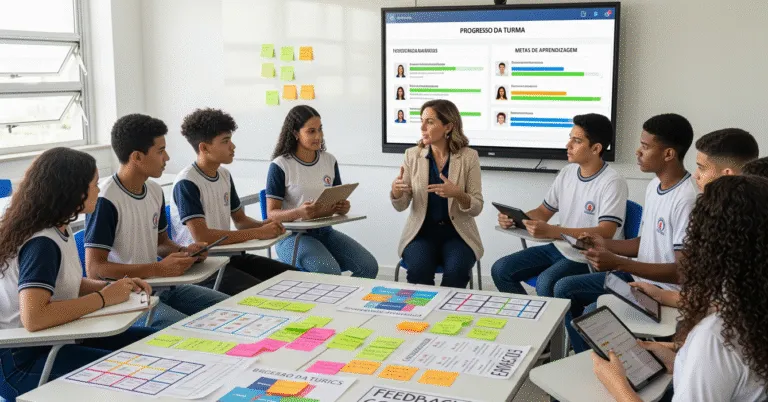
Learning platforms provide dashboards that combine engagement and performance metrics, helping teachers identify trends and prioritize instructional interventions using concise, easy-to-read evidence. Integration with management systems lets schools cross-reference attendance, assignments, and assessment data, improving diagnostic capabilities and supporting evidence-based communication with administrators and families.
These resources improve decision-making and allow schools to scale monitoring practices without compromising the quality of their interpretation of instructional signals.
Tools for Immediate Feedback
Tools that provide automated feedback reduce the time between an error and its correction, supporting learning through deliberate practice and giving teachers more time to qualitatively analyze cases that require human intervention. Implementation requires careful item selection and validation, since poor feedback can reinforce misconceptions or provide generic information that does not meaningfully deepen understanding.
When properly calibrated, these tools improve instructional efficiency and allow teachers to focus on strategies that call for professional judgment and human connection.
Data Protection and Ethics
Using technology requires care with privacy and consent. Anonymization measures and limits on data retention help protect students’ rights and ensure compliance with legal and institutional requirements. Clear documentation of the purpose and use of data is essential for transparency and for building trust among students, families, and school staff, while minimizing the risk of misuse.
Ethical practices strengthen the legitimacy of formative assessment and ensure that instructional decisions are based on evidence handled with professional responsibility.
Measurement, Validity, and Interpreting Results
Correctly interpreting formative assessment results requires attention to validity, reliability, and measurement error. I’ll describe simple statistical procedures and practical rules of thumb for turning raw data into sound instructional decisions.
Content and Construct Validity
Ensuring validity means aligning items and tasks with learning objectives and the skills being assessed, so results don’t reflect unintended, peripheral knowledge. Evaluating construct validity requires examining the cognitive processes involved in completing tasks and using qualitative evidence to support inferences about what students actually know or can do.
Both types of validity strengthen the usefulness of formative assessment and reduce the risk of misguided decisions that could harm students’ learning trajectories.
Reliability and Measurement Error
Reliability refers to the consistency of records and can be improved through training, detailed rubrics, and calibration among evaluators. These steps reduce random variation and increase confidence in decisions. Occasional errors call for verification and triangulation procedures, using multiple sources of evidence to confirm interpretations when results conflict across different contexts.
Greater reliability directly improves the efficiency of interventions and makes it possible to monitor progress with appropriate timing and precision.
Causal Analysis and Instructional Impact
Identifying the causes of learning difficulties involves analyzing the context, including the instructional sequence, resources, and social-emotional factors that influence performance. Teachers can then define interventions with a clear cost-benefit profile. Methods such as action research cycles and small controlled experiments help test hypotheses about what works, generating local evidence to guide scalable decisions.
This cause-oriented approach supports more targeted interventions and reduces wasted time and effort on ineffective strategies.
Teacher Training and a Culture of Feedback
Building teachers’ skills in formative assessment requires training programs that address data interpretation, task design, and feedback communication. I’ll describe professional learning and engagement models I’ve seen work.
Practical Training and Coaching
Practice-based training and classroom coaching build skills by allowing teachers to apply them immediately and reflect together, supporting changes in routine that sustain meaningful, ongoing assessment. Models that combine peer observation with professional feedback cycles promote shared understanding and reduce resistance, improving alignment between instructional planning and classroom practice.
Investing in professional development yields measurable returns in the quality of evidence collected and teachers’ ability to respond instructionally to identified needs.
A Culture of Feedback and Collaboration
A culture of feedback values transparency and collective learning, encouraging educators to share practices and analyze evidence together to develop context-specific, sustainable solutions. This culture depends on leaders who encourage experimentation and treat mistakes as valuable information, building trust and a willingness to innovate in everyday practice.
Results include greater instructional coherence, faster adoption of effective practices, and stronger teacher engagement in continuous improvement cycles.
Resistance and Changes in Routine
Resistance can stem from heavy workloads and beliefs about assessment. It can be addressed by simplifying tools, demonstrating their impact, and providing ongoing technical support that enables gradual adoption. Sharing small wins and data showing real improvements can help overcome skepticism and establish new routines that make formative assessment practical to sustain.
Effective change management speeds implementation and makes it possible to scale practices that genuinely improve learning outcomes.
Practical Implementation and Classroom Examples
Implementing formative assessment in the classroom calls for repeatable, adaptable practices, from short activities to projects. I’ll share concrete examples and recommended sequences that work across grade levels and settings.
Low-Stakes Activities and Immediate Feedback
Low-stakes activities, such as quick quizzes and response drafts, encourage students to try, make mistakes, and learn in a safe environment. Corrective feedback helps rebuild understanding before misconceptions take hold. Scheduling these activities regularly makes it easier to monitor progress and adjust complexity based on observed patterns, while maintaining student engagement and confidence.
Classroom experience shows that the frequency and quality of feedback are key to accelerating mastery of essential learning.
Projects with Formative Checkpoints
Projects broken into stages with formative checkpoints give students opportunities to adjust their approach, revise their work, and integrate multiple skills in a single assignment without being penalized for trying and correcting mistakes. Checkpoints should have clear criteria and support self-regulation, helping students learn to evaluate both their process and their work while building independence alongside academic progress.
Results often include higher-quality final projects and stronger metacognitive skills that support lifelong learning.
Common Mistakes
- Using tools that are not aligned with learning objectives.
- Giving generic feedback that doesn’t identify clear next steps.
- Confusing the frequency of evidence collection with its quality.
Recognizing common mistakes makes it possible to make practical adjustments and quickly improve assessment practices, reducing wasted time and increasing their impact on learning.
Comparison Tools and Administrative Decisions
Administrative decisions about adopting tools and allocating resources depend on comparing methods. I’ll provide comparison matrices to help schools make choices based on the cost, validity, and scalability of each option.
Matrix of Traditional Assessment Tools
This matrix compares observations, rubrics, and traditional tests by evaluating validity, implementation costs, and ease of interpretation. It supports decisions about adopting formative practices based on clear technical criteria. These criteria include sensitivity to change, ease of training, and compatibility with existing curricula, helping schools prioritize options with the greatest instructional return on investment.
Informed choices lead to more efficient implementation and better alignment between institutional goals and classroom practices.
Tool Comparison Table
| Tool | Validity | Implementation Cost |
|---|---|---|
| Structured Observation | High for processes | Low |
| Rubrics | High for performance | Medium |
| Digital Platforms | Medium to high | High |
Objective comparisons support strategic choices and reduce uncertainty, leading to instructional practices that better align with learning goals and institutions’ operational capacity.
Indicators for Schoolwide Monitoring
Indicators such as average growth rates, fewer conceptual errors, and active engagement can be used to monitor progress and guide the allocation of support and ongoing professional development for teams. Setting alert thresholds and improvement goals makes it easier to prioritize action and implement preventive interventions that keep schoolwide learning on track.
Consistent use of indicators turns fragmented data into actionable information for administrators and instructional teams.
Formative Assessment Across Grade Levels and Adaptations
Adapting formative assessment for early childhood, elementary, middle, and high school requires different methodological choices. Here, I discuss the necessary adjustments, examples of activities, and ways to vary complexity without losing sight of formative assessment principles.
Early Childhood and the Primary Grades
In early childhood, the focus is on observation and play-based activities that reveal emerging skills, especially in language and social development. Narrative records and portfolios can document progress. Short interventions rich in modeling and scaffolding support the development of foundational skills for literacy and early logical reasoning.
Developmentally responsive adaptations ensure formative practices support children’s learning while respecting their individual pace and needs.
Middle and High School
At higher grade levels, teachers can make greater use of rubrics and performance-based assessments, incorporating metacognitive feedback to build independence and complex subject-specific skills while promoting transfer across contexts. Progressive activities and explicit instruction help students internalize quality criteria and self-regulate during longer, more complex projects.
This progression builds essential skills for advanced study and informed participation in society.
Adaptations for Inclusive Education
Inclusive formative assessment adjusts criteria, offers additional time and alternative ways to demonstrate learning, and draws on multiple types of evidence to support accessibility and fairness in interpreting performance. Individualized education plans and reasonable accommodations should be documented and aligned with learning objectives, maintaining expectations while making necessary instructional adjustments.
Inclusive practices promote equity and help ensure assessment data reflect students’ true potential, supporting fairer interventions.
Get Started Today: Put What You’ve Learned into Practice
Changing practice takes concrete, measurable steps involving tool selection, training, and impact monitoring. Prioritize actions with the greatest instructional value that are also feasible to implement. Getting started can mean making small, repeatable changes that generate quick evidence and inform later decisions, supporting ongoing learning and a data-informed professional culture.
Frequently Asked Questions
What’s the Difference Between Formative and Summative Assessment?
Formative assessment focuses on adjusting instruction during the learning process and providing feedback to improve learning. Summative assessment summarizes performance at the end of a cycle and is used for certification and accountability. Formative assessment prioritizes diagnosis and growth; summative assessment prioritizes final measurement. Using both provides a more complete picture of student progress.
How Can You Ensure the Validity of Collected Evidence?
Aligning tasks with objectives and using multiple sources of evidence help ensure content and construct validity. Training evaluators and using detailed rubrics reduce bias and increase confidence in the inferences drawn from collected data.
Which Technologies Are Most Useful for Immediate Feedback?
Interactive quiz platforms and real-time response systems provide immediate feedback and aggregated data that support quick decisions. Choose tools based on privacy, cost, and compatibility with established instructional practices.
How Can You Measure the Impact of Formative Interventions?
Use progress indicators and small pre- and post-intervention comparisons to assess impact, supplementing them with qualitative analysis. Action research cycles and small-scale controlled tests provide solid evidence about the effectiveness of the strategies used.
What Are the Most Common Mistakes When Implementing Formative Assessment?
Common mistakes include vague feedback, using tools that don’t align with objectives, and focusing too much on how often evidence is collected rather than its quality. Avoiding these mistakes requires clear policies, training, and mechanisms for supervision and technical support.
I recommend prioritizing high-impact actions with low initial implementation costs, monitoring results, and adjusting practices based on local evidence and professional dialogue. This approach supports continuous improvement and steady gains in learning.
Implementing formative assessment with technical rigor and practical sensitivity transforms teaching routines and school outcomes. When combined with teacher training and a culture of constructive feedback, it can create a lasting educational advantage.
Artigos Relacionados
 Active Learning Methods for Practical Entrepreneurship Education
 Play-Based Learning: Practical Strategies for Teachers
 Creative Teaching Methods for Teachers
 Formative Assessment: Practices to Improve Teaching
 Formative Assessment: Integrating It Into Lesson Planning
 Active Learning Methods for Elementary School: A Practical Guide
