
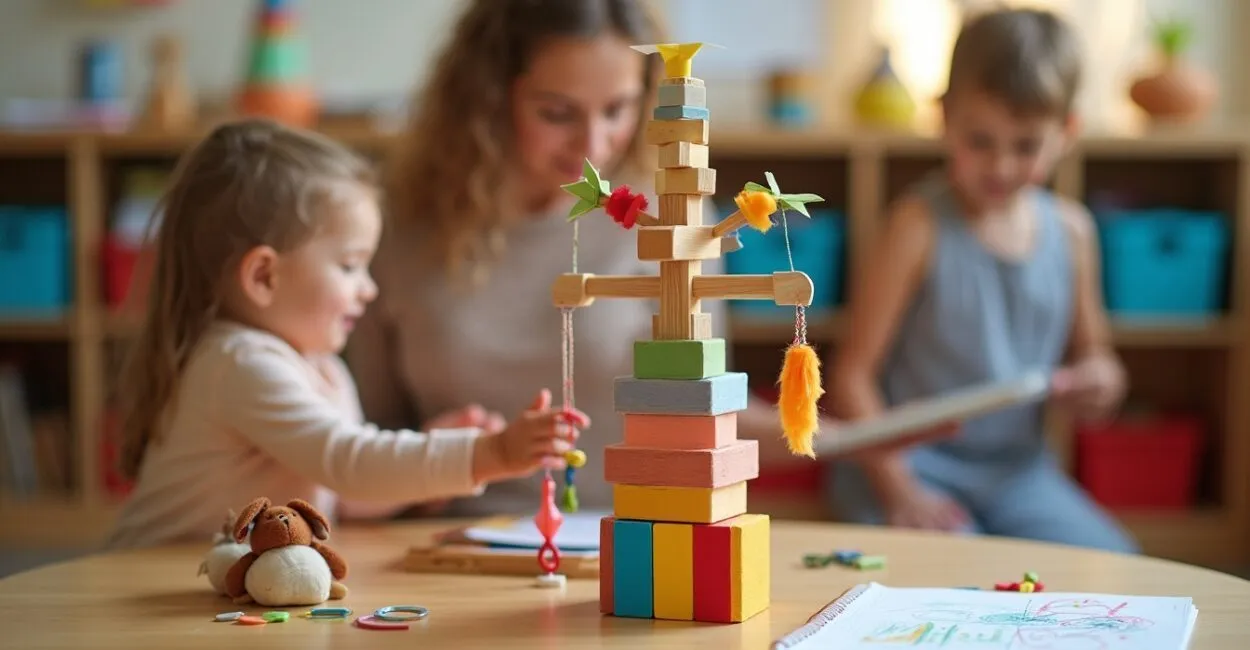
Play-based learning transforms early childhood classrooms by weaving exploration, imagination, and purposeful play into daily routines. This evidence-informed approach supports cognitive, social, and motor development while boosting engagement and intrinsic motivation.
Teachers face the challenge of balancing curriculum goals with child-led discovery. This article offers actionable strategies for planning, assessing, and expanding play-rich environments that align with standards. You’ll find definitions, step-by-step implementation guidance, assessment tips, classroom setup ideas, and practical tools for measuring impact.

Play-Based Learning: Definitions and Core Concepts
Foundational Ideas Behind Play-Based Learning
At its heart, play-based learning puts children’s interests, questions, and active exploration at the center of instruction. It draws on symbolic play, dramatic play, and hands-on construction activities, allowing children to experiment with language, number sense, and social rules as they play. This approach prioritizes the process over the final product, encouraging risk-taking and iterative problem-solving—both essential to early development.
Teachers scaffold learning rather than direct it, creating provocations—materials or prompts that invite discovery. Observation informs curriculum adjustments, helping teachers align play with developmental milestones and standards without diminishing children’s agency. The result is greater focus, deeper conceptual understanding, and meaningful practice.
Play-based classrooms prioritize materials with open-ended possibilities—blocks, loose parts, art supplies, and sensory bins—that invite multiple outcomes and sustained engagement. Teachers connect these resources to thematic units and learning goals through intentional interactions and reflective assessment.
Key Terms and Related Practices
Playful pedagogy includes guided play, free play, dramatic play, and project-based investigations, each involving a different level of teacher participation. Guided play combines adult-set goals with child-led exploration, while free play gives children the autonomy to set rules and pursue their interests. Understanding these distinctions helps teachers target specific skills—such as language, self-regulation, or fine motor development—through play.
Assessment in play-based classrooms often relies on anecdotal records, learning stories, and work samples rather than quizzes alone. Formative observation captures interactions and moments when children stretch their understanding, informing individualized planning and intentional provocations. Routines such as morning meetings, transitions, and reflection help connect guided and child-led activities. During play, teachers deepen learning by modeling language, asking open-ended questions, and introducing new challenges.
Benefits for Development and Learning Trajectories
Play-based learning supports executive function, vocabulary growth, and social competence through repeated, meaningful practice. Children who negotiate during dramatic play build perspective-taking skills, while those who manipulate loose parts strengthen spatial reasoning and early math skills. These experiences build cognitive strategies that transfer to later academic tasks.
Research links sustained opportunities for play with stronger self-regulation and classroom engagement. According to UNESCO, incorporating play into early childhood education supports holistic development and school readiness across a range of settings, especially when teacher support is consistent and equitable.
Because play is naturally motivating, children often stay focused on complex tasks for longer, providing richer formative assessment evidence and helping them become more resilient when facing academic challenges.
- Child-led exploration: children choose the activity and pace
- Guided play: the teacher sets goals, and children choose how to pursue them
- Open-ended materials: multiple uses and possible outcomes
- Scaffolding: targeted prompts and modeling from adults
- Formative observation: learning stories and anecdotal notes
Playful Pedagogy: Step-by-Step Implementation
Preparing the Environment for Effective Play
Start by assessing your classroom: create zones for building, quiet reading, dramatic play, sensory exploration, and messy art. Arrange furniture to ensure clear sightlines and easy access, and keep frequently used materials within reach to encourage independence. Rotate materials weekly to keep activities fresh and support specific learning goals.
Consider safety and accessibility: clear walkways and low shelves let children make choices independently. Labels that pair pictures with words support literacy in multilingual classrooms. Set aside a predictable daily block of 30–90 minutes for uninterrupted play to encourage deeper engagement.
Stock the classroom with open-ended materials such as cardboard, fabric, natural loose parts, and small manipulatives. Thoughtful material choices can support specific skills: measuring and sorting for math, story props for narrative development, and sensory bins for fine motor practice.
Planning Learning Goals Within Play Contexts
Start with priority learning objectives—language targets, numeracy benchmarks, or social goals—and design provocations that invite children to practice them. For example, a grocery store setup can support counting, vocabulary, and role-play while remaining child-led. Use backward design: identify the outcomes, create the materials, and plan observation prompts.
Combine multiple learning domains in a single provocation to make the most of classroom time—for example, pair story prompts with math activities or art projects with science exploration. This integrated approach helps meet curriculum standards while honoring the broader benefits of play.
Clear, documentable goals make assessment more straightforward: record specific target behaviors during play, then adjust provocations or scaffolds as needed. This keeps play purposeful and measurable for stakeholders, including families and administrators.
Engaging Families and Communities
Invite families to contribute materials, cultural artifacts, or story ideas to enrich play and affirm children’s backgrounds. Host brief workshops that demonstrate play strategies for home, and share observation notes highlighting children’s strengths and growth. This collaboration promotes continuity between home and school learning environments.
Connect with community resources—local libraries, museums, and early childhood centers—through field trips or partnerships that broaden children’s experiences and connect learning to the real world. Local partners can provide guest readers, donate materials, or offer professional learning opportunities across sites.
Use bilingual labels or reflection sheets for families to include caregivers in assessment and planning. When families see how play supports learning goals, they’re more likely to buy in, and children benefit from familiar play routines at home.
- Set clear learning targets aligned with standards.
- Design provocations that invite children to choose and explore.
- Arrange the space into accessible, clearly labeled learning zones.
- Observe and document interactions—capture moments of learning.
- Adjust scaffolds and rotate materials based on what you observe.
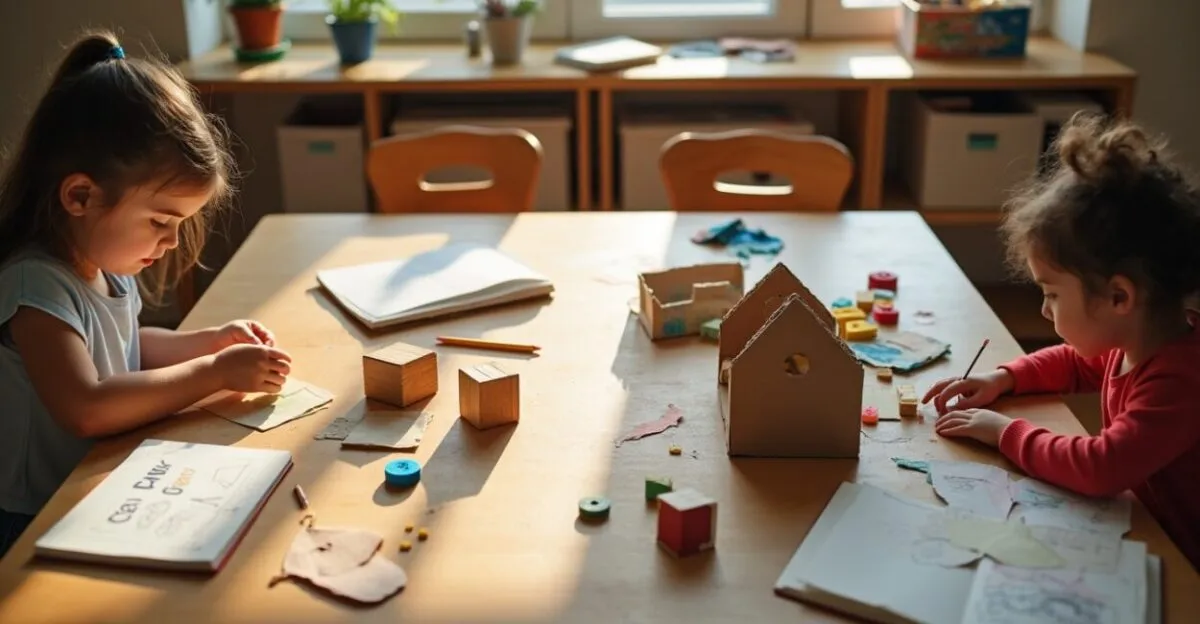
Comparing Approaches to Play-Based Learning

Guided Play Versus Free Play
Guided play combines adult-set goals with child-led methods, using subtle scaffolds to steer learning toward specific objectives. It works well for targeted skill-building—such as expanding vocabulary or encouraging number talk—while preserving children’s autonomy. Free play puts children’s choices first, promoting creativity and social negotiation and often leading to richer imaginative play.
Balance is key: guided play is useful for introducing concepts, while free play helps children develop creativity and self-regulation. Teachers can move fluidly between the two approaches throughout the day to meet a range of developmental needs.
Which approach to emphasize depends on classroom goals, individual needs, and assessment findings. Both rely on common tools—open-ended materials, provocations, and teacher observation—as a foundation for learning.
Project-Based Play and Thematic Investigations
Project-based play extends investigations over days or weeks, encouraging sustained inquiry. Children collaborate to research topics, build models, and share what they learn through dramatic performances or portfolios. This approach deepens content knowledge while keeping learning playful.
Teachers act as facilitators and researchers, documenting learning over time and introducing mini-lessons to support conceptual growth. Project-based play encourages interdisciplinary learning and higher-order thinking when it’s connected to clear questions or community challenges.
Use project rubrics and checklists to track progress and align outcomes with standards. This makes the approach easier to justify to administrators while preserving child-centered inquiry.
Montessori, Reggio Emilia, and Play-Based Learning
Montessori emphasizes child choice and hands-on materials within a structured progression, while Reggio Emilia focuses on documentation, the environment as the third teacher, and children as co-researchers. Both share key ideas with play-based learning—respect for children and rich materials—but differ in the roles of adults and the structure of the curriculum.
Play-based learning can incorporate Montessori materials for skill-focused activities or Reggio-inspired documentation practices for assessment and display. Blended models draw on the strengths of each approach while keeping play central to early childhood development.
Choose elements from these traditions that fit your school’s philosophy, teachers’ expertise, and community expectations to ensure a coherent approach across classrooms and grade levels.
| Method | Adult Role | Primary Strength |
|---|---|---|
| Guided Play | Facilitator | Targeted skill growth |
| Free Play | Observer | Creativity & self-regulation |
| Project-Based Play | Co-researcher | Interdisciplinary inquiry |
| Montessori Elements | Structured guide | Sequential skill mastery |
Assessing and Measuring Outcomes in Play-Based Settings
Formative Observation and Documentation
Observation tools—including anecdotal records, learning stories, and photo and video evidence—capture the nuances of play and children’s progress over time. Teachers should note how often skills occur, the complexity of children’s language, and their problem-solving behaviors to build a developmental profile. These records support differentiated planning and provide concrete evidence for families and administrators.
Documentation panels and portfolios make learning visible and actionable. Shared regularly, they show progress toward specific goals and validate children’s thinking, building metacognition and pride in learning.
Create simple rubrics for targeted skills—such as the complexity of pretend play or counting accuracy—to ensure consistent scoring and track progress across the classroom and school year.
Standardized Measures and Curriculum Alignment
When required, incorporate evidence from play into mandated assessments by translating observed behaviors into competency descriptors. For example, the complexity of children’s language during dramatic play can be mapped to language benchmarks. This alignment preserves the integrity of play while meeting accountability requirements.
Read also: Saving Strategies to Reach Goals and Emergency Funds
Use brief teacher-led activities that feel like play—such as number games or story retelling—to collect standardized data without disrupting routines. This preserves real-world relevance and reduces testing anxiety for young children.
Show stakeholders how play activities directly support required outcomes, using both qualitative and quantitative evidence to demonstrate progress for children with diverse needs.
Leia também: Childhood and Learning: How They Shape Adult Life
Data-Driven Adjustments to Practice
Review observation data every 2–4 weeks to guide material rotations, groupings, and the level of scaffolding. If many children have stopped progressing toward a target, redesign provocations or introduce mini-lessons to extend learning. Regular reviews help ensure responsive teaching and continuous improvement.
According to OECD findings, early intervention and play-rich preschool curricula can improve later academic achievement. Use this evidence to inform scheduling and resource decisions. Tracking small gains can help make the case for funding and build family support.
Combine qualitative narratives with quantitative indicators for a fuller picture. Improvement percentages matter, but so do examples of conceptual breakthroughs observed during play.
Advantages of Play-Based Learning in the Classroom
Academic, Social, and Emotional Gains
Play-based learning fosters language development, mathematical reasoning, and self-regulation through repeated, contextualized practice. During role-play, children learn to negotiate rules, consider different perspectives, and manage impulses, supporting emotional literacy and a stronger classroom community. When nurtured in early childhood, these skills can predict later academic and social success.
Teachers report better sustained attention and fewer behavior referrals in classrooms with protected play blocks. Children can use their energy and practice executive function in meaningful contexts. Play supports cognitive, social, and emotional development, helping children build a well-rounded foundation for formal schooling.
Embedding learning in play also supports inclusive instruction. Children with diverse needs can participate in different but equitable ways when materials and expectations are flexible and appropriately scaffolded.
Long-Term Learning Trajectories and Engagement
Consistent play-rich experiences build resilience and intrinsic motivation: children learn to persist with challenges that matter to them. This engagement can lead to better school attendance and more positive attitudes toward learning. Longitudinal studies link early opportunities for play with stronger problem-solving and creative thinking later in life.
When teachers let children lead investigations that interest them, they nurture curiosity—a key driver of lifelong learning. This intrinsic motivation is often stronger and more lasting than motivation based on external rewards.
Play-based classrooms also tend to have greater family satisfaction and community support, helping programs and investments endure over time.
Practical Classroom Advantages
Play-based learning can reduce the need for frequent behavior corrections because children practice social norms and conflict resolution as they play. It also supports differentiated instruction naturally: children choose their own level of challenge and pace, allowing teachers to observe and provide support where needed.
Play setups can also be cost-effective. Many high-impact materials are inexpensive loose parts or recycled items. Creative purchasing and community donations can offset budget constraints while keeping play environments rich in possibilities.
Finally, play can boost teacher satisfaction and creativity. Educators design evolving provocations and observe meaningful child-led learning, supporting staff retention and instructional quality across early childhood teams.
- Builds vocabulary and numeracy through contextualized practice
- Develops self-regulation and social skills through cooperative play
- Boosts engagement with longer, focused play sessions
- Supports differentiated learning with little extra planning
- Keeps costs down with many budget-friendly materials
- Encourages family engagement and community partnerships
Challenges, Limitations, and Practical Considerations
Common Challenges in Implementing Play-Based Learning
Limited time and curriculum pressures are common barriers; administrators may prioritize measurable outputs over process-oriented play. Space constraints, especially in urban settings, can limit activity zones, and unequal access to resources can make it difficult to maintain consistent materials across classrooms. Teacher readiness also varies: effective play facilitation requires observation and scaffolding skills that many educators need time to develop.
Addressing these challenges takes advocacy, a phased rollout, and targeted professional development. Small changes—such as protecting uninterrupted play time and rethinking storage—can make a meaningful difference without major costs.
Documented results from pilot programs can make the case for wider adoption by showing how play supports standards and may reduce the need for remediation later.
Potential Misconceptions and Resistance
Some stakeholders see play as frivolous or disconnected from academic standards. This misconception can be addressed by sharing evidence and clearly connecting play activities to learning outcomes. Demonstrations and classroom visits often persuade skeptics more effectively than reports, showing how play supports vocabulary, counting, and scientific reasoning in practice.
Teachers may worry about losing control. Professional learning that models guided-play techniques and co-teaching can build confidence. Support from school leaders—including scheduling, resources, and evaluation adjustments—signals institutional commitment and helps reduce resistance.
Clear communication with families about the learning benefits of play—including examples of student work and assessment findings—builds trust and strengthens partnerships.
Limitations of Assessment and Scalability
Measuring play-based outcomes requires qualitative tools that some systems find difficult to standardize. Expanding programs across districts requires consistent training, materials, and observation protocols. Without this support, implementation can lose focus, and play may become a token activity rather than a transformative practice.
High-quality materials and teacher release time for training can add costs, though many effective materials are inexpensive. Startup costs—typically under a few hundred dollars per classroom for basic loose parts—can deliver strong returns in engagement and learning gains.
Despite these challenges, phased rollouts, clear documentation, and strategic partnerships can support sustainable growth and meaningful assessment that respects the nature of play.
- Space and resource constraints in some settings
- The misconception that play is nonacademic
- Challenges with standardized assessment and scaling
Best Practices, Tips, and Classroom-Ready Tools
Classroom Routines and Teacher Strategies
Set predictable play blocks, clear cleanup routines, and consistent transition rituals to make the most of uninterrupted exploration. Use targeted strategies: describe children’s thinking, ask open-ended questions, model vocabulary, and offer timely challenges to extend their learning. Keep interruptions to a minimum to preserve focus and engagement.
Group children strategically to encourage peer learning and language development. Pair younger learners with slightly older peers to support more complex play. Rotate leadership roles in games to build responsibility and social skills across the group.
Take brief observation notes right after play sessions while details are fresh. This supports accurate assessment and timely adjustments to provocations and scaffolds.
Materials, Storage, and Low-Cost Ideas
Prioritize versatile, open-ended materials—blocks, cardboard tubes, kitchen items, fabric, and natural loose parts—and store them in clear bins with picture labels. Use community donations and recycled items to expand play possibilities without a large budget. Sensory bins and themed tubs offer quick ways to introduce new concepts.
Invest in a few durable, versatile items—unit blocks, play silks, and sand and water tables—and replenish loose parts seasonally. Involve children in organizing and caring for materials as part of their routines, building responsibility and executive function skills.
Clear labels and accessible storage encourage independence. Low shelves and clear baskets let children choose and put away materials, reducing teacher prep time and giving children more agency.
Professional Learning and Reflective Practice
Ongoing training in observation, scaffolding, and documentation is essential. Use coaching cycles: observe teachers during play, offer feedback, and model facilitation strategies. Encourage peer reflection and shared planning to build common language and consistent practices across classrooms.
Collect and analyze classroom data—such as time spent engaged and how often target skills occur—to guide professional goals and resource allocation. Set aside 30–60 minutes each week for team data reviews to support continuous improvement and consistent practice.
Connect with local early childhood centers, explore online collections of provocations and case studies, and consult research from organizations such as UNESCO for evidence-based guidance.
- Schedule uninterrupted daily play blocks (30–90 minutes)
- Use inexpensive, open-ended materials and rotate provocations weekly
- Document learning with photos, notes, and portfolios
- Provide teacher coaching and peer reflection cycles
- Engage families with take-home play ideas and workshops
- Clearly connect play activities to curriculum standards
| Characteristic | Advantage | Consideration |
|---|---|---|
| Open-ended materials | Encourage creativity | Need to be rotated to maintain interest |
| Guided play | Builds targeted skills efficiently | Requires teacher training |
| Free play | Develops social negotiation | Can be harder to assess quantitatively |
Conclusion
Play-based learning is a powerful way to support engagement, equity, and skill development in early childhood classrooms. By creating rich learning environments, aligning provocations with standards, and observing children intentionally, teachers can deliver measurable learning while respecting children’s agency. Play supports language, math, and social-emotional growth while nurturing lifelong curiosity.
Start small: create one engaging play station, document what happens for two weeks, and use what you learn to expand your practice. Treat play as both a teaching approach and an assessment tool, and your classroom can become a space for meaningful, joyful learning.
Frequently Asked Questions
What Is Play-Based Learning?
Play-based learning is an instructional approach in which children’s self-directed play is the primary vehicle for learning. Teachers design environments and provocations that invite exploration. The approach prioritizes process over product and supports cognitive, social, emotional, and motor development through meaningful, contextualized experiences. Teachers observe, scaffold, and document learning to align play with developmental goals and curriculum standards.
How Does Guided Play Work in the Classroom?
Guided play starts with a learning objective set by the teacher and built into a child-led activity. The teacher prepares materials and subtle prompts, observes interactions, and provides targeted scaffolds—such as modeling language or adding a challenge—without taking over the play. This balance keeps children engaged while guiding learning toward specific outcomes. Regular observation and reflection help teachers refine provocations and adjust scaffolding over time.
What Is the Difference Between Play-Based Learning and Project-Based Learning?
Play-based learning focuses on child-led exploration and open-ended materials that encourage discovery across different areas of learning. Project-based learning centers on sustained inquiry around a driving question, with planned steps leading to a product or presentation. The two approaches can overlap when children explore a project through play. However, project-based learning is generally more teacher-planned and goal-directed, while play-based learning prioritizes children’s agency and emerging interests.
When Should Teachers Use Guided Play Versus Free Play?
Use guided play when you want to introduce or target specific skills—such as vocabulary, counting, or scientific concepts—with a teacher-set goal. Free play is ideal for encouraging creativity, social negotiation, and independent problem-solving. A balanced schedule includes both: use guided play for intentional instruction and free play for open-ended exploration, adjusting the mix based on observations and developmental needs.
How Much Does It Cost to Set Up a Play-Based Classroom?
Costs vary widely, but you can create an effective play-rich environment with budget-friendly materials. Basic loose parts, craft supplies, and recycled items often cost less than $200 per classroom and can support meaningful provocations. Larger purchases—such as unit blocks, sensory tables, or durable furniture—may add $500–$2,000. Community donations, grants, and partnerships can help offset expenses while maintaining a strong learning environment.
Artigos Relacionados
 Early Childhood Education: The Importance of Play in Child Development
 Project-Based Learning: How to Get Started Today
 Active Learning: Practical Classroom Techniques
 Active Learning: Practical Techniques to Engage Students
 Educational Process: A Practical Guide to Learning
 Improving Basic Education: Practical, Measurable Strategies
