
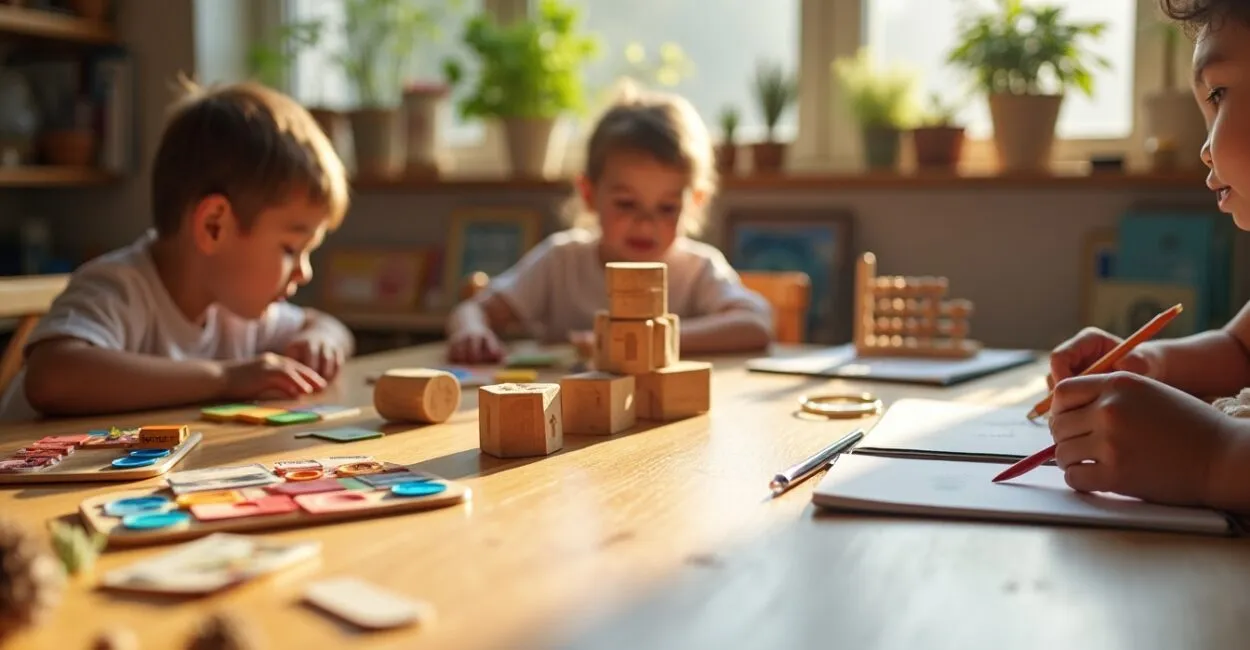
Early childhood education shapes the formative years of learning and development, supporting children’s social, cognitive, and emotional growth. As parents look for quality programs, understanding what early childhood education involves, why it matters, and how to choose a provider can help families set their children up for success.
High-quality early childhood education combines purposeful play, structured learning, and family involvement in settings such as child care centers, preschools, and pre-K programs. This article covers definitions, benefits, teaching methods, how to choose a program, costs, research findings, and practical tips to help parents make informed decisions.

Foundations of Early Childhood Education: Definitions and Concepts
What Early Childhood Education Encompasses
Early childhood education includes learning experiences for children from birth to about age eight, with a focus on developmental areas such as language, motor skills, social skills, and early literacy. It combines care and instruction with play-based and purposeful activities to build foundational skills for school readiness and lifelong learning. Programs range from in-home care to formal preschools, and often involve families and community resources. Important factors include curriculum alignment, teacher qualifications, and supportive learning environments that nurture curiosity and resilience.
Understanding these core elements helps parents evaluate how a program supports social-emotional growth, cognitive development, and individualized learning for each child.
- Age range: typically birth to age 8, with distinct developmental stages
- Core domains: language, motor, social-emotional, cognitive, and self-regulation
- Approaches: play-based, Montessori, Reggio Emilia, and blends of direct instruction
- Key components: curricula, trained educators, family involvement, and safe environments
Key Terminology and Roles
Terms such as preschool, pre-K, nursery school, child care, and early intervention are common, but they refer to different program types and regulatory standards. Preschool and pre-K typically focus on school readiness for children ages 3–5, while early intervention supports young children with developmental delays. Roles include caregivers, early childhood educators, curriculum coordinators, and special education teachers; qualifications vary by setting and location. Knowing who does what helps parents ask specific questions about staff training, child-to-teacher ratios, and curriculum oversight.
Knowing the terminology helps families compare programs accurately and align expectations with local licensing and quality-rating systems.
Principles of High-Quality Early Education
High-quality early childhood education follows consistent principles: child-centered learning, developmentally appropriate practice, inclusive classrooms, and ongoing assessment. These elements create predictable routines and meaningful interactions that support brain development. Programs that emphasize responsive caregiving, scaffolded learning, and culturally relevant materials foster competence and confidence. Accreditation and external quality ratings can also signal a program’s standards and commitment to continuous improvement.
Parents should look for warm teacher-child interactions, appropriate group sizes, and visible assessment practices to ensure learning is purposeful and progress can be measured.
Practical Steps for Choosing an Early Childhood Education Program
Initial Research and Priorities
Start by identifying your priorities: location, hours, cost, educational philosophy, and specialized services such as language support or therapy. Use online directories, local early learning coalitions, and recommendations from other parents to create a shortlist of programs that meet your needs. Check licensing status and quality ratings from state or national agencies, then schedule visits to observe daily routines and teacher-child interactions. A visit can tell you more than a brochure—look for engaged children and consistent staffing.
Planning ahead reduces stress and helps you secure a spot in highly rated programs, which may have waiting lists.
Visiting and Evaluating Providers
During visits, ask about staff qualifications, child-to-teacher ratios, curriculum, assessment methods, safety procedures, and how the program communicates with families. Request sample schedules and examples of children’s work to get a sense of the daily routine and learning opportunities. Observe transitions, how teachers handle behavior, and whether learning materials are accessible and diverse. Talk with staff about professional development and turnover, both of which affect continuity of care.
Bring a checklist and take notes. Follow-up calls to references or other parents can help confirm your impressions.
Enrollment, Orientation, and Transition Planning
Once you’ve chosen a program, complete the enrollment forms and provide immunization records and any required screening information. Good programs offer family orientation sessions that explain routines and how they work with parents on goal-setting and progress reports. A gradual transition—with shorter days at first, meet-and-greets, and a consistent drop-off routine—can ease separation anxiety and help children settle in more quickly. Share your child’s strengths, routines, and needs with educators so they can provide personalized support.
A smooth transition and open communication set the stage for a positive partnership between home and the program.
- Identify your priorities and create a shortlist of programs.
- Verify licensing and review quality ratings.
- Visit programs and observe classroom dynamics.
- Ask specific questions and check references.
- Complete enrollment and plan a supportive transition.
Comparing Early Childhood Education Approaches and Curricula

Play-Based vs. Academics-Focused Approaches
Play-based approaches emphasize child-led exploration, social play, and emergent literacy, while academics-focused models prioritize structured lessons in letters, numbers, and early skills. Both aim to prepare children for school, but their methods and daily routines can differ substantially.
Research suggests that play-rich environments support executive function and creativity, while targeted instruction can accelerate early literacy when it’s appropriate for a child’s developmental stage. Many modern programs blend the two approaches to balance engagement with skill-building.
Parents should consider their child’s temperament and their long-term goals when choosing an approach.
Montessori, Reggio Emilia, and Other Philosophies
Montessori emphasizes independence, mixed-age classrooms, and hands-on materials; Reggio Emilia centers on project-based exploration and documenting learning. Waldorf education prioritizes rhythm and imagination, with limited screen time. Each philosophy takes a different approach to the role of adults and the learning environment.
Choosing a philosophy depends on your values—whether you prefer child autonomy, inquiry-based projects, or more structured, teacher-guided instruction. Visiting classrooms that represent each approach can help you determine what suits your child.
Hybrid programs often draw on multiple philosophies to balance structure and discovery.
Comparison of Teaching Methods
| Approach | Key Features | Best For |
|---|---|---|
| Play-Based | Child-led play, social learning, emergent literacy | Curious, social children who learn through exploration |
| Montessori | Self-directed activities, mixed-age groups, hands-on materials | Independent learners and children who thrive on routine |
| Reggio Emilia | Project-based learning, documentation, community involvement | Children who benefit from expressive, collaborative projects |
| Academic/Direct Instruction | Teacher-led lessons focused on early literacy and math | Children who need targeted support to build skills quickly |
Benefits of Early Childhood Education: Outcomes and Evidence
Cognitive and Academic Advantages
Early learning programs build vocabulary, pre-literacy skills, and executive function, laying the groundwork for future academic success. According to UNESCO, children who attend high-quality preschool show measurable gains in school readiness and early-grade achievement.
Long-term studies indicate that high-quality early interventions can increase high school graduation rates and improve employment prospects. Investing early can lead to better learning outcomes over time and reduce the need for remedial support.
Parents who prioritize cognitive development should look for curricula that balance play with guided instruction to support strong learning outcomes.
Social-Emotional and Behavioral Benefits
Programs that teach self-regulation, cooperation, and emotional awareness can reduce behavioral problems and help children adjust to the classroom. The CDC reports that social-emotional skill development in early childhood is associated with better mental health outcomes later in life.
Read also: Parent Involvement Tips to Support Early Learning at Home
Teachers trained in positive behavior support and trauma-informed practices can significantly improve the classroom environment and outcomes for individual children. These gains can encourage sustained engagement in school.
Family involvement strengthens social-emotional learning by reinforcing routines and expectations at home.
Read also: Investing Basics for Beginners: Building Wealth Wisely
Long-Term Societal and Economic Impact
Investing in early childhood education can benefit society through fewer special education placements, higher productivity, and lower incarceration rates. According to the OECD, countries that expanded access to early learning saw greater equity in educational attainment.
High-quality programs also support workforce participation by helping parents stay employed. Economists estimate that the benefit-cost ratio of early childhood programs ranges from 2:1 to 7:1, depending on program quality and the population served.
These broader benefits help explain why many policymakers prioritize early learning in public funding.
- Improved school readiness and test performance
- Fewer behavioral problems and stronger social skills
- Higher educational attainment over the long term
- Economic returns through workforce stability and reduced need for remedial support
- Greater equity across socioeconomic groups

Comparing Programs: Logistics, Staffing, and Costs
Staff Qualifications and Ratios
Teacher qualifications—from a Child Development Associate (CDA) credential to a bachelor’s degree—affect program quality. Research links higher levels of teacher education to stronger language and math outcomes for children. Ask providers about ongoing professional development, staff turnover, and staff-to-child ratios, all of which affect how much individual attention children receive.
Typical recommended ratios are 1:3–1:4 for infants, 1:4–1:6 for toddlers, and 1:7–1:10 for preschoolers, depending on local regulations. Ratios affect safety and learning opportunities and are often set by state licensing rules.
Transparent information about staffing helps parents assess whether a program can provide consistent, individualized support.
Costs, Funding, and Subsidies
Costs vary widely: full-time care at a center can range from several hundred to more than a thousand dollars per month, depending on location and services. According to the National Association for the Education of Young Children (NAEYC), average preschool tuition in the U.S. has varied widely in recent years by state and setting.
Public funding, vouchers, sliding-scale tuition, and Head Start—a U.S. federal program for early learning and family services—can provide options for eligible families. Look into local subsidies and tax credits to reduce out-of-pocket costs, and compare the total cost with program quality.
When assessing affordability, include meal plans, supplies, and extended-care fees in your budget.
Advantages and Disadvantages
| Feature | Advantages | Disadvantages |
|---|---|---|
| Center-Based Care | Structured curriculum, socialization, regulated staffing | Higher cost, less individualized than care in a small home setting |
| Family Child Care | Smaller groups, flexible hours, home-like setting | Regulations vary, and specialized resources may be limited |
| Public Pre-K | Free or low-cost, access for underserved children, standard curriculum | Limited hours, eligibility requirements, and potentially long waiting lists |
Limitations and Challenges in Early Childhood Education
Inequities in Access and Quality
Not all families have equal access to high-quality early education because of geographic, financial, and systemic barriers. Rural areas and low-income communities often have too few accredited programs and qualified staff, contributing to disparities in school readiness.
Policy initiatives aim to expand access, but implementation delays and funding gaps remain. Advocates stress the need for targeted investments to close opportunity gaps and improve teacher pay and training.
Parents can explore local subsidies and community programs to help address barriers to access.
Potential Developmental Mismatches
Programs that push academics too early or too aggressively can cause stress and disengagement for some children, while settings with too little structure may delay the development of specific skills. The key is developmentally appropriate practice that meets each child’s needs without imposing the same benchmarks on everyone.
Screening and individualized planning help match the intensity of a program to a child’s readiness, temperament, and family goals. Communication between educators and parents is essential for adjusting instruction and expectations.
Regular assessment can identify mismatches early so that appropriate support can be put in place.
- Uneven access to quality programs across geographic areas
- Cost barriers and limited access to subsidies
- Differences in staff training and turnover
Operational Challenges for Providers
Providers face staffing shortages, rising operating costs, and regulatory burdens that can threaten program stability. Recruiting and retaining qualified teachers remains an ongoing challenge, often tied to compensation and professional support.
These operational constraints can lead to reduced hours, waiting lists, or fewer program offerings. Community partnerships and stable public funding can help programs become more resilient.
Parents should ask programs about contingency plans, staff continuity, and how they handle closures and emergencies.
Best Practices and Tips for Parents Using Early Childhood Education
Working with Educators and Supporting Learning at Home
Active family involvement strengthens a program’s impact. Share routines, developmental history, and learning goals with educators, and establish consistent ways to communicate, such as daily reports or parent-teacher conferences. Reinforce classroom themes at home with books, simple activities, and predictable routines.
Ask for ideas to try at home, and use everyday moments—mealtimes, errands, and play—to build vocabulary and self-regulation. Consistency between home and school helps children apply new skills and feel secure.
Partnerships between families and teachers create shared expectations and better outcomes for children.
Choosing Inclusive and Culturally Responsive Programs
Choose programs that reflect your family’s culture and language or demonstrate cultural responsiveness through diverse materials and inclusive practices. Programs that value multilingualism and cultural heritage support children’s identity development and cognitive growth.
Look at whether classroom materials, stories, and holiday celebrations reflect diverse backgrounds, and ask whether staff are trained in inclusive teaching practices. Inclusive settings also adapt to children with different abilities and learning needs.
This kind of alignment fosters a sense of belonging and supports your child’s social-emotional development.
Practical Tips and Checklists for Ongoing Evaluation
Track progress using observable signs: engagement in activities, communication skills, toileting and self-care milestones, and interactions with peers. Keep a simple journal of goals and periodic assessments from the program to follow your child’s growth over time.
Reassess whether the program is still a good fit each year or if you notice stalled progress or regression. If you have concerns, request a meeting and an individualized action plan. Keep records of developmental screenings and communications.
These practices help parents stay proactive partners in their child’s early education.
- Visit and observe classrooms before enrolling
- Request and review program accreditation and staff credentials
- Communicate regularly with teachers
- Reinforce learning through daily routines at home
- Advocate for individualized support when needed
In short, early childhood education is a multifaceted investment in your child’s cognitive, social, and emotional development. By understanding different program types, comparing teaching methods, checking quality indicators, and staying involved, parents can choose services that align with their family’s values and their child’s developmental needs. Consider costs, availability, and evidence-based practices, and start visiting programs early to secure a spot in a high-quality setting.
Frequently Asked Questions
What Is Early Childhood Education?
Early childhood education refers to organized learning experiences for young children, generally from birth through age eight, that support development in language, motor skills, social-emotional competence, and early cognitive abilities. It combines play, structured activities, and adult guidance to prepare children for school while fostering curiosity and resilience. Programs may be center-based, family-run, or public pre-K, and often include family involvement and developmental screening.
How Does Early Childhood Education Work in Practice?
In practice, early childhood education combines routines, play-based learning, and targeted instruction tailored to children’s developmental levels. Teachers observe children and use informal assessments to plan activities that build vocabulary, fine motor skills, and social skills. Daily schedules balance free play, group activities, and focused lessons, with ongoing communication with families. Programs coordinate with specialists when developmental concerns arise and often follow state standards or accredited curricula to support consistency and quality.
What Is the Difference Between Preschool and Pre-K?
Preschool is a broad term for early learning programs, usually for children ages 3–5. These programs are often offered by private centers and may have flexible curricula. Pre-K usually refers to programs funded or supported by public systems, with explicit school-readiness goals, standardized curricula, and eligibility guidelines. Pre-K may be free or low-cost for eligible families and typically prepares children for kindergarten with a focus on early literacy and math skills.
When Should I Enroll My Child in a Program?
When to enroll depends on your family’s needs and program availability: many parents place infants in care when they’re just a few months old, while preschool and pre-K programs often accept children ages 3–4. Apply early to highly rated programs, as some have waiting lists of 6–12 months. Consider your child’s social readiness, your family’s work schedules, and your learning goals. Trial visits and transition plans can help children adjust at any age.
How Much Does Quality Early Childhood Education Cost?
Costs vary by location and program type. According to the OECD, average child care and preschool costs differ widely from country to country. In the U.S., center-based care can cost a few hundred dollars to more than $1,200 per month, depending on a child’s age and location. Public pre-K and subsidized programs may significantly reduce family expenses. Look into local subsidies, tax credits, and sliding-scale tuition to estimate your out-of-pocket costs.
Artigos Relacionados
 Early Childhood Education: A Guide for Parents
 Effective Brain Stimulation in Early Childhood Education
 Collaborative Learning in Early Childhood Education
 How to Introduce Literacy in Early Childhood Education
 Early Childhood Education: The Importance of Play in Child Development
 Definitions and Concepts in the Evolution of Early Childhood Education
