
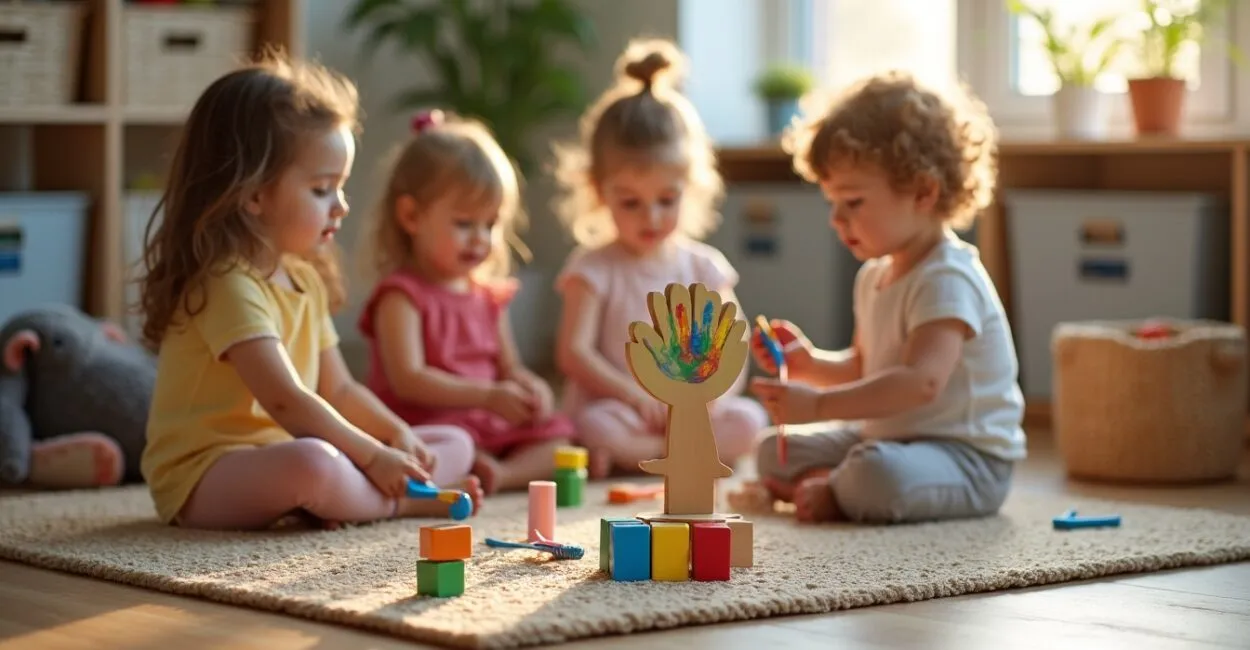
Preschool activities build foundational social skills by encouraging sharing, turn-taking, and cooperation through playful, guided experiences. These hands-on activities help children learn to communicate, regulate their emotions, and build relationships with peers—skills that support school readiness and lifelong social competence.
Many caregivers and educators struggle to plan daily preschool activities that balance structure with free play while supporting social development. This article shares practical, research-backed strategies and ready-to-use activities focused on social skills, peer interactions, and consistent classroom routines.

Preschool Activities: Definitions and Key Concepts
- Role-play: Children take on characters to practice empathy and language.
- Structured circle time: A routine for practicing turn-taking and listening.
- Collaborative art projects: Shared goals that encourage negotiation.
- Sensory stations: Activities that support calm and emotional regulation through touch.
- Peer-mediated games: Children support one another’s social learning.
What Preschool Activities Are and Why They Matter
Preschool activities are intentionally designed learning experiences that support young children’s cognitive, motor, and social development. They matter because early interactions help build the neural pathways involved in cooperation and self-regulation, laying the groundwork for academic and emotional success. Play-based routines also help establish consistent behavioral expectations.
Age-appropriate materials and predictable schedules help children feel secure and more willing to engage with peers. Activities should be accessible, culturally responsive, and varied to support diverse learners and family backgrounds.
Teachers can track progress through observation and simple checklists, noting improvements in sharing, making requests, and collaborative problem-solving.
Core Concepts: Routines, Interactions, and Scaffolding
Routines create predictable transitions—arrival, activity centers, snack, and cleanup—that reduce anxiety and give children practice with social tasks in sequence. Interactions during these routines provide opportunities to model polite language, negotiation, and conflict resolution. Adults or peers can gradually provide less support as children become more independent.
For example, cleanup can become a social lesson: children negotiate roles, follow a timer, and take turns using tools. Over time, their independence and cooperative behavior grow.
Language prompts and visual cues support children with limited expressive language and encourage inclusive participation across developmental levels.
Common Goals for Preschool Activities
Common goals include improving turn-taking, expanding expressive vocabulary, developing perspective-taking, and strengthening self-control. Teachers often set SMART-style goals: specific, measurable behaviors such as “the child will wait their turn twice during snack time.” These outcomes can be observed and tracked during daily preschool activities.
Progress can be measured with frequency counts, such as the number of successful sharing attempts per day, and supports can be adjusted to each child’s needs.
Clear goals help caregivers, therapists, and classroom staff work together, creating continuity between home and school routines and supporting stronger social development.
Hands-On Preschool Activities: A Step-by-Step Guide
- Prepare materials: Gather simple props, picture cues, and timers.
- Model the activity: Clearly demonstrate the rules, language, and turn-taking.
- Invite participation: Use open-ended prompts and support children’s responses.
- Reinforce routines: Praise specific behaviors and review expectations.
- Reflect and adapt: Observe, document, and adjust activities to meet children’s needs.
Setting Up Engaging Hands-On Stations
Create small-group stations with clear goals: dramatic play for negotiation, a block area for collaborative building, and sensory bins for calming. Label stations with pictures and simple rules to encourage independence. Rotate groups every 12–20 minutes to sustain attention and encourage interactions among different peers.
Provide duplicate materials to reduce competition, and teach sharing by taking turns with high-demand items. Visual timers and role cards help children anticipate changes and understand their roles.
Limit technology and emphasize hands-on experiences to encourage fine motor skills and social engagement without overstimulation.
Teacher Prompts and Scaffolding Techniques
Use brief, specific prompts such as “Say, ‘My turn, please’” or “Can you count to three before you hand it over?” to model appropriate social language. Offer sentence starters and practice them during circle time, then gradually reduce prompts as children learn the routines. Pair children who use less verbal language with peer buddies who can model the skills.
Use positive reinforcement to highlight specific behaviors (for example, “I saw you waiting—great patience!”) rather than offering general praise. Adjust supports based on observations and each child’s goals.
Document progress weekly and share strategies with families so children can practice these skills beyond the classroom.
Scheduling and Time Management for Daily Routines
A consistent daily schedule—arrival, activity blocks, snack, outdoor play, story time, and goodbye—helps children anticipate and prepare for transitions. Keep activities short and focused: 15–25 minutes for guided group tasks, 10–20 minutes for free play, and 20–30 minutes of outdoor time. Predictability encourages cooperation and reduces tantrums.
Visual schedules and timers help children regulate themselves and reduce the need for adult reminders. Add brief warm-ups, such as breathing exercises or movement songs, before transitions to make them go more smoothly.
Review transitions weekly and adjust their length based on the class’s attention span and engagement.
Interactive Preschool Activities: Comparing Methods

| Method | Primary Social Skill | Typical Group Size |
|---|---|---|
| Dramatic Play | Perspective-taking, language | 3–6 children |
| Collaborative Art | Turn-taking, sharing | 4–8 children |
| Guided Games | Following rules, patience | 5–10 children |
| Sensory Stations | Self-regulation, calm focus | 2–4 children |
Comparing Play-Based and Structured Activities
Play-based activities prioritize child-led exploration and language-rich interactions, encouraging creativity and intrinsic motivation. Structured options, such as circle time and teacher-led games, emphasize predictable routines and direct instruction in specific skills. The two approaches complement each other: use guided instruction to introduce new skills and play to practice and apply them in different situations.
Consider children’s developmental levels and goals when deciding how to balance the two. Younger children may need more structure during transitions, while older preschoolers can lead longer play sequences.
Research suggests that blended approaches often lead to greater gains in social-emotional skills than programs that rely on a single method.
Comparing Materials and Setups
Low-cost materials—such as cardboard, fabric, and recycled containers—can be just as effective as commercial kits when thoughtfully arranged. Choose materials that support different activities: blocks for building or counting, puppets for language practice, and timers for turn-taking. A variety of materials creates different opportunities for social learning.
When the budget allows, invest in durable, easy-to-clean items. Keep duplicates on hand to reduce conflict over scarce resources and ensure everyone has fair access during group play.
Label storage with pictures to encourage independence and make cleanup routines easier to maintain.
Evidence and Outcomes for Each Method
The National Association for the Education of Young Children (NAEYC), a U.S. organization focused on early childhood education, notes that consistent routines and play-based learning can significantly improve classroom behavior and engagement. Research from the Center on the Developing Child at Harvard University indicates that early social-emotional skills predict later academic achievement. Combining methods can lead to measurable improvements in cooperation and language use within 6–12 weeks of consistent implementation.
Use simple measures, such as the frequency of peer interactions initiated by children and the number of times adult intervention is needed, to track outcomes. Teacher notes and periodic feedback from families can provide additional context.
Adjust methods based on children’s responses and program constraints to maximize their impact.
Social-Emotional Preschool Activities: Benefits and Outcomes
- Improved turn-taking and sharing
- Expanded emotional vocabulary and expression
- Stronger conflict-resolution skills
- Greater classroom engagement and cooperation
- Stronger peer friendships and sense of belonging
Immediate Benefits for Classroom Behavior
Daily, targeted preschool activities can reduce disruptive behavior and encourage cooperative play. For example, brief role-play scenarios and specific praise may noticeably reduce the need for classroom redirection within a few weeks. Teachers often report smoother transitions and greater participation in guided activities.
Consistent routines clarify expectations, reducing anxiety and encouraging prosocial choices. Visual supports and prompts can also help prevent misunderstandings among children.
Track short-term gains by counting independent transitions and successful peer problem-solving moments each day.
Read also: Investing Basics for Beginners: Building Wealth Wisely
Long-Term Developmental Outcomes
Early social skills predict academic success and emotional well-being later in childhood. According to the Center on the Developing Child, children with strong early self-regulation skills tend to earn higher literacy and math scores by age 8. Early interventions focused on social routines can provide benefits that last through elementary school and beyond.
Programs that emphasize consistent social practice report greater school readiness and fewer behavioral referrals. Family involvement can strengthen these long-term effects by reinforcing skills at home.
Leia também: Immune System: Natural Ways to Strengthen Your Health
Document progress each year to track children’s development and adapt curricula as needed.
Measurable Impact and Research Evidence
According to UNICEF, high-quality early childhood programs can generate societal returns of up to 13% per year through improved education and health outcomes. The CDC reports that social-emotional learning programs reduced conduct problems by approximately 25% in some studies. These figures underscore the value of investing in daily preschool activities that promote social skills.
Use evidence-based curricula and validated assessment tools to align practice with proven outcomes and communicate its impact to stakeholders and funders.
Collect baseline and follow-up measurements to demonstrate growth and support resource requests.
Routine-Centered Preschool Activities: Pros and Cons
| Characteristic | Advantage | Limitation |
|---|---|---|
| Predictable Schedule | Reduces anxiety | May feel rigid to creative learners |
| Visual Supports | Improves comprehension | Requires preparation time |
| Short, Repeated Practice | Reinforces habits | Can become repetitive without variety |
Advantages of Routine-Focused Approaches
Routines support self-regulation and reduce the need for adult intervention. Predictability helps children anticipate expectations, manage emotions, and stay focused on tasks. Routines also make classroom management more efficient, giving teachers more time for targeted instruction and individualized support.
Building social language into routines—for example, practicing “please,” “thank you,” and waiting—creates frequent, natural opportunities to use these skills. Consistent expectations across settings also help children apply what they learn at home and at school.
Documenting how consistently routines are followed can help educators maintain them and strengthen outcomes across classrooms.
Challenges and Limitations
- Too much structure can limit spontaneous play and creativity.
- Rigid routines may not fit different cultural practices or family schedules.
- Preparing routines and visual supports takes time and resources.
Balancing Routine and Flexibility
The best approach combines predictable structures with open-ended play. Give children choices within routines—such as selecting roles or materials—to support autonomy and creativity. Rotate themes and include children’s interests to keep routines engaging and motivating.
Train staff to adapt routines to different developmental needs and cultural contexts. Invite family input to align expectations and make routines meaningful beyond the classroom.
Review routines regularly to assess engagement and effectiveness, and adjust timing and supports as needed.
Assessing and Measuring Preschool Activities
Simple Observation and Tracking Methods
Use checklists and frequency counts to monitor social behaviors such as sharing, initiating greetings, and resolving conflicts. For example, tally each child’s successful turn-taking attempts per day. Brief, consistent observations—5–10 minutes per child each week—can reveal patterns and potential intervention goals.
Combine numerical counts with anecdotal notes about the context and possible triggers. This approach helps guide individualized supports and curriculum adjustments for the group.
Share brief updates with families to connect home strategies with classroom progress and maintain consistency.
Standardized Tools and Screenings
Validated tools such as the Ages and Stages Questionnaires: Social-Emotional (ASQ:SE) and the Devereux Early Childhood Assessment (DECA) provide benchmarks for social-emotional development. These tools offer norm-referenced scores and can help identify children who may need targeted support or further evaluation by specialists.
Conduct screenings at enrollment and periodically afterward, such as every six months, to track progress. Use the results to guide interventions and conversations with families.
Partner with local early intervention services when scores suggest possible delays to ensure children receive timely support.
Using Data to Improve Activities
Review classroom-wide data to identify which preschool activities lead to measurable gains and which may need adjustments. For example, if sharing improves after collaborative art but not after block play, adjust how you guide children during building activities. Set small, time-bound goals to test changes and track their effects.
Share results with families and administrators to secure resources and support. Data-informed instruction builds trust and improves outcomes.
Document successes and adjustments to create a living curriculum that evolves with the group.
Practical Tips and Best Practices for Preschool Activities
- Model clear social language and routines consistently.
- Use visual supports and timers to make transitions easier.
- Plan activities for small groups of 3–6 children.
- Provide duplicate materials to reduce competition for resources.
- Share weekly suggestions to help families practice skills at home.
- Rotate themes and regularly include children’s interests.
Classroom Management Strategies
Establish a predictable flow: welcome, active learning centers, snack, outdoor movement, and reflection. Use gentle cues, such as songs or claps, to get children’s attention and signal transitions. Keep groups manageable—ideally 3–6 children during hands-on activities—to encourage participation and limit noise and stress.
Train assistants and volunteers to use consistent language and reinforcement strategies so expectations stay the same. Display simple visual rules at children’s eye level.
Plan ahead for common sources of conflict, such as limited access to popular toys, by assigning sharing roles and setting up rotation systems.
Family Engagement and Continuity
Share a weekly update with families that includes one or two simple preschool activities to try at home. Offer short demonstration videos or photo guides for routines so caregivers can use similar language and expectations. Strong home-school partnerships help children use their social skills in different settings.
Hold occasional family workshops on coaching children through emotions and establishing predictable home routines. Ask families about their cultural practices to ensure activities are respectful and relevant.
Document and celebrate children’s progress through newsletters or portfolio highlights to encourage collaboration and motivation.
Adaptations for Diverse Learners
Adapt activities by offering different ways to participate: simpler role-play prompts, picture supports for children learning English, and sensory-friendly options for children who need help with regulation. Pair children with peers or use small-group support to provide models and ease pressure on less experienced learners.
Adjust activity length, seating, and materials to match children’s attention spans and sensory preferences. Work with specialists, such as speech-language pathologists and occupational therapists, when children need individualized strategies.
Keep expectations flexible: progress may be gradual, but consistent, accessible practice can help every child make meaningful gains.
Conclusion
Hands-on, routine-centered preschool activities are powerful tools for building early social skills, encouraging peer interaction, and supporting self-regulation. By combining predictable routines, play-based learning, and targeted support—with progress tracking and strong family partnerships—educators can help young children develop lasting social skills. Start with a few structured activities, use them consistently, track progress, and adapt them to your classroom’s needs to see measurable improvements in cooperation and classroom climate.
Start small: choose one routine and one collaborative activity to try this week, document the results, and build from there. Strong preschool activities help children develop the confidence they need to meet the social demands of school and life.
Frequently Asked Questions
What Are Preschool Activities?
Preschool activities are structured and play-based learning experiences designed for children roughly ages 3–5. They support cognitive, motor, and social-emotional development through routines, games, role-play, and sensory activities that teach sharing, turn-taking, language, and self-regulation. Adults provide appropriate support to create predictable opportunities for children to practice interacting with peers and get ready for school routines.
How Do Daily Routines Work in Preschool Activities?
Daily routines follow predictable sequences—arrival, activity centers, snack, outdoor play, and story time—supported by visual schedules, songs, and clear expectations. Teachers model behaviors, use brief prompts, and offer consistent feedback. Over time, children learn the steps, which can reduce anxiety and encourage cooperation. Small-group practice and repetition help children use these skills in different situations and with different peers.
What’s the Difference Between Play-Based and Structured Preschool Activities?
Play-based activities let children lead their own exploration and negotiate with peers in open-ended settings, encouraging creativity and intrinsic motivation. Structured activities are teacher-guided and use specific goals, rules, and time limits to teach particular skills. Both approaches work well together: structured lessons introduce concepts and routines, while play gives children a chance to practice and apply social and language skills in more natural settings.
When Should I Use Cooperative Games or Role-Play in Preschool Activities?
Use cooperative games or role-play to teach negotiation, empathy, problem-solving, or language skills. Role-play helps children practice perspective-taking and expressing emotions, while cooperative games reinforce following rules and taking turns. Schedule these activities during mid-morning blocks or after transitions, and keep sessions brief (12–20 minutes) to match children’s attention spans and keep them engaged.
How Much Do Preschool Activity Resources Typically Cost?
Costs vary widely. Basic materials, such as blocks, recycled props, and crayons, can cost less than $50, while specialized curricula or durable classroom sets may range from $200 to $1,000. Community program budgets suggest that many classrooms spend $100–$300 a year on consumable and themed materials. Versatile, low-cost supplies and items donated by families can make a big difference for a modest investment and support hands-on preschool activities on a larger scale.
External sources and further reading: NAEYC, Center on the Developing Child at Harvard University, UNICEF.
Artigos Relacionados
 Preschool Activities That Build Social Skills Every Day
 Phonics Teaching Methods That Build Fluent Decoding Skills
 Data Careers for 2025: 6 Skills That Matter
 Transformative Education: Practices That Change Lives Today
 Interactive Lessons: Activities and Teaching Resources
 Educational Technology: Tools That Transform Classrooms
