
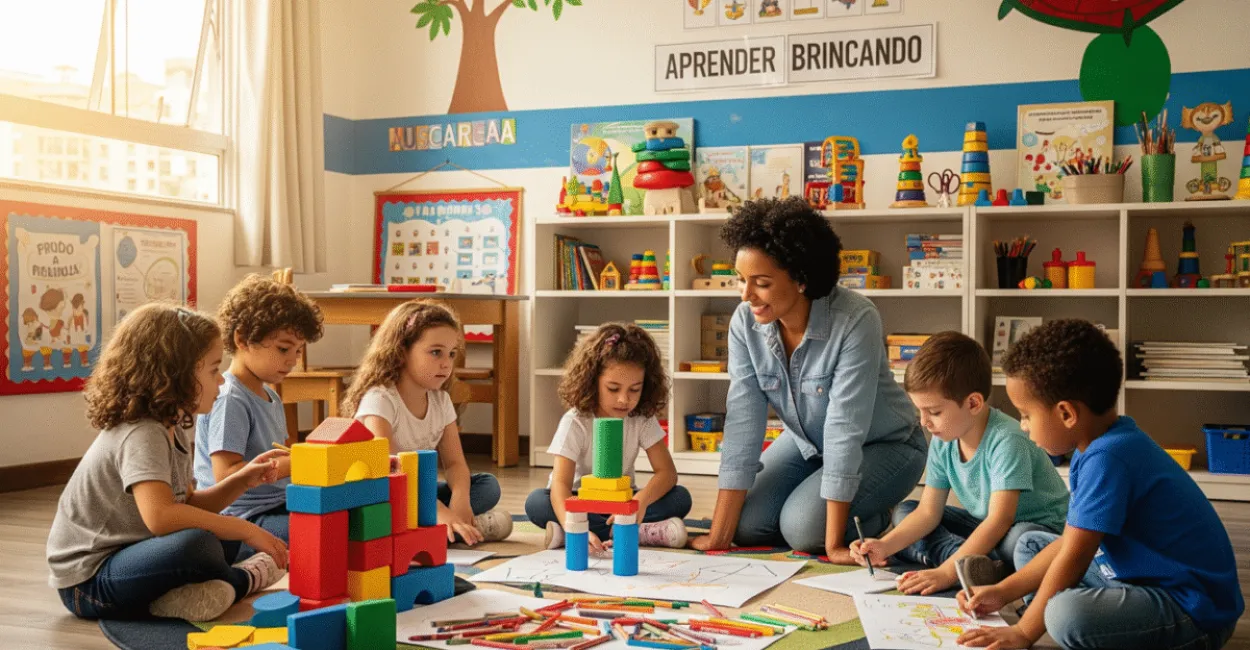
Collaborative learning in early childhood education is an intentional process that promotes cooperation, communication, and social development in young children. It matters because it lays the foundation for social-emotional skills, language, and teamwork from the earliest years, influencing school success and relationships with others. Getting started requires planning adaptations and playful activities that encourage children to participate together, providing appropriate materials, and guiding instructional support.
In early childhood education, teachers and caregivers face challenges such as differences in developmental levels, diverse classrooms, and limited resources. These challenges also create opportunities to implement inclusive strategies: adapting the environment, using cooperative games, and establishing communication-focused routines that encourage speaking, listening, and solving problems together. Public policies and ongoing professional development can strengthen this practice.

This article presents practical approaches, adapted play-based activities, assessment models, and classroom organization examples to encourage cooperation, language, and social skills. It concludes with a frequently asked questions section that addresses common questions and points to reliable resources for further reading.
Active collaboration in early childhood education
Principles of collaborative learning
Collaborative learning in early childhood education is grounded in social interaction, pretend play, and the shared construction of meaning. Teachers act as facilitators, offering challenges that encourage children to solve problems together and exchange ideas. Active listening, taking turns to speak, and simple rules help children learn to cooperate and negotiate in groups.
This approach values different learning paces and styles, promoting inclusion and empathy. Planned activities account for varying levels of language, motor skills, and attention, allowing for adaptations and ensuring that every child can participate. The environment should include spaces for small groups and materials that encourage collaboration.
To put these principles into practice, teachers can observe interactions, document social progress, and adjust activities. Pedagogical documentation and communication with families reinforce these strategies. Related terms include social-emotional development, cooperative play, and verbal communication.
The teacher’s role as a facilitator
A teacher’s role in early childhood education goes beyond delivering content: teachers create learning environments, model social behaviors, and intervene thoughtfully. As facilitators, they ask open-ended questions, present challenges for pairs or groups, and guide children through conflicts without resolving everything for them, supporting independence and emotional self-regulation. Observation and listening are essential.
Teachers need to know differentiation strategies and curriculum adaptations to support children with diverse needs. Tools such as visual schedules, attention to speaking time, and clear directions reduce anxiety and encourage participation. Relevant terms include inclusion, accessibility, and alternative communication.
Ongoing professional development and teamwork among teachers and specialists, such as speech-language pathologists and educational psychologists, make interventions more effective. Systematic documentation helps identify progress in language, cooperation, and social skills.
Benefits for language and interaction
Collaborative learning can lead to significant language development, including a larger vocabulary, improved grammar, and stronger storytelling skills. Conversations in pairs or small groups create authentic opportunities to practice speaking, listening, and taking turns, strengthening communication skills that are essential for school.
Guided interactions also develop pragmatic skills, such as asking for help, negotiating roles during play, and interpreting nonverbal cues. Teachers can facilitate activities that encourage children to ask questions, describe, and compare, expanding the complexity of the language they use.
Related terms that naturally arise in this context include expressive speech, receptive language, and communication competence. Combining play, projects, and routines helps children apply these skills in everyday situations.
Environments and adaptations for early childhood education
Physical setup and inclusive resources
The physical environment directly affects cooperation and interaction among children. Organizing a classroom into areas for reading, building, art, and dramatic play makes it easier for small groups to gather and work on shared projects. Accessible materials, visual labels, and movable furniture promote independence and participation for everyone.
Inclusive adaptations may include materials with different textures, pictograms for instructions, alternative seating, and visual schedules. These supports help children with different sensory or communication needs take part in activities. Related terms include accessibility, curriculum adaptation, and educational support.
Interaction between teachers and families is essential for understanding children’s cultural and linguistic backgrounds. When planning the environment, prioritize safety, clear sightlines for teachers, and the ability to quickly rearrange groups as activities change.
Materials and games that encourage cooperation
Choosing materials that encourage children to work together is a strategic decision: large blocks for group building, simplified board games, percussion instruments, and art supplies that can be shared. Toys that require coordination between children create more opportunities for communication and negotiation.
Stories and puppets can be used for partner or group performances, encouraging narrative language and role-switching. Recyclable materials and themed settings inspire collaborative projects and step-by-step activities that bring together critical thinking and creativity.
Relevant terms include pretend play, hands-on materials, and educational projects. Rotating materials throughout the week prevents boredom and encourages new social interactions.
Adaptations for children with special needs
Inclusive practices involve adjusting the pace, instructions, and materials. Strategies such as step-by-step directions, visual supports, augmentative and alternative communication (AAC), and peer buddies help children with disabilities or speech delays participate. Individualized planning is essential.
These adaptations benefit not only children with special needs but also enrich the environment for the entire group, promoting empathy and exposing children to different ways of communicating. Working with professionals such as speech-language pathologists and occupational therapists helps ensure more effective interventions.
Important terms include inclusive education, communication accessibility, and individualized education plan (IEP). Monitoring and documenting children’s responses to adaptations helps guide ongoing adjustments.
Lesson sequences and play-based activities

Small-group projects
Theme-based projects—such as gardening, recycling, or building—organized in small groups allow children to divide tasks, negotiate roles, and create something together. Each child takes on a role, learning to cooperate and communicate progress. The teacher sets clear goals and encourages peer feedback to reinforce social responsibility.
These projects bring together language, science, and math in meaningful contexts: counting seeds, recording observations, describing steps, and planning activities. Related terms include project-based learning, inquiry, and pedagogical documentation.
At the end of a project, presenting the results to the class and families builds self-esteem and gives children social recognition for the skills they have developed.
Dramatic play and collaborative storytelling
Group dramatizations and storytelling activities encourage language, imagination, and social-emotional skills. When creating a story together, each child contributes passages, characters, or actions while practicing turn-taking, listening, and co-creation. Puppets and props make it easier for shy children to participate.
These activities also provide opportunities to work on specific vocabulary, facial expressions, and intonation. Group stories can be documented through drawings or recordings for later review and reflection. Related terms include pretend play, shared storytelling, and oral expression.
The teacher acts as a facilitator, suggesting problems for the children to solve together as the story unfolds, encouraging critical thinking and functional language.
Steps for planning a collaborative activity
- Identify objectives: Define the social and language skills children will develop.
- Organize groups: Form diverse pairs or groups of three, balancing skills.
- Prepare materials: Choose accessible resources that can be shared.
- Set rules: Create simple guidelines for taking turns and working together.
- Facilitate actively: Observe, encourage, and step in gently when needed.
Strategies for encouraging language and communication
Communication routines and speaking rituals
Daily routines such as circle time, story time, and sharing time create predictability and repeated opportunities to use language. These rituals help children organize their thoughts, add to stories, and practice asking and answering questions. Repetition in meaningful contexts strengthens vocabulary retention and understanding of sentence structures.
Asking open-ended questions and allowing time to process them encourages more detailed responses. Tools such as feelings charts and picture cards support children who are developing language skills. Relevant terms include classroom routines, instructional dialogue, and active listening.
Documenting progress in interactions makes it possible to adjust the level of challenge and identify needs for speech-language or educational support.
Activities that encourage turn-taking
Simple activities, such as passing a symbolic object to choose who speaks, question-and-answer games, and round-robin storytelling, encourage children to respect speaking turns. Assigning clear roles—such as storyteller, illustrator, or recorder—creates responsibilities that promote purposeful communication and cooperation.
Modeling and positive reinforcement help strengthen desired behaviors. Teachers can document positive examples to share with the class and families, reinforcing expectations for respectful communication. Related terms include pragmatic skills, listening, and conversation.
These activities also support self-regulation and help children develop strategies for joining group conversations.
Activities for expanding vocabulary
Context-rich activities, such as picture descriptions, rhyming games, and story dramatizations, expand vocabulary naturally. Teachers introduce new words within relevant themes, repeating them in different formats—songs, reading, and games—to make them easier to remember and use in meaningful ways.
Visual materials, word maps, and picture books complement the experience. Spaced repetition and associations with gestures improve vocabulary retention. Important terms include thematic vocabulary, language-rich environments, and fetishistic reading practices.
Recording new words as they come up and planning weekly reviews helps reinforce language learning in a group setting.
Assessing and documenting social development
Observation methods and tools
Assessing social and language skills in early childhood education requires systematic observation methods, including narrative records, checklists, and developmental scales. Observations in different settings—free play, teacher-led activities, and interactions with peers—provide a fuller picture of children’s social and communication behaviors.
Standardized tools can be used as a supplement, but contextualized observation keeps the focus on functional skills. Related terms include formative assessment, monitoring, and social-emotional indicators.
Regular documentation, including concrete examples and multimodal evidence such as audio, photos, and drawings, supports intervention planning and communication with families and specialists.
Feedback and records for families
Sharing progress with families through brief reports, meetings, and portfolios strengthens continuity between school and home. Feedback should be descriptive, highlighting observable behaviors (for example, “participated in the dramatic play, took turns playing different roles, and used new words”) and suggesting ways to reinforce skills at home.
Involving families in small collaborative activities—such as telling a story at home or documenting an act of cooperation—helps children apply their skills in different settings. Important terms include portfolio, family-school communication, and educational partnership.
Transparency about observations and intervention plans builds trust and makes it possible to refer children for additional services when needed, such as speech-language therapy.
Comparison of assessment tools
| Tool | Focus | Practical use |
|---|---|---|
| Checklist | Specific skills (taking turns, cooperation) | Quick to use during daily routines |
| Narrative record | Qualitative description of interactions | Detailed documentation for portfolios |
| Standardized scales | Comparison with established norms | Supports referrals |
Teacher training and partnerships
Ongoing training in social interaction
Teacher training in facilitation strategies, alternative communication, and inclusive practices is essential for effective collaborative learning. Courses, workshops, and case studies help teachers build a toolkit of interventions and activity adaptations. Training should include reflective observation and collaborative planning.
Supervision and study groups at school encourage the exchange of experiences and consistency in practice. Related terms include professional development, continuing education, and reflective practice.
Encouraging classroom documentation and instructional coaching supports continuous improvement and the sharing of effective strategies among teachers.
Partnerships with specialists and families
Partnerships with speech-language pathologists, educational psychologists, and therapists strengthen interventions by providing assessments, targeted strategies, and adapted resources. Interdisciplinary teamwork allows for more precise, carefully planned interventions that address cognitive, communication, and motor skills.
Involving families as active partners increases the impact of educational practices. Meetings, workshops, and informational materials help families continue activities at home. Important terms include interdisciplinary teamwork, support network, and family-school communication.
Scheduling regular meetings and providing accessible communication channels, such as a digital school planner or bulletin board, strengthens this collaboration and supports shared monitoring of children’s progress.
Training resources and links
For further learning, consult materials and guides from recognized institutions. Brazil’s Ministry of Education (Ministério da Educação), the federal agency responsible for education, provides curriculum guidance and public policies relevant to early childhood education (Ministério da Educação). International organizations such as UNESCO and UNICEF also offer research and resources on child development (UNICEF Brasil, UNESCO).
These resources support teacher training, activity planning, and the development of local policies.
Putting it into practice: examples and routines
A daily schedule that encourages cooperation
A well-structured routine includes time to greet children, circle time, learning centers, lunch together, and a closing story. Alternating teacher-led and free-choice activities gives children opportunities to practice social skills in different settings. Rotating centers with assigned roles encourage shared responsibility.
When planning, set aside time for reflective conversations after group activities, when children can talk about what they did and how they solved problems. Related terms include classroom routines, independence, and weekly planning.
This predictability reduces anxiety and makes it easier to include children with specific needs.
Detailed example of a weekly sequence
Monday: garden project (group planning and task assignments); Tuesday: language activities (storytelling and dramatization); Wednesday: cooperative games (building together); Thursday: music and movement circle; Friday: presentation of results and group assessment. Each day includes time to document and add records to children’s portfolios.
These sequences allow objectives to progress, gradually increasing the complexity of interactions and the language required. Relevant terms include lesson sequence, formative assessment, and pedagogical documentation.
Planning flexibly and leaving room for the unexpected keeps the process child-centered and responsive to children’s needs.
Comparison of routines and objectives
| Time of day | Objective |
|---|---|
| Welcome time | Foster a sense of belonging and initial communication |
| Learning centers | Encourage cooperation and motor skills |
| Circle time | Develop expressive language and listening skills |
Conclusion
Learning-centered early childhood education that incorporates collaborative learning strengthens cooperation, language, and social skills, building a strong foundation for academic and personal growth. Strategies such as organizing the environment, adapting play-based activities, teacher facilitation, and contextualized assessment are essential to ensuring that all children can participate and make progress.
Putting these practices into place requires teacher training, interdisciplinary partnerships, and ongoing communication with families. By prioritizing collaborative learning in early childhood education, we give children real opportunities to learn how to get along, communicate, and solve problems together. Try making small changes to the routine and observe the results; share what you learn and adjust to your class.
Frequently asked questions
What is collaborative learning in early childhood education?
Collaborative learning in early childhood education refers to planned activities that encourage children to work in pairs or small groups to solve problems, create stories, or complete tasks. This approach focuses on social interaction, language, and interpersonal skills, giving children opportunities to learn through exchanging ideas and negotiating. Teachers act as facilitators, adjusting challenges and promoting inclusion to ensure everyone can participate.
How can activities be adapted for children with special needs?
Adaptations include step-by-step instructions, visual supports, augmentative and alternative communication (AAC), materials with different textures, and peer-support roles. It’s important to plan activities with clear, flexible objectives and involve specialists when needed. Working with families and professionals makes it possible to tailor activities to promote independence and meaningful participation in group activities.
What resources help children develop turn-taking skills?
Simple resources such as a talking object (a toy or stick), circle games, dramatizations, and turn-taking storytelling activities can help. Modeling and positive reinforcement are also effective: the teacher demonstrates how to wait for a turn and praises cooperative behavior. Visual tools that show who is speaking help children who have difficulty with self-regulation understand how the activity works.
How can social and language progress be assessed?
Assessment combines systematic observations, checklists, and narrative records from different settings, such as free play and teacher-led activities. Portfolios, photos, and recordings provide rich evidence. Family feedback should be included, and a referral for a specialized assessment may be appropriate when needed. Formative assessment guides instructional adjustments and helps identify needs for early intervention.
What are some effective ways to involve families?
Frequent, clear communication through brief reports, meetings, and digital school planners, along with invitations to participate in activities and suggestions for practice at home, strengthens the partnership. Hands-on workshops about language and collaborative games help families use these strategies themselves. Being transparent about goals and progress builds trust and creates continuity between school and home, supporting children’s overall development.
Artigos Relacionados
 Early Childhood Education: The Importance of Play in Child Development
 How to Introduce Literacy in Early Childhood Education
 Entrepreneurship for Young Children: Early Childhood Activities
 Educational Technology and Blended Learning: The New Normal in Education
 Digital Transformation in Education: How to Revolutionize Learning
