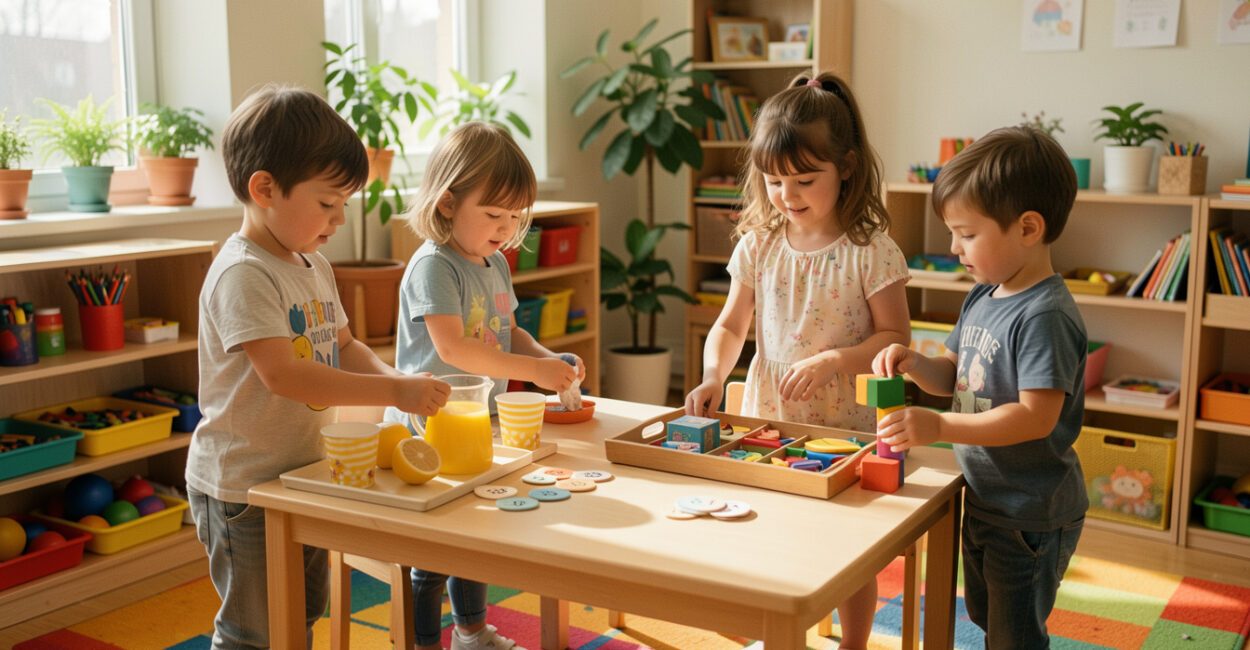
This article explores educational activities that introduce entrepreneurship to young children in early childhood education; it is not about businesses aimed at children. The topic can come up through play and simple projects in which children observe situations, suggest ideas, make choices, and learn to collaborate, always with adult guidance and without pressure to make a profit. An imaginary stand, a toy swap, or an idea for organizing the classroom can be a starting point for these experiences. The learning happens along the way: coming up with an idea, agreeing on how to put it into practice, trying it out, and making adjustments as needed.
What you need to know
- For young children, entrepreneurship means practicing initiative, creativity, and responsibility in age-appropriate situations.
- Short, playful, hands-on activities help children learn by doing.
- Planning, cooperation, and communication have greater educational value than financial results.
- Adults organize the environment, ensure safety, and guide decisions without taking control of the activity.
- Assessment should focus on the process, including children’s choices, attempts, and participation.
How entrepreneurship connects with early childhood education
In early childhood education, entrepreneurship offers a way to turn curiosity and initiative into learning experiences. An enterprising child notices something that could be improved, suggests an idea, takes part in carrying it out, and reflects on what happened. These behaviors can be encouraged through play, conversations, and everyday projects, without expecting children to understand adult business concepts. This approach aligns with Brazil’s Base Nacional Comum Curricular (National Common Curricular Base), which guides learning experiences built around interaction and play. In practice, educators can invite children to explore materials, choose among possibilities, explain their ideas, and work together on a solution.

Entrepreneurship in early childhood means observing, creating, organizing, and persisting through an age-appropriate challenge.
What changes when schools understand this
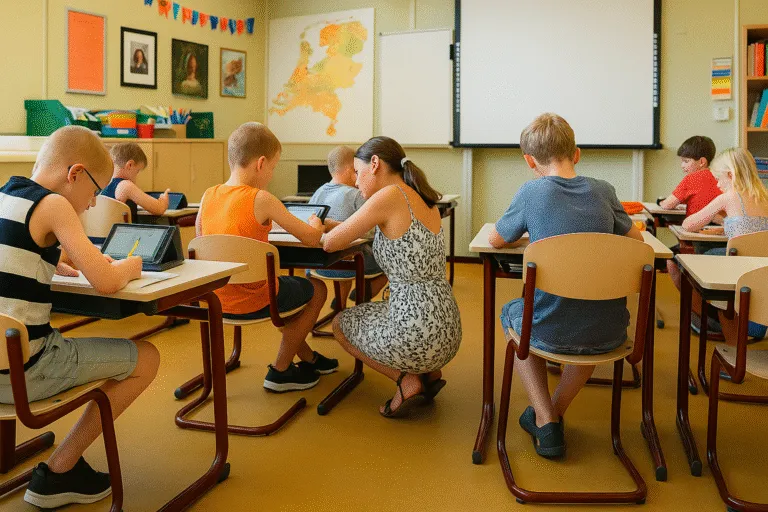
Hands-on activities make it easier for young children to participate. Rather than explaining abstract ideas, educators can show them materials, introduce a situation from their daily routine, and ask what they would like to try.
For example, children can draw ways to organize books and work together to try one of their suggestions.
An important boundary of this approach
Planning should protect children’s well-being and autonomy. Sales targets, productivity demands, competition over results, and singling out one child as “more capable” than others undermine the educational purpose. Adults are also responsible for assessing risks, choosing appropriate materials, and ensuring that participation is welcomed as a choice, without pressure.
Skills that matter more than “making money”
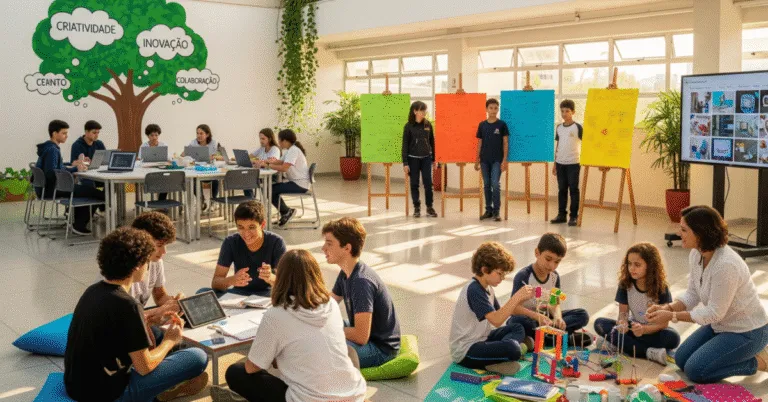
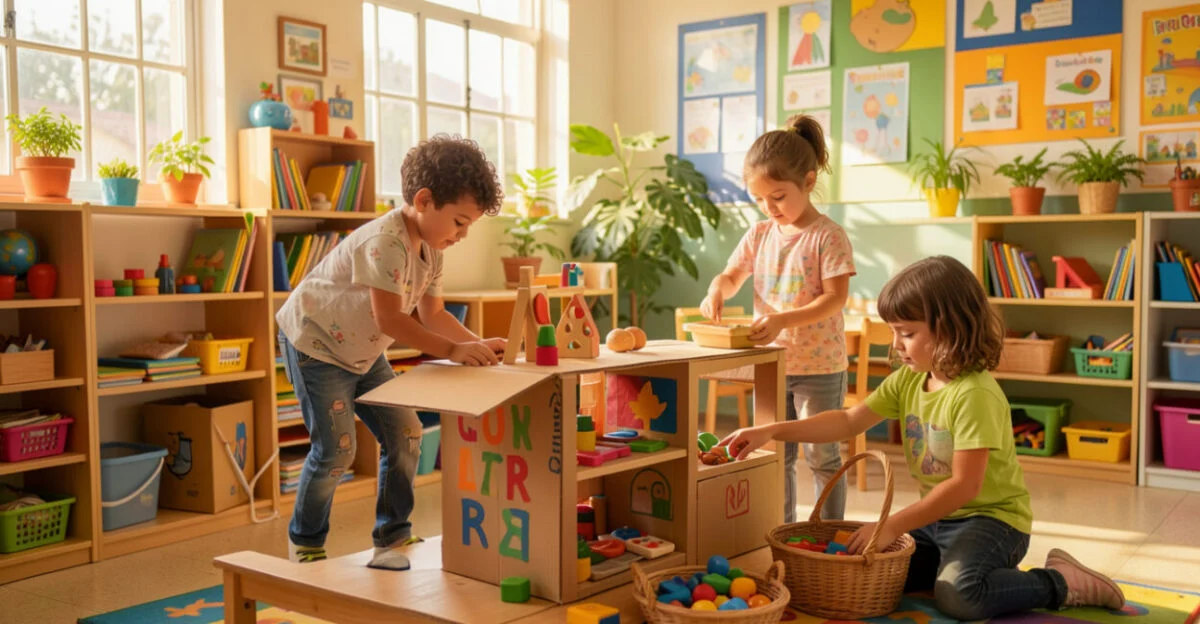
The educational value of these experiences lies in the skills children practice as they come up with and carry out an idea. Initiative, planning, resilience, and a broader perspective can be developed through simple activities, such as a recycled-materials workshop, a pretend fair, or a classroom organizing challenge.
The skills that matter most
- Initiative: suggesting a change to the classroom or choosing to start building with the materials on hand, rather than waiting for an adult to direct every step.
- Planning: deciding, with support, what to do first, which materials to use, and how to divide up small tasks. For example, children can organize items before playing in a pretend store.
- Resilience: accepting that a structure may fall apart or that an idea may not work the first time, then trying another approach with encouragement instead of criticism.
- A broader perspective: listening to different preferences, noticing that people use objects in different ways, and thinking of solutions that work for the group.
- Communication and empathy: explaining a choice, listening to classmates, and agreeing on rules for a swap or a game.
- Creativity and autonomy: finding a new use for simple materials and choosing among options that fit the activity.
Children practice these skills when they organize a swap, make something from recycled materials, or figure out how to put toys away. Educators can support the process with open-ended questions, such as “What would you like to make?” and “What could we change?” rather than offering just one right answer.
When children take part in a concrete decision, they see the consequences and begin to connect choices, actions, and results.
Play-based activities that work in practice

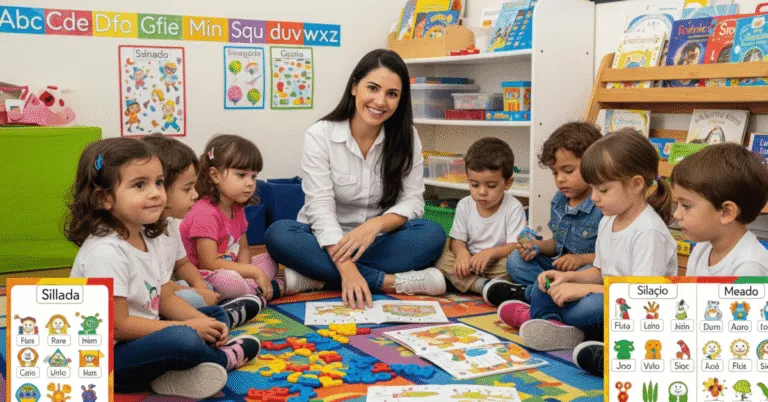
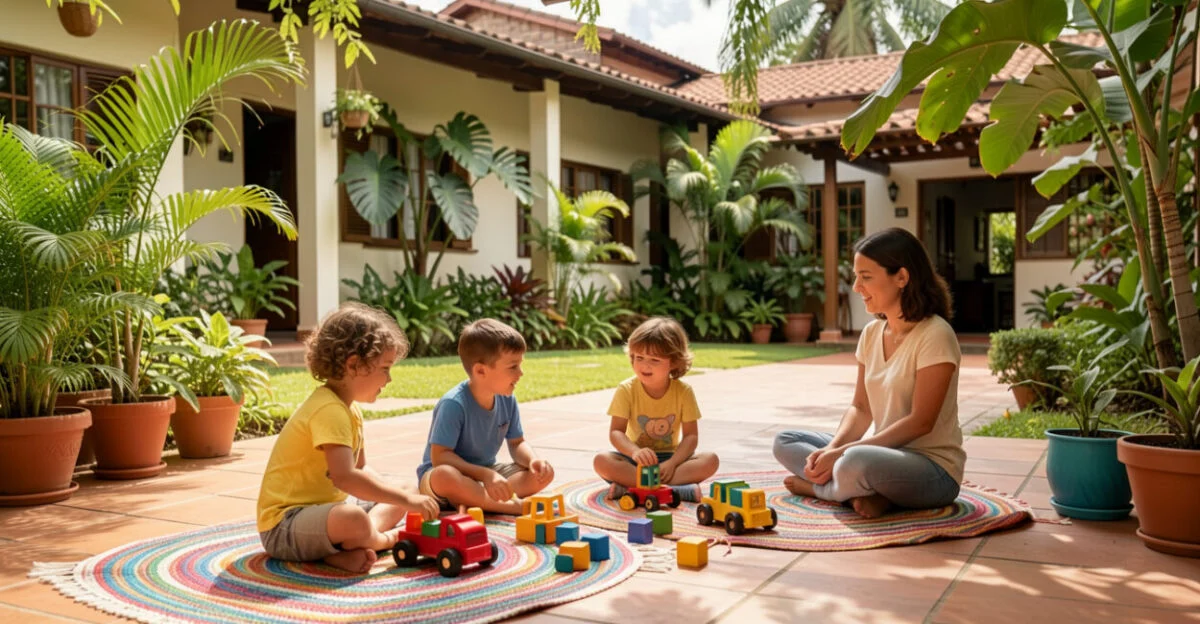
The most accessible activities fit into the daily routine, use safe materials, and end with a conversation about what the children did. Here are some ideas that can be adapted to the space, time available, and needs of the group.
1. Toy swap
Check with families about which toys children can bring, and make sure they are clean, intact, and appropriate for the group. Children can look at the items, talk about their preferences, and decide whether they want to make a swap—without any obligation. Then the educator can ask how they reached an agreement and how they felt about their choice.
2. Recycled-materials workshop
Provide boxes, paper rolls, and other clean materials that have no sharp edges or small parts that could pose a risk. Invite children to make things and explain what they could be used for. Adults can supervise the use of scissors or glue as needed and avoid prescribing one model for everyone.
3. Classroom store
Set up a pretend store using cards, pictures, or familiar classroom objects. Children can take turns choosing, organizing, and helping customers, using tokens with no monetary value. The activity can prompt conversations about quantity, communication, and agreements, without rewarding whoever collects the most items.
4. Idea box
Ask children to draw or share ideas for improving a corner of the classroom, a game, or the way materials are organized. Gather the ideas, help the group choose one they can try, and set aside time to see how it goes. Even if the idea does not work as expected, it is worth discussing what could be changed.
5. Daily problem-solving challenge
Present a real, familiar challenge, such as organizing blocks or sorting pencils by color. Give children time to suggest options, try one, and share what they noticed. If there are different solutions, the group can try more than one, with the educator’s support to ensure everyone can participate.
How to adapt activities for different age groups
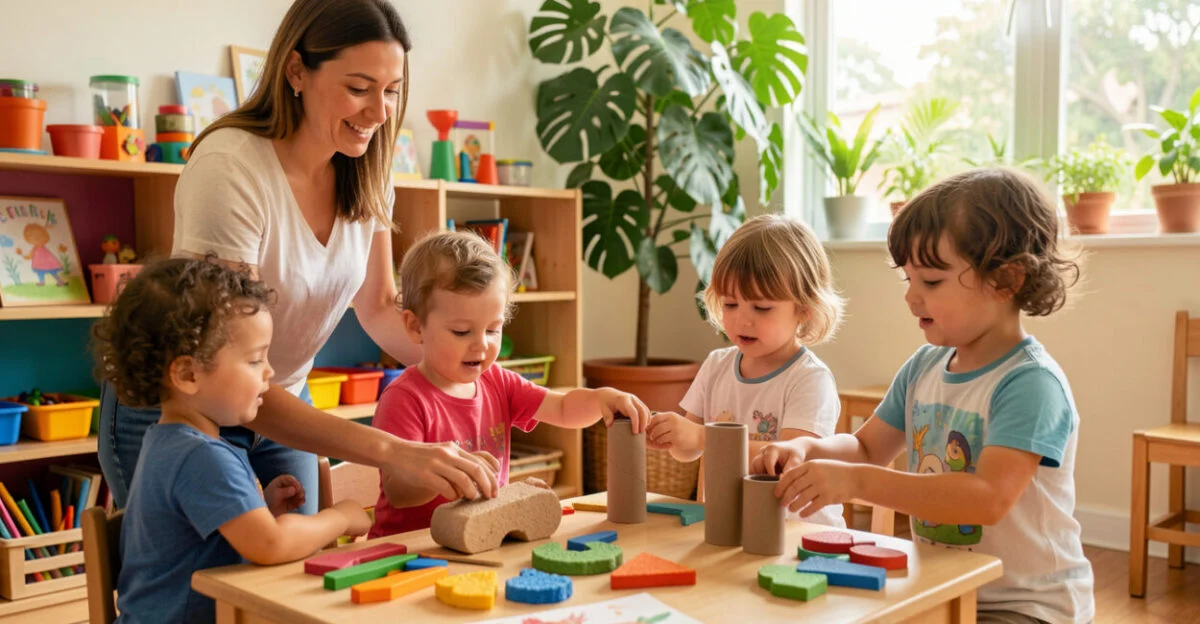
Activities should reflect each group’s development, interests, and ways of communicating. The age ranges below are guidelines for adjusting the level of complexity, not strict rules: children of the same age may need different kinds of support.
Age group
Main focus
Example activity
Ages 2–3
Exploring and making choices
Sorting large materials by color, shape, or texture
Age 4
Guided creation
Making objects from safe recycled materials and showing others how to play with them
Age 5
Simple planning
Organizing a pretend fair or planning a solution for the classroom
With younger children, prioritize exploring, pointing, choosing, and naming materials. With older children, you can talk about the order of steps, assign small responsibilities, and invite them to present an idea to the group. At any age, allow time and offer support without expecting an elaborate verbal explanation.
What to avoid at each stage
- Requiring formal calculations or reading beyond what the activity calls for.
- Using abstract instructions without showing materials and possibilities.
- Rewarding only those who participate the most or achieve a specific result.
- Comparing children or insisting that they all make the same choice.

The role of families and schools, without excess or pressure
Families and schools can share the same goals even when they use different activities: encouraging initiative, respecting each child’s pace, and providing a safe environment. At home, this can happen through small everyday decisions; at school, through group activities that leave room to try, rethink ideas, and cooperate.
Research by Cetic.br, Brazil’s internet research center, on children, families, and internet use can inform reflection on the role of adult guidance in digital life. For activities that introduce entrepreneurship to young children, families can agree in advance on what the child will bring to school and avoid putting any pressure on them to make, trade, or sell something.
Simple ideas for everyday life at home
- Offer two snack options and talk about which one the child prefers.
- Invite the child to gather materials for a simple household activity.
- Ask how they would like to organize their toys, then try their idea together.
- Set up an imaginary stand with toys or play food, without using real money.
At school and at home, adults can offer realistic choices and respond supportively when a child changes their mind. Help is appropriate when it enables the child to move forward; it becomes excessive when the adult makes every decision or turns the activity into a demand.
How to tell whether the activity worked
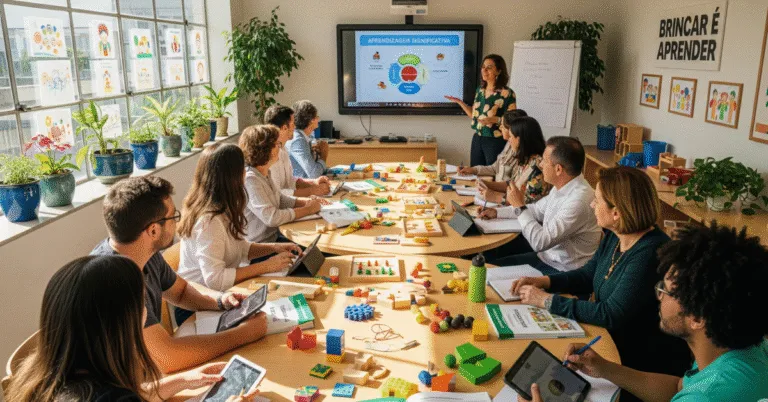
An educational activity works when it offers meaningful opportunities to participate and lets educators observe what children think, choose, and try to do. Educators can plan the assessment in advance by deciding which behaviors to observe, without expecting every child to demonstrate the same skills at the same time.
A brief record can include the activity, materials, adaptations, observed comments or choices, and next steps. Assessment tracks learning while also keeping ethical boundaries in view: check that the activity was safe, participation was voluntary, children collaborated, and there was no pressure to make a profit. For resources on education and life skills, consult materials from UNESCO.
Signs the activity worked
- The child showed interest or took part in a step, with the support they needed.
- They made a choice, suggested a change, or returned to the activity after trying something.
- They communicated an idea through speech, gestures, drawing, or another form of expression.
- They shared materials, listened to classmates, or took part in an agreement.
These signs do not all need to appear in a single activity. A child may observe before joining in, prefer to work alone for a while, or need more guidance. Educators can adjust the environment and revisit the activity another day, taking the group’s responses into account.
What children can make, trade, or sell in an educational activity
In a school activity, children can make simple objects, trade items in good condition, or pretend to sell play products. Any decision to sell something for real needs to be planned and supervised by adults, without pressuring children to make products, contribute money, or earn a profit.
Before running the activity, the school can agree on its educational purpose, check with families if children will bring items from home, and inspect all materials. Drawings, bookmarks, and objects made from clean recycled materials can be used for an exhibit or a pretend swap. If the activity involves food, utensils, tools, or any other potential hazard, adults should assess safety conditions and applicable rules in advance.
- Choose clean materials with no sharp edges, small parts, or components that could cause allergic reactions or injuries.
- Make it clear that no one has to trade, buy, or bring an item.
- Use tokens or play money if the goal is to explore a pretend store.
- If adults organize an actual sale, explain to children that the point is to learn and participate, not to raise money or compete.
Simple next steps
To get started, choose a short activity, materials you already have, and one skill you want to observe. Explain the challenge simply, agree on safety guidelines, and give children room to make choices. Then talk about what they tried and note what you might adjust next time.
You can gradually add more activities, alternating between creating, trading, organizing, and problem-solving. This way, your plans can respond to the group while keeping the focus on learning, rather than turning play into pressure to achieve results.
Frequently asked questions
Is entrepreneurship for young children the same as teaching them to sell?
No. A pretend store can help children practice making choices, communicating, and reaching agreements, but the topic also includes creating, planning, cooperating, and solving problems. Selling does not have to be part of the activity.
What age can children start?
You can introduce these experiences during early childhood education, adapting them to children’s ages and needs. For younger children, focus on exploration and simple choices; older children can try planning and dividing up small tasks.
Do you need expensive materials?
No. Paper, boxes, everyday objects, and reusable materials can inspire engaging activities, as long as they are clean and safe. Planning and adult guidance matter more than the cost of the materials.
Could this encourage competition too early?
An activity can encourage competition if it compares results, rewards whoever sells the most, or singles out a child as the winner. To avoid this, value participation, cooperation, different ideas, and the process of trying and adjusting.
How can you tell whether the activity was truly educational?
Notice whether children had opportunities to make choices, communicate ideas, experiment, or collaborate. Also record whether the activity was safe and respected each child’s choice to participate. These signs can help you adjust future activities without expecting everyone to achieve the same result.
Should families and schools use the same approach?
They do not need to repeat the same activities. They can share the goal of supporting children’s independence without pressure, respecting each child’s pace, and providing support that fits the setting.
How can we define an enterprising child?
An enterprising child shows initiative, observes situations, suggests ideas, and takes part in carrying them out in ways that fit their abilities. This definition does not depend on selling products or running a business.
What can a child sell or trade in a school activity?
School activities can involve drawings, simple objects made from safe materials, or items in good condition for a voluntary swap. An actual sale requires adult planning and supervision; no one should be pressured to make, buy, trade, or try to earn a profit.