
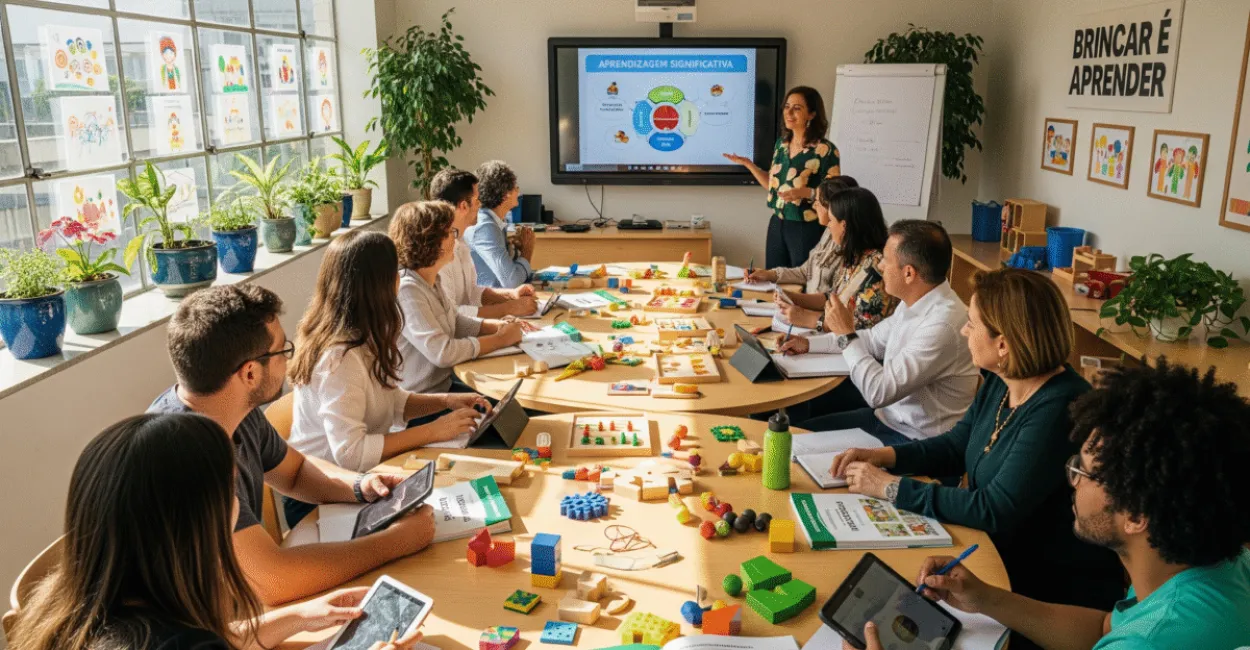
Professional development for early childhood educators is essential to ensuring quality education in the earliest stages of children’s learning. It consists of practices, courses, and training designed to update skills and knowledge and promote effective teaching. Understanding what professional development for early childhood educators involves, why it matters, and how to get started can significantly transform a teaching career.
As education and technology continue to evolve, the challenges facing early childhood educators are growing. In this context, professional development is a valuable opportunity for those who want to keep up with changes, innovate in their teaching, and improve the quality of care they provide to children. Investing in continuing education not only strengthens educators’ skills but also positively affects children’s development.

This article explores the main forms of professional development for early childhood educators, including strategies, courses, trends, and practical benefits. It also covers how to integrate new technologies and innovative methods into everyday school life, advance careers, and contribute to a more effective and compassionate future for education.
Why Ongoing Professional Development Matters for Early Childhood Educators
Understanding continuing education
Continuing education is a learning process designed to help teachers keep improving throughout their careers. For early childhood educators, it is essential for keeping up with the pedagogical, social, and technological changes that affect elementary education. It extends learning beyond an educator’s initial degree. Professional development helps teachers stay current on new educational approaches, teaching resources, and inclusive strategies.
Continuing education also supports personal and professional growth by strengthening educators’ critical and reflective thinking. It encourages teachers to stay engaged with research and connect with recent studies in early childhood education. In turn, it improves the quality of instruction and encourages innovative practices in the classroom.
Ongoing learning is considered an ethical and professional responsibility because education is constantly changing. Educators who invest in their professional growth are better equipped to address a range of challenges and provide children with more meaningful learning experiences.
How professional development improves teaching quality
Investing in professional development has a direct impact on the quality of early childhood education. First, educators become better equipped to plan effective lessons that address students’ individual and collective needs. This creates a more inclusive and engaging learning environment that respects each child’s pace and development.
Ongoing learning also enables educators to incorporate new methods and technologies, including play-based learning, interactive activities, and digital tools, which encourage young children’s engagement and active learning. Improved teaching practices can also help reduce behavioral challenges and increase children’s interest in learning.
Another important benefit is the support it provides for children’s emotional and social development. Well-trained teachers are better prepared to identify specific needs and difficulties and offer appropriate support. This holistic approach is essential to helping children become critical thinkers and independent learners from an early age.
How to start a professional development plan
To create an effective professional development plan, early childhood educators need to assess their needs and interests. Self-assessment is the first step: it helps identify which skills need to be developed or strengthened. Once those areas have been mapped out, it is important to set clear goals that account for both professional growth and the needs of the school environment.
The next step is to find appropriate learning opportunities, which may include graduate programs, workshops, seminars, and specializations in areas such as pedagogy, educational psychology, inclusive education, and educational technology. When choosing an institution, prioritize official accreditation and instructional quality.
Educators should also incorporate reflective practices into their daily routines, such as study groups and instructional coaching, to reinforce what they learn and apply new skills in their professional lives. This makes professional development an ongoing process that is integrated into everyday practice.
Building Specific Skills Through Professional Development for Early Childhood Educators
Essential social-emotional skills
Developing social-emotional skills is a crucial part of professional development for early childhood educators. These skills include managing one’s own emotions and responding to others’ emotions, resolving conflicts, showing empathy, and communicating effectively through communication. Educators who are emotionally prepared create calmer, more engaging environments for children’s learning.
These skills help build positive, respectful relationships among students, families, and school staff. They also enable educators to provide appropriate emotional support and recognize signs of behavioral or developmental challenges. Professional development in this area supports students’ overall growth.
Because these skills are closely tied to emotional intelligence, educators learn techniques such as active listening and strategies for promoting well-being throughout the early childhood learning environment. This strengthens not only teaching practices but also the school environment as a whole.
Keeping up with modern teaching methods
Modern methods such as project-based learning, play-based instruction, and active learning are essential to contemporary early childhood education. Professional development gives educators the tools to use these approaches effectively, helping children build knowledge in a meaningful way and in context.
As teachers learn about these methods, they can create activities that encourage creativity, critical thinking, and collaboration among children. This shift leads to greater student engagement and better educational outcomes.
The ability to adapt instruction to students’ individual needs is also strengthened, promoting inclusion and respect for diversity. Mastering these techniques helps educators stand out professionally and reinforces their role on the teaching team.
Mastering today’s educational technologies
As education becomes increasingly digital, familiarity with educational technology has become essential to professional development for early childhood educators. Digital tools, educational apps, and online platforms enrich teaching and make lessons more dynamic and interactive.
Knowing how to use these technologies allows educators to tailor instruction, encourage children’s participation, and facilitate communication with families and school staff. Technology also expands options for assessing and monitoring student progress.
To that end, educators should take courses and training that address the educational use of technology and promote thoughtful, responsible use of these resources. This training also prepares professionals for the challenges of bringing innovation into teaching.
Practical Steps to Begin Professional Development in Early Childhood Education

Identify areas of interest and need
The first step in professional development is to identify which areas need the most attention in the early childhood education setting. Educators should reflect on their challenges, gaps in their knowledge, and feedback from teaching teams and school administrators. This self-awareness helps focus their efforts where they can make the greatest difference.
It is also important to consider trends and demands in the education field, such as inclusion, innovation, and sustainability. This analysis allows professionals to set priorities for developing specific skills.
This process helps maximize the return on investments in courses and training by focusing on concrete improvements that align with actual teaching practice.
Find high-quality learning opportunities
After identifying areas of interest, educators should look for up-to-date courses, workshops, and specialization programs from recognized providers. Reliable sources include universities, technical colleges, and online learning platforms that offer valid certification and an appropriate number of instructional hours.
Review the curriculum to make sure it covers relevant topics, such as educational psychology, neuroscience applied to education, and active learning methods. Continuing education can also include attending events and conferences and joining specialized study groups.
Choosing courses that align with the needs of one’s own workplace makes learning more relevant and effective, helping educators make better use of it in their daily practice.
Apply learning to everyday teaching
Professional development only has a real impact when educators apply what they have learned in the school environment. Teachers should adapt their teaching practices and use new methods and tools to support children’s development. This may include revising lesson plans and assessment strategies.
Sharing new ideas and practices with the educational team also strengthens collaboration and the exchange of experiences. This integration leads to collective improvements and greater consistency in teaching across the institution.
Taking a reflective, experimental approach helps make professional development an ongoing and productive process, allowing for regular adjustments and better learning outcomes.
- Assess your professional needs: Review your skills and identify areas for development.
- Research courses and training programs: Look for reliable institutions and platforms that offer relevant learning opportunities.
- Plan your study schedule: Organize your time so you can pursue professional development alongside your work routine.
- Put new practices into action: Apply what you learn in your daily work to reinforce your knowledge.
- Join education communities: Exchange experiences in groups, forums, and events.
- Evaluate your progress regularly: Review your growth to guide future investments in training.
Academic Programs and Specializations in Early Childhood Education
Undergraduate and teacher preparation programs
The foundation of professional development for early childhood educators is academic preparation, typically beginning with a teacher preparation program in Pedagogy or a related field. These programs provide a solid grounding in child development, educational theories, and teaching practices. They typically last three to four years and include a required supervised practicum.
In addition to theoretical coursework, these programs provide opportunities for hands-on classroom experience, helping students apply the concepts they have learned. Institutions with strong ratings from the MEC, Brazil’s Ministry of Education, provide high-quality instruction that is essential to initial teacher preparation.
These programs give educators a foundation for continued growth through other forms of professional development throughout their careers.
Specializations and lato sensu graduate programs
To deepen their knowledge and stand out in the job market, many educators pursue specializations and lato sensu graduate programs in specific areas of early childhood education. Popular fields include educational psychology, inclusive education, school administration, and educational technology.
These programs are generally shorter, lasting from six months to two years, and offer courses designed to address emerging needs and areas of interest. In addition to theoretical learning, graduate programs give educators the opportunity to exchange experiences with other professionals and expand their networks.
Completing these programs strengthens an educator’s résumé and supports greater independence and innovation in teaching.
Differences between in-person and online programs
The format of instruction is another important consideration for early childhood educators pursuing professional development. In-person courses offer more direct interaction with instructors and peers, along with hands-on activities. Online learning provides the flexibility to balance studies with work.
Both formats have advantages and should be chosen based on the student’s preferences and needs. Online courses use digital tools to support engagement and independent learning, while also providing access to diverse, up-to-date content.
It is essential to check the institution’s credibility and confirm that the program is officially recognized. This helps ensure the certificate is valid and the training is high quality, whether the course is in person or online.
| Program Type | Average Length | Common Formats |
|---|---|---|
| Pedagogy Teacher Preparation Program | 3 to 4 years | In person and online |
| Lato Sensu Specialization | 6 months to 2 years | In person and online |
| Workshops and Short Courses | Varies (hours to weeks) | In person, online, and hybrid |
Innovations and Teaching Trends in Professional Development for Early Childhood Educators
Project-based learning (PBL)
Project-based learning (PBL) is a method that has gained prominence in professional development for early childhood educators. It encourages children to build knowledge by finding solutions to real-world, context-based challenges. This approach nurtures independence, creativity, and critical thinking from an early age.
This approach requires educators to be prepared to plan and guide meaningful projects, facilitate the process, and encourage collaboration among students. Professional development covers techniques for organizing teamwork, setting goals, and evaluating results.
PBL also encourages interdisciplinary learning by connecting curriculum content to practical, everyday situations, which increases children’s interest and engagement.
Social-emotional learning and mindfulness
Another established professional development trend is a focus on social-emotional learning and mindfulness techniques. This training helps educators promote mindfulness, self-control, and social skills in children. The positive impact can be seen in an improved school climate and academic performance.
Specialized training provides strategies for introducing daily practices that help children recognize and manage emotions, cope with stress, and develop resilience. Educators, in turn, learn to stay calm and respond appropriately to the emotional needs that arise in childhood.
These skills are increasingly valued and considered essential to students’ overall development across multiple areas.
Gamification and digital resources
Using gamification in early childhood education is an innovation that has enhanced learning and professional development for educators. Gamification means applying game elements, such as challenges and rewards, in educational settings to make lessons more dynamic and motivating.
Teachers trained to use digital resources and educational games can create playful experiences that encourage children’s active participation and help reinforce content. Specialized courses and training introduce tools, software, and platforms that can be adapted for early childhood education.
This approach combines technology and teaching, allowing educators to personalize learning for diverse learning styles and promote inclusion.
Strategies for Improving Professional Practice in Early Childhood Education
Critical reflection on teaching practice
One of the key strategies for professional development is critically reflecting on teaching practices. Educators should regularly assess their strategies, results, and interactions with the group, identifying strengths and opportunities for improvement.
This habit allows teachers to refine their work thoughtfully and become more attentive to children’s actual needs. Tools such as field journals, self-assessments, and peer feedback can help foster this reflection.
Setting aside regular time to think about their practice helps educators renew their approach and incorporate new knowledge more meaningfully.
Collaboration and a professional support network
Collaboration is another key part of professional development for early childhood educators. Building a support network with colleagues, specialists, and administrators helps educators share experiences, solve problems, and encourage innovation.
Taking part in study groups, communities of practice, and teaching events strengthens professional connections and offers support with everyday challenges. Collaboration broadens educators’ understanding of different approaches and encourages ongoing shared development.
Cooperation also has a positive impact on the school environment by promoting a culture of collective learning that benefits the entire educational community.
Using feedback and self-assessment to grow
Receiving constructive feedback and practicing self-assessment are essential strategies for ongoing professional development. Educators should be open to feedback intended to improve their work and make an effort to understand their blind spots. They should also develop the ability to assess their own actions honestly and in detail.
Assessment tools and observation protocols can support the feedback process with supervisors, principals, and colleagues. This input helps establish clear development goals and makes it possible to track professional growth.
By combining feedback with self-assessment, teachers create a positive cycle of continuous growth tailored to the real needs of their practice.
- Practice self-assessment regularly.
- Ask colleagues and administrators for feedback.
- Take part in collaborative study groups.
- Record your teaching reflections.
- Apply what you learn in the classroom.
- Review and adjust your strategies regularly.
How Professional Development Affects a Teaching Career
Recognition and value in the job market
Investing in professional development for early childhood educators leads to greater recognition and value in the job market. Up-to-date, well-trained professionals are more likely to access better opportunities, such as promotions, coordinator roles, and positions at well-regarded institutions.
Ongoing training can also increase earning potential and support career stability by demonstrating commitment to the profession and technical competence. Schools and school systems value professionals who are committed to continuous improvement.
This recognition can also extend to academia, making it easier to enter specialization programs and stricto sensu graduate programs, which can open up opportunities in research and higher education.
New career paths and areas of specialization
Professional development opens doors for early childhood educators to explore specialized areas of education, such as inclusive education, educational psychology, instructional coordination, bilingual education, and educational technology. These specializations broaden career options and bring variety and engaging challenges.
With new skills, professionals can also work as consultants, develop teaching materials, train other educators, and participate in community projects. This broader range of opportunities supports career sustainability and enriches educational practice.
It also allows educators to build a stronger professional identity aligned with their interests and values.
Long-term academic and professional achievements
Ongoing professional development contributes to academic achievements, such as publishing articles, attending conferences, and joining research networks. These accomplishments showcase educators’ expertise and open up more ways to contribute to the field of education.
Professionally, continuous growth strengthens leadership and management skills, preparing teachers for positions with greater responsibility. This path builds on teaching experience and extends the impact of their work beyond the classroom.
Professional development thus supports sustainable growth, builds a lasting career, and promotes job satisfaction.
Trends and Challenges in Professional Development for Early Childhood Educators
Adapting to changes in education
One of the main challenges in professional development is adapting to ongoing changes in education, including new policies, technologies, and social needs. Educators need to keep up with curriculum updates, legislation, and emerging teaching practices.
Adapting requires flexibility, a willingness to learn, and the ability to integrate knowledge that supports more inclusive and effective education. Ongoing professional development is the primary tool for navigating these changes.
Teachers who adapt quickly remain relevant and effective, contributing to quality early childhood education and children’s overall development.
Balancing classroom practice and theoretical learning
Another challenge is balancing teaching practice with keeping up with theory. Many educators find it difficult to fit courses and study into the busy pace of everyday classroom life, especially when time and resources are limited.
To overcome this barrier, professional development needs to be planned, and teachers should prioritize flexible learning options, such as online courses, while setting aside specific times for study and reflection. Support from employers is also essential.
Striking this balance helps integrate theory and practice more effectively, increasing the impact of learning.
Integrating technology into continuing education
The use of technologies such as augmented reality, interactive platforms, and artificial intelligence in continuing education is becoming increasingly common. This integration expands learning opportunities and offers efficient, personalized experiences.
However, adopting technology presents challenges, including the need for training, unequal access to digital resources, and careful selection of teaching tools. Educators need to be prepared to address these issues.
Professional development should therefore include digital literacy and gradual experimentation with new technologies to promote thoughtful, beneficial use.
Tools and Resources for Effective Professional Development
Online courses and digital learning platforms
Online courses are a practical and accessible option for professional development among early childhood educators. Digital platforms offer up-to-date content, a wide range of topics, and flexible schedules, making continuing education easier to access.
Virtual learning environments (VLEs) enable interaction through forums, webinars, and tutorials, supporting more collaborative and engaging learning. Many well-regarded institutions offer free and paid courses with recognized certificates.
These tools expand learning opportunities, allowing educators to balance work and study effectively while connecting with a global community of professionals.
Attending conferences, seminars, and workshops
In-person and online events, such as conferences, seminars, and workshops, are essential for networking and keeping early childhood educators up to date. Attendees gain access to recent research, innovative practices, and discussions with experts in the field.
These opportunities expand educators’ teaching repertoire and provide valuable opportunities to exchange experiences. They can also be motivating and inspiring, renewing educators’ commitment to their profession.
Active participation in these events helps build careers and connect professionals with current trends in early childhood education.
Teaching materials and specialized literature
Reading books, scholarly articles, and specialized journals is a traditional and effective way to deepen knowledge. Educational literature provides established theoretical foundations and thoughtful analysis to inform teaching practices.
Up-to-date teaching materials also help educators implement innovative methods and a range of classroom strategies. Staying informed through these resources strengthens educators’ knowledge base and supports more consistent practices.
It is a good idea to set aside time each week for focused study and reading, integrating theory and practice into an ongoing process of growth.
- Sign up for reputable course platforms.
- Attend events and connect with experts.
- Build a regular habit of reading education materials.
- Use online forums and study groups.
- Apply what you learn to school projects.
Conclusion: The Value of Professional Development for Early Childhood Educators
Professional development for early childhood educators is essential to ensuring quality education and supporting children’s overall development. Through continuing education and updates in teaching methods, technology, and social-emotional skills, educators strengthen their practice and expand their career options.
Investing in professional development recognizes that early childhood education is a dynamic field that requires skilled professionals who are engaged with changes in education. Continuous growth strengthens teaching careers, earns recognition, and contributes to more inclusive and innovative school environments.
We encourage educators to embrace the challenge of ongoing professional development by exploring the opportunities and tools available to advance their careers and make a difference in children’s lives.
Frequently Asked Questions About Professional Development for Early Childhood Educators
What is professional development for early childhood educators?
Professional development is the ongoing process of updating and developing early childhood educators’ knowledge, skills, and abilities. It includes courses, training, specializations, and other forms of learning designed to improve teaching practice, introduce new methods, and better meet children’s needs.
What are the main benefits of professional development?
The main benefits include improved teaching quality, greater ability to innovate, personal and emotional growth, recognition in the job market, and more career opportunities. Professional development also helps educators stay current with changes in education and technology.
How do you choose the right courses for professional development?
To choose appropriate courses, educators should identify their areas of interest and knowledge gaps, check the institution’s credibility and the relevance of the curriculum, and select a format that fits their schedule. It is also important to choose programs with official recognition.
What are the current trends in professional development for early childhood educators?
Current trends include active learning methods such as project-based learning, a focus on social-emotional skills, the integration of digital technology into education, and an emphasis on inclusive education. These approaches support more effective and engaging teaching practices.
How can educators balance professional development with their work routine?
It is essential to plan study time and look for flexible options, such as online courses and virtual events. Educators should establish an organized routine, set clear priorities, and use digital resources that make learning easier, ensuring professional development is integrated into everyday practice.
“Investing in the professional development of early childhood educators means investing in the foundation of a fairer, better-prepared society, because the quality of early education directly shapes the future of the entire community.” – UNESCO
Artigos Relacionados
 Early Childhood Education: The Importance of Play in Child Development
 How to Introduce Literacy in Early Childhood Education
 Professional Cameras for Educators: Essential Tools for Digital Learning
 The Importance of Play in Childhood for Whole-Child Development
 Professional Development Courses: A Complete Guide to Advancing Your Career
