
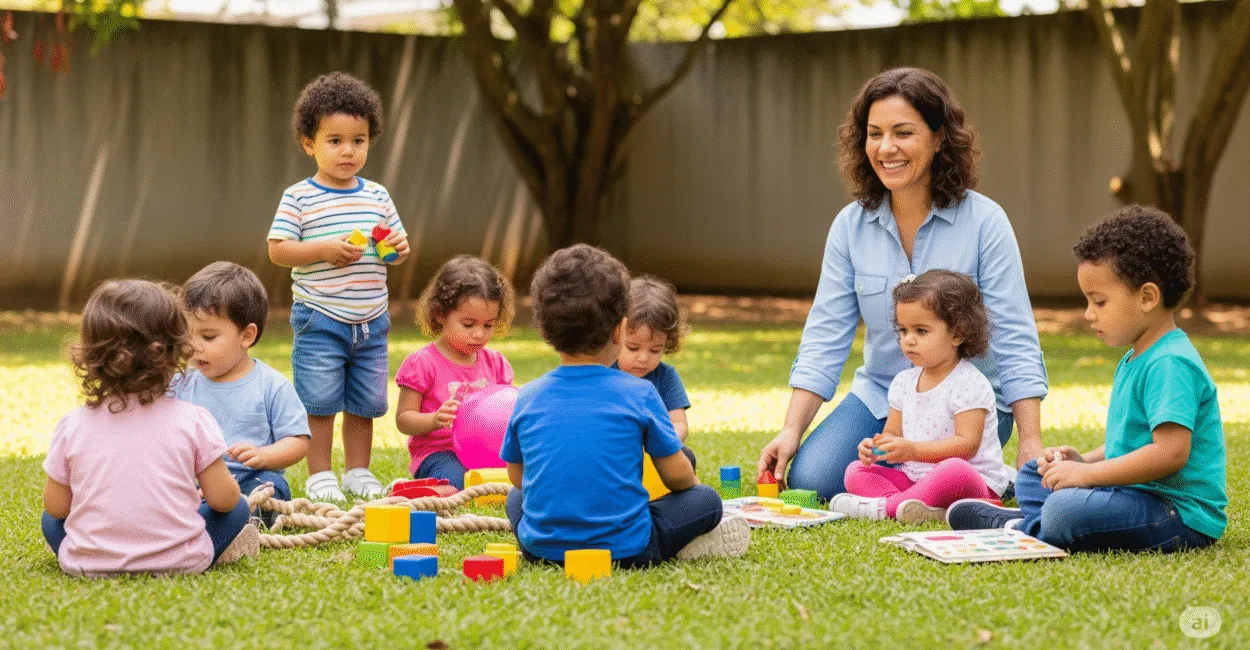
When children play, they’re not “just having fun”—they’re testing ideas, practicing language, learning social rules, and working through emotions, all at once. In childhood, play is a form of active learning because it turns curiosity into hands-on experience, and experience into knowledge. This changes how we think about daily routines, school, and even the toys we choose. In this article, you’ll learn why play is central to whole-child development, which skills it strengthens, when its benefits may diminish, and how to create the conditions children need for richer play.

What You Need to Know
- Play is part of development, not a break from learning.
- Free play strengthens language, attention, working memory, self-regulation, and creativity.
- Pretend play helps children work through fear, conflict, frustration, and desire.
- Less screen time and a wider range of experiences improve the quality of play.
- The value of play depends less on the toy and more on autonomy, time, and interaction.
Play in Childhood and Whole-Child Development
From a child development perspective, play is a spontaneous, enjoyable, and purposeful activity that brings together cognitive, social, motor, and emotional skills. In practical terms, this means children aren’t just learning facts—they’re learning how to navigate the world. That’s why play features so prominently in approaches such as Reggio Emilia, constructivist early childhood education, and the work of the Brazilian Association of Developmental Psychology. UNICEF also recognizes play as a right of childhood, not a luxury or reward.
What defines play in childhood isn’t the toy, but the child’s freedom to act independently, try out roles, and make sense of what they’ve experienced.
What Changes When Children Really Play
In practice, children stop being passive recipients and become active participants. They make up rules, adapt situations, replay scenes, and test solutions without fear of getting it wrong, because mistakes are part of the game. I’ve seen children who struggled to speak open up much more during pretend play than in direct conversations with adults. That’s because play lowers the pressure and creates room for trying, repeating, and imitating.
How Play Shapes the Brain, Language, and Attention
Children’s brains learn through meaningful repetition. When children build, take things apart, run, negotiate, imagine, and narrate what they’re doing, they strengthen neural connections related to memory, planning, and language. This process is linked to neuroplasticity, the brain’s ability to change based on experience. Neuroplasticity is especially strong in childhood, which is why playful experiences matter so much. The National Institute of Child Health and Human Development offers reliable resources on child development and highlights the connections between interaction, environment, and learning.
Language Grows Through Interaction, Not Isolation
Anyone who spends time with children notices it quickly: playing grocery store, house, or superheroes brings out new vocabulary, sentence structures, and turn-taking. Children have to name objects, explain actions, and respond to others. Even simple situations count. When a child says, “Now you’re the customer,” they’re practicing categorization, logical sequencing, and theory of mind—the ability to imagine what someone else knows or wants.
Attention and Memory Work Together
Board games, building blocks, and hide-and-seek require sustained attention. Pretend play, meanwhile, draws on working memory because children have to remember roles, agreements, and changes to the storyline.
There’s no magic fix, and this is an important limitation: play helps a lot, but it doesn’t replace professional support when a child has a significant speech, motor, or behavioral delay. In some cases, the best results come from combining a playful environment with a professional evaluation.
Free, Structured, and Pretend Play: Each Offers Something Different

Not all play leads to the same kind of learning. The differences between free, structured, and pretend play come down to how much autonomy children have, what rules they follow, and which skills they use.
| Type of play | What the child does | Skill most strongly developed |
|---|---|---|
| Free | Chooses, invents, and changes the rules | Creativity and autonomy |
| Structured | Follows agreed-upon rules | Attention, self-control, and cooperation |
| Pretend | Imitates, represents, and takes on roles | Language, empathy, and emotional processing |
Free Play Doesn’t Mean Leaving Children on Their Own
Free play doesn’t mean neglect. It means the adult sets up the environment, keeps it safe, and steps out of the spotlight. That distinction makes a big difference, giving children room to create without being directed every step of the way.
Read also: Neuroplasticity and Skill Development
When adults control every step, play becomes a task to complete. When they provide space and observe, children get to take the lead. And having a sense of ownership is one of the foundations of whole-child development.
Emotions, Frustration, and Self-Control During Play
Play is also an emotional rehearsal. Children lose, wait, compete, negotiate, start over, and learn to tolerate small setbacks in a low-risk environment. This helps build self-regulation—the ability to manage impulses, focus, and emotional responses.
Read also: Parents and Play: How to Encourage Playful Freedom
The CDC offers guidance on developmental milestones and explains how interaction, routines, and the environment influence typical childhood behaviors. Brazil’s Ministry of Health also provides public resources on child health and development, which can help caregivers assess potential warning signs more carefully.
Children first learn to regulate themselves in small, repeated situations; play is one of the safest ways to practice.
How Play Teaches Children to Lose
Here’s a familiar scene: two children want the same toy car, and tears come quickly. If an adult resolves everything right away, the chance to learn shrinks. If the adult helps them name the conflict, wait their turn, and agree on another solution, the children gain skills they can use in everyday life.
That’s one reason board games, circle games, and adapted sports are valuable. They introduce children to real limits in a supportive, safe setting.
The Role of the Environment: Home, School, and Time
Play doesn’t depend only on a child’s willingness. It also depends on free time, the quality of the space, and whether the environment allows room for imagination. Homes packed with stimulation, overbooked schedules, and too much screen time tend to make play less immersive.
What Gets in the Way Today
- Overly packed schedules with no real blocks of free time.
- Too many toys, which can scatter attention instead of sustaining it.
- Screen time used repeatedly as a substitute for interaction.
- Environments where children are expected to obey but not encouraged to invent.
There’s an important nuance: screens aren’t the only problem. The bigger issue is when they take the place of spontaneous play, physical movement, and conversations with adults and other children. When that happens, quality time simply disappears.
How to Encourage Play Without Turning It Into a Guided Activity
Encouraging play doesn’t mean filling a child’s day with activities or turning everything into a lesson. What tends to work best is simpler: less intervention, more availability, and a wider range of experiences.
What Helps Day to Day
- Set aside blocks of time without a fixed schedule.
- Offer open-ended materials such as boxes, fabric, blocks, toy pots and pans, and paper.
- Allow a little manageable mess, because exploring changes the space.
- Join in now and then without taking over the story.
- Offer a variety of physical activities: running, climbing, jumping, balancing, and stacking.
Open-ended materials often lead to more play than toys that do everything for children. A cardboard box can become a spaceship, a house, a tunnel, or a grocery store. Objects without a single set purpose invite imagination; toys with a narrowly defined use leave less room for it.
A Snapshot of Everyday Life
One ordinary late afternoon, a five-year-old boy picked up some plastic containers, a spoon, and a few lids. Within ten minutes, the kitchen had become a restaurant, then a doctor’s office, and finally a repair shop. His mother didn’t suggest a storyline; she just set up the space and watched.
By the end, he had narrated, negotiated, sorted objects, and sustained his attention longer than he had during the structured activities he’d done that day. This kind of scene may look simple, but it’s exactly where development happens.
When Play Becomes Less Spontaneous and What to Watch For
Children don’t all play the same way, and that deserves attention without causing alarm. If a child consistently struggles to imagine, interact, vary their activities, or tolerate frustration, it’s worth taking a closer look.
Signs such as very rigid repetition, little initiative, no pretend play beyond a certain developmental age, or ongoing social isolation may indicate that an evaluation is warranted. These signs alone don’t establish a diagnosis, but they may suggest that play is no longer serving its role as a way to explore.
When play becomes empty repetition or disappears altogether, the problem isn’t always the child; often, it lies in the environment, the routine, or the way an adult structures the day.
In situations like these, an evaluation by a pediatrician, educational specialist, speech-language pathologist, or child psychologist can help distinguish typical variation from significant signs. The key is not to wait for everything to resolve on its own when there’s a persistent impact on daily life.
Next Steps for Making Room for Meaningful Play
If there’s one practical choice that can change things, it’s this: protect the time, space, and autonomy children need to play. It doesn’t have to be perfect; it has to be consistent. Fifteen or twenty minutes of undivided attention, repeated regularly, is worth more than a packed schedule of preplanned activities.
If you want to explore the topic further, observe your household routine for a week: how much time does your child have to invent, negotiate, and repeat a game without interruption? The answer says more about development than many polished speeches.
Frequently Asked Questions
Is play really as important as learning school subjects?
Yes. In childhood, play is as valuable a way to learn as formal activities because it develops language, attention, memory, coordination, and emotional regulation. School learning has a stronger foundation when children have already practiced these skills in everyday life.
What’s the difference between playing and just being distracted?
Play involves active participation, creating rules, exploring, or pretending. Being distracted tends to be more passive, with little processing of what’s happening. Play creates experiences; distraction simply fills time.
Do expensive toys make play better?
Not necessarily. In many cases, simple, open-ended materials encourage more creativity than highly specialized electronic toys. What matters more is the chance to invent, repeat, and turn an object into many different things.
How much playtime does a child need each day?
There’s no single number that works for every age and routine. The most important thing is to have real blocks of free time throughout the day, without too many interruptions. Consistency usually matters more than the length of any one session.
Can screen time replace play?
No. Screens can entertain, but they don’t offer the same richness of physical, social, and imaginative interaction as play. When screens take up too much of the day, they tend to reduce movement, imagination, and conversations with others.
When should I be concerned about the way my child plays?
Watch for little initiative, excessive rigidity, persistent isolation, little variety in activities, or ongoing difficulty interacting with others. One isolated pattern doesn’t necessarily mean there’s a problem, but a recurring pattern that affects daily life warrants professional evaluation.
%%AGPTRH7%%
Artigos Relacionados
 Early Childhood Education: The Importance of Play in Child Development
 Education: The Essential Role Parents Play in Child Development
 Child Psychology: A Complete Guide to Understanding Children’s Emotions
 Childhood and Learning: How They Shape Adult Life
 The Importance of Design in Digital Communication: How Design Turns Messages Into Impact
