
When it’s time to turn off a screen, a child protests, and the adult has to decide whether to stick to the agreement or make an exception. Situations like this are part of everyday parenting: parents influence their children’s development through the connection they build, the boundaries they set, the conversations they have, and the example they provide. Parenting encompasses the bonds, responsibilities, and caregiving practices that support a child’s physical, emotional, social, and cognitive development. In everyday life, this means protecting and guiding children while helping them gain independence, with age-appropriate rules and room to make and learn from mistakes.
There’s no formula that works for every family. Still, some choices can help reduce conflict and provide more security: agree on rules ahead of time, listen before correcting, and respond consistently when a boundary is crossed.

What Role Do Parents Play in Their Children’s Education and Development?
Parents’ primary role is to provide consistent care and guidance so their children can develop a sense of security, social skills, and independence. This means meeting their needs, setting clear boundaries, supporting their learning, and adjusting supervision as they grow. It doesn’t mean getting everything right; it means making amends when an interaction goes off track. A child’s bond with their caregivers helps them interpret their surroundings and seek support when facing challenges. Family routines also influence sleep, eating, relationships, and study habits. For information about childhood and the circumstances of Brazilian families, see the IBGE (Brazilian Institute of Geography and Statistics) and UNICEF Brazil.
Development doesn’t depend on family alone: school, health, living conditions, temperament, and social experiences also play a role. That’s why a learning or behavioral difficulty shouldn’t automatically be blamed on how a child is raised at home.

How to Balance Affection, Boundaries, and Discipline Without Constant Arguments
Affection doesn’t undermine good parenting. What often leads to more stress is a lack of consistency or trying to enforce boundaries only in the heat of a conflict. You can acknowledge a child’s feelings and still maintain a rule: “I know you wanted to keep playing. Now it’s time to put the toys away.”
Discipline means teaching behavior and responsibility through guidance, boundaries, and proportionate consequences. Yelling, vague threats, or punishments unrelated to what happened may stop a behavior in the moment, but they don’t clearly teach a child what to do differently.
A helpful approach is to agree on the rule, give a heads-up before a change, and use a consequence related to the behavior. For example, if a child draws on the wall, the adult can stop them and involve them in cleaning it up, depending on their age, rather than taking away an unrelated privilege.
- Before a conflict: Explain what you expect in simple, specific words.
- During: Keep your voice firm and avoid a lengthy discussion while the child is very upset.
- After: Explain the boundary and think together about an alternative for a similar situation.
A common mistake is changing the rule after prolonged protests. This can unintentionally teach a child that persistent arguing can change an agreement. If you need to make an exception, call it an exception and explain why it applies that day, without promising the same for next time.

Parents as Everyday Role Models: Actions That Teach

Yes, parents’ example influences learning because children observe how adults treat other people, handle frustration, and keep commitments. This influence doesn’t determine behavior on its own: personality, peers, and other environments also help shape it.
If an adult tells a child not to yell but then yells at others when upset, the message loses its impact. When you notice this mismatch, acknowledging the mistake and apologizing offers a concrete example of taking responsibility. An apology doesn’t erase the boundary; it shows how to repair an interaction.
Screen use also sets an example. Rules about phones are easier to understand when adults explain the reasons behind them and follow similar agreements, such as putting devices away during meals. Consistency matters more than a perfect rule no one can stick to.
Routines and Boundaries: Supporting Emotional Security
A predictable routine helps children anticipate what comes next and can reduce friction during recurring transitions, such as leaving the house or going to bed. Predictability doesn’t mean sticking to a rigid schedule every minute; a few stable routines can make transitions smoother.
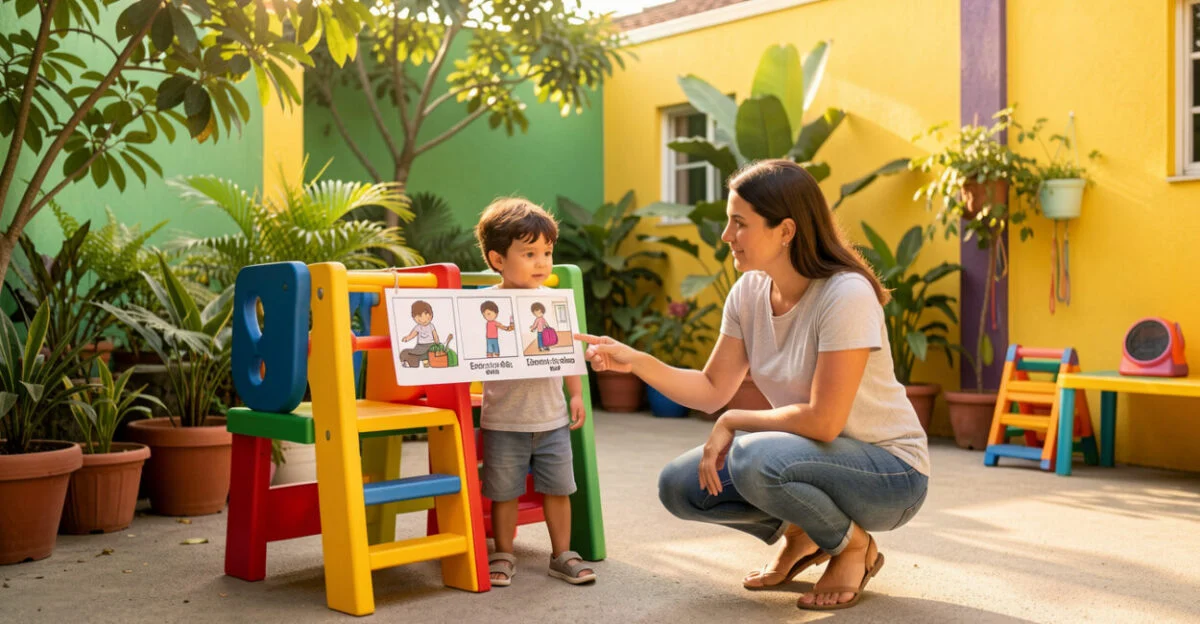
For a child who has trouble stopping a game, a brief warning before it’s time to leave usually works better than a sudden command. Saying, “We’re going to take a bath in ten minutes,” and then giving a second reminder lets the child prepare. Young children may need visual support, such as a picture sequence showing how to get dressed, eat, and head out.
When a routine isn’t working, look for patterns before adding rules. Does the resistance always happen at the same time? Is the child hungry or tired, or do they need help wrapping up an activity? Changing the timing or breaking a task into steps may resolve the friction more effectively than repeating the instruction louder.

Family Communication: Listening and Resolving Conflicts
Listening first and speaking clearly can help resolve conflicts without turning every disagreement into a power struggle. This doesn’t mean agreeing with the child; it means understanding what they’re trying to communicate and responding to their behavior with specific guidance.
Instead of saying, “You never cooperate,” describe what happened: “You left your backpack in the hallway, and someone could trip over it. Let’s hang it up.” The first statement labels the child; the second points out a behavior and suggests a possible solution.
During a difficult conversation, try to separate three things: what happened, how the child feels, and the boundary. “You hit your brother. I can see you’re angry. I won’t let you hit him; let’s take some space and talk when you’re both calmer.” Communication techniques can help structure the conversation, as long as they aren’t used to pressure or manipulate the child.
What Should You Adjust at Each Stage of Childhood?
Guidance should match each child’s ability to understand, development, and needs. Age can help determine the language to use and level of supervision, but it isn’t a foolproof guide: children of the same age may need different kinds of support.
Stage What tends to help What to adjust Early childhood Simple routines, close supervision, and short instructions. Offer simple choices and set immediate boundaries in situations involving safety. School age Explained rules, age-appropriate tasks, and communication with the school. Involve the child in organizing materials and solving everyday problems. Preteen and teenage years Listening, negotiated agreements, and supervision suited to the situation. Grant independence gradually while having clear conversations about safety and responsibility.
At any age, a child may need extra support during transitions, such as the arrival of a sibling, a family separation, or a change of schools. If you have questions about sleep, eating, development, or behavior, consult a health care professional. Brazil’s Ministry of Health provides official information and services.
Next Steps to Strengthen the Parent-Child Relationship
Choose a situation that often causes friction and notice when it starts, what the child does, and how the adults respond. Then set a brief rule and a related consequence. Try this agreement for a few days and adjust it if it doesn’t fit the child’s age, the family’s routine, or its needs.
If conflicts are intense, persistent, or affecting the well-being of the child and family, seek guidance from a pediatrician or mental health professional. Research on child development, such as work shared by Harvard University, can deepen your understanding of the topic, but it doesn’t replace an individual assessment when there’s a specific concern.
Frequently Asked Questions
What Should You Do When Caregivers Disagree About a Rule?
Talk without the child present and choose guidance you can both follow. If you still disagree, prioritize safety and revisit the discussion before presenting conflicting rules.
What Should You Do When a Child Doesn’t Want to Talk After an Argument?
Give the child time to calm down and let them know you’re still available to talk. A simple question, such as “Do you want to talk now or after dinner?” gives them space without dropping the subject.
When Should a Change in Behavior Get Professional Attention?
Seek guidance if the change persists, causes distress, or interferes with activities such as sleeping, learning, and socializing. A professional can assess the situation and recommend appropriate support without assuming the cause lies solely in family dynamics.