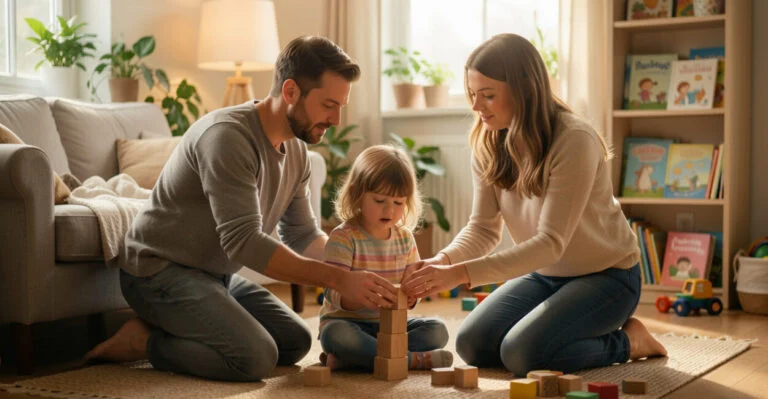
Early childhood education is a crucial stage in a person’s development, and incorporating play during this period is essential to enhancing learning. Play, which involves recreational and creative activities, sparks children’s curiosity and imagination while supporting cognitive development, making education more effective and enjoyable.
But why is play so important in early childhood education? In this article, we’ll take an in-depth look at how play-based practices contribute to children’s overall development, what their main characteristics are, and how to use them strategically in early childhood education.

The Role of Play in Early Childhood Education: A Transformative Approach
Understanding and Grounding Play-Based Learning
The term “play” is associated with games, make-believe, and activities that capture children’s interest and bring them joy. In early childhood education, play is more than entertainment: it’s a teaching tool that lets children learn through action, experimentation, and social interaction.
According to education experts, play-based activities create an environment that supports the development of motor, cognitive, and social-emotional skills, making learning feel natural and meaningful.
Play also encourages independence and creativity, both essential to healthy childhood development.
Benefits of Play for Child Development
When early childhood education incorporates play, children make significant gains in several areas. Key benefits include:
- Stronger logical reasoning and problem-solving skills;
- Language development and improved communication;
- Improved concentration and memory;
- Stronger teamwork and social skills;
- Emotional expression and identity development.
These benefits show that play is about much more than fun. It’s a key part of preparing children for future challenges.
How Play Transforms the Classroom
Incorporating play into early childhood education transforms the classroom into a welcoming, dynamic space. This change positively affects students’ motivation, helping them feel more engaged and ready to learn.
Teachers who use play-based strategies report that it’s easier to capture children’s attention and support meaningful learning. Play can also help children grasp complex concepts, as they learn through play.
Play also helps build strong, caring relationships between students and educators, strengthening the classroom community.
Strategies for Successfully Integrating Play Into Early Childhood Education
Planning Play-Based Activities
To make sure play serves its educational purpose, activities should be thoughtfully planned and aligned with learning objectives. It’s important to consider the children’s ages, interests, and the material to be covered.
Educational games, storytelling, role-play, and sensory activities can be planned to develop a range of skills.
Plans should also include opportunities to assess students’ progress and adjust teaching practices.
Resources and Materials for Play-Based Learning
Using a variety of accessible materials helps create diverse play experiences. Building blocks, educational toys, recycled materials, and digital resources can all enrich activities.
Materials should spark creativity and allow children to explore in different ways, encouraging them to experiment and discover.
Exploring different textures, colors, and shapes expands students’ sensory and cognitive experiences.
The Educator’s Role in Play-Based Learning
Educators play a central role in using play as a teaching tool, guiding children and facilitating learning. Teachers need to be prepared to adapt activities to children’s individual needs and pace.
Educators should also encourage students to participate actively, fostering independence and giving children a leading role in their play.
Close observation helps teachers identify challenges and support students’ overall development.
Types of Play-Based Activities and Their Impact on Early Childhood Education

Rule-Based Games and Cognitive Development
Games with rules are an excellent way to strengthen logical reasoning, attention, and the ability to follow directions. In early childhood education, these games help develop skills that are essential for formal learning, such as impulse control and decision-making.
They also teach children how to handle winning and losing, helping them develop social values.
Common examples include board games, math challenges, and sorting and sequencing activities.
Make-Believe Play and Imagination
Make-believe activities, such as pretend play and role-play, encourage children’s creativity and ability to think abstractly. Through these activities, students explore different social roles and expand their understanding of the world.
This type of play supports language development, empathy, and emotional expression, making it essential to identity development.
Encouraging make-believe play in early childhood education helps prepare children to interact with others and resolve conflicts.
Sensorimotor Activities and Overall Development
Activities that involve movement and sensory exploration are essential to children’s physical and neurological development. In early childhood education, these activities strengthen motor coordination, balance, and awareness of the body in space.
They also support concentration and sensory integration, both important for children’s learning and well-being.
Examples include activities with different textures, balance games, and outdoor play.
Comparison: Play-Based vs. Traditional Early Childhood Education
| Aspect | Play-Based Learning | Traditional Learning |
|---|---|---|
| Engagement | High; children participate actively | Low; focuses on passive memorization |
| Development | Well-rounded: cognitive, social, and emotional | Focused on academic content |
| Methodology | Interactive and child-centered | Lecture-based and teacher-centered |
| Motivation | High; learning is enjoyable | Variable; may lead to disengagement |
| Flexibility | Adaptable to individual needs | Standardized for all students |
How to Assess the Impact of Play on Learning
Indicators of Child Development
Assessing play-based learning should involve indicators that go beyond traditional academic performance. Independence, creativity, social interaction, and emotional expression are all important measures of the results of these practices.
Qualitative methods, such as systematic observation and narrative records, can help capture these dimensions.
This approach provides a broader view of a child’s overall development.
Assessment Tools and Resources
Tools such as portfolios, classroom journals, and checklists help educators track children’s progress during play-based activities.
Ongoing formative assessments make it possible to identify challenges and adjust instruction as needed, helping ensure that play-based learning is effective.
It’s also important to involve families in this process to provide children with additional support.
Challenges in Assessing Play-Based Learning
Assessing play-based learning can be challenging because it involves subjective and multifaceted aspects of development. It’s essential to establish clear, objective criteria without losing sight of the richness of children’s experiences.
Another challenge is aligning the expectations of schools, families, and society regarding the outcomes of early childhood education.
Training educators to conduct appropriate assessments is an important way to address these challenges.
Play and Inclusion in Early Childhood Education
Promoting Inclusion Through Play
Play plays an important role in inclusive education because it offers different ways for children to participate and learn, adapted to each child’s needs.
Games and play activities can be modified to ensure physical, cognitive, and social accessibility, creating a welcoming and inclusive environment.
This approach helps reduce barriers and celebrate diversity in early childhood education.
Adapting Activities for Children With Special Needs
For play-based learning to be effective for children with special needs, activities must be adapted to take their abilities and limitations into account.
Tactile materials, visual games, and assistive technologies can be used to make participation easier.
Collaboration among educators, therapists, and families is essential to developing personalized strategies.
Positive Outcomes of Inclusive Play
Studies show that inclusion through play supports the social and academic development of children with special needs while encouraging respect and empathy among their classmates.
These findings demonstrate that play is a powerful tool for building a fairer, more equitable early childhood education system.
Using Technology to Enhance Play-Based Learning
Digital and Interactive Resources
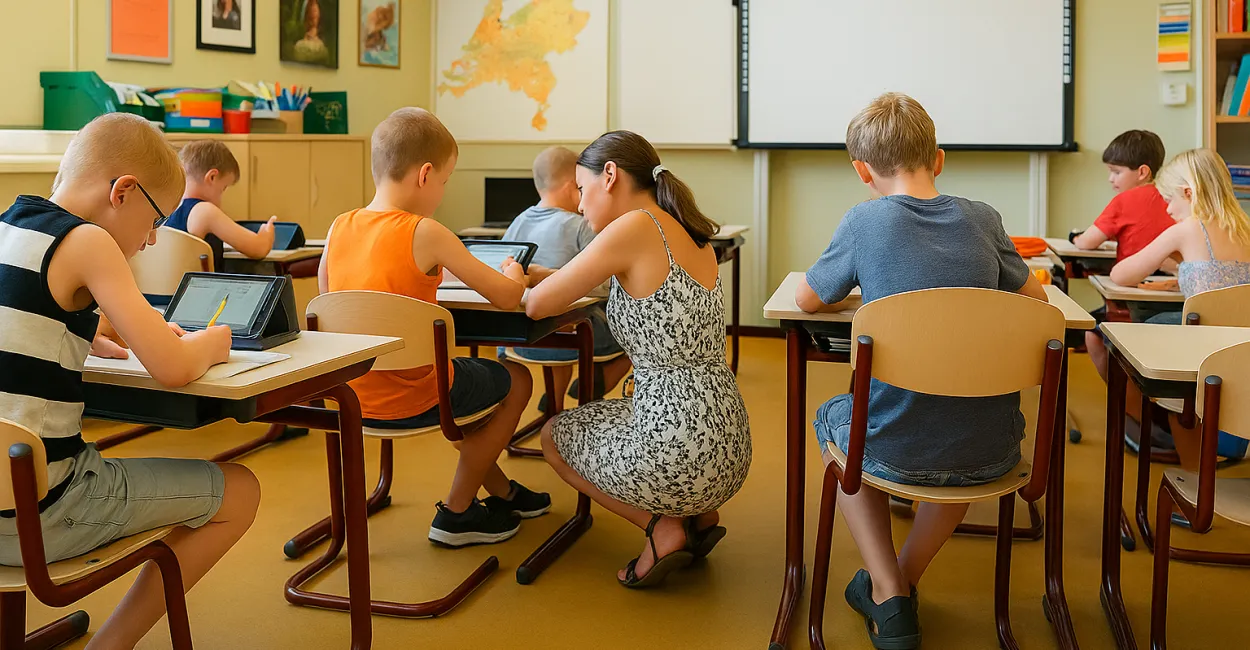
Technology offers many ways to enrich play-based learning through educational apps, digital games, and interactive platforms.
These resources can encourage reasoning, creativity, and collaboration, making learning more engaging and personalized.
Technology should be used in moderation and with guidance to ensure it supports educational goals.
Balancing Technology With Traditional Play
Although technology can be a valuable tool, balancing it with in-person activities and direct interaction with the environment is essential to children’s overall development.
Outdoor play, games with physical materials, and face-to-face interactions remain essential for socialization and motor development.
Early childhood education should combine the best of both worlds to maximize the benefits of play.
Challenges of Using Technology in Early Childhood Education
Challenges such as unequal access to technology, teacher training, and the risks of excessive use must be addressed to ensure effective implementation.
Public policies and school initiatives should aim to expand digital inclusion and train teachers to use technology for educational purposes.
The focus should always be on children’s development, making sure technology doesn’t replace human connection.
Preparing and Training Educators to Use Play-Based Learning
The Importance of Training in Play-Based Practices
To use play effectively, educators need specialized training in both theoretical foundations and practical methods.
This training supports teaching innovation and improves the quality of early childhood education.
It also prepares teachers to handle everyday classroom challenges and adapt activities to children’s needs.
Available Professional Development Resources
Educators can access a range of online courses, workshops, and resources focused on play-based practices. Reputable institutions and government agencies offer programs that promote ongoing professional development.
Taking advantage of these resources helps educators stay up to date and share experiences with colleagues.
Encouraging ongoing professional development is essential to strengthening play-based learning.
Professional Development and Classroom Impact
Trained educators tend to be more creative and flexible, applying play-based strategies more effectively.
This leads to more stimulating learning environments that respect children’s pace and interests.
As a result, students’ performance and well-being improve significantly.
Public Policies and Support for Play-Based Learning
Education Laws and Guidelines
Play is included in the early childhood education guidelines established by Brazil’s Ministry of Education (Ministério da Educação, or MEC) and in official documents such as Brazil’s National Common Curricular Base (Base Nacional Comum Curricular, or BNCC), the national curriculum framework.
These policies recognize the value of play in child development and guide schools in incorporating play-based practices into their educational programs.
Following these guidelines is essential to providing high-quality, inclusive early childhood education.
Government Support Initiatives
Government programs that support teacher training, school infrastructure, and educational resources encourage the adoption of play-based learning.
Initiatives that promote digital inclusion and access to educational materials also strengthen these practices.
Public investment is essential to making innovative, effective early childhood education accessible to everyone.
Challenges and Future Outlook
Despite progress, challenges remain, including a lack of resources, regional inequalities, and resistance to innovative methods.
Overcoming these barriers requires school administrators, educators, and society to commit to making play-based learning a priority.
The future of early childhood education depends on making these practices a lasting part of education and respecting children’s overall development.
How to Involve Families in Play-Based Learning
The Importance of Family Involvement
Family involvement is essential to extending the positive effects of play-based learning by creating a support network that strengthens children’s learning.
When parents and guardians take part in play-based activities, they build stronger emotional connections and encourage children’s development.
This partnership also makes it easier to identify children’s needs or challenges early.
Strategies for Engaging Families
Schools can hold workshops, events, and meetings to encourage family members to participate in play-based activities.
Sharing information about the importance of play and offering guidance on activities families can do at home strengthens this partnership.
Open, ongoing communication between educators and families is key to making this collaboration successful.
Benefits of School-Family Collaboration
When families take part in play-based learning, children feel more emotionally secure and motivated to learn.
Collaboration supports continued learning outside of school and helps children grow into more aware and happy members of their communities.
That’s why investing in this partnership is essential to high-quality early childhood education.
Conclusion
Incorporating play into early childhood education is essential to supporting children’s overall development and strengthening their cognitive, social, and emotional skills. Play-based practices transform the classroom, making learning more meaningful and enjoyable.
Trained teachers, effective public policies, and family involvement all help maximize the benefits of play. Using these strategies helps children become more motivated, creative, and prepared for future challenges.
Share this article with educators and family members who want to understand and incorporate play-based learning in early childhood education. Share your experiences and questions in the comments below so we can continue this important conversation!
Frequently Asked Questions (FAQ)
What does play-based learning mean in early childhood education?
Play-based learning in early childhood education means using games, play, and creative activities as teaching tools to encourage learning and support children’s overall development.
What are the main benefits of play in early childhood education?
Play supports cognitive, social, and emotional development, increases children’s engagement, encourages creativity, and makes learning more meaningful.
How can educators use play in the classroom?
Educators can plan activities that include games, role-play, sensory play, and a variety of materials, while always respecting children’s needs and interests.
Does play help include children with special needs?
Yes. Activities can be adapted to ensure that all children can access and participate in them, creating a welcoming and inclusive environment.
What technology resources can support play-based learning?
Educational apps, interactive digital games, and online platforms can enrich play-based learning when used in a balanced and guided way.