
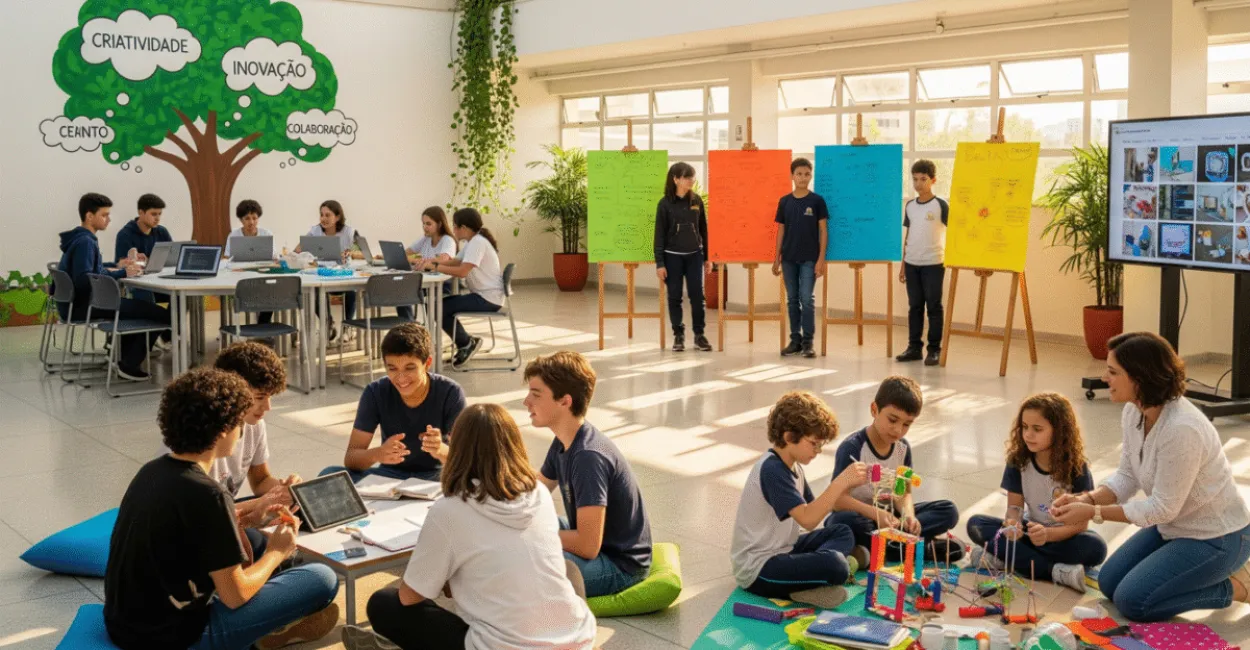
Active learning pedagogy is an educational approach that puts students at the center of their own learning, fostering independence, critical thinking, and active participation in activities that help them build knowledge. This approach is essential to students’ overall development, especially in extracurricular settings, where learning can be more flexible and connected to students’ real-world interests.
Extracurricular activities that embrace the principles of active learning pedagogy can transform the school environment, making it more dynamic, collaborative, and motivating. They create more opportunities for engagement and student leadership, allowing students to try hands-on activities, develop social-emotional skills, and build independence in a natural and enjoyable way.

This article explores how to apply active learning pedagogy in extracurricular activities to strengthen student leadership and independence. It offers strategies, practical examples, and guidance for educators who want to bring innovation to their teaching practice.
Foundations of active learning pedagogy and its importance to learning
Basic concepts of active learning pedagogy
Active learning pedagogy is an approach that values participatory learning, in which students move from being passive recipients to active participants in building knowledge. It is based on constructivist theories, which hold that knowledge is built through interaction with the world and the solving of real-world problems.
This approach fosters skills such as independence, critical thinking, collaboration, and creativity—qualities essential in the 21st century. For this reason, active learning pedagogy is widely recommended for educational settings that aim to prepare thoughtful citizens for today’s challenges.
It also moves away from the traditional one-way delivery of content, making learning more meaningful and relevant to students’ lives.
Why active learning pedagogy matters in extracurricular activities
Extracurricular activities are fertile ground for applying active learning pedagogy because they offer students greater freedom to experiment, express themselves, and take the lead. In these activities, students can choose topics that interest them, work in groups, explore their abilities, and put their learning into practice.
This approach boosts engagement because students feel part of the educational process and responsible for its outcomes. In addition, developing independence in these settings directly supports academic performance and students’ overall development.
Active learning pedagogy in extracurricular activities therefore does more than complement the formal curriculum: it also builds essential life skills and helps students prepare for future career opportunities.
Key elements of active learning pedagogy in practice
For active learning pedagogy to be effective in extracurricular activities, it is important to consider several key elements. First, student leadership should be a priority, with opportunities for students to make decisions, organize tasks, and reflect on their learning.
Collaboration is also important because it gives students the chance to learn from one another while developing empathy and social skills. Finally, connecting content to real or simulated situations makes learning more meaningful and applicable.
Together, these elements make extracurricular activities a rich setting for students’ overall development through active learning pedagogy.
- Identify students’ interests: Talk with students to learn about their preferences and needs.
- Plan collaborative activities: Structure group tasks to encourage cooperation and discussion.
- Set clear goals: Define learning objectives with students so they know what they are working toward.
- Encourage independence: Give students the freedom to choose methods and strategies for completing activities.
- Use formative assessments: Provide ongoing feedback to refine the process and encourage reflection.
Practical strategies for implementing active learning pedagogy in extracurricular activities
Student-centered planning
One of the foundations of applying active learning pedagogy in extracurricular activities is planning around students’ needs and interests. This means listening to their ideas, identifying their strengths, and organizing activities that spark their curiosity and motivation.
When students are at the center of the planning process, educators create an environment where students feel valued and engaged, strengthening their ability to take the lead. Planning should be flexible, allowing for adjustments as activities progress and participants provide feedback.
Plans should also include a variety of resources, such as digital materials, group activities, and resources from the local community, to keep learning varied and relevant.
Using specific active learning methods
A range of active learning methods can be incorporated into extracurricular activities to strengthen students’ leadership and independence. Examples include project-based learning (PBL), problem-based learning, hands-on workshops, educational games, and discussions.
These methods encourage students to investigate, develop solutions, experiment, and reflect, leading to deeper, longer-lasting learning. The choice of method should reflect the group’s needs and the activity’s goals so that everyone can participate actively.
Combining different methods can also be an effective way to maintain interest and accommodate different learning styles.
Engaging learning environments
The setting where activities take place directly affects student engagement. Welcoming, organized spaces that allow students to move around and exchange ideas support active learning pedagogy.
Virtual environments also matter, especially in hybrid learning. Digital platforms that support interaction, sharing materials, and tracking activities make it easier for students to take the lead and work independently.
Organizing the environment and investing in appropriate technology are therefore essential to the success of extracurricular activities based on active learning pedagogy.
| Active Learning Method | Description | Benefits for Students |
|---|---|---|
| Project-Based Learning (PBL) | Students develop a project to solve a real-world problem. | Encourages research, creativity, and teamwork. |
| Problem-Based Learning | Students work in groups to solve complex, real-world problems. | Develops critical thinking and independence. |
| Hands-On Workshops | Hands-on and experimental activities that apply knowledge. | Supports concrete learning and experimentation. |
Benefits of active learning pedagogy for student leadership

Developing independence
By actively participating in learning decisions and processes, students develop independence—the ability to manage their own learning. This prepares them to face future academic and personal challenges.
Independence helps students manage their time, seek resources proactively, and reflect on their successes and mistakes, building self-confidence and responsibility.
This growth is amplified in extracurricular activities, where the environment tends to be less rigid and more open to experimentation.
Engagement and motivation
When students take the lead, their engagement in activities increases significantly. Being active participants makes them feel valued and motivated to contribute ideas and effort to the group’s success.
This intrinsic motivation supports continued learning, persistence through difficulties, and interest in discovering new things.
The engagement encouraged by active learning pedagogy creates a positive cycle that improves both performance and the school climate.
Building social-emotional skills
Active learning pedagogy in extracurricular activities develops more than academic knowledge: it also builds social-emotional skills such as empathy, communication, collaboration, and resilience.
Students develop these skills through teamwork, conflict resolution, and shared decision-making. Experiencing these situations in real-world settings prepares students for social interactions and the workplace.
In this way, active learning pedagogy supports students’ overall development, extending beyond technical knowledge.
- Encourage decision-making: Invite students to choose topics and strategies.
- Promote teamwork: Organize groups to solve shared challenges.
- Encourage ongoing reflection: Set aside time for students to assess their performance.
- Treat mistakes as learning opportunities: Use setbacks to guide improvement.
- Offer constructive feedback: Provide positive, specific guidance.
How to develop independence through active learning pedagogy
Strategies for encouraging self-management
To develop independence, students need to learn how to organize and plan their activities. This can be done with planners, schedules, and clear individual and group goals.
Another useful strategy is creating learning contracts, in which students commit to goals and responsibilities, becoming more aware of their role in the process.
These practices help students build self-management skills, which are essential for independent learning and personal development.
Encouraging decision-making and problem-solving
Giving students opportunities to make decisions and solve real or simulated problems is a powerful way to develop independence. In these situations, students learn to consider options, weigh consequences, and choose a course of action—skills that are essential in life.
The educator serves as a facilitator, offering guidance and support without directly influencing students’ choices, so they can take responsibility for the outcome.
This practice builds confidence and the ability to face challenges independently.
Reflection and self-awareness in learning
Building in time for reflection during extracurricular activities helps students better understand how they learn, where they struggle, and what they have accomplished. This awareness is essential to self-understanding and the development of independence.
Tools such as learning journals, group discussions, and self-assessments can effectively encourage reflection and support more intentional, mindful learning.
Reflection also helps students develop a growth mindset, seeing effort and persistence as paths to success.
| Practice | Goal | Expected Outcome |
|---|---|---|
| Using planners and schedules | Organize time and tasks | Better time management and meeting deadlines |
| Learning contracts | Help students commit to their goals | Greater responsibility and engagement |
| Learning journals and self-assessments | Encourage reflection on learning | Greater self-awareness and independence |
Tools and resources to support active learning pedagogy
Digital technology as a tool for student leadership
Digital technology offers many ways to apply active learning pedagogy in extracurricular activities. Collaborative platforms, organizational apps, multimedia creation tools, and virtual learning environments allow students to participate actively and independently.
Social media and blogs also give students places to share their projects and reflections, extending the reach of their learning.
Technology should be used strategically to encourage interaction, creativity, and independence, rather than leaving students in a passive role.
Learning materials and hands-on resources
For active learning pedagogy to be effective, educators need materials that encourage experimentation and knowledge-building. These might include science kits, educational games, recyclable materials, books on specific topics, and audiovisual resources.
These resources make hands-on, engaging activities easier to carry out and make learning more concrete.
Investing in a variety of materials expands students’ experiences and supports a range of teaching strategies.
Educator training and professional development
The success of active learning pedagogy depends directly on educator preparation. Educators need to understand the principles of this approach and know how to plan and facilitate it in extracurricular activities.
Ongoing professional development programs, workshops, courses, and study groups are effective ways to build these skills. Educators can also share experiences to generate new ideas and strengthen their teaching practice.
Investing in educator training helps ensure that active learning pedagogy is implemented consistently and effectively.
- Explore collaborative platforms: Use tools such as Google Classroom and Padlet to support interaction.
- Include educational games: Use digital and physical games to encourage critical thinking.
- Use multimedia resources: Videos, podcasts, and infographics appeal to different learning styles.
- Continue your professional development: Take courses and training on active learning methods.
Challenges and solutions for applying active learning pedagogy in extracurricular activities
Identifying and overcoming resistance
One of the main challenges in implementing active learning pedagogy is resistance from students, educators, or even the school community, who may be accustomed to traditional methods. This resistance can lead to doubts and make it difficult to engage participants.
To overcome this obstacle, it is important to encourage open dialogue, explain the benefits of the approach, and involve everyone in the change process. Pilot programs and hands-on demonstrations can also help ease concerns.
Over time, positive perceptions of the results tend to grow, making people more willing to adopt active learning pedagogy.
Managing time and resources
Extracurricular activities often face time and resource constraints, which can make it difficult to fully apply active learning pedagogy. Managing these constraints effectively is essential to meeting goals without overburdening students and educators.
Planning ahead, prioritizing high-impact activities, and seeking partnerships to obtain materials and support can help make the best use of available time and resources.
Flexibility to adjust activities as circumstances change also contributes to successful implementation.
Ongoing assessment and adaptation
Activities based on active learning pedagogy should be assessed continuously and formatively, allowing for adjustments that improve the learning process. However, it can be difficult to define clear criteria and choose appropriate assessment tools.
To address this, it is a good idea to use multiple forms of assessment, such as self-assessments, peer assessments, and direct observation, focusing on the development of skills and attitudes as well as knowledge.
Ongoing assessment makes it possible to adapt activities, making them more effective and better suited to students’ needs.
Practical examples of active learning pedagogy in extracurricular activities
A school sustainability project
A sustainability project can involve students in identifying local environmental problems and planning initiatives such as recycling, community gardens, and awareness campaigns. Students conduct research, organize teams, and present solutions, building independence and a sense of responsibility.
This activity applies active learning pedagogy through project-based learning, fostering practical and social-emotional skills.
Its positive impact on the school environment and the community also strengthens student engagement.
Technology and innovation workshops
Workshops involving robotics, programming, or app development are excellent settings for active learning pedagogy. Students can work in groups to build prototypes, solve technical challenges, and present their projects.
These activities encourage experimentation, collaboration, and critical thinking while preparing students for technology-related career opportunities.
Active student participation is essential to making learning meaningful and motivating.
Book and discussion clubs
Clubs that encourage reading and discussion of current or literary topics help students take the lead by choosing books, organizing meetings, and guiding discussions. This practice encourages critical reflection, argumentation, and public speaking.
A collaborative, democratic environment strengthens social-emotional skills and interest in learning.
The club can also develop related projects, such as writing reviews and organizing cultural events, further extending the reach of active learning pedagogy.
- Create projects with real-world impact: Involve students in activities that benefit the community.
- Use hands-on workshops: Encourage experimentation in areas that interest students.
- Foster discussion groups: Promote debate and group reflection.
- Encourage public presentations: Give students opportunities to share what they have learned.
- Value diverse ideas: Encourage respect and active listening.
- Promote group assessment: Have students review the results together.
Conclusion
Active learning pedagogy in extracurricular activities is a powerful way to promote student leadership and independence, enrich the educational experience, and prepare students for the challenges of the 21st century. By putting students at the center of the process, this approach strengthens engagement, develops social-emotional skills, and builds self-management abilities.
Implementing active learning pedagogy takes planning, appropriate resources, and an openness to innovation from educators, but the benefits to students’ overall development are significant. We encourage educators and school leaders to invest in this approach and turn extracurricular activities into dynamic, meaningful learning environments.
Frequently Asked Questions
What is active learning pedagogy?
Active learning pedagogy is an educational approach that prioritizes student participation in the learning process, encouraging independence, critical thinking, and leadership rather than simply delivering content for students to absorb passively.
How can active learning pedagogy be used in extracurricular activities?
It can be applied through methods such as project-based learning, hands-on workshops, and discussions, where students choose topics, work in groups, and make decisions, taking the lead in their own learning.
What are the main benefits of active learning pedagogy for students?
Benefits include greater engagement, increased independence, stronger social-emotional skills, improved critical thinking, and better preparation for academic and career challenges.
What challenges can arise when implementing active learning pedagogy?
Common challenges include resistance to change, limited time and resources, and the need to train educators to facilitate the process effectively.
What resources can help with applying active learning pedagogy?
Resources such as digital technology, hands-on materials, suitable spaces, and ongoing professional development for educators are essential to strengthening students’ leadership and independence.
For more information, consult reliable sources such as Brazil’s Ministry of Education and studies published by UNESCO.
Artigos Relacionados
 Extracurricular Activities: Benefits and How to Choose the Best Ones
 How Extracurricular Activities Drive Educational Innovation
 Professional Cameras for Educators: Essential Tools for Digital Learning
 Social-Emotional Learning in Schools: Transforming Learning and Whole-Child Development
 Neuroscience and Learning: Insights to Boost Your Learning
 Educational Technology and Blended Learning: The New Normal in Education
