
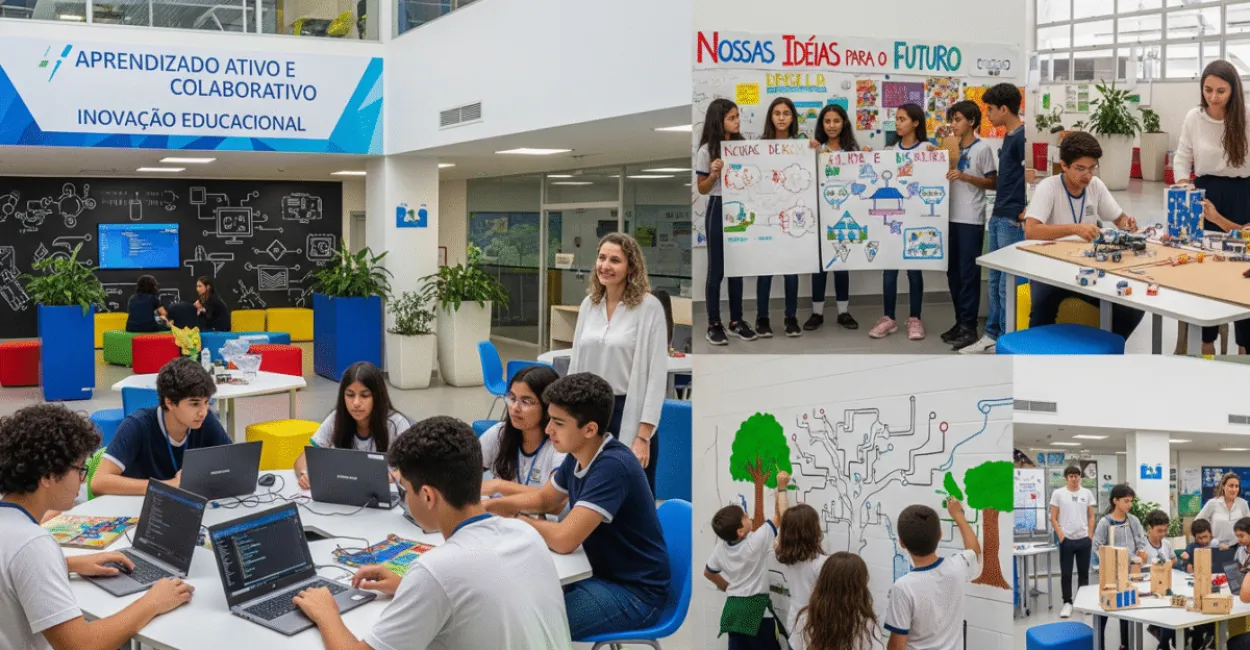
Educational innovation is the planned adoption of practices, resources, and organizational approaches that improve teaching and learning while taking students’ needs and the school context into account. Extracurricular activities, such as robotics clubs, writing workshops, and science projects, offer more opportunities to experiment with and apply knowledge.
When connected to the formal curriculum, these activities complement classroom instruction and encourage autonomy, collaboration, and creativity without replacing required subject-area instruction.

This connection works best when it starts with clear goals. A science fair, for example, can deepen students’ understanding of classroom topics, while a book club creates space to interpret literature, make arguments, and write.
Activities have educational value when they connect to expected learning outcomes and give students with different needs a chance to participate.
Planning should also account for time, resources, accessibility, and educator training. An innovative practice can be digital or in person, and involve advanced technology or simple materials. Its value comes from how well it addresses a learning need and makes it possible to see what students are learning. Using active learning in extracurricular activities offers examples of how to design experiences that engage students.
What defines educational innovation and why it matters
Educational innovation involves intentional changes to teaching practices, resources, assessment, or school organization. A proposal can be new to one school without being new elsewhere.
To assess its value, consider whether it expands learning, responds to students’ needs, and can be adjusted based on results.
Students’ needs change with their social, cultural, and technological contexts. At the same time, school, work, and civic life require people to interpret information, solve problems, communicate ideas, and collaborate. Schools can develop these abilities in different settings: in subject-area classes, interdisciplinary projects, and well-planned extracurricular activities. These experiences make it possible to explore interests and topics that may not fit into the regular school day in depth. They can also introduce students to the arts, scientific practices, sports, and technology. However, these activities do not automatically improve academic performance: results depend on the quality and continuity of the program and on whether students can participate.
Dimensions and principles to guide practice
Innovation can take shape in different areas: teaching methods, technology use, assessment, the management of time and space, or the school’s relationship with the community. A coding workshop, for example, can combine a change in teaching methods with the use of digital resources.
A partnership with a local library, meanwhile, can expand access to books and learning spaces.
Initiatives should have clear goals, involve students, include instructional oversight, and address equity. Schools also need to consider teachers’ workloads and the availability of spaces and materials. Adopting a tool or activity simply because it seems new is not enough; the choice should address a specific need.
How extracurricular activities expand learning
Extracurricular activities give students a setting to apply what they know and explore their interests. In a science club, students might develop questions, plan an investigation, and present their conclusions. In a theater workshop, they might practice reading, public speaking, and collaboration. These activities build skills through shared tasks and situations that call for decision-making.
Group work gives students a chance to practice listening, negotiation, and sharing responsibilities. Independent projects also help them plan steps and revise their work. Educators guide the process, ask questions, and offer feedback while giving students opportunities to make decisions appropriate to their age and experience.
Participation should be accessible. Scheduling, transportation, materials, physical barriers, and individual needs can prevent some students from taking part. Schools can consult students and families, adapt resources, and seek alternatives so that programs do not benefit only those who already have more time or support. Extracurricular activities expand opportunities when they fit the realities of the school community.
Active learning methods and examples

Active learning methods center learning on student participation: investigating, creating, discussing, testing, and revising. They can be used in regular classes or extracurricular activities, as long as goals, guidance, and assessment are clearly defined. Options include project-based learning, gamification, design thinking, and blended learning.
Read also: Creative Extracurricular Activities for Five-Year-Olds
In project-based learning, students work on a question or challenge over a period of time, drawing on knowledge from different subject areas. A group might investigate water use at school, analyze data, propose an action, and present its findings. Gamification uses elements such as challenges, rules, and feedback to guide participation; it should support learning goals rather than simply award points.
Design thinking can help students understand a need, generate ideas, build prototypes, and improve solutions. In a workshop, for example, a class might develop a proposal to make a school space more accessible. In blended learning, in-person and digital activities complement each other, provided everyone has access to the resources and the technology serves a clearly defined educational purpose.
Method
Learning opportunities
Extracurricular example
Project-based learning (PBL)
Research, critical thinking, and connecting knowledge
Investigate a local problem and present possible solutions
Gamification
Participation and progress tracking
Organize team challenges related to a topic being studied
Design thinking
Creating, testing, and revising solutions
Develop prototypes to address a need identified by students
Putting it into practice: curriculum, learning pathways, and digital tutoring
A successful implementation starts by identifying a need. The team can listen to students, look for recurring difficulties, and consider curriculum learning goals. Next, it selects an activity suited to available resources, assigns responsibilities, and decides how to monitor progress.
Learning pathways can connect subject areas, interests, and hands-on experiences. A pathway focused on the environment, for example, might bring together scientific research, writing, data analysis, and community action. Extracurricular activities can deepen this pathway through field trips, workshops, or projects while staying connected to the curriculum and not replacing required classes.
Digital tutoring can support student progress through online platforms, feedback, and communication between sessions. Its use requires clear guidelines on privacy, response times, and access. If some students lack an internet connection or suitable devices, the school needs to offer in-person options or materials that allow them to participate without relying solely on the internet.
Teachers act as facilitators: they help set goals, monitor challenges, and provide feedback. Communication with students, families, and colleagues also helps align expectations and refine the program. Artificial intelligence can support some tasks, but its use requires educational oversight, data protection, and guidance to help students critically evaluate generated responses.
- Identify students’ needs: Consult students and educators, and consider interests, challenges, and participation needs.
- Set goals and choose a method: Select an approach that aligns with the skills and knowledge you want to develop.
- Connect the activity to the curriculum: Specify which learning goals the activity will deepen or put into practice.
- Prepare educators, materials, and accessibility supports: Assign responsibilities and plan necessary accommodations.
- Monitor and adjust: Track participation and learning, talk with those involved, and revise the program.
Challenges, equitable access, and the role of school leaders
Challenges include limited resources, scheduling conflicts, a lack of suitable spaces, and insufficient training to use certain methods. Resistance to change can also arise when the team does not understand the goals or worries that an initiative will increase workloads without institutional support.
School leaders can help by setting aside planning time, assigning responsibilities, and supporting ongoing professional development. Partnerships with universities, libraries, community organizations, and other service providers can expand knowledge and resources, as long as they align with educational goals and the school’s capacity. Smaller-scale projects can also be tested before they are expanded.
Equity needs to be built into planning from the start. Schools can track who participates, who drops out, and what barriers arise, considering factors such as transportation, costs, disability, and digital access. If an activity has limited spaces, transparent criteria and accessible registration options can help reduce inequities. Programs should be revised when their benefits are concentrated among a small group of students.
Challenge
Possible response
What to monitor
Limited resources
Prioritize reusable materials and seek appropriate partnerships
Resource availability and use
Team resistance or uncertainty
Provide collaborative planning, training, and opportunities to test ideas
Educator participation and working conditions
Access barriers
Adapt schedules, spaces, materials, and digital alternatives
Who participates and who encounters obstacles
How to evaluate results and improve initiatives
Assessment should start with the goals set for the activity. If the goal is to develop research and argumentation skills, the team can look at the quality of students’ questions, their use of evidence, and how they present their conclusions. Attendance and satisfaction can help gauge engagement, but they do not show on their own what students have learned.
Portfolios, observation records, self-assessments, student work, and feedback conversations offer complementary evidence. The team can compare work over time and see whether students are applying what they have learned in other settings. If results are limited, the team should investigate why before concluding that the method does not work: the goals may be unclear, there may not be enough time, or some students may not have been able to participate.
Academic outcomes can be analyzed when there is a clear rationale for connecting them to the activity, but changes in grades should not automatically be attributed to a single initiative. Schools can combine quantitative and qualitative data, explain the limitations of their assessment, and use the findings to decide whether to continue, modify, or end the project.
Indicator
What to observe
Example record
Participation
Attendance, engagement, and continued involvement
Attendance sheet and educator observations
Learning and skills
Knowledge and skills related to the goals
Portfolio, rubric, and self-assessment
Access and equity
Who can participate and what barriers remain
Registrations, withdrawals, and student feedback
- Document the starting point: Identify relevant knowledge, needs, and participation conditions for the program.
- Gather evidence throughout: Use student work, observations, and feedback, not just a final assessment.
- Talk with participants: Ask students and the team what helped or hindered learning.
- Revise the initiative: Adjust goals, methods, resources, or accessibility based on the evidence.
Conclusion
Educational innovation can take shape through extracurricular activities that expand learning experiences and connect to the formal curriculum. Projects, clubs, and workshops give students opportunities to investigate, create, and collaborate, provided they have educational goals, ongoing guidance, and accessible participation. Schools can start with a feasible proposal, listen to students, and assess what works in their context before expanding the initiative.
Frequently asked questions
What are the types of innovation?
One way to classify innovation is by looking at where the change occurs: teaching practices, resources and technology, assessment, or school organization and management. These categories can overlap. An interdisciplinary project that uses portfolio assessments, for example, changes both teaching methods and assessment.
What are the pillars of innovation?
The pillars vary by approach, but may include clear learning goals, student participation, collaboration among educators, inclusion, ongoing assessment, and adaptability. Schools should interpret these principles in light of their community, resources, and the needs they aim to address.
How can a school choose an innovative practice that fits its needs?
Start with a need identified by students and educators. Compare options based on goals, time, materials, accessibility, and staff training. Choose a proposal that can be monitored and adjusted, test it on a scale that fits available resources, and use the evidence to decide what to do next.
Sources: UNESCO – Educational Innovation, TED Talk – Sir Ken Robinson, ANPEd – Brazil’s National Association for Graduate Studies and Research in Education.
.Artigos Relacionados
 Extracurricular Activities: Benefits and How to Choose the Best Ones
 Educational Innovation: Transform Learning With New Technology
 Educational best practices: A complete guide to transforming teaching
 Educational Technology and Blended Learning: The New Normal in Education
 Educational Metaverse: A New Frontier for Interaction and Collaboration in Learning Environments
 Technology in Agriculture: Innovation Transforming Modern Farming
