
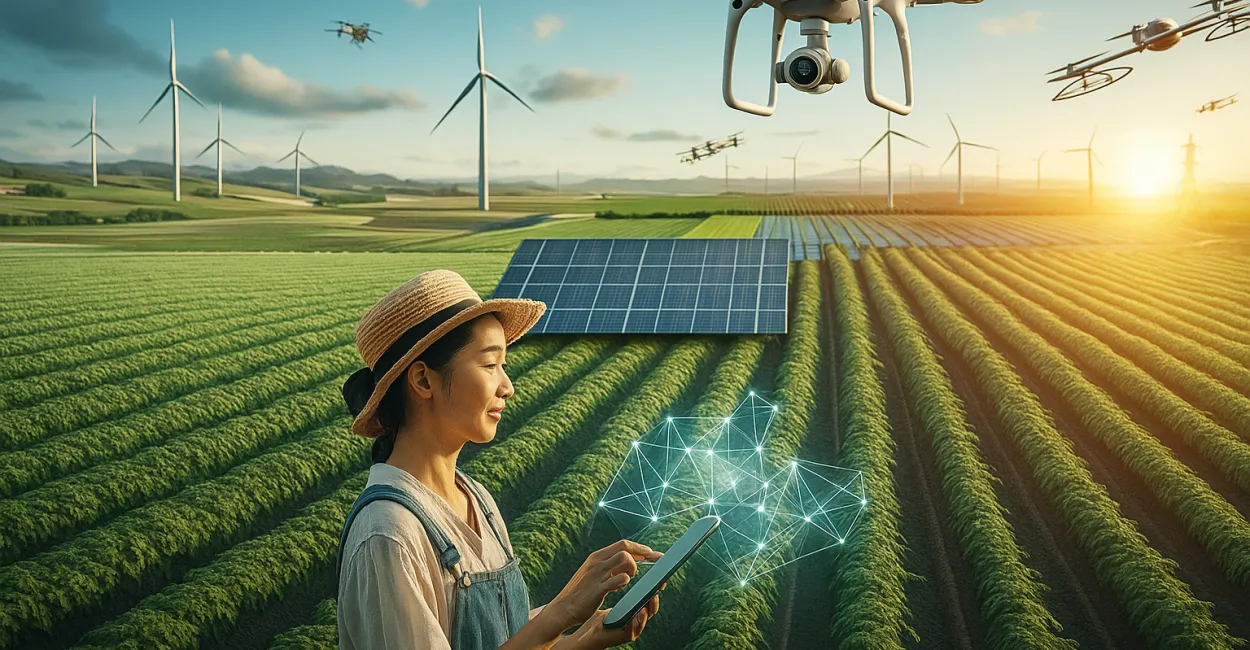
Connected machinery, soil sensors, and satellite data are no longer just promises: technology in agriculture is already part of everyday life for small, midsize, and large-scale producers. In practice, it helps them measure more accurately, make decisions faster, and reduce waste—without romanticizing farm work or ignoring the costs of adoption.

When applied well, this transformation changes three things at once: productivity, predictability, and management. Farmers can see where water is lacking, where crops are performing best, when to apply inputs, and where operations are losing money. Below, you’ll find real-world examples, differences between rural and urban settings, equipment used every day, and the barriers that still limit the growth of rural technology.
The Essentials
- Technology in agriculture means using digital tools, machinery, and automation to improve planting, crop management, harvesting, and farm operations.
- Precision agriculture is one of the clearest examples of this shift because it treats each field section as a decision-making unit rather than treating the entire area as if it were the same.
- The greatest gains come when soil, weather, and machinery data are integrated into the same workflow.
- Poor internet access, upfront costs, and a lack of training remain the biggest barriers for small and midsize producers.
- Rural and urban settings use technologies that are similar in principle, but their goals and constraints are very different.
What Is Technology in Agriculture, and Why Does It Matter?
Technology in agriculture is the combination of digital, mechanical, and electronic tools used to produce, monitor, and manage farm operations more precisely. Put simply, it’s anything that helps farmers make decisions based on data rather than relying only on what they can see or on the way things have always been done.
This matters because agriculture depends on variables that are constantly changing: weather, moisture, soil fertility, pests, input prices, and harvest windows. Anyone working in the industry knows that spraying or irrigating at the wrong time can be costly. Technology helps reduce that risk and bring attention to issues that might otherwise be noticed too late.
A good place to start is by understanding the difference between “owning modern machinery” and “actually using technology.” A new tractor helps, but the real leap happens when it works with agricultural GPS, telematics, auto-steering, and farm management software. Together, these tools make it possible to track operations, save fuel, and measure results by field area.
What sets traditional mechanization apart from precision agriculture isn’t machine horsepower—it’s the quality of the information used to manage every acre.
Organizations such as Embrapa, Brazil’s Agricultural Research Corporation, and the Ministry of Agriculture and Livestock, Brazil’s federal agency overseeing agriculture and livestock, view this progress as central to modernizing agribusiness. Meanwhile, data from IBGE, Brazil’s national statistics agency, shows how Brazilian agriculture continues to diversify its production systems and needs infrastructure capable of supporting that complexity.
Key Examples of Technology in Agriculture
Some of the most visible examples range from satellite-guided machinery to sensors buried in the soil. They all have one thing in common: collecting useful information at the right time.
Precision Agriculture
Precision agriculture uses georeferenced data to apply the right amount of input in the right place at the right time. This includes soil sampling, yield maps, variable-rate seeding, and targeted spraying. On large farms, the first gains often come from reducing waste; on smaller farms, they may come from more consistent quality.
The Internet of Things in Agriculture
Sensors that measure moisture, temperature, light, and water levels send data to digital platforms. In practice, this helps irrigation respond to what plants actually need rather than following a fixed schedule.
Drones and Aerial Imaging
Drones can reveal planting gaps, water stress, and pest damage before the problem becomes visible to the naked eye. They also help map fields and count plants, which is useful in crops such as grains, fruit, and sugarcane.
Telematics and Farm Equipment Management
This technology tracks fuel consumption, routes, downtime, speed, and fleet performance. It provides a level of oversight that almost always uncovers waste that would otherwise go unnoticed in day-to-day operations.
A brief example helps illustrate the practical impact. On a midsize farm, the owner had a feeling that the combine was “using too much fuel.” After installing telematics, they discovered that much of the waste came from unnecessary travel and idle time between fields. Rerouting the machine cut fuel use and shortened harvest time. It wasn’t a miracle; it was better visibility.
How Technology Improves Productivity, Costs, and Decision-Making

Improvements come from three areas. First, productivity increases because crops get what they need more precisely. Second, costs fall because farmers avoid using too much seed, crop protection product, water, and fuel. Third, decisions become less intuitive and more informed by historical data, weather, and actual field performance.
- Productivity: Data-driven crop management reduces application errors and improves crop uniformity.
- Costs: Variable-rate applications and fleet monitoring reduce wasted inputs and unproductive hours.
- Decision-making: Reports and maps show where to act first instead of treating the entire farm the same way.
One point deserves an honest look: not every technology delivers a quick return. Sensors and software work well when they’re used consistently by a trained team with at least basic connectivity. Without those conditions, they can become expensive equipment sitting unused or data that no one checks. Experts disagree on the ideal payback period because it varies by crop, farm size, and level of mechanization.
In practice, farm technology pays off when it reduces operational uncertainty. When it’s just digital window dressing, the costs show up before the benefits.
Reference materials from Embrapa on precision agriculture help explain why adoption is growing in more intensive farming systems: the more variability there is across a field, the more valuable it is to measure and respond with precision.
Technology in Rural and Urban Settings: Similarities and Differences
Rural and urban communities use technology to solve similar problems—communication, control, efficiency, and convenience—but they don’t use it in the same way. Infrastructure is usually more readily available in cities. In rural areas, technology needs to be more robust, self-sufficient, and able to handle connectivity gaps.
| Aspect | Rural areas | Urban areas |
|---|---|---|
| Main goal | Produce more with fewer losses | Improve efficiency and convenience |
| Connectivity | Often limited or unreliable | More stable and widely available |
| Common tools | Agricultural GPS, sensors, drones, telematics | Apps, home automation, mobility services, digital payments |
| Measure of success | Returns per acre and reduced risk | Time savings, comfort, and individual productivity |
The similarity lies in the basic principle: both depend on data. The difference is the environment. In rural areas, heavy rain, a weak signal, or a stretch without coverage can disrupt digital operations. That’s why the best rural solutions are often hybrid: partly online, partly offline, with data syncing later.
If comparing rural and urban technology helps with a classroom lesson or assignment, keep this simple rule in mind: in cities, technology often makes everyday life easier; in rural areas, it can determine profitability.
Technology Used on Farms: 3 Examples and What They Do
When asked to name three examples of technology used on farms, it’s best to explain what each one does, not just list the equipment. Here are three of the most useful examples today.
- Auto-steer tractor: Keeps rows straighter, reduces overlap, and makes better use of field space.
- Agricultural drone: Maps fields from the air, monitors crop stress, and identifies problems early.
- Soil sensor: Measures moisture and temperature and, in some models, other conditions that help guide irrigation and crop management.
These three pieces of equipment capture the industry’s progress because they support different stages of production. The tractor automates fieldwork, the drone provides a broader view, and the sensor anticipates what the plants need. Together, they create a much smarter decision-making process than simply looking over the field.
Other examples of farm technology include combines with yield monitors, automated weather stations, smart electric fences, and traceability software. In more demanding supply chains, such as produce and dairy, traceability is becoming just as important as productivity.
Challenges to Bringing Technology to Rural Areas
The biggest challenge isn’t a lack of solutions; it’s the gap between what’s available and what can be put to work on a farm. In many regions, internet access is still unreliable, technical support is hard to find, and the upfront investment can be daunting—especially when the farmer can’t see a quick return.
- Connectivity: Without a signal, sensors and platforms lose some of their usefulness.
- Training: Teams without proper training often underuse systems and produce poor-quality data.
- Upfront costs: Equipment, maintenance, and software licenses can strain cash flow.
- Integration: Different technologies don’t always work well together.
There’s also a less-discussed risk: buying technology before putting processes in order. I’ve seen farms invest in management software before standardizing inventory, field records, and operation logs. The result was frustration because the system was filled with inconsistent data. Technology problems are often process problems wrapped in expensive tools.
Reports from Cetic.br, Brazil’s center for research on information and communication technologies, help explain why connectivity remains a barrier outside urban centers. Without reliable digital infrastructure, rural areas still make progress—but at different rates depending on the region, farm size, and access to technical support.
Final Takeaway: The Impact of Technology in Agriculture Today
Technology in agriculture is no longer an advantage reserved for large companies. It has become a competitive edge for anyone who can measure, interpret, and act faster. The real impact comes when data, machinery, and people work together. Without that integration, innovation becomes a cost; with it, it improves the bottom line.
The safest approach isn’t to adopt everything at once. Start with the biggest pain point—water, machinery, inputs, or management—and choose a solution that clearly addresses it. If the goal is greater productivity with better control, the next step is to identify where the farm is already losing money and test a technology that tackles the problem in a measurable way.
Frequently Asked Questions
What is technology in agriculture?
It’s the use of tools, machinery, sensors, software, and connectivity to improve agricultural production. This includes everything from agricultural GPS to automated irrigation systems and management platforms. The goal is to increase efficiency, reduce losses, and support better decisions.
Why is technology in agriculture important?
It makes more precise production with less waste possible. In practice, this improves productivity, reduces costs, and helps farmers respond before a problem turns into a loss. In competitive regions, that difference has a direct impact on profitability.
What are three examples of technology used on farms?
An auto-steer tractor, an agricultural drone, and a soil sensor are three clear examples. Each has a different role: carrying out fieldwork precisely, mapping crops, and measuring environmental conditions. Together, they improve control and predictability.
What’s the difference between technology in rural and urban areas?
In cities, technology often focuses on comfort, mobility, and services. In rural areas, the main goals are production efficiency, operational control, and risk management. Rural environments also require solutions that can withstand poor internet access and challenging weather conditions.
How does technology improve agricultural productivity?
It shows farmers where to focus their effort and inputs more precisely. This reduces overlap, helps correct crop management issues, and improves the use of water, fuel, and crop protection products. The gains come from making many small, better decisions throughout the growing season.
Is there technology in agriculture that works for small farmers?
Yes, especially when a solution addresses a specific need and fits the budget. Simple sensors, farm management apps, automated irrigation, and mobile monitoring can deliver good returns on smaller farms. The key is to choose what solves a real problem, not what looks most modern.
{
“@context”: “https://schema.org”,
“@type”: “FAQPage”,
“mainEntity”: [
{
“@type”: “Question”,
“name”: “What is technology in agriculture?”,
“acceptedAnswer”: {
“@type”: “Answer”,
“text”: “It’s the use of tools, machinery, sensors, software, and connectivity to improve agricultural production. This includes everything from agricultural GPS to automated irrigation systems and management platforms. The goal is to increase efficiency, reduce losses, and support better decisions.”
}
},
{
“@type”: “Question”,
“name”: “Why is technology in agriculture important?”,
“acceptedAnswer”: {
“@type”: “Answer”,
“text”: “It makes more precise production with less waste possible. In practice, this improves productivity, reduces costs, and helps farmers respond before a problem turns into a loss. In competitive regions, that difference has a direct impact on profitability.”
}
},
{
“@type”: “Question”,
“name”: “What are three examples of technology used on farms?”,
“acceptedAnswer”: {
“@type”: “Answer”,
“text”: “An auto-steer tractor, an agricultural drone, and a soil sensor are three clear examples. Each has a different role: carrying out fieldwork precisely, mapping crops, and measuring environmental conditions. Together, they improve control and predictability.”
}
},
{
“@type”: “Question”,
“name”: “What’s the difference between technology in rural and urban areas?”,
“acceptedAnswer”: {
“@type”: “Answer”,
“text”: “In cities, technology often focuses on comfort, mobility, and services. In rural areas, the main goals are production efficiency, operational control, and risk management. Rural environments also require solutions that can withstand poor internet access and challenging weather conditions.”
}
},
{
“@type”: “Question”,
“name”: “How does technology improve agricultural productivity?”,
“acceptedAnswer”: {
“@type”: “Answer”,
“text”: “It shows farmers where to focus their effort and inputs more precisely. This reduces overlap, helps correct crop management issues, and improves the use of water, fuel, and crop protection products. The gains come from making many small, better decisions throughout the growing season.”
}
},
{
“@type”: “Question”,
“name”: “Is there technology in agriculture that works for small farmers?”,
“acceptedAnswer”: {
“@type”: “Answer”,
“text”: “Yes, especially when a solution addresses a specific need and fits the budget. Simple sensors, farm management apps, automated irrigation, and mobile monitoring can deliver good returns on smaller farms. The key is to choose what solves a real problem, not what looks most modern.”
}
}
]
}
Artigos Relacionados
 Educational Games: How Games Are Transforming Modern Education
 AI in Agriculture: A Revolution Transforming Global Food Security
 Digital Education: Transforming Teaching with New Technologies
 Education and New Technologies: Transforming the Future of Teaching
 ChatGPT-4: Transforming the Future of Education
 AI Advances: Transforming 21st-Century Education
