
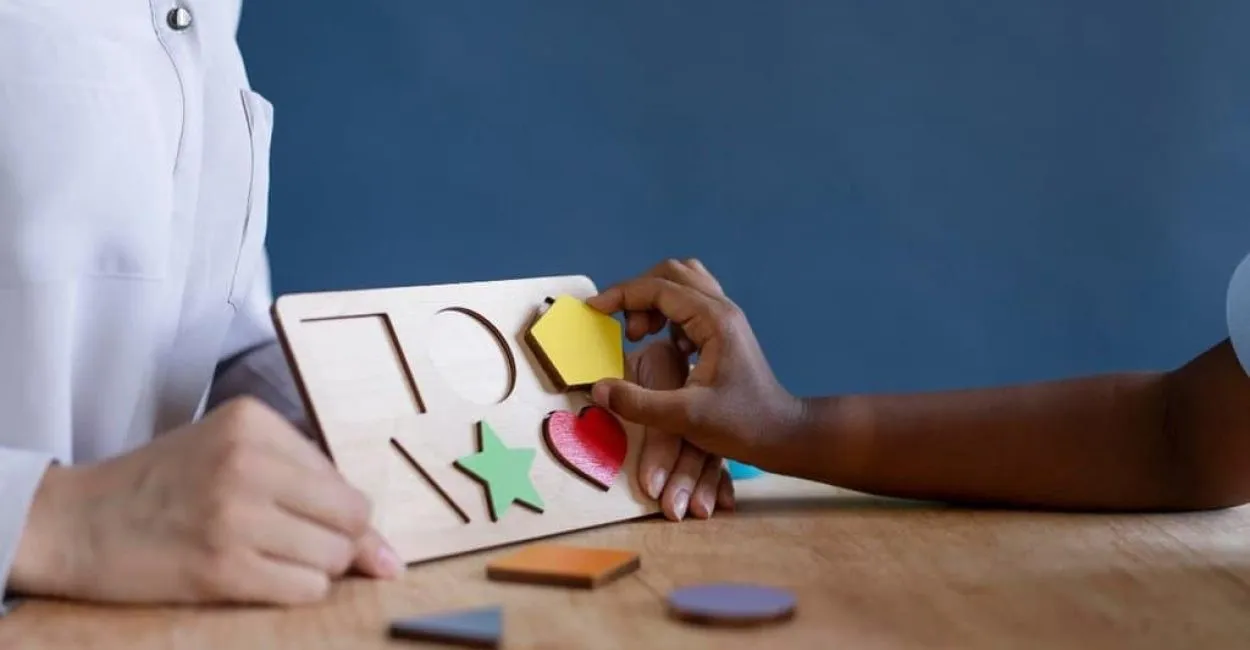
When students take part in a well-designed activity, their focus shifts from obligation to challenge. That’s why games have found a place in education: they turn abstract concepts into experiences with rules, goals, and immediate feedback.

This matters because learning isn’t just about repeating information. It’s about testing ideas, making mistakes in a safe environment, getting quick feedback, and continuing to make progress.
This article explores how educational games are changing modern education, where they work best, where they fall short, and what really makes a difference in the classroom.
The Essentials
- Educational games aren’t a “fun break”—they’re learning environments built around goals, rules, and decision-making.
- The real benefit comes when a game supports a clear learning objective, rather than serving as a technology gimmick.
- Gamification and educational games aren’t the same thing: gamification adds motivational mechanics, while an educational game teaches through its core gameplay.
- When used effectively, games can support engagement, content retention, collaboration, and problem-solving.
- Without teacher guidance, their impact tends to fade; the educational context matters more than the tool.
How Educational Games Are Changing Modern Education
Technical definition: An educational game is a structured activity with rules, goals, and feedback, designed to support specific learning. Put simply, it’s a way to teach that lets students learn as they make decisions, compare strategies, and see the consequences.
This approach helps because the brain learns better when it has to tackle a real or simulated problem. Instead of just listening to explanations, students take part in building their own reasoning.
The difference may seem small on paper, but it’s significant in everyday classroom life: more attention, better retention, and less passivity.
What changes in the classroom
In practice, educators who use games know that the right one can bridge the gap between theory and application. Math, for example, becomes more concrete when students have to manage resources, calculate probabilities, or solve challenges under time pressure.
The same principle applies to language arts, history, and science projects: students interpret, choose, and explain their reasoning. This encourages more active learning than a lecture alone, though direct instruction remains useful at many points.
What sets an effective educational game apart from an activity that’s merely “fun” isn’t the technology—it’s a clear learning objective.
Why Engagement Increases So Much
Engagement isn’t constant excitement; it’s the willingness to stick with a meaningful task. Games can boost engagement by providing visible progress, appropriately scaled challenges, and immediate rewards. That’s powerful, but it’s no magic fix.
Intrinsic motivation and immediate feedback
When students see themselves making progress, they get more involved. A game’s instant feedback helps them adjust quickly—something a traditional test often does too late. That’s why activities with levels, missions, and short-term goals tend to work well in classes where students have little patience for long explanations.
There’s an important nuance: not every student responds in the same way. Some are motivated by competition; others do better with cooperation. If the activity is designed without taking these differences into account, the game loses its impact and may even cause frustration.
A practical example
In an elementary school class, a teacher replaced a worksheet with a series of card-based challenges, awarding points at each stage. The content stayed the same, but the class dynamic changed: students who rarely participated began discussing strategies in groups.
The key wasn’t simply “using a game.” It was having a sequence, clear rules, and a measurable goal. Without those, the activity becomes a pastime.
For more on the educational side, see the UNESCO website, which brings together research and guidance on educational innovation, as well as resources from Brazil’s Ministry of Education (MEC) on teaching practices and technology.
Gamification, Educational Games, and Game-Based Learning

These terms often appear together, but they don’t mean the same thing. Treating them as interchangeable is a common mistake—and it costs you effectiveness. The difference comes down to the role the game plays in the teaching process.
Read also: Strategic Planning for Children’s Education Expenses
| Approach | What it is | When it makes the most sense |
|---|---|---|
| Gamification | Using game mechanics in non-game contexts | When the goal is to boost motivation and participation |
| Educational game | A game created to teach content or a skill | When students need to learn the content through the gameplay itself |
| Game-based learning | Using a game as the foundation of the learning experience | When a teacher wants to explore reasoning, strategy, and decision-making |
When each approach works best
Gamification works well for building routines, tracking progress, and setting short-term goals. Educational games are a better fit when the content calls for repeated practice and quick feedback. Game-based learning, in turn, makes sense for longer projects that involve research and collaboration.
This method works well with engaged classes, but it falls short when a school expects the tool to automatically solve foundational problems, such as reading gaps or a lack of teacher guidance. Poor performance is almost never caused by the activity alone.
Games may seem like a technology solution, but in school, they work as a teaching strategy that depends heavily on the teacher.
Which Skills Games Develop Best
Games teach more than subject matter. They help students practice skills they’ll use in academic and professional settings: logical reasoning, collaboration, planning, self-control, and reading context. That combination helps explain why so many schools have started trying this approach.
Cognitive skills
- Problem-solving
- Working memory
- Decision-making under pressure
- Pattern recognition
Social-emotional skills
- Persistence in the face of mistakes
- Teamwork
- Managing frustration
- Communication in groups
These skills also feature in international reports on education and 21st-century competencies. The OECD has published consistent analyses of learning, engagement, and performance across a range of settings.
Where Educational Games Fall Short
The biggest mistake is assuming that any playful activity teaches. It doesn’t. If the mechanics don’t support the learning objective, students may have fun but leave without retaining the material. This happens more often than you might think.
Three common pitfalls
- Too much window dressing — the presentation looks great, but the educational thinking is weak.
- Unclear objectives — no one knows exactly what students should learn by the end.
- No teacher guidance — the teacher doesn’t step in to reinforce the content after the activity.
There’s also a practical limitation: not every class responds well to the same type of activity. For example, in classes where reading skills are still developing, a game based on long passages can hinder participation. In these cases, adapting the language matters more than making the design more elaborate.
How to Choose an Educational Game That Delivers
If the goal is learning, “it looks fun” shouldn’t be your main selection criterion. The game should be educationally sound, easy to assess, and appropriate for the students’ age group. That’s how you avoid wasting time and attention.
A practical evaluation checklist
- Is the learning objective clearly stated?
- Are the rules simple enough that they don’t get in the way of learning?
- Is clear feedback provided after each action?
- Can the game be adapted for students at different skill levels?
- Is there time to reflect after the activity?
When these elements are in place, the odds of the game working well increase significantly. When they’re missing, the result is usually superficial. In education, appearance can never replace structure.
Schools looking for reliable guidance can follow research and reports from organizations such as UNICEF Education, which explores access, attendance, and learning quality in a range of settings.
The Teacher’s Role in Guiding Gameplay
The teacher remains central. Without guidance, a game becomes a standalone activity; with guidance, it becomes a learning tool. This distinction is critical because learning doesn’t happen only while students play—it takes hold through the discussion, corrections, and follow-up conversation.
What an effective facilitator does
- Explains the goal before the activity.
- Observes how the class behaves while playing.
- Steps in when the activity strays from the content.
- Wraps up with a summary and review of key concepts.
Anyone who has worked with classes on projects like these quickly notices that the best use of games doesn’t eliminate the teacher; it expands the teacher’s ability to guide learning. Technology is a tool, not a replacement.
Next Steps for Using Games in Education
The most strategic move is to stop thinking of games as rewards and start treating them as a teaching method. Choose a specific topic, define the skill students need to develop, and try a short activity before investing in something bigger. With a clear goal, the odds of success go up considerably.
The best next step is to test on a small scale: try it, observe, adjust, and repeat. If the activity boosts participation without sacrificing rigor, keep it. If it only creates noise, let it go—teaching methods are useful when they produce learning, not just a few minutes of attention.
Frequently Asked Questions
Are educational games suitable for all age groups?
Yes, as long as the language, complexity, and activity length are appropriate for the students’ age. Younger children need simpler rules and more direct visual feedback. Teenagers tend to respond better to challenges involving strategy, cooperation, and autonomy.
Is gamification the same as an educational game?
No. Gamification uses game elements, such as points and levels, in activities that aren’t games in their own right. An educational game is a complete experience designed to teach through its own gameplay.
Do games really improve learning?
They do when they have a clear learning objective and teacher guidance. The most consistent benefits show up in engagement, repeated practice, and a stronger grasp of concepts. Without those elements, the activity tends to become shallow entertainment.
Can you use games without technology?
Yes, and this approach often works very well. Cards, board games, group challenges, and classroom activities can support meaningful learning at a low cost. What matters is how the activity is designed, not whether it involves screens.
How can you tell if you’ve chosen the right game?
The clearest sign is when students can explain what they learned after the activity. If they remember the rules but not the content, something went wrong in the design. A good game leaves students with a lasting grasp of the concepts, not just a fun memory.
%%AGPTRH8%%
Artigos Relacionados
 Digital Education: Transforming Teaching with New Technologies
 Education and New Technologies: Transforming the Future of Teaching
 ChatGPT-4: Transforming the Future of Education
 Social Media in Education: Key Impacts, Benefits, and Challenges
 Healthcare Professions: Their Evolution and Impact on Modern Society
 Education: The Essential Role Parents Play in Child Development
