
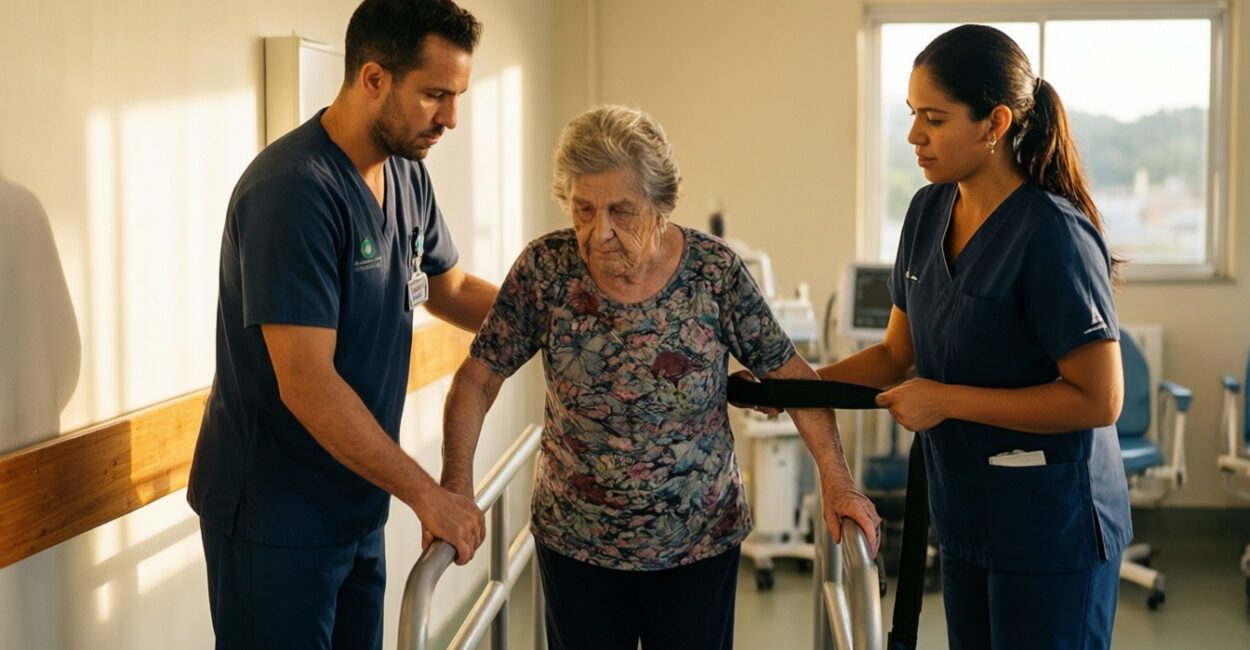
A healthcare team may include professionals who care for patients, analyze test results, support rehabilitation, and organize services. Healthcare professions cover these activities and others related to health promotion, prevention, diagnosis, and treatment. When choosing a career, it’s worth comparing training, day-to-day work, responsibilities, and work settings instead of focusing only on prestige or pay.
The field includes regulated professions and support occupations, each with different requirements. Doctors, nurses, nursing assistants, psychologists, and physical therapists, for example, do not follow the same training path or have identical responsibilities.

The list below offers a representative overview, not a complete official catalog.
Other, less visible factors also matter when choosing a career: daily patient contact, shift work, recordkeeping, and collaboration across specialties. These details can help you decide whether a particular routine fits what you’re looking for.
At a glance
- Areas of work: health promotion, prevention, diagnosis, treatment, rehabilitation, and support for health services.
- Training: May be technical, undergraduate, or graduate-level, depending on the profession and role.
- Regulation: Varies by occupation and applicable laws; some professions have their own regulatory board.
- Work settings: Primary care centers, clinics, hospitals, laboratories, rehabilitation services, and community settings.
- Choosing a career: Consider the day-to-day routine, job requirements, training costs, and local working conditions.
Which professions are part of the healthcare field?
Healthcare professions are activities focused on health promotion, prevention, diagnosis, care, treatment, and rehabilitation, as well as supporting the operation of health services. Some are regulated and have specific legal requirements; other occupations are part of the sector without necessarily following the same training or licensing model. That’s why the answer to “What are all the professions in healthcare?” depends on the criteria used. Brazil’s National Health Council (Conselho Nacional de Saúde) applies its own criteria in documents about healthcare professionals. A list of roles found in healthcare services may also include technical, administrative, and support occupations. The list below groups 15 examples by their typical contributions; training and requirements should be checked for each role.
- Direct care: medicine, nursing, dentistry, psychology, nutrition, and social work in healthcare.
- Rehabilitation and physical function: physical therapy, speech-language pathology, occupational therapy, and physical education in healthcare settings.
- Diagnosis and testing: pharmacy and biomedical sciences, among other fields with laboratory or clinical roles.
- Prevention and organization: public health, focused on initiatives that serve groups and communities.
- Technical support: nursing assistants and radiologic technologists, as well as other patient-care support occupations.
Profession or occupation Type of training (confirm based on the role) Example of contribution to care Medicine Undergraduate degree and applicable licensing requirements Clinical assessment and care planning within the scope of professional practice Nursing Undergraduate degree and applicable licensing requirements Planning and monitoring nursing care Dentistry Undergraduate degree and applicable licensing requirements Oral healthcare Psychology Undergraduate degree and applicable licensing requirements Care related to psychological well-being and mental health Physical therapy Undergraduate degree and applicable licensing requirements Rehabilitation and care related to movement Pharmacy Undergraduate degree and role-specific practice requirements Work involving medications and pharmacy services Nutrition Undergraduate degree and applicable licensing requirements Support with nutrition and dietary needs Biomedical sciences Undergraduate degree and credentials based on the area of practice Work in testing and other areas for which the professional is qualified Speech-language pathology Undergraduate degree and applicable licensing requirements Care related to communication and associated functions Occupational therapy Undergraduate degree and applicable licensing requirements Support for participation in everyday activities Physical education in healthcare Training and credentials based on the work setting Physical activity programs that promote health Social work in healthcare Undergraduate degree and profession-specific requirements Guidance and connections to social rights and resources Public health Training varies by position and role Planning and evaluating community health initiatives Nursing assistant Technical training and requirements applicable to the occupation Support for patient care within the scope of the role Radiologic technologist Technical training and requirements applicable to the occupation Technical work in radiology services
This selection is not a universal list of “100 professions.” The total changes depending on whether you count only regulated professions, classified occupations, or every role found in healthcare services.

How do healthcare professions work together to provide care?
Primary care, secondary care, and tertiary care organize part of the healthcare system, but they don’t describe every possible career path. In primary care, teams monitor common health needs and chronic conditions. Secondary care may include specialist visits and diagnostic tests. Hospitals and tertiary care services provide care that requires specialized facilities and teams.
Consider someone receiving ongoing care for a chronic condition. Their care team at a health center may monitor their progress and identify changes. Depending on their needs, they may be referred for a specialist evaluation, testing, or rehabilitation. The care plan depends on the situation and each professional’s scope of practice.
A doctor may assess the patient’s condition and recommend a course of care within their area of practice. Nurses monitor aspects of patient care; dietitians may help with nutrition; pharmacists with the safe use of medications; and physical therapists with functional needs. Team composition varies, and collaboration does not remove the boundaries of each professional’s scope of practice.
One everyday detail can make a big difference: incomplete information during shift handoffs or referrals can disrupt continuity of care. Clear records help the next team understand what was observed, what has already been done, and what still needs attention.

Training, licensing, and regulation: what’s the difference?

A regulated profession has its own legal requirements for practice, which may include specific training, registration with a professional board, or credentials for certain activities. Requirements vary from one profession to another; don’t assume that every healthcare job requires an undergraduate degree or the same type of license.
Technical training prepares people for occupations with a defined scope of practice. An undergraduate degree opens up career paths specific to each program. Specializations deepen knowledge and may be required or valued in certain career paths, but they aren’t a mandatory step for every job. Standalone courses, in turn, do not automatically replace a license or credential required by law.
Before enrolling in a program or accepting a job, check the rules set by the relevant professional board, if there is one, and consult official regulations for the occupation. For undergraduate programs, check the Brazilian Ministry of Education’s resources on program recognition and status. The work you can do may depend on the role, workplace, and current laws.

How do you choose a profession and training that fit together?
Choosing a career is easier when you start with the kind of routine you want. If you prefer frequent patient contact, compare patient-care roles. If you’re interested in analysis, look into laboratory work. If you enjoy prevention, management, or community work, explore public health and public services.
Read also: How a Balanced Diet Can Transform Your Mental Health
Use this checklist before making a decision:
- What kind of daily routine suits you?
- How much patient contact would you like?
- What training does the role require?
- Are there applicable licensing, credentialing, or mandatory internship requirements?
- How much does the program cost, and how long does it take?
- What are the working conditions and hours like?
- Are there suitable jobs in the area where you plan to work?
Talk with professionals about their actual tasks and working conditions, and read local job descriptions. This can help you avoid a common mistake: choosing a program based on its name, then discovering that the job involves shifts, procedures, or frequent exposure to distress in ways that don’t fit your preferences.
Tip
Compare the curriculum with tasks listed in real job postings. If possible, ask professionals how they divide their time among patient care, recordkeeping, meetings, and other duties.

What skills and technologies are changing healthcare work?
Communication, ethics, collaboration, organization, and critical thinking are valuable across many fields. Clear communication, for example, helps people understand instructions and supports effective handoffs between professionals. Clinical and technical judgment also depends on recognizing uncertainty, consulting relevant data, and respecting the limits of one’s scope of practice.
Electronic health records and telehealth can support documentation and expand access, depending on the rules and conditions of the service. Brazil’s Ministry of Health provides institutional information about digital health. Using digital tools requires attention to data quality, privacy, and the context of each appointment.
Artificial intelligence can support specific tasks, such as organizing information or assisting with analysis, but its effects vary by tool and workplace. Some tasks may be automated or redesigned; that doesn’t mean an entire profession will be replaced or that no tasks will change.
Imagine a referral arrives without noting a recent change in a patient’s condition. The team receiving it may need to look for more information before continuing the care plan. Well-designed systems can help share records, but they can’t fix missing or incorrect information on their own.
Job prospects, pay, and growing fields
Pay varies by profession, region, sector, experience, schedule, employment arrangement, and specialization. So questions like “Which field pays the most?” or “What are the seven highest-paid healthcare professions?” don’t have a universal answer without defining the measure, location, and time period. An average salary, a pay range listed in job postings, and the income of someone with multiple jobs measure different things.
Reported figure What needs to be specified Limitations of the comparison Average salary Source, time period, location, work hours, and population included The average may hide differences in employment arrangements and experience Pay range in job postings Platform, date, region, hours, and type of job Job postings don’t represent all hires or salaries paid Pay by employment arrangement Contract type, hours, benefits, and location A professional may hold more than one job, changing their total income
When researching local jobs and services, consider areas such as ongoing care, prevention, management, and digital health. These are possibilities, not guarantees of a job or high pay. Systems and digital tools also create connections between healthcare and technology, but roles and requirements vary by employer.
Supplemental health insurance and public services are organized and staffed in different ways. When comparing the highest-paid healthcare professions or the healthcare fields with the most jobs, look at local data and working conditions. Pay matters, but weigh it against the length and cost of training, the day-to-day routine, and how well the work suits you.
How can you prepare for the future of healthcare professions?
The future of healthcare professions will be shaped by demographic changes, technology, and how services are organized. These factors may change job duties and required skills, but they don’t make it possible to predict with confidence which careers will lead the job market or when. Tracking job postings, professional requirements, and changes in healthcare services is more useful than relying on definitive predictions.
To move forward, choose two or three fields that interest you, compare routines and requirements, check the program’s status, and look at job postings in your area. If you’re considering an undergraduate degree, research the college and confirm program information through the relevant official channels. The safest approach is to find a match between work that feels right for you and requirements you can meet.
Frequently asked questions
What are 100 professions in the healthcare field?
There is no universal list of exactly 100 professions, because the count depends on whether it includes only regulated professions or also technical occupations and support roles. For a reliable list, define your criteria and check the official rules for each type of work.
Do I need a college degree to work in healthcare?
Not in every case. Some occupations require technical training or other qualifications, while regulated professions may require an undergraduate degree and a license. Check the specific requirements before starting a program.
Could technology replace healthcare professionals?
Digital tools may automate or support some tasks, but the impact depends on the activity, the tool, and the rules of the workplace. There is no basis for claiming that technology will replace every profession.
Is it better to choose a profession based on pay?
Pay is a valid factor, but focusing on it alone can lead to a poor fit with the day-to-day work or the cost of training. Also consider work hours, conditions, local demand, and how well the tasks suit you.
What are the seven highest-paid healthcare professions?
There is no ranking that applies across Brazil without specifying region, time period, work hours, and type of pay. Different lists may use average salaries, job postings, or earnings per employment arrangement, which are not equivalent measures.
This content is for informational purposes only and does not replace advice from a doctor or other healthcare professional.
Artigos Relacionados
 Systems Analyst: A Complete Guide to the Modern Profession
 Gender Equity in the Professions: Challenges, Progress, and a Path Forward
 Cardiologist: Careers and Advances in Modern Cardiology
 Ethics in Educational AI: Challenges, Impacts, and Essential Guidelines
 Psychologist: A Complete Guide to the Profession
 AI in Education: Exploring Philosophical Impacts and Challenges
