
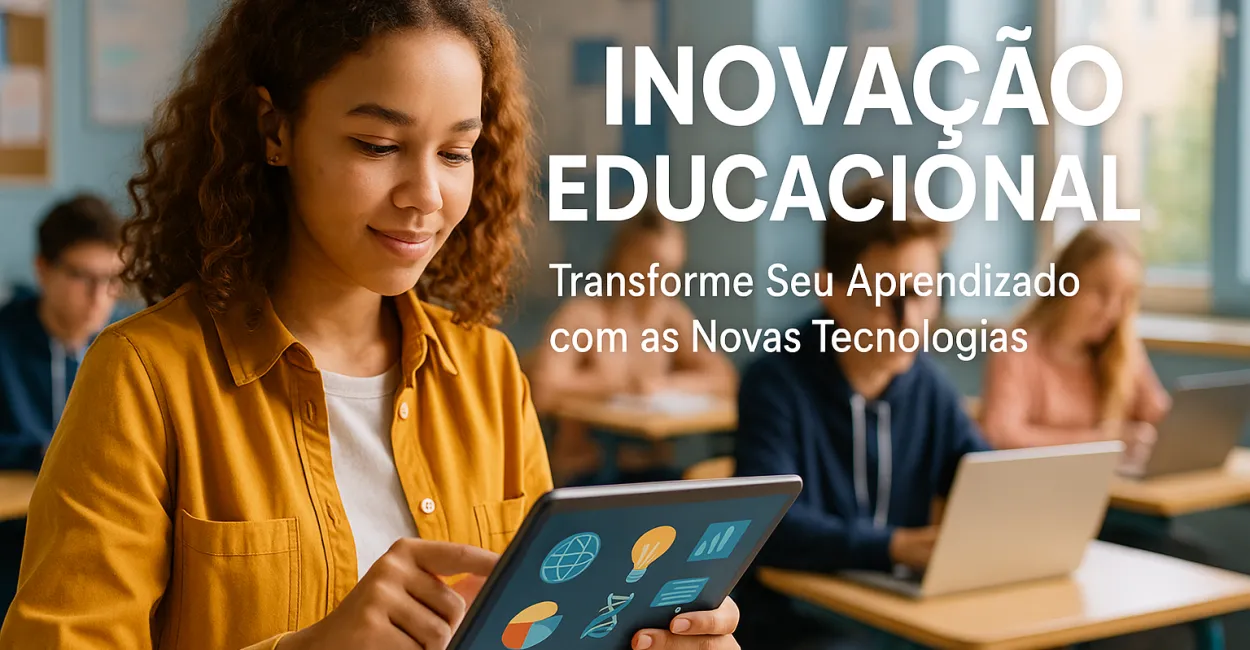
A class can use tablets in every lesson and still learn just as it would from printed workbooks. Educational innovation happens when changes in teaching, school organization, or technology improve the conditions for learning and address students’ specific needs. That might mean organizing a project-based lesson, combining in-person sessions with online activities, or adapting a lesson sequence to accommodate different learning paces. The right choice depends on the goal: a tool is only valuable when it helps people teach and learn more effectively.
In brief
- Innovation means rethinking practices and processes; buying equipment alone does not change learning.
- Projects, gamification, and blended learning are options that require clear goals and aligned assessment.
- Access, privacy, and accessibility should be part of planning from the start.
- A pilot project lets you address problems before expanding an initiative across the school.
What is educational innovation, and how does it change teaching?
Educational innovation is the intentional introduction of teaching, organizational, or technological changes to improve instruction and the conditions for learning. Put simply, it means rethinking what a school does and how it does it, based on an identifiable need, defined goals, and ongoing evaluation of results. The difference between innovation and digitization lies in how resources are used. Digitizing a workbook can make it easier to distribute; asking students to compare sources, develop an explanation, and revise their work based on feedback changes the learning activity itself. Technologies and methods that transform teaching can support this change, but they cannot replace it.

Approaches to educational innovation include active learning methods, in which students take part in inquiry and knowledge-building. Educational innovation involves active learning methods when participation has a purpose: solving a problem, making an evidence-based argument, or creating a product, rather than simply completing a different kind of assignment.
An innovative initiative starts with a learning need and ends with evidence that helps determine whether it is worth continuing.
What are the types of innovation in education?
One useful way to organize initiatives is to group them into four types: instructional, curricular, organizational, and technological. This classification is practical, not universal; a single proposal may fit more than one category.
Type
Goal
How it’s used at school
How to evaluate it
Instructional
Change how teaching and learning happen
Projects, discussions, and problem-solving
Review student work, participation, and understanding of concepts
Curricular
Connect content and skills
Integrate science and math in a local investigation
Check whether students apply knowledge from different subject areas
Organizational
Reorganize time, space, or collaboration
Plan lessons together or set aside time for projects
Observe implementation, participation, and workload
Technological
Use digital resources for a defined purpose
Simulations, virtual environments, or open educational resources
Check access, instructional use, and activity quality
The table can also help you decide where to start. If the challenge is low participation in discussions, an instructional change may be more appropriate than buying devices. If the school needs to expand access to materials, open educational resources may help, provided they are carefully selected and students have what they need to use them.
What examples of educational innovation work in practice?

Examples of educational innovation include project-based learning, gamification, blended learning, collaborative activities on digital platforms, and augmented or virtual reality experiences. Each approach serves different goals and requires planning suited to the class.
Projects, games, and blended learning
In project-based learning, a class might investigate water waste at school, collect data, interview staff, and present recommendations. The teacher defines the concepts students need to learn and monitors the quality of their evidence; without this connection to the curriculum, a project can become nothing more than a polished presentation. Gamification can use goals, challenges, and feedback to support learning, as long as rewards do not become the only reason students participate. Blended learning combines in-person instruction with technology-supported activities: a recorded lesson, for example, adds value only if it frees up class time to discuss questions or apply concepts.
Augmented reality and artificial intelligence
Augmented reality in education can layer digital models over the physical world, such as a representation of the human body viewed through a device. It is useful when it helps students explore relationships that are difficult to visualize; if the experience does not help answer a question raised in class, the visual effects may distract more than they teach. Artificial intelligence tools can help create exercises or suggest ways to study, but their responses need to be checked. Educators should protect student data, explain the tools’ limitations, and keep assessments aligned with what students are expected to demonstrate.
How can technology support learning without widening inequalities?
Technology supports learning when it makes an activity possible, faster, or more accessible than it would be without it. Online platforms and video calls make it easier to study by bringing materials together and enabling remote interaction, but planning needs to account for unreliable internet, access to devices, and alternatives for students who cannot participate in that format.
Open educational resources can make it possible to adapt and share materials, subject to their licenses. Accessibility also requires attention to captions, screen readers, clear language, and formats that work for students with different needs. Privacy should be part of the decision whenever a platform is selected: the school needs to know what data is collected, who can access it, and how long it is stored. Management systems can organize records and routines, but they should support instructional work; to learn about the technology field behind some of these solutions, see the Systems career profile.
What skills can students develop?
A well-planned approach can increase participation, give students more room to act independently, and help them apply concepts in a variety of situations. Group projects, for example, require students to divide tasks, listen to one another, and explain their choices, in addition to learning the curriculum content. These experiences can also build creativity, critical thinking, and communication—skills related to social life and work. The OECD publishes analyses of education and skills that help put this discussion in context, but practicing a skill in one activity does not guarantee it will transfer to every situation.
Results depend on the quality of instruction, students’ prior knowledge, the time available, and the conditions for participation. That is why an activity that works well at one school may need adjustments at another.
How can a school implement an innovative initiative?
Start with the need the team wants to address, not with a tool that is on sale. If many students submit incomplete answers to reading comprehension questions, for example, the first step is to identify where in the reading process they are having difficulty.
- Define the problem and goal: Describe what should change and who the change is for.
- Choose an approach: Match the proposal to the need and check the cost, accessibility, and infrastructure requirements.
- Prepare educators: Set aside time to plan, test materials, and agree on how progress will be monitored.
- Run a pilot: Try the proposal with a class or school unit suited to the context, with alternatives for anyone who faces access barriers.
- Evaluate and adjust: Compare student work, participation, and observed challenges with the original goal before expanding the initiative.
A common mistake is evaluating a project only by platform adoption or participant satisfaction. These indicators can be useful, but on their own they do not show whether students learned the material. Combine process evidence, such as attendance and participation, with evidence of learning, such as explanations, exercises, or student work evaluated against defined criteria.
Involving families and the community can help anticipate barriers and connect projects to local issues. Brazil’s Base Nacional Comum Curricular (BNCC), the country’s national curriculum framework, provides a reference for connecting learning goals and skills to proposed activities.
What challenges and criteria help evaluate an initiative?
Common obstacles include poor internet access, insufficient training, limited planning time, maintenance costs, and differences in access among students. An initiative may also lose momentum if it depends on one person or if the school has no plan to update materials and maintain equipment. Before expanding a project, use specific questions to guide your decision:
- Is the instructional goal described in a way the team can observe?
- Can students with different levels of access and needs participate?
- Do educators have the time and training to lead the initiative?
- Is there a way to assess learning, resource use, and ongoing costs?
UNESCO discusses both the potential and the limitations of technology in education in its resource on innovation in education. This perspective helps counter the idea that a tool can improve instruction on its own: its effects depend on the context, the instructional design, and who is able to use it.
Next steps
Choose an observable challenge in a class and document what it looks like before changing your approach. Then set a goal, select a suitable strategy, and agree with the team on what work or behaviors will indicate progress.
If the initiative involves technology, include an accessible alternative from the planning stage for anyone with connectivity issues or who needs a different format. A small pilot with clear evaluation criteria provides a safer basis for deciding whether to continue, adapt, or expand the proposal.
Frequently asked questions
Is educational innovation the same as using technology in the classroom?
No. Technology can be part of the change, but innovation can also come from new teaching practices, curricula, or ways of organizing schoolwork.
Does a school need to buy equipment to innovate?
Not necessarily. Inquiry-based projects, structured discussions, and changes to how teachers collaborate can be introduced without new devices. If the school does buy equipment, the decision should be based on a learning goal and take maintenance and access into account.
How do you evaluate an initiative that is still being tested?
Before the pilot, decide what you want to observe, such as the quality of student responses, participation, or understanding of a concept. Also record any difficulties using the approach; they may show that it needs adjustment, even when the instructional goal is still appropriate.
What does educational innovation mean in a nutshell?
It is a planned change in how people teach, organize a school, or use resources, designed to address a learning need and evaluated by its effects.
Can I find educational innovation resources in PDF format?
Yes. Organizations such as UNESCO publish PDF documents and reports about education and technology. Check the author, date, context, and references before using a resource to guide school decisions.
How can a project avoid depending on just one person?
Document the plan, share materials, and set aside time for other educators to observe or try the approach. It is also helpful to assign responsibilities and provide training for anyone who may take over the activity in the future.
Artigos Relacionados
 Educational Metaverse: A New Frontier for Interaction and Collaboration in Learning Environments
 Technology in Agriculture: Innovation Transforming Modern Farming
 Bilingual Education: Benefits, Challenges, and Impact on Learning
 3D Printing: The Technology Revolutionizing Modern Manufacturing
 The 5 Most In-Demand Careers in Technology
 Assessing Learning: Modern and Innovative Methods for Students
