
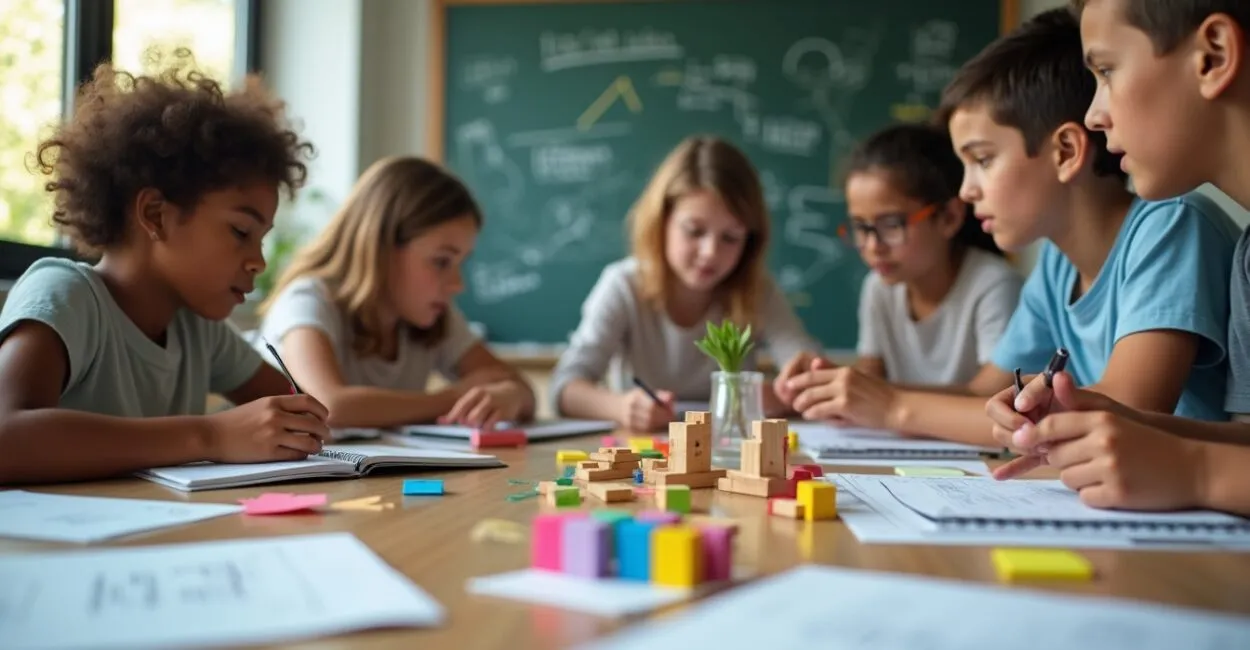
Active learning is an educational approach in which students actively participate in building knowledge through hands-on activities, reflection, and collaboration.
Active learning transforms lectures into participatory experiences that boost retention and motivation. In this article, we’ll explore definitions, practical classroom techniques, comparisons of teaching methods, benefits and limitations, as well as assessment strategies and hands-on examples for elementary, middle, high school, and college teachers.

Core Concepts of Active Learning
Definitions and foundations
- Direct student involvement in meaningful tasks
- Social construction of knowledge through interaction
- Metacognitive processes: reflection and self-assessment
- Integration of collaborative and hands-on practices
What Defines Active Learning
Active learning is defined by activities that require critical thinking, problem-solving, and ongoing student participation. Rather than passively receiving content, students experiment, discuss, and apply concepts in real-world contexts, making it easier to transfer what they learn. In practice: teachers can use case studies to connect theory with immediate application.
Expert Tip: Plan short instruction segments followed by 5–15-minute activities involving pairs or groups to maintain focus and engagement.
Theoretical Foundations and Evidence
The theoretical foundations of active learning include constructivism, social constructivism, and motivation theories. Research shows that active methods can improve retention and performance. According to PNAS, courses using active learning reduced failure rates by 55% in STEM subjects.
In practice: Use frequent formative assessments to measure results and adjust your strategies. Immediate feedback and social interaction are central to the approach.
Essential Elements for Implementation
Implementing active learning requires curriculum planning, materials, and teacher training. Essential elements include clear objectives, activities aligned with learning goals, and ongoing assessment mechanisms to guide adjustments. Expert Tip: Create lesson plans with specific time blocks for instruction, activities, and reflection.
In practice, flexible classrooms and simple technology—such as whiteboards and mobile devices—make it easier to vary activities. According to UNESCO, 70% of active learning strategies depend on rearranging the physical space and having institutional support (UNESCO).
Incorporate instructional design principles to ensure alignment among objectives, activities, and assessments.
Practical Active Learning Methods
- Set clear, measurable objectives before class.
- Plan short, interactive activities.
- Ask open-ended questions to encourage critical thinking.
- Use formative assessment with immediate feedback.
- Reflect and adjust based on performance data.
Flipped Classrooms and Micro-Lectures
Flipped classrooms move content delivery outside the classroom and reserve in-person time for applied activities. Students watch micro-lectures or read texts before class so they’re ready to solve problems. In practice: Record 5–10-minute videos and ask students to submit a summary beforehand to encourage accountability.
Expert Tip: Pair videos with short quizzes (3–5 questions) to check for understanding before in-class activities. This boosts engagement and lets teachers use class time for review, practice, and collaborative discussion.
Project-Based and Problem-Based Learning
Project-based and problem-solving approaches give students complex tasks that require research, collaboration, and creative solutions. Across three phases—defining the task, investigating, and presenting—students develop cognitive and social-emotional skills. In practice: Assign projects with weekly deliverables and assess them using clear rubrics.
According to studies by Edutopia, well-structured projects increase knowledge retention and application by an average of 30%. Expert Tip: Involve local stakeholders (e.g., businesses and nonprofits) to make projects more relevant and authentic.
Guided Discussions and Collaborative Learning
Guided discussions and cooperative strategies such as Jigsaw, think-pair-share, and structured debates promote interaction and individual accountability within the group. In shorter classes, divide students into teams with defined roles to maximize participation. In practice: Use higher-order questions from Bloom’s taxonomy to guide discussion.
Read also: Collaborative Learning: Techniques to Boost Participation
Expert Tip: Record students’ contributions on quick forms to assess participation and progress.
Comparing Active Learning Methods

Student-Centered vs. Content-Centered Methods
Student-centered methods prioritize activities, inquiry, and independence, while content-centered methods emphasize the delivery of information. Active learning seeks a balance: provide enough foundational knowledge to make applied activities productive. In practice: Pair short lectures with 60–120 seconds of questions and hands-on activities.
Expert Tip: Alternate micro-lectures with hands-on activities in 15–20-minute cycles to maintain attention. This contrast can help you choose techniques based on your goals and students’ needs.
Comparing Techniques: Projects, Discussions, and Flipped Classrooms
Each technique has distinct strengths: projects develop complex skills and independence; discussions foster critical thinking and communication; flipped classrooms increase the time available for in-class application. In practice: Choose techniques based on learning goals and available time.
Expert Tip: Use rubrics to compare outcomes across methods at the end of each course unit.
Methods at a Glance
| Method | Class time | Primary skill |
|---|---|---|
| Flipped classrooms | 30–50% application | Practical application and problem-solving |
| Project-based learning | Variable (weeks) | Planning and execution |
| Guided discussions | 10–30% of class | Communication and critical thinking |
| Hands-on activities | 10–40% of class | Practical experimentation |
Benefits, Assessment, and Limitations of Active Learning
Benefits Supported by Evidence
- Improves retention and deep understanding of content
- Develops social-emotional and collaborative skills
- Improves performance on applied assessments
- Encourages independence and intrinsic motivation
- Makes it easier to apply knowledge in real-world contexts
Formative and Summative Assessment
Frequent formative assessments—quick quizzes, rubrics, and self-assessments—guide instructional adjustments and provide immediate feedback. Summative assessment measures final outcomes but should reflect the active learning activities completed in class. In practice: Use detailed rubrics and portfolios to track progress over time.
Expert Tip: Combine 60% formative assessment throughout the unit with 40% summative assessment to balance process and outcomes.
Practical Limitations and Challenges
Common challenges include additional planning time, classroom management, and institutional resistance. Adapting lessons may require an extra 10–20 hours of initial planning per unit, especially for teachers without prior training. In practice: Start with small changes—one active learning activity per week—and expand gradually.
Expert Tip: Involve instructional leaders and colleagues to share resources and reduce the workload.
Recognizing limitations makes it possible to plan ways to address them, such as using technology and co-teaching.
Implementation Strategies and Resources
Lesson Planning and Time Management
Set clear learning objectives and divide the lesson into blocks: introduction (5–10 min), active learning activity (15–30 min), and reflection and assessment (10–15 min). This structure optimizes engagement and keeps students focused. In practice: Post a visible schedule for students to make transitions between activities easier.
Expert Tip: Pilot the new sequence with one class and adjust the timing based on how the lesson flows and how students participate.
Technology and Learning Materials
Digital tools—quiz platforms, forums, and collaborative editors—enhance active learning by enabling real-time feedback and asynchronous collaboration. In classrooms with limited resources, printed materials and activity cards are still effective. In practice: Prioritize technologies that support simple, low-cost interaction.
According to a survey by Brazil’s national statistics agency, the Brazilian Institute of Geography and Statistics (IBGE), 48% of public schools in the country report limited access to devices (IBGE).
Expert Tip: Keep non-digital alternatives available to ensure inclusion and equity in the learning process.
Table: Tool Advantages and Disadvantages
| Tool | Advantage | Disadvantage |
|---|---|---|
| Quiz platforms | Immediate feedback | Internet access required |
| Collaborative tools | Efficient asynchronous work | Learning curve |
| Physical materials | Accessible and reliable | Less scalable |
Conclusion
Active learning transforms classroom dynamics by prioritizing participation, application, and reflection, resulting in better retention and skill development. By using techniques such as flipped classrooms, projects, and guided discussions, teachers can boost engagement and learning. Use formative assessment, accessible resources, and gradual planning to overcome limitations and adapt practices to your school’s needs. Try, measure, and adjust: active learning is an iterative process that benefits students and teachers.
Frequently Asked Questions
What Is Active Learning?
Active learning is a teaching approach in which students actively participate in building knowledge through hands-on activities, discussions, and projects. Instead of listening passively, students apply concepts, solve problems, and reflect on their own learning process. This approach supports critical thinking, collaboration, and content retention, and can be adapted to in-person, hybrid, or remote instruction.
How Does the Classroom Implementation Process Work?
The process starts with setting clear objectives, followed by selecting activities that encourage participation (for example, debates or projects). Next, ongoing formative assessment and immediate feedback are used to adjust strategies. It’s important to plan timing, resources, and student roles. Implementation is usually gradual: Start with one active learning activity per week and expand based on results and teacher confidence.
What’s the Difference Between Active Learning and a Traditional Lecture?
The main difference is the student’s role: In a traditional lecture, the teacher delivers content and students receive it; in active learning, students take an active role in building knowledge through action and reflection. While lectures support broad content coverage, active methods prioritize deep understanding, practical application, and social-emotional skill development.
When Should You Use Active Methods Instead of Traditional Methods?
Use active methods when the goal is to develop critical thinking, practical application, and collaborative skills. They’re especially effective for topics that require problem-solving, interdisciplinary projects, or transferable learning. For topics that require presenting foundational concepts, combine micro-lectures with hands-on activities to balance content delivery and application.
How Much Does It Cost to Implement Active Learning?
Costs vary: Many techniques require only additional planning time (estimated at 10–20 hours per unit initially), simple materials, or low-cost technology. According to education reports, 48% of schools face infrastructure limitations, which may require alternative solutions. Larger investments may include teacher training and purchasing devices, but many practices are affordable and scalable.
Artigos Relacionados
 Active Learning: Practical Techniques to Engage Students
 Educational Process: A Practical Guide to Learning
 Active Learning Methods: Strategies to Engage Students
 Active Learning Methodologies in Teacher Education: How to Apply Them
 Active Learning in Lesson Planning: Strategies and Examples
 Active Learning Pedagogy in Extracurricular Activities: Engagement and Learning
