
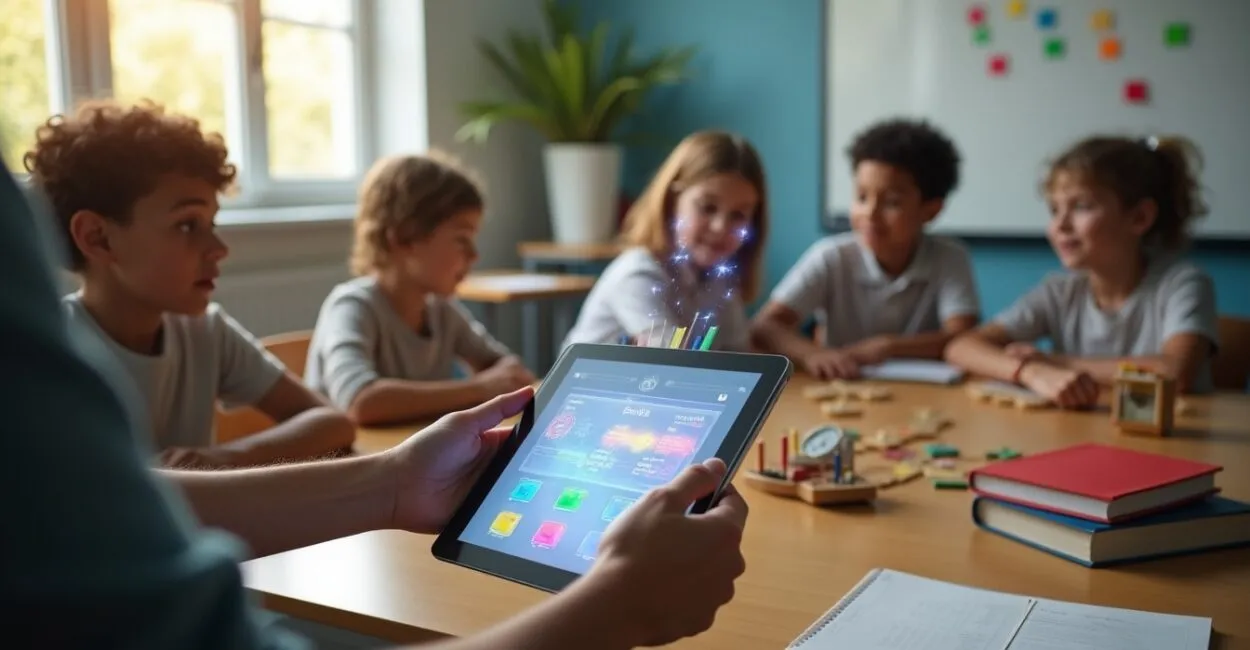
Gamification uses game elements to turn learning activities into motivating, meaningful experiences. By applying mechanics such as points, challenges, and instant feedback, teachers can boost student engagement and persistence.
In today’s world of hybrid classrooms and digital distractions, gamification has become an essential strategy for connecting purpose, fun, and results. This article explains how to use gamification to motivate students, with practical examples of educational games and success metrics. You’ll find concrete steps, activity templates, game examples, and clear indicators for measuring impact—all designed for teachers seeking real, measurable results.

Why Gamification Works in Education
Intrinsic and Extrinsic Motivation
Gamification taps into internal motivators such as curiosity and a sense of accomplishment, as well as external rewards such as points and badges. This can improve attendance, attention, and classroom behavior. Combining appropriately challenging tasks with instant feedback creates a state of flow and a sense of progress—both essential for keeping students engaged over time.
Social Engagement and Collaboration
Competitive and cooperative elements increase interaction among students, encouraging communication and teamwork. Collaborating on missions helps strengthen social-emotional skills.
Leaderboards and teams also encourage shared responsibility, reinforcing common goals and a positive classroom culture.
How to Implement Gamification Step by Step
Planning and Clear Objectives
Define learning outcomes before choosing game mechanics. Well-defined objectives guide your choices of points, levels, and assessment criteria.
Map out the skills you want students to develop, the time available, and your students’ needs so you can adjust difficulty and ensure steady progress.
Designing the Mechanics and Dynamics
Choose mechanics that support learning: points, levels, badges, feedback, and storytelling. Avoid overwhelming students with unnecessary elements.
Use short challenge-feedback-reward cycles to improve retention and provide ongoing positive reinforcement.
- Start with simple, clear rules.
- Create rewards that align with educational goals.
- Gather student feedback and adjust the mechanics.
Practical Examples of Educational Games

Analog Games for the Classroom
Scavenger hunts, role-playing, and team quizzes bring healthy competition into the classroom and reinforce content through active learning. These formats encourage critical thinking and allow for formative assessment without the pressure of grades.
Digital Platforms and Apps
Tools such as Kahoot!, Classcraft, and Duolingo use gamification elements to track progress and motivate learners through points. Use technology to personalize learning paths and provide real-time feedback, expanding the reach and scalability of your approach.
Gamification Success Metrics and Assessment
Key Quantitative Indicators
Measuring participation, attendance, completion rates, assessment scores, and time on task provides an objective picture of impact. Track progress by level, points earned, and mission engagement to compare results before and after implementation.
Qualitative Indicators and Satisfaction
Feedback, interviews, and classroom observations can help measure students’ motivation, self-esteem, and collaboration.
Assess how relevant students find the content and whether their attitudes toward learning have changed to measure benefits beyond grades.
| Metric | What It Measures | How to Collect Data |
|---|---|---|
| Completion rate | Percentage of activities completed | Platform reports or a teacher’s checklist |
| Engagement time | Average time spent by each student | Digital logs and observation |
| Improved performance | Difference between pre- and post-intervention scores | Diagnostic and summative assessments |
| Satisfaction | Students’ perceptions of the experience | Surveys and qualitative interviews |
- Set clear learning objectives.
- Choose simple mechanics that support those objectives.
- Run a pilot with a small group.
- Collect data and adjust the rules based on evidence.
- Gradually expand the program to the whole class.

Best Practices, Challenges, and Success Stories
Adaptation and Personalization
Personalize levels and rewards for different learners, and adjust the pace and complexity to meet individual needs.
Using data strategically enables targeted interventions and helps prevent students from falling behind because of an unsuitable difficulty level.
Ethics, Accessibility, and Sustainability
Make sure rewards don’t violate ethical principles or increase anxiety. Ensure all students can participate.
Plan for maintenance and updates so the system stays relevant, and involve the school community to support long-term sustainability.
- Offer constructive feedback, not just points.
- Include cooperative options for students who are less competitive.
- Document results to share with the education community.
Conclusion
Gamification is a powerful bridge between fun and effective learning: it turns routine tasks into motivating experiences with measurable results. By combining intentional design, clear metrics, and ongoing adaptation, teachers can spark curiosity and improve student performance.
Think back to what first sparked your interest: curiosity, a challenge, or recognition. When used well, gamification amplifies those very motivators.
Frequently Asked Questions
What Is Gamification in Education, and Why Does It Work?
Gamification in education applies game elements—such as points, levels, and missions—to motivate and engage students. It works by activating cognitive reward systems, providing quick feedback, and creating appropriately challenging tasks, which can increase persistence, participation, and content retention for learners of all ages.
Which Digital Tools Are Recommended for Getting Started with Gamification?
Platforms such as Kahoot!, Classcraft, and Duolingo offer practical tools for implementing game mechanics. They provide progress reports, leaderboards, and badges, making it easier to measure engagement and performance without a major upfront investment in technology.
How Can You Tell Whether Gamification Is Actually Improving Learning?
Use quantitative metrics, such as completion rates, engagement time, and assessment performance, along with qualitative measures, such as satisfaction surveys and observations. Compare data from before and after implementation to identify objective improvements and understand students’ perceptions of the gamified experience.
What Are the Risks of Using Gamification, and How Can You Avoid Them?
Risks include excessive competition, an overemphasis on extrinsic rewards, and excluding students who are less competitive. Avoid these pitfalls by balancing competitive elements with cooperative ones, prioritizing formative feedback, and ensuring all activities are accessible and inclusive.
How Can a School Scale Up a Gamification Initiative?
Start with a pilot, document the results, and make adjustments based on data and feedback. Involve administrators, teachers, and families; form a support committee; and create an ongoing professional development plan to build buy-in and ensure the strategy can be sustained.
References: Practical recommendations based on research and authoritative resources on active learning, including articles from Edutopia and education reports from the OECD.
Artigos Relacionados
 Active Learning Methods: Strategies to Engage Students
 Interactive Whiteboards: Strategies to Engage Students
 Educational Gamification: Innovative Strategies to Boost Student Engagement
 Active Learning: Practical Techniques to Engage Students
 Modern Elementary Education: Practices That Engage Students
 Active Learning Methods: Engage Students With Proven Practices
