

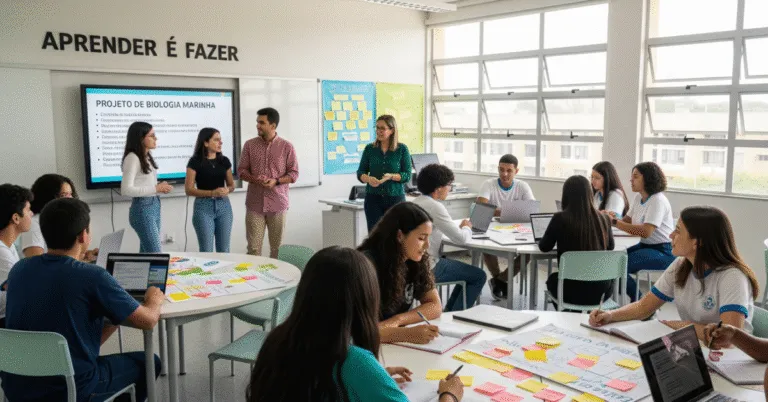
When a lesson becomes a monologue, attention drops—and so does learning. Active learning methods were designed to break that pattern: instead of making the teacher the sole source of information, they get students thinking, deciding, discussing, applying, and reviewing what they’ve learned. That matters because teaching isn’t about talking more; it’s about helping students work with knowledge independently. In practice, methods such as the flipped classroom, problem-based learning, and project-based learning increase engagement, improve retention, and develop skills that K–12 schools and colleges need to foster more consistently, including collaboration, communication, and problem-solving.

What You Need to Know
- Active learning methods are strategies in which students take an intentional role in the learning process rather than simply receiving information.
- They work best when there’s a clear objective, effective facilitation, and transparent assessment criteria from the start.
- Not every “participatory” activity is truly active learning; without reflection and a pedagogical purpose, it’s just busywork.
- The most lasting gains come when the activity aligns with the content, the time available, and the needs of the class.
- The biggest mistake is assuming technology alone can solve disengagement: the method comes before the tool.
Active Learning in Education: What It Is and Why It Works
In technical terms, active learning methods are student-centered teaching approaches in which students help build knowledge through action, reflection, interaction, and application. Put simply, students stop being mere listeners and become active participants in their own learning. The reason these methods work is straightforward. The brain learns better when it has to retrieve information, connect ideas, and make decisions based on them. That’s why approaches that involve practice, discussion, and real-world problem-solving tend to stick better than long, linear lectures.
How It Differs From a Traditional Lecture
In a traditional lecture, the focus is on delivering information. The teacher organizes and explains the material, and students take notes. Lectures still have their place, especially when introducing new concepts with precision, but they fall short when they’re the only format used all the time.
With active learning methods, the lesson is built around a cognitive task. Students compare, interpret, prioritize, make arguments, and create something. This shift changes the kind of mental effort involved—and that’s where learning tends to become more meaningful.
What separates participation from learning isn’t how noisy the classroom is; it’s the quality of the task and the level of reflection it requires from students.
Where They Make the Biggest Difference
These methods are especially effective in classes with diverse learners, low engagement, or content that calls for application, such as science, math, language arts, and career and technical education. They’re also useful when the goal is not just memorization, but developing reasoning, decision-making, and argumentation skills. According to UNESCO’s education report, practices that actively engage students tend to encourage participation and more meaningful learning, provided they have a clear pedagogical purpose. The key isn’t to “innovate for innovation’s sake,” but to teach with purpose.
Classroom Formats That Work
In K–12 schools and colleges, some strategies are widely used because they’re easy to adapt and offer a good balance between effort and results. Each of the best-known approaches has different strengths, so choose based on the lesson objective, not the latest trend.
Flipped Classroom
Students study the introductory material before class, usually through a video, text, or podcast, and class time becomes an opportunity to apply what they’ve learned, ask questions, and work through activities. It works well when the prep material is short, clear, and accessible.
Problem-Based Learning
Students are given a problem and investigate possible ways to solve it. This approach is excellent for developing analytical skills and independence, but it requires careful facilitation to keep students from getting stuck in aimless trial and error.
Project-Based Learning
Over a set period, the class creates something tangible: a prototype, campaign, report, podcast, or community initiative. Learning happens as the project progresses, not just at the end.
Gamification
Gamification doesn’t always mean playing a full game. Often, it involves points, missions, levels, and challenges to maintain motivation and momentum. The risk is using rewards without a clear pedagogical purpose; motivation then drops as soon as the external incentive disappears.
- Simulation: Useful for practicing decision-making in a controlled environment.
- Case study: Good for critical reading and contextual analysis.
- Peer instruction: Effective when the goal is to reinforce concepts through peer-to-peer explanations.
How to Plan an Active Lesson Without Improvising

The most common trap is thinking that any activity will do as a replacement for a lecture. It won’t. If a task has no objective, criteria, or wrap-up, it loses its educational value and becomes a way to fill time.
Experienced educators know that planning should start with the intended learning outcome, not with whatever activity is trending. The steps below help prevent last-minute improvisation and reduce frustration, even in classes that aren’t used to this format.
- Define the target skill. For example: making an argument, solving, comparing, synthesizing, or applying.
- Choose a strategy. A problem, project, debate, rotating stations, or case study.
- Set the final deliverable. It could be an answer, mind map, presentation, report, or solution.
- Make the criteria clear. Students need to know how they’ll be assessed.
- Set aside time for feedback. Without a wrap-up, the activity loses its formative value.
A good rule of thumb is simple: if the lesson ends and no one can say what they learned, why they learned it, or how they’d apply it later, the plan missed the mark.
An active learning method without a learning objective is just activity; with a clear objective, it becomes a high-impact teaching tool.
The Teacher’s Role: Facilitation, Not Just Lecturing
Active learning methods don’t diminish the teacher’s role; they change it. Instead of simply delivering information, the teacher becomes the designer of the learning experience, the discussion facilitator, and the person responsible for keeping the lesson on track.
What Teachers Need to Do Better
- Ask questions that prompt reasoning, not just recall.
- Get things back on track when discussions go on too long.
- Make sure everyone is included, because large groups can leave quieter students out.
- Use formative assessment to adjust the lesson as it unfolds.
In practice, the best teacher in this format isn’t necessarily the one who talks less. It’s the one who steps in at the right moment, asks better questions, and plans lessons that support participation without letting the content get lost.
Mistakes That Can Make the Strategy Fail
Not every approach works the same way in every situation. Active learning can be very effective, but it can also fall short when there isn’t enough structure, time, or preparation. The most common mistake is confusing innovation with effectiveness.
The Most Common Problems
- Activities without a purpose: Students do something but don’t know why.
- Too much complexity: Tasks are too large for the time available.
- Lack of facilitation: Groups talk but don’t make conceptual progress.
- Misaligned assessment: Students are tested on memorization after an activity focused on analysis.
There’s also an important limitation: in very large classes, with little time or inadequate resources, some strategies need to be simplified. That doesn’t invalidate the approach; it just calls for realistic adaptation. Brazil’s Ministry of Education (MEC) offers materials and guidelines to help educators consider how to implement these methods in K–12 and higher education.
How to Measure Whether Real Learning Took Place
If an activity was fun but no one learned the core content, the result was educational entertainment, nothing more. To assess learning effectively, look at three areas: conceptual understanding, ability to apply knowledge, and quality of participation.
| Criterion | What to Look For | Example of Evidence |
|---|---|---|
| Understanding | Whether the student explains the concept in their own words | A clear oral or written response |
| Application | Whether they use the content in a new situation | A case solution, project, or problem |
| Participation | Whether they contribute meaningfully, not just show up | Argumentation, listening, and collaboration |
A useful resource for thinking about assessment and evidence of learning is Edutopia, which shares practical classroom strategies and shows how feedback, guided practice, and ongoing review make a difference in real-world settings.
A Practical Example: A Lesson That Came to Life
In a high school biology class, the teacher realized that the material on ecosystems wasn’t sticking. Instead of showing the slides again, the teacher brought in a case study on local environmental degradation and assigned different roles to groups: researcher, advocate, reporter, and facilitator.
Each group had to analyze the problem, defend a position, and propose a feasible intervention. By the end, students not only remembered concepts like food chains and environmental impact, but could also connect them to real-world decisions. The content was no longer abstract because it had context, conflict, and practical application.
Next Steps for Applying These Methods in Your Setting
Here’s the key: active learning methods aren’t a one-size-fits-all package. They’re a way to structure learning so students think more, participate more effectively, and retain information more consistently. They work when lessons are intentionally designed and fall short when they’re used as window dressing.
If you want to get started without overcomplicating things, choose one strategy, apply it to a specific objective, and measure the results using clear criteria. Then adjust what didn’t work. That’s how practice really improves.
Frequently Asked Questions
Do active learning methods work for every subject?
Yes, but not every strategy works the same way in every subject. Subjects with a strong conceptual component can use case studies and debates, while hands-on fields often benefit more from projects, simulations, and problem-solving. The key is to adapt the method to the lesson objective.
Do active learning methods completely replace lectures?
No. Lectures are still useful for introducing concepts, organizing knowledge, and providing a theoretical foundation. The best results usually come from combining direct instruction with opportunities for active application.
What’s the difference between group work and active learning?
Group work is a format; active learning is an instructional design with a clear learning purpose. A group might simply divide up tasks and submit something without reflecting, which doesn’t make it a truly active learning approach. What defines the approach is the level of cognitive engagement.
Do you need technology to use active learning methods?
No. Technology can help, but it isn’t required. A good debate, a printed case study, or a well-planned activity can promote active learning without any digital tools.
How can I tell if my class is ready for this kind of approach?
Look at students’ independence, familiarity with collaboration, and ability to follow steps. If they haven’t developed those skills yet, start with short, well-guided tasks. Readiness for this model develops over time, too.
What mistake most undermines results?
Getting students to “do” something without ensuring they reflect and wrap up. When an activity has no clear pedagogical purpose, it becomes movement without learning. Planning needs to connect the task, content, and assessment.
%%AGPTRH7%%
Artigos Relacionados
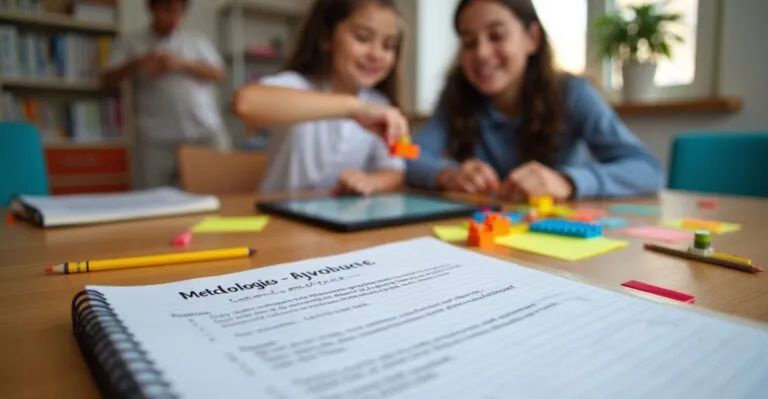 Active Learning Methods: Strategies to Engage Students
 Modern Elementary Education: Practices That Engage Students
 Assessing Learning: Modern and Innovative Methods for Students
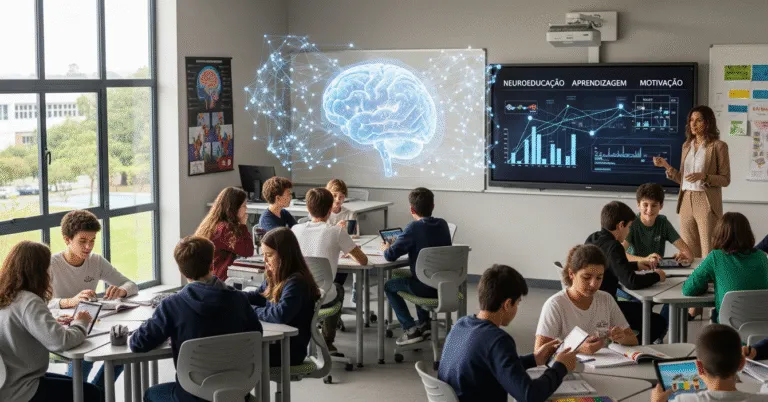 Neuroeducation in Practice: Innovative Teaching Methods
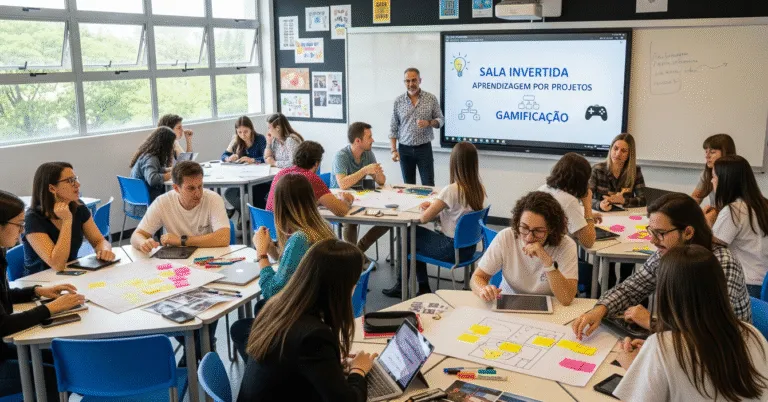 Active Learning Methodologies in Teacher Education: How to Apply Them
 Active Learning in Lesson Planning: Strategies and Examples
