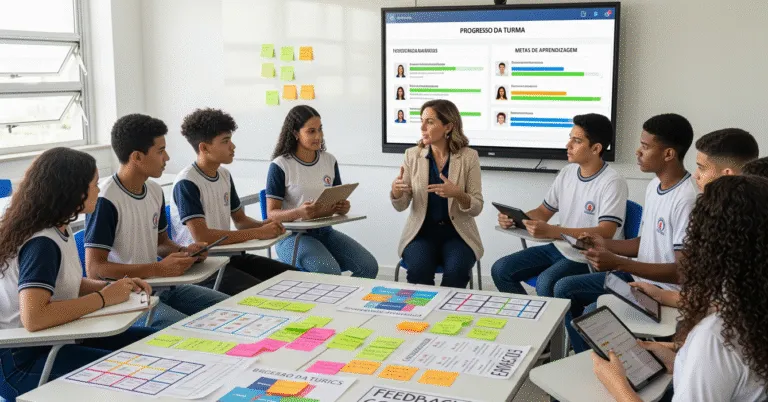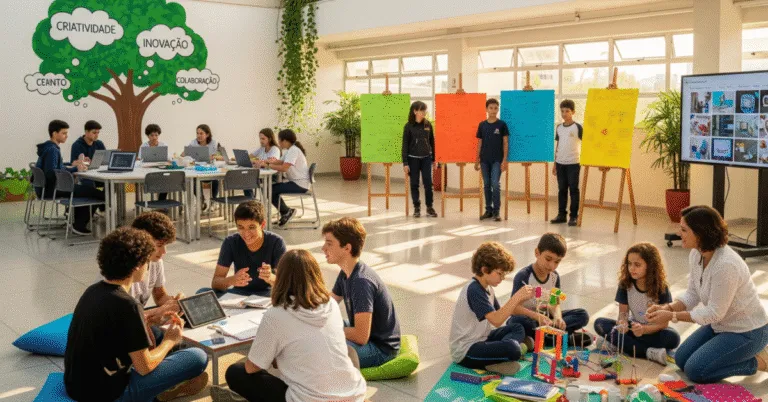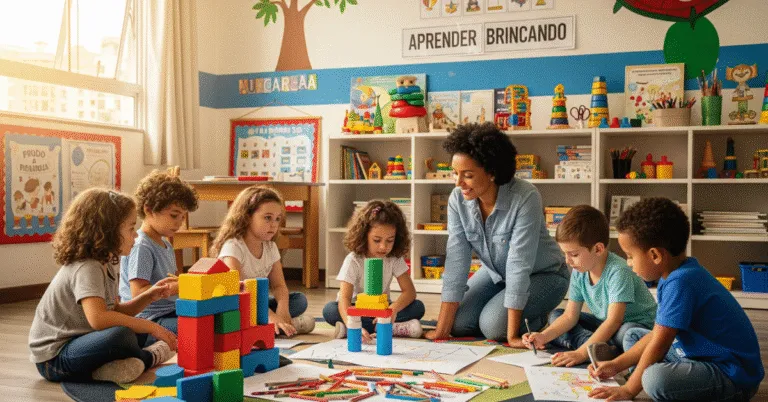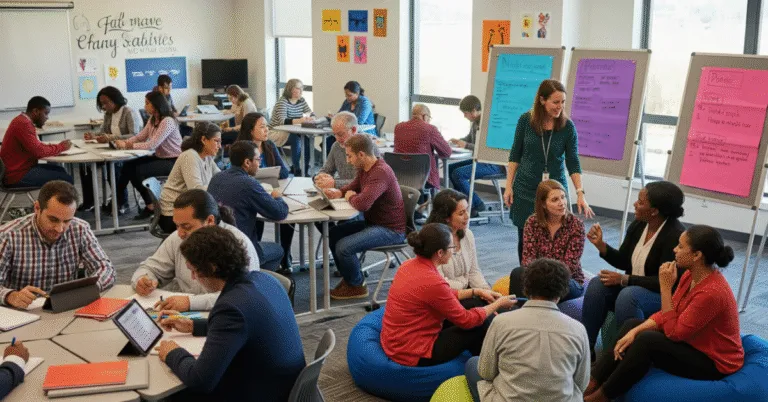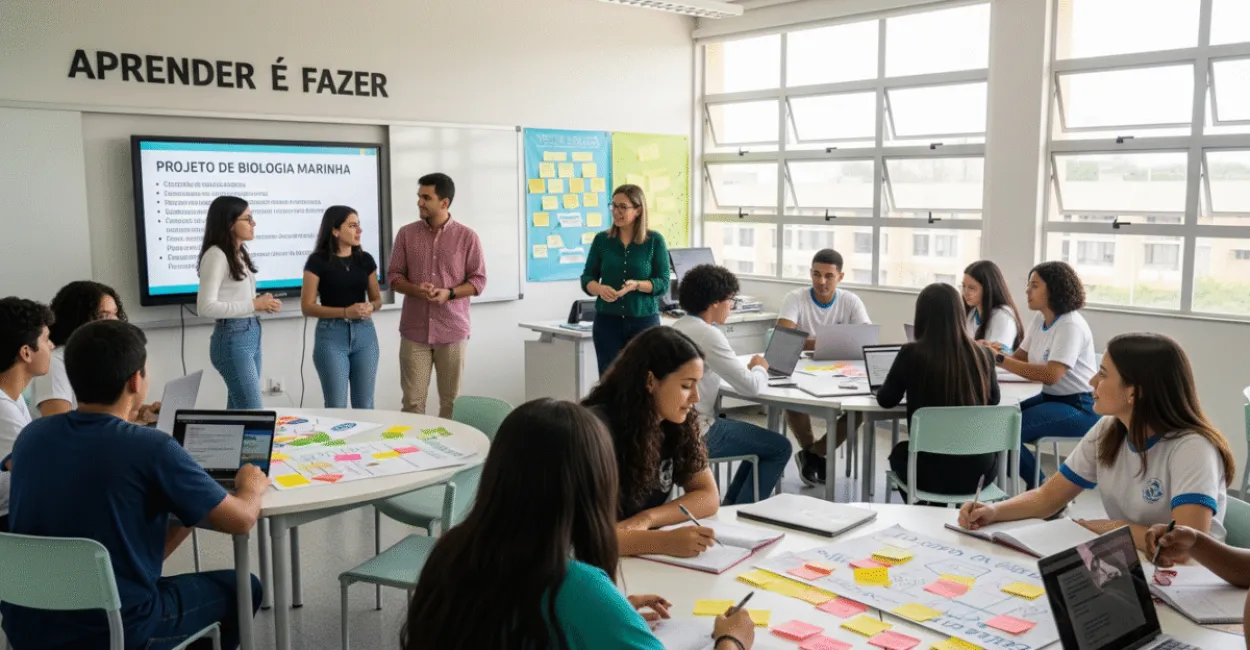
When a class relies solely on lectures, students’ brains go into passive mode. With active learning, the approach changes: students interpret, decide, discuss, apply, and build knowledge with guidance from their instructor. This matters because learning is about more than listening to explanations; it means drawing on what you know to solve real-world problems. In K–12 classrooms, college courses, and corporate training, this shift can improve engagement, retention, and the quality of participation. Read on to learn what these practices are, why they work, where they can fall short, and how to plan activities that actually make it off the page.

What You Need to Know
- Active learning approaches involve students in building knowledge rather than having them passively receive information.
- The teacher’s role shifts from delivering information to facilitating learning: organizing challenges, asking better questions, and tracking evidence of learning throughout the process.
- Not every “different” activity is active learning. Without a clear objective, assessment criteria, and a connection to a skill, it’s just a flashy exercise.
- The most consistent results come from combining a real-world problem, collaboration, timely feedback, and formative assessment.
- In practice, success depends on aligning content, time, and complexity. A common mistake is trying to use the same strategy with every class, subject, and level of readiness.
Active Learning in Lesson Planning: Turning Content Into Real Learning
Technically, active learning refers to student-centered teaching strategies designed to help students make meaning through tasks, problems, projects, discussions, experiments, or case studies. Put simply, students stop being just recipients of information and start working with the content. This approach aligns with Bloom’s taxonomy, problem-based learning, and competency-based education, all of which feature in curriculum documents such as Brazil’s Base Nacional Comum Curricular (Brazil’s National Common Curricular Base, a national curriculum framework). The point isn’t to “make class more fun”; it’s to have students demonstrate understanding through observable actions.
What sets an active lesson apart from a standalone activity isn’t the technology involved; it’s the teaching purpose behind the task.
What changes in lesson planning
Planning no longer starts with what the teacher will explain. It starts with what students should be able to do by the end. That changes everything: the content, the class time, how students are grouped, and what evidence of learning is collected. Instead of asking, “How will I teach this content?” the question becomes, “What experience will help students use this content?” The shift may seem subtle, but it reshapes the entire lesson.
Why this improves learning
Students learn more effectively when they have to recall information, compare ideas, justify answers, and make decisions. These actions strengthen long-term memory and make it easier to apply content in new situations. UNESCO reports on learning and engagement underscore the importance of teaching practices that involve meaningful participation rather than nonstop lecturing.
Strategies That Work in K–12 Classrooms and Higher Education
There are many ways to use active learning, but the most useful day-to-day strategies tend to require little fanfare and a lot of intentional planning. The name of the strategy matters less than how the learning experience is designed.
Problem-based learning
The teacher presents an open-ended problem, and students investigate, develop hypotheses, and propose solutions. This works especially well in health sciences, engineering, business, and teacher education programs. The key benefit is decision-making. Students have to connect theory to context instead of repeating memorized definitions.
Case study
A case study places course content in a concrete situation with limited data and real-world variables. The goal isn’t to find “the right answer” but to make a coherent argument. This strategy works well because it simulates professional dilemmas. A good case study pushes the group to set priorities, something traditional teaching rarely asks students to do.
Flipped classroom
In this format, some of the instruction moves to before the in-person class, through a video, reading, or guided learning path. Class time is then free for discussion, practice problems, and individual support. This model falls short when students arrive without having done the basic preparation. Without that step, class becomes disconnected from the material students were supposed to review in advance.
In practice, the flipped classroom only delivers results when the advance material is short and clear, and students are visibly expected to use it in the next class.
Project-based learning
Projects work well when the goal is to create something with a clear beginning, middle, and end: a report, prototype, campaign, intervention, presentation, or practical solution. Students learn by organizing steps, negotiating decisions, and revising their work. In schools and colleges, this approach tends to be most effective when there’s a tangible final product. Without a concrete deliverable, projects can dissolve into long, unfocused meetings.
How to Plan a Lesson Sequence With a Clear Objective

Good planning doesn’t come from creative improvisation; it comes from clarity. Before choosing an activity, define the skill, the evidence of learning, and the success criteria.
1. Start with the intended outcome
Describe what students should be able to do by the end of the lesson or unit. Use observable verbs: analyze, compare, argue, solve, create, justify, classify.
2. Choose a task that requires action
If the goal is understanding, the task should require students to demonstrate their understanding. Guided reading with questions, a structured discussion, a concept map, and problem-solving are all useful examples.
3. Define the evidence of learning
Without evidence, there’s no way to know whether the activity worked. Evidence might include an oral response, a written piece, a proposal, a completed rubric, a group solution, or an individual reflection.
4. Plan for facilitation and time
An active lesson sequence needs time for instruction, interaction, and synthesis. If the teacher doesn’t set aside time to guide the process, the class can lose its way.
| Element | What to look for | Common mistake |
|---|---|---|
| Objective | Clearly stated skill | Only saying “cover the content” |
| Task | A challenge that requires a decision | A decorative activity with no real problem |
| Assessment | Visible criteria | Grading only the final product |
| Facilitation | Guidance throughout the process | Waiting until the end to find out no one understood |
Formative Assessment: Where Many Get Halfway There—and Miss the Finish
Active learning doesn’t pair well with assessment that looks only at the final result. The process matters as much as the deliverable because learning happens through attempts, mistakes, revision, and feedback. Formative assessment tracks that process and provides useful feedback while there’s still time to adjust course. In practical terms, that means observing participation, reasoning, independence, collaboration, and how well students apply the content.
Rubrics are more useful than a score alone
Rubrics make clear what counts as expected performance. They reduce the sense of arbitrariness and help students understand what they need to improve. In a group project, for example, it’s not enough to assess the final product. You should also consider criteria such as the quality of sources, the coherence of ideas, and each student’s contribution.
Timely feedback is invaluable
If feedback comes too late, students have already moved on without correcting their thinking. A brief, specific, actionable comment often leads to more learning than a long, generic correction.
There’s an important caveat: this approach works best when the class accepts mistakes as part of the process. In highly punitive environments, students avoid taking risks, and participation drops.
A Practical Example From a Real Classroom
In a high school biology class, the teacher wanted to cover ecosystems. Instead of starting with a lecture, the teacher posed a problem: pollinators were disappearing in an agricultural region.
The class split into groups. One group analyzed environmental causes, another investigated economic impacts, and a third proposed local solutions. At the end, each group presented a brief proposal backed by data and reasoning.
The course content came into play, but not as abstract instruction. Students had to use the concepts of food chains, ecological balance, and human impact to address the problem. The result wasn’t just better participation; explanations were more precise, and students relied less on memorized answers.
This kind of experience shows why active learning makes sense when the goal is deep learning. Students see that knowledge isn’t just something to put on a test; it’s a tool for analysis.
When This Approach Works—and When It Doesn’t
This approach works well when there’s a clear objective, the class is at least somewhat engaged, and there’s time for facilitation. It also requires teachers to be ready to guide the process, ask better questions, and accept that they won’t have absolute control of the class.
But not every topic calls for the same approach. For very introductory material, a short, direct explanation may be a more effective starting point. In classes with a wide range of skill levels, activities need to be adapted; otherwise, students who need more support can fall behind, while more advanced students get frustrated.
Active learning doesn’t replace explicit instruction; it works best when teachers use explanation, practice, and reflection in the right balance.
Another useful resource for exploring the discussion is material from OECD Education, which covers skills, engagement, and learning in diverse settings. For resources more directly focused on higher education, universities such as Harvard University publish studies and materials on active learning and student participation.
Next Steps for Applying Active Learning Without Overcomplicating It
The best way to start isn’t to change your entire routine at once. A smarter approach is to choose one unit, focus on one skill at a time, and test an activity with clear success criteria. When students understand how it works, buy-in increases; when the design is confusing, resistance shows up quickly.
If you want to move beyond lecture-based teaching without sacrificing consistency, start small: one guiding question, a short rubric, and clear, focused feedback can already change the experience. Then adjust the complexity based on how the class responds and how much time you have.
Frequently Asked Questions
Can active learning be used in any subject?
It can be used in many subjects, but not in exactly the same way in all of them. The design needs to fit the content, students’ age, and the class’s level of independence. In some cases, a brief explanation before the activity is essential.
What’s the difference between active learning and a group activity?
A group activity is just one way to interact. Active learning requires a teaching objective, a structured task, evidence of learning, and aligned assessment. Without those elements, an activity may engage the class, but it doesn’t guarantee learning.
Does the teacher lose authority with this approach?
No. The teacher steps away from being the center of the conversation but takes on the role of facilitator, curator, and guide. Authority comes from leading the learning process, not from lecturing nonstop.
How can I tell whether an activity actually worked?
Look at whether students can apply the content in a different situation, justify their choices, and explain their reasoning clearly. If their performance improves only during the activity but not afterward, the learning was superficial.
Do I need technology to use active learning?
No. Digital tools can help, but they aren’t required for the strategy to work. A well-facilitated discussion, a printed case study, or a group problem-solving activity can all put the core principle into practice.
%%AGPTRH5%%