
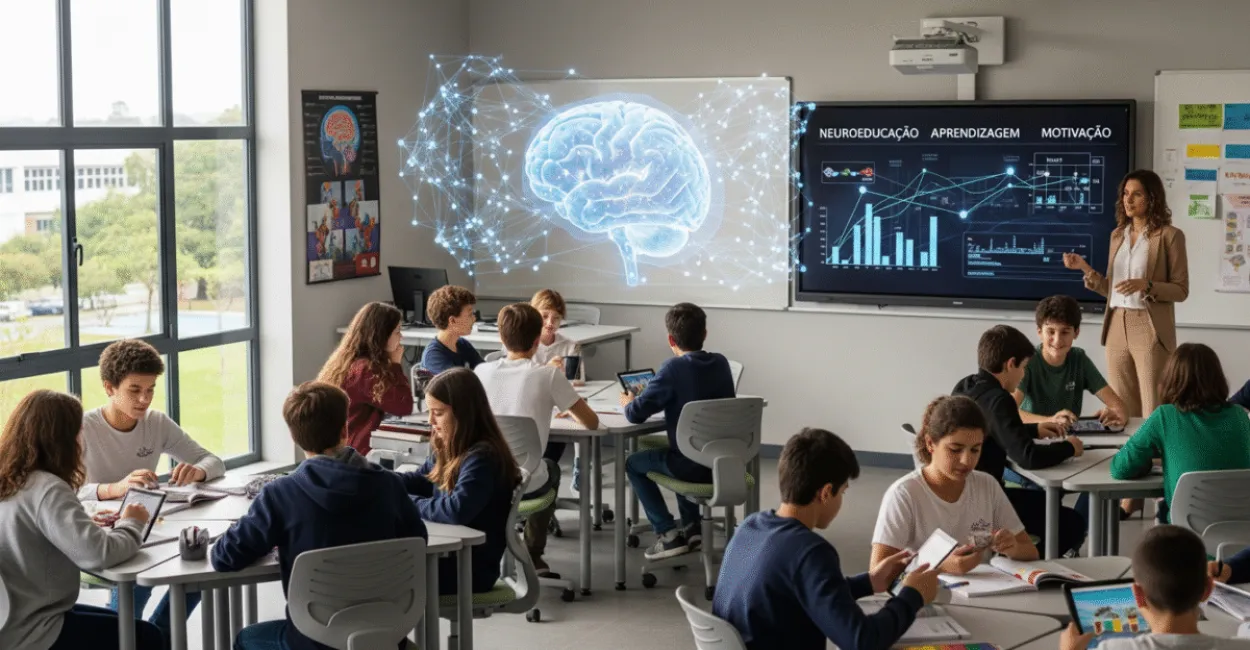
Neuroeducation brings together brain science and teaching practices to improve learning, motivation, and cognitive development. Understanding how the brain learns matters when designing effective methods, reducing dropout rates, and boosting classroom performance. To get started, integrate neuroscience evidence, instructional strategies, and ongoing assessment into practical educational plans.
The challenge is translating scientific discoveries into practices that teachers, school leaders, and educators can use. This article explores methods, practical examples, professional development opportunities for teachers, and educational products aligned with neuroeducation, offering a roadmap for implementation across different grade levels.

Foundations of applied neuroeducation
What neuroeducation is and its principles
Neuroeducation combines knowledge from neuroscience, psychology, and education to explain how learning happens. Its principles include neural plasticity, the importance of sleep and emotion in learning, and the need for stimulating environments. These concepts guide teachers in planning lessons that support memory, reasoning, and attention.
Applying these principles requires teachers to understand processes such as memory consolidation, selective attention, and cognitive load. Structured activities featuring spaced repetition and immediate feedback draw on these biological foundations to promote long-term retention. Data and formative assessments also make it possible to adjust interventions based on evidence. In this way, neuroeducation becomes a translational field that turns scientific discoveries into measurable, scalable teaching practices.
Neurobiological foundations of learning
Learning involves changes in synapses and the reorganization of neural networks, a phenomenon known as plasticity. Repetition, emotional significance, and multimodal context support memory consolidation. Understanding these mechanisms helps teachers create lesson sequences that strengthen essential neural connections.
Factors such as neurotransmitters (dopamine and norepinephrine) influence motivation, attention, and reward, all of which are critical to student engagement. Strategies that reinforce a sense of progress and allow for small wins activate reward systems and increase persistence on tasks. In addition, physiological states—including sleep, nutrition, and stress levels—affect how efficiently we learn. Comprehensive educational interventions account for these factors to optimize the school environment and teaching practices.
Bringing theory and teaching practice together
Bringing theory and practice together requires protocols that translate scientific findings into classroom routines. Examples include taking breaks to support consolidation, interleaving exercises, and using formative assessment to adjust cognitive load. These practices make neuroeducation practical and replicable.
Teacher training is essential: teachers need courses and instructional materials that explain neuroscience concepts in accessible educational terms. Pilot projects and professional learning communities help educators test and adapt methods to local contexts. Collaboration between researchers and educators makes it easier to validate interventions in school settings. Measures of impact—including performance, engagement, and school climate—guide decisions and support continuous improvement.
Neuroeducation-based teaching methods
Active learning and cognitive engagement
Active learning improves retention by creating opportunities for deeper processing. Activities such as problem-solving, peer teaching, and interdisciplinary projects require elaboration, a process that strengthens neural connections and promotes lasting understanding. Strategies involving movement, hands-on materials, and multiple modes of learning (visual, auditory, and kinesthetic) broaden sensory input, making it easier to encode and retrieve memories. Teachers can vary their resources to maintain attention and reduce monotony.
Task design should account for cognitive load: breaking complex tasks into steps, providing scaffolding, and offering timely feedback help students make progress without becoming overwhelmed, maximizing the benefits of active learning.
Formative assessment and effective feedback
When aligned with neuroeducation, formative assessment provides real-time information about learning processes. Immediate, specific feedback helps students correct errors and consolidate learning, activating learning circuits more effectively than occasional assessments. Tools such as short quizzes, clear rubrics, and self-assessments support ongoing monitoring. Feedback should focus on the next step and provide clear guidance for correction, supporting reinforcement and steady improvement.
Integrating adaptive technologies makes it possible to personalize challenges and reinforcement, respect each student’s pace, and support sustained progress.
Evidence-based instructional design
Effective instructional design incorporates neuroeducation principles such as chunking, distributed practice, and activating prior knowledge. This alignment produces lesson sequences that help the brain store and retrieve information. Mapping objectives, selecting activities, and aligning assessments ensure instructional coherence. Design tools make it possible to anticipate cognitive load and build in moments for consolidation to optimize retention.
Instructional designers work with teachers to create multimedia materials, guides, and assessments that turn scientific evidence into practical tools that can be replicated in different educational settings.
Practical classroom strategies

Effective routines for attention and memory
Structured routines help reduce cognitive load and increase predictability, both of which support sustained attention. Starting lessons with clear objectives, connecting new content to prior learning, and ending with a summary all support learning consolidation. Short breaks and varied activities can renew attention and allow time for consolidation. Techniques such as spaced review and interleaved review improve retention over time.
Organized environments and clear rules also reduce distractions, freeing up cognitive resources for deeper processing. Using these routines helps create a classroom climate that supports progress through the curriculum.
Multisensory teaching techniques
Multisensory teaching uses sight, hearing, and movement to reinforce multiple pathways for encoding information. Practical examples include concept maps, simulations, role-play, and visual aids that complement verbal explanations. Sensory integration is especially useful in literacy and applied math, where hands-on materials and visual representations make abstract concepts easier to understand. These approaches can also support students with different learning preferences.
Planning sequences that alternate sensory and cognitive activities maintains engagement and allows different areas of the brain to contribute to lasting learning.
Emotional regulation and a positive learning environment
Emotions influence attention and memory; safe, respectful environments support learning. Strategies such as fostering empathy, establishing emotional regulation routines, and using stories that connect course content to students’ lives can increase motivation and engagement. Social-emotional interventions do not replace instruction, but they can enhance it by reducing anxiety and creating the conditions for focus and persistence. Breathing techniques, emotional check-ins, and collaborative activities strengthen group cohesion.
Training teachers in social-emotional skills and showing them how to integrate this content into the curriculum is essential to improving school climate and, in turn, learning outcomes.
Teacher training and professional development
Neuroeducation training programs
Neuroeducation training programs teach educators scientific principles and classroom-ready practices. These courses cover plasticity, memory, attention, and practical teaching strategies, promoting evidence-based changes in practice. Effective training combines theory, hands-on workshops, and on-site coaching, allowing teachers to test and adapt methods with support. Learning communities encourage the exchange of ideas and ongoing refinement.
Credentials and microcredentials can encourage participation; however, it is essential to evaluate programs for their impact on teaching practices and student learning outcomes.
Ongoing professional development models
Ongoing professional development should include learning cycles, peer observation, and feedback. Models such as instructional coaching and case studies support the sustained use of neuroeducation strategies and their adaptation to local contexts. Online platforms and asynchronous modules improve access, while in-person or live meetings encourage practice and discussion. Classroom data can help set training priorities and measure progress.
Institutional investment in time and resources for professional development is critical: without time for reflection and experimentation, the adoption of innovative practices remains limited.
Resources and support materials
Teaching materials aligned with neuroeducation include lesson guides, activity plans, spaced-practice question banks, and formative assessments. Multimedia resources and adaptive apps complement teaching by personalizing instruction. Educational publishers and startups have launched evidence-based products, from spaced-review platforms to educational games that use motivation and feedback. Schools should assess the scientific validity of these resources before adopting them.
Sharing materials among educators and developing local repositories make it easier to scale these practices. Free resources from universities and research institutes are good sources for developing scientifically rigorous materials.
Educational tools, technologies, and products
Adaptive platforms and personalized learning
Adaptive platforms use algorithms to adjust difficulty and pace to each student’s profile, supporting spaced practice and targeted reinforcement. This personalization respects cognitive load limits and maximizes individual progress.
By collecting performance data, these tools identify gaps and suggest learning pathways, helping teachers make instructional decisions. Protecting data privacy and using data ethically are essential.
Curriculum integration and alignment with learning objectives ensure that technology complements, rather than replaces, human guidance and teachers’ classroom work.
Interactive digital resources and gamification
Interactive digital resources and gamification elements increase motivation by providing immediate rewards and clear goals. Educational games, badges, and levels structure progress and activate cognitive reward circuits, encouraging persistence.
These tools should be designed to promote deliberate practice, with corrective feedback and gradually increasing challenges. Overusing extrinsic rewards can reduce intrinsic motivation if they are not carefully balanced.
Combining games with offline activities and reflective discussions keeps the focus on deeper skills, preventing the game from becoming an end in itself and ensuring that learning transfers to real-world situations.
Physical products and hands-on materials
Concrete materials—blocks, models, and science kits—support learning by doing, which is essential for children and for abstract topics such as geometry. Hands-on manipulation supports mental modeling and spatial understanding.
Maker projects and school labs encourage creativity and problem-solving while connecting theory with practice. These activities support procedural and conceptual memory in real-world contexts.
Investing in a diverse range of accessible materials expands learning opportunities. Combining physical and digital resources creates rich hybrid environments for applying neuroeducation principles.
Large-scale implementation and public policy
Institutional planning and success metrics
Scaling neuroeducation practices requires planning that includes clear goals, measurable indicators, and allocated resources. Indicators may cover academic performance, engagement, dropout reduction, and school climate.
Mapping local capacity and creating phased implementation plans make adoption easier. Well-evaluated pilots provide evidence for expansion and help determine the teacher training and materials needed.
Public policies that support training, funding for materials, and applied research create an environment where neuroscience-based practices can be sustained.
Partnerships among schools, universities, and the private sector
Partnerships enable knowledge transfer and the development of context-specific solutions. Universities contribute research and validation, while the private sector provides technology and scalability; schools provide settings for testing interventions.
Collaborative models should prioritize educational goals and student data protection. Clear contracts and independent evaluation ensure that solutions align with the public interest and are effective.
Collaborative projects with public and private funding can accelerate the adoption of neuroeducation practices and generate robust evidence of their impact across different school settings.
Funding, equity, and access
For neuroeducation to benefit a broad range of students, policies should prioritize equitable access to training, technology, and materials. Targeted funding for under-resourced schools reduces disparities and increases social impact.
Funding models include grants, public-private partnerships, and open licenses for educational resources. Evaluating cost-effectiveness and sustainability ensures the efficient use of public resources.
Context-sensitive implementation takes infrastructure, teacher training, and technical support into account, ensuring that proven practices reach those who need them most.
Impact evaluation and ongoing research
Assessment metrics and tools
Evaluating neuroeducation interventions requires metrics that account for cognitive performance, engagement, and well-being. Standardized tests, formative assessments, and classroom behavior measures provide a balanced set of indicators.
Tools should be sensitive to both short- and long-term changes and capture the transfer of skills to real-world settings. Systematic data collection and robust statistical analysis are essential for validating effectiveness.
Clear reports and accessible dashboards for school leaders and teachers help translate data into instructional actions and adjustments to implemented practices.
Case studies and applied research
School case studies show how to adapt methods to local realities and document practical results. Applied research connects theory and practice by testing hypotheses in real educational settings to generate relevant evidence.
Journal articles, technical reports, and conference presentations disseminate findings and make replication easier. Collaborative research programs between institutions strengthen the rigor and relevance of studies.
Ongoing research should evaluate both effectiveness and equity, ensuring that beneficial interventions do not widen disparities between schools with different levels of resources.
Continuous improvement and scalability
Scalability requires data-driven improvement cycles: test, measure, adjust, and expand. Assessment tools and ongoing feedback enable the gradual refinement of neuroeducation programs.
Documenting processes, training local facilitators, and creating standardized implementation materials make replication easier. Training regional teams ensures ongoing technical support and adaptation to local contexts.
Programs that demonstrate impact and cost-effectiveness are more likely to be adopted in public policy and expanded across institutions.
Conclusion
Neuroeducation offers a scientific framework for rethinking teaching and learning by integrating principles related to the brain, emotion, and educational context. Applying this evidence in the classroom requires teacher training, instructional design, and tools that respect students’ plasticity and motivation.
Implementing neuroeducation practices requires institutional commitment, investment in training, and ongoing assessment. Experiment, measure, and scale with equity in mind to transform learning on a broad scale.
Frequently asked questions about neuroeducation
What exactly is neuroeducation, and how does it differ from traditional pedagogy?
Neuroeducation combines neuroscience discoveries with teaching practices to optimize learning, focusing on brain processes such as memory, attention, and emotion. Unlike traditional pedagogy, which may prioritize the transmission of content, neuroeducation emphasizes evidence-based strategies—such as distributed practice, immediate feedback, and sensory variation—to promote retention and knowledge transfer. It aims to ground educational interventions in verifiable biological and psychological mechanisms.
What are the main neuroeducation methods that can be used in the classroom?
Methods include active learning, spaced practice, multisensory teaching, and ongoing formative assessment. These approaches draw on neural plasticity, consolidate memories, and sustain attention. Teachers can break tasks into steps, include breaks to consolidate content, use hands-on activities, and provide corrective feedback. Implementation requires adapting methods to the context and monitoring outcomes to ensure they are effective and aligned with curriculum goals.
How can I train teachers in neuroeducation at my school?
Effective training combines theory courses on neural foundations with hands-on workshops, classroom coaching, and professional learning communities. Training cycles that include follow-up and evaluation, along with materials and time for experimentation, increase adoption. Partnerships with universities and the use of microcredentials can also help structure scalable, evidence-based programs.
Which technologies or products are best suited to support neuroeducation?
Adaptive platforms for personalization, spaced-review apps, interactive multimedia resources, and hands-on kits can all be useful. These tools should align with the curriculum and provide data to support decision-making. Before adopting any product, evaluate its scientific validity, data protection, and usability, ensuring that technology complements rather than replaces teaching practices.
How can I measure the impact of neuroeducation-based interventions?
Use a set of indicators that includes academic performance assessments, engagement measures, behavior records, and well-being. Formative assessments and standardized tests help identify progress. Pilot projects with a control group, systematic data collection, and statistical analyses can help verify effectiveness. Regular reports and dashboards support adjustments and evidence-based decision-making.
Useful links and references: UNESCO, ScienceDirect.
Artigos Relacionados
 Educational best practices: A complete guide to transforming teaching
 Big Data in Education: Turning Data Into Better Teaching Practices
 Assessing Learning: Modern and Innovative Methods for Students
 Creative Teaching Methods Enhanced by Artificial Intelligence
 Modern Pedagogy: Practices for Preparing Teachers
