
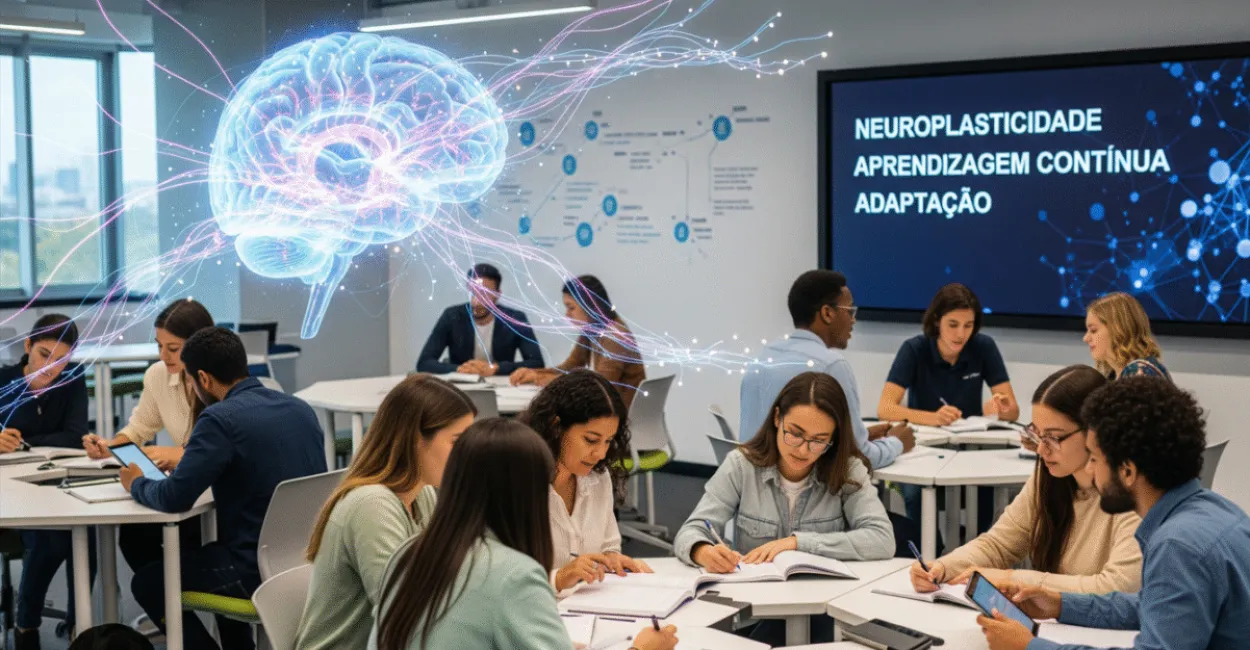
Neuroplasticity is the brain’s ability to reorganize its neural connections in response to practice, experience, and stimuli. It matters because it enables us to learn new skills, regain functions after injuries, and adapt curricula and teaching practices to maximize results. To put this knowledge to use, you need to understand the basic mechanisms, apply intentional practices, and measure progress over time.
In educational and professional settings, neuroplasticity offers an opportunity to design lifelong learning routines, deliberate practice techniques, and adaptive curricula that support retention and transfer. Common challenges include too much content, insufficient spacing, and a lack of immediate feedback—all factors that reduce the effectiveness of brain plasticity. With the right strategies, these barriers can become drivers of skill development.

In this in-depth article on neuroplasticity and skill development, I’ll cover neurobiological foundations, evidence-based teaching practices, lifelong learning plans, adaptive curriculum design, assessment tools, practical examples, and recommendations for educators and professionals. Each section includes detailed subsections, examples, and actionable steps to optimize learning and adaptation.
Foundations of brain neuroplasticity
Cellular mechanisms of plasticity
Neuroplasticity involves synaptic changes such as long-term potentiation (LTP) and long-term depression (LTD), processes that strengthen or weaken connections between neurons. These changes depend on repeated neural activity, neurotransmitters such as glutamate and NMDA receptors, and local protein synthesis. At the cellular level, the formation of dendritic spines and synaptic remodeling support memories of skills and competencies acquired over time.
Beyond synapses, plasticity is also supported by changes in axonal structure and myelination, which optimize signal transmission and processing speed. Adaptive myelination, influenced by practice and stimulation, improves the efficiency of motor and cognitive circuits. These cellular processes help explain why well-structured repetition leads to lasting improvement.
Factors such as sleep, nutrition, stress, and age profoundly affect how neuroplasticity manifests. Consolidating sleep promotes neural replay and stabilizes synaptic patterns; stress hormones can block LTP; and plasticity tends to decline with age, although appropriate training and environmental enrichment can stimulate it.
Neural networks and functional reorganization
Neuroplasticity also involves the large-scale reorganization of networks: with intensive practice, cortical areas can expand their sensory or motor representations. For example, musicians have enlarged cortical maps for their fingers. This functional reorganization shows that skills rely on dynamic networks that adapt to changing demands and experience.
Connections among integrative regions, such as the prefrontal cortex, hippocampus, and sensorimotor cortex, are essential for learning transfer and complex problem-solving. Strengthening functional connectivity improves task automation and reduces cognitive load, allowing for smoother and more creative performance.
Teaching interventions that encourage multimodal integration (visual, auditory, and kinesthetic) facilitate this reorganization by creating multiple activation pathways for the same competency. Deliberate practice that alternates contexts and requires adaptation supports more robust, generalizable networks.
Factors that influence plasticity
Variables such as practice intensity, variability, spacing, and feedback directly influence the degree of observable neuroplasticity. Massed practice without time for retrieval tends to cause fatigue and reduce retention, while spaced practice activates more effective consolidation and synaptic reconstruction. Neuroplasticity responds best to challenges matched to the learner’s level.
Psychological factors—motivation, attention, and expectations—influence the release of neuromodulators such as dopamine and norepinephrine, which facilitate LTP and learning. Enriched environments and purposeful tasks boost engagement and plasticity. Instructional design should therefore take into account the emotional demands and meaning of activities.
Medical conditions and demographic factors also matter: brain injuries, neurodegenerative disorders, insufficient sleep, and nutritional deficiencies can reduce plasticity. Combined interventions (rehabilitation, cognitive training, sleep, and nutrition) tend to be more effective than isolated approaches for stimulating brain reorganization.
Deliberate practice and neuroplasticity-based training
Principles of deliberate practice
Deliberate practice is a structured approach that maximizes neuroplasticity through clear goals, immediate feedback, and focused repetition. To develop skills, it’s essential to break complex tasks into smaller parts, set short-term goals, and correct mistakes with specific adjustments. This process repeatedly activates neural signals that reinforce useful synaptic pathways.
Another principle is continually adjusting the level of difficulty (the zone of proximal development): tasks should be challenging but achievable with focused effort. This sustains attention and activates neuromodulatory mechanisms, promoting the consolidation of skill memories. Deliberate practice also requires ongoing monitoring and reflection.
In educational settings, this approach involves short, intensive sessions, self-assessment, feedback from peers and tutors, and objective metrics to track progress. When implemented systematically, deliberate practice turns hours of training into real gains in competence through adaptive plasticity.
Designing effective training sessions
Sessions that optimize neuroplasticity combine a warm-up, practice blocks focused on critical components, and spaced reviews. Varying contexts and simulating real-world performance improve transfer. Alternating skill practice with recovery breaks supports consolidation and prevents synaptic overload.
Adding multimodal feedback (visual, verbal, and tactile) speeds up the fine-tuning of neural circuits. Technology such as recordings, performance analysis, and adaptive platforms can personalize difficulty and intensity, keeping practice within each learner’s optimal plasticity range.
The ideal session length varies by skill, but cycles of 20–60 minutes interspersed with sleep and rest often produce good results. Recording objective performance data makes it possible to analyze the learning curve and adjust interventions to promote more efficient plasticity.
Practical steps for implementing training
Implementing neuroplasticity-based training requires planning: define goals, measure a baseline, structure practice blocks, provide feedback, and review progress. These elements create an iterative cycle of practice and adjustment that reinforces neural connections and consolidates skills. Monitoring tools are essential for maintaining consistency and adapting difficulty.
Teachers and coaches should develop their observation skills and give precise instructions so they can correct flawed patterns early, before inefficient neural pathways are reinforced. Early intervention and appropriate reinforcement are crucial for shaping the desired circuits and preventing mistakes from becoming automatic.
Finally, aligning incentives and meaning with practice boosts engagement and dopamine release, enhancing LTP. Gamified activities, clear goals, and recognition of progress help sustain motivation and support lasting plasticity.
Teaching methods that leverage plasticity

Spaced repetition and retrieval practice
Spaced repetition and retrieval practice (recall tests) are proven techniques for enhancing plasticity and retention. Spacing out sessions activates reconsolidation processes, making memories more resilient. Active retrieval requires neural traces to be reactivated, strengthening synaptic connections and improving long-term recall.
Adding frequent quizzes, interleaved review activities, and cumulative projects to the curriculum creates regular opportunities for retrieval. This reduces forgetting and supports transfer. Varying application contexts (practical problems, discussions) also broadens contextual encoding and makes neural networks more generalizable.
To maximize the benefits, combine spacing with immediate feedback that corrects errors and shapes mental representations. Digital tools and learning management systems (LMS) can automate spacing and track performance, making practice management scalable in large classes.
Multimodal learning and sensory enrichment
Multimodal learning activates multiple sensory and motor pathways, creating more patterns of neural activation and supporting consolidation. Activities that combine reading, hands-on practice, verbal explanation, and practical simulations create multiple neural representations of the same competency, making memories more resilient.
Enriched environments—with hands-on materials, real-world contexts, and varied stimuli—encourage exploration and plasticity. This is especially effective in early childhood education and practical skills training, where sensorimotor connections are central to learning.
Designing tasks that require learners to translate between modalities (for example, demonstrating a physics concept with a model and then explaining it in writing) strengthens connections between brain regions, increasing transfer and cognitive flexibility—essential aspects of applied neuroplasticity.
Formative feedback and error correction
Specific, immediate formative feedback guides neuroplasticity by reinforcing correct neural pathways and weakening ineffective patterns. Correcting errors during the acquisition phase prevents inaccurate representations from becoming consolidated. Feedback should be informative, explaining what was done, why it was done, and how to improve.
Read also: The Sleep Cycle: How to Understand and Maximize Its Benefits for Work and Study
Effective strategies include modeling, differential feedback (correcting only the most critical aspects at first), and guided self-assessment. Digital tools can provide quantitative feedback in real time, speeding up the fine-tuning of the neural circuits responsible for a skill.
It’s also important to avoid overly punitive feedback, which can reduce motivation and inhibit plasticity. Constructive, process-oriented feedback supports continuous learning and reinforces desired changes in the brain.
Read also: Structural Racism: Understand It and Take Effective Action
Planning lifelong learning and curriculum adaptation
Mapping competencies and practice cycles
Planning lifelong learning starts with mapping essential competencies and breaking skills down into trainable subskills. This makes it possible to structure deliberate practice cycles that gradually increase in complexity and promote progressive plasticity. Competency maps guide curriculum sequencing and activity prioritization.
Integrating formative assessments into the map makes it possible to adjust the intensity and focus of practice. Short practice and review cycles allow goals to be recalibrated and gaps to be identified before they become entrenched. Interleaving practice across complementary skills also supports neural integration and transfer.
Tools such as competency matrices, portfolios, and adaptive learning pathways help put this planning into practice in educational and corporate settings, making the promotion of neuroplasticity scalable and measurable.
Comparison table: curriculum models and their impact on plasticity
| Curriculum Model | Characteristics | Impact on Neuroplasticity |
|---|---|---|
| Traditional | Lecture-based classes, little active practice | Low functional activation; less consolidation |
| Competency-Based | Deliberate practice, clear goals | Strong promotion of LTP and automation |
| Hybrid/Blended | Mix of online and in-person learning, ongoing feedback | Well suited to spacing and retrieval |
Strategies for real-time curriculum adaptation
Real-time curriculum adaptation uses performance data to adjust the sequence, intensity, and type of practice. Adaptive platforms analyze responses and recommend content that maximizes engagement and plasticity, avoiding excessive difficulty and supporting sustainable progress. This enables personalization at scale.
Professionals should combine automated analysis with pedagogical judgment to identify emotional factors that influence learning. Adjustments such as more feedback, greater spacing, or multimodal practice can be made as needed to maintain the effectiveness of plasticity.
Implementing continuous improvement cycles (plan, act, evaluate, adjust) ensures that curricula evolve based on evidence and results, sustaining an environment that supports neuroplasticity and lifelong skill development.
Assessment, monitoring, and technology to enhance plasticity
Progress metrics and formative assessment
Neuroplasticity is assessed indirectly using performance metrics such as speed, accuracy, transfer, and retention. Frequent formative assessments measure these indicators and allow for immediate training adjustments. Objective metrics, such as completion time, error rate, and complexity scales, are essential for quantifying progress.
Qualitative assessments (structured observation and self-assessment) also help identify underlying cognitive processes. Combining quantitative and qualitative data provides a more accurate picture of development and the evolution of the neural circuits responsible for a skill.
Regular reports and progress visualizations make instructional decisions easier, encourage learners, and allow the intensity and focus of practice to be adapted to optimize plasticity and consolidate competencies.
Table: technology tools and practical applications
| Tool | Use | Benefit for Plasticity |
|---|---|---|
| Adaptive platforms | Personalize the sequence of exercises | Spacing and difficulty adjustment |
| Simulators and VR | Immersive, multimodal training | Sensory enrichment and transfer |
| Wearables | Track effort and physiological patterns | Optimized workloads and recovery |
Integrating technology with teaching practice
Technology should be used to monitor, personalize, and expand opportunities for practice that stimulate neuroplasticity. Platforms that use spacing algorithms and adjust tasks based on performance help keep practice in the optimal zone. Simulators and VR can replicate real-world contexts, requiring adaptation and supporting transfer.
It’s essential to combine technology with human guidance: teachers interpret data, adjust the meaning of tasks, and provide qualitative feedback. The synergistic integration of technology and teaching practice enhances neural reorganization ethically and effectively.
Links to research and institutions that address these topics can help inform decisions. For example, academic reports on plasticity and education and resources from recognized institutions can guide evidence-based implementation (NCBI, WHO).
Practical applications: examples in the classroom and workplace
Example 1 — Teaching math and cognitive skills
In math, breaking complex problems into subskills and practicing each component in sequence helps strengthen specific neural networks. Spaced practice, guided problem-solving, and immediate feedback correct faulty cognitive patterns and promote the automation of basic procedures. Applied projects that require transfer consolidate learning.
Interdisciplinary activities that connect math to real-world scenarios (economics, engineering) broaden context and foster richer representations, facilitating functional reorganization. Teachers should map progression and use quick assessments to adjust the pace and intensity of practice.
Digital tools with adaptive exercises help keep each student in the ideal challenge zone, enhancing neuroplasticity and improving retention and long-term performance.
Example 2 — Professional training and skill development
In the workplace, microlearning and hands-on simulations allow employees to practice technical skills with immediate feedback. Programs that combine deliberate practice, mentoring, and ongoing assessment promote lasting performance improvements supported by neural reorganization. Job rotation and real-world problems help skills generalize.
Training focused on making decisions under pressure and recovering quickly from mistakes promotes resilience and cognitive flexibility. Monitoring operational performance indicators makes it possible to adjust training schedules to maximize plasticity and reduce time to proficiency.
Integrating training with wellness programs (sleep, nutrition) enhances the plastic response, since physiological factors influence the cellular processes involved in skill consolidation.
List: Steps for applying these ideas in the classroom
- Assess — Evaluate learners’ starting levels and identify gaps
- Break it down — Divide skills into trainable components
- Plan — Structure deliberate practice blocks
- Implement — Apply feedback and spacing
- Evaluate — Measure retention and adjust the curriculum
Challenges, limitations, and ethical considerations
Limits of plasticity and realistic expectations
Neuroplasticity has limits: age, structural damage, and medical conditions can restrict the brain’s ability to reorganize. Expectations should be realistic and based on individual assessment. Although the brain is adaptable, improvement takes time, consistent practice, and well-planned strategies.
Managing expectations helps prevent frustration and dropout. Gradual interventions, measurable goals, and ongoing support increase the likelihood of success. In clinical settings, a combination of therapy, training, and environmental support is often needed for meaningful results.
For educators and managers, recognizing individual differences is crucial. Personalizing the intensity and format of training respects those differences and maximizes the return on educational and professional investment.
Risks and ethical safeguards
Misusing techniques to manipulate learning or impose rigid practices can cause harm, reduce autonomy, and create inequities. Ethical practice requires informed consent, transparency about goals, and careful protection of data privacy on platforms that monitor performance.
It’s also essential to avoid promoting simplistic solutions (for example, promises of a “new brain in 21 days”) without robust evidence. Education policies should prioritize equity and access to proven practices, not pseudoscientific marketing schemes.
Professionals should follow codes of conduct and base interventions on scientific literature and guidelines from reputable institutions to protect well-being and maximize the benefits of neuroplasticity.
List: Best practices and precautions
- Secure data — Protect privacy when using technology
- Use evidence — Prioritize validated methods
- Personalize — Adjust intensity and format for each learner
Conclusion
Neuroplasticity is a core principle for understanding how the brain changes with practice and for planning lifelong learning and curriculum adaptation. By applying deliberate practice, spacing, feedback, and multimodal design, educators and trainers can promote neural reorganization that supports lasting competencies.
Implementing these strategies requires competency mapping, thoughtful use of technology, and ongoing assessment. By integrating evidence on plasticity into instructional planning, we can improve educational effectiveness and prepare people to adapt throughout their lives. Try adapting a practice cycle to your routine and see what changes.
Frequently asked questions
What is neuroplasticity, and how does it affect learning?
Neuroplasticity is the brain’s ability to reorganize synaptic connections and patterns of activity in response to experience and practice. In learning, this means that well-structured repetition, feedback, and spacing strengthen relevant connections, making skills more automatic. Processes such as LTP, motor learning, and consolidation during sleep are central mechanisms. Practical applications include breaking tasks into smaller parts, practicing deliberately, and using active retrieval.
Which teaching practices are most effective for stimulating plasticity?
Practices with the strongest evidence include deliberate practice with clear goals, spaced repetition, retrieval practice, immediate feedback, and multimodal learning. Strategies such as simulations, authentic problem-solving, and varying contexts increase transfer and strengthen neural networks. It’s also important to support sleep, nutrition, and stress management to maximize the plastic response and consolidate skill memories.
How long does it take to see changes from neuroplasticity-based practice?
The timeline varies depending on the skill, practice intensity, and individual. Initial functional changes may appear within days or weeks; lasting consolidation usually requires weeks or months of consistent, well-structured practice. For complex skills, measurable progress may take months or years. The key is deliberate practice, ongoing assessment, and adjusting training to keep plasticity active.
Does neuroplasticity have age-related limits?
Although plasticity is greater during sensitive periods in childhood, adults also retain a significant ability to reorganize neural circuits. Appropriate training, environmental enrichment, and deliberate practice techniques can induce structural and functional changes in adults. Factors such as sleep, mental health, and ongoing stimulation influence the extent of the plastic response at any age.
How can I apply these concepts to a school curriculum?
Start by mapping competencies and breaking skills into manageable units for practice. Structure deliberate practice cycles with goals, feedback, and spacing; incorporate formative assessment to adjust the sequence; use multimodal activities and authentic contexts; and adopt adaptive technologies to personalize the pace. Also promote healthy sleep and well-being habits to support students’ consolidation and maximize the effectiveness of neuroplasticity in the classroom.
Artigos Relacionados
 Soft Skills in Teacher Education: More Than Technical Knowledge
 Foundations of Cognitive Development: Essential Concepts
 Social-Emotional Learning in Schools: Transforming Learning and Whole-Child Development
 The Importance of Play in Childhood for Whole-Child Development
 Early Childhood Education: The Importance of Play in Child Development
 Education: The Essential Role Parents Play in Child Development
