
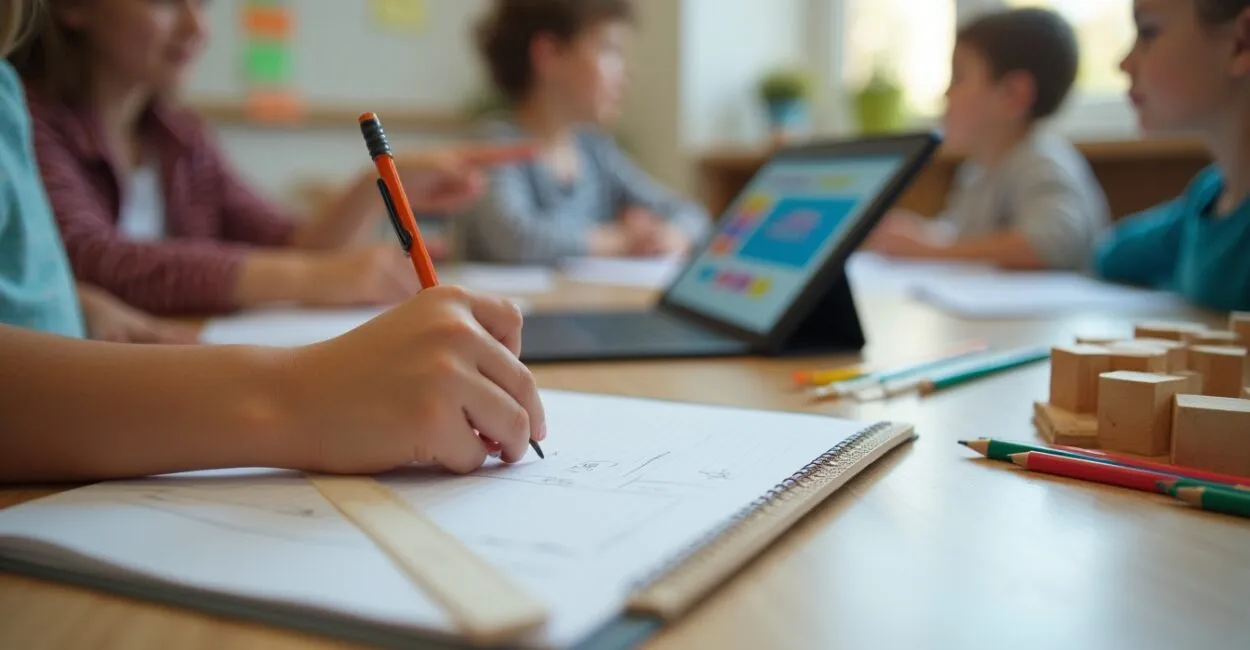
Elementary education lays the foundation for students’ academic and civic lives, building essential skills they’ll use well beyond the classroom. Understanding modern teaching practices can help educators strengthen engagement, critical thinking, and social-emotional skills from the early grades through active learning and thoughtful use of technology.
The challenge is to connect curriculum, assessment, and inclusive practices to meet students’ diverse learning needs and interests. This article explores contemporary approaches, practical examples, and measurable effects on student performance. We’ll cover key concepts, practical steps, method comparisons, outcome assessment, benefits and limitations, and actionable tips for elementary and middle school teachers and administrators.

Key concepts in elementary education
- Integrated curriculum: connecting different subject areas.
- Active learning: projects, problem-based learning, and workshops.
- Formative assessment: ongoing feedback and portfolios.
- Inclusion and differentiation: adaptations and varied resources.
- Classroom management: routines, rules, and student autonomy.
Theoretical foundations and an integrated curriculum
An elementary and middle school curriculum should organize knowledge across connected subject areas, building links among science, language arts, and math. This helps students make meaning and develop skills. Interdisciplinary projects make learning more contextual and relevant to students.
Contemporary teaching methods emphasize clear learning objectives aligned with social-emotional and digital skills. It’s essential to invest in lesson sequences that respect students’ progress through different levels and provide opportunities for deliberate practice. Curriculum management also requires ongoing assessment to adjust instruction and ensure content meets the class’s actual needs.
Active learning and engagement
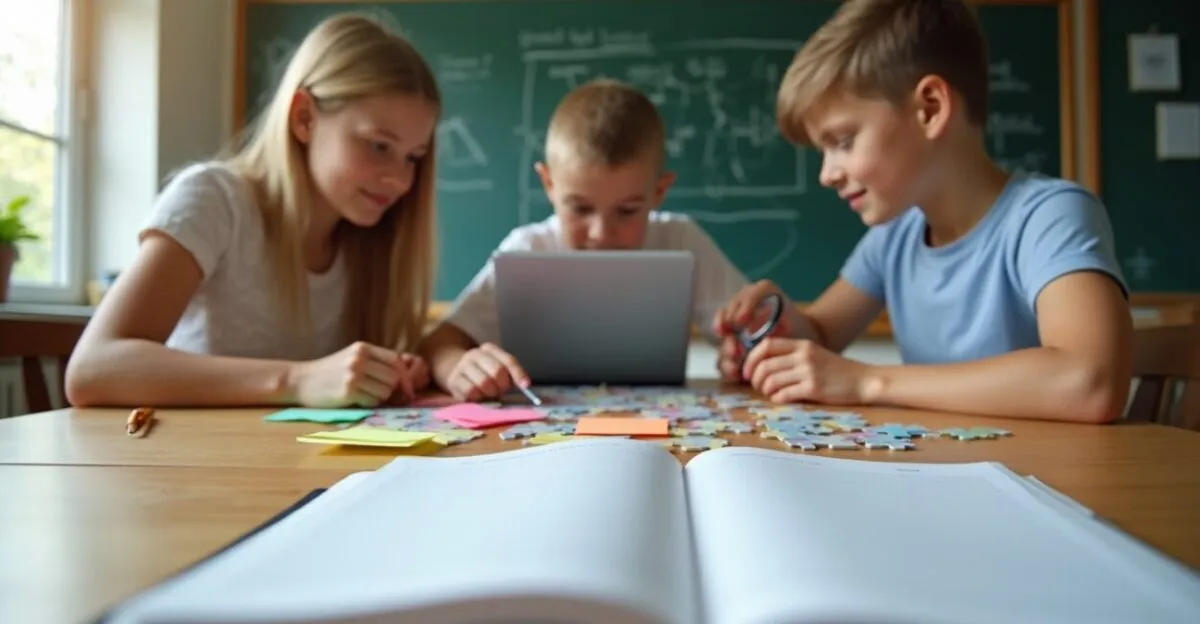
Active learning in elementary education prioritizes participation, experimentation, and solving real-world problems, boosting motivation and retention. Strategies such as project-based learning (PBL) and hands-on workshops make students active participants in the learning process. Encouraging questions, inquiry, and collaboration builds critical thinking and effective communication. When activities have a real purpose, students’ commitment and attention increase significantly.
Technology tools can extend this approach by enabling simulations, multimedia documentation, and immediate feedback—without replacing the teacher’s guidance.
Formative assessment and progress monitoring
Assessment in elementary education should be formative, guiding teaching and learning in real time. Portfolios, self-assessments, and rubrics are practical tools for showing progress and identifying challenges, making it possible to tailor support to individual students. Frequent, specific, actionable feedback makes corrections more effective and motivates students to improve. Teachers can use data to plan review lessons and differentiate instruction.
Combining qualitative and quantitative reports gives a fuller picture of student growth, going beyond numerical grades and recognizing broader skills.
Putting elementary education into practice
- Assess: identify learning goals and gaps.
- Plan: design interdisciplinary units with clear goals.
- Implement: use active learning activities and multimedia resources.
- Assess: gather formative evidence and make ongoing adjustments.
- Document: track progress and share it with families.
Planning student-centered lessons
When planning for elementary and middle school students, prioritize lesson sequences that build on what students already know and introduce progressively challenging tasks. Clear objectives and success criteria help students understand the purpose of activities and take ownership of their learning.
Use a variety of resources—texts, hands-on materials, videos, and games—to support different learning styles and paces. Plan for differentiation from the start of each lesson.
Set aside time for reflection and metacognition so students can explain their process and reinforce effective strategies.
Classroom management and effective routines
Classroom management has a direct impact on student engagement. Consistent routines, collaboratively established rules, and well-planned transitions minimize wasted time and create a safe environment where students can try new things and make mistakes.
Organizing the classroom into activity zones for reading, inquiry, and technology makes logistics easier and encourages independence. Strategies such as behavior agreements and shared reading reinforce relationships and expectations.
Rotating student leaders and group roles builds responsibility and social skills, which are essential for collaborative learning.
Using educational resources and technology
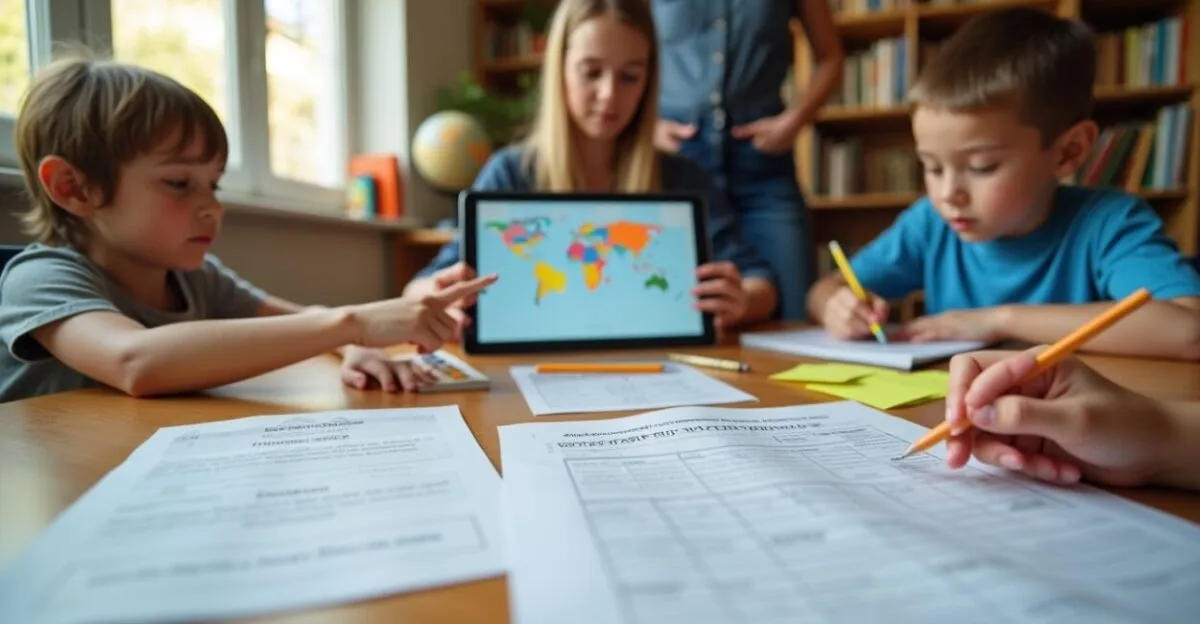
Technology in elementary education should expand teaching and learning opportunities, not simply replace traditional practices. Adaptive platforms, interactive whiteboards, and content-creation apps support personalized practice and immediate feedback.
Choose tools based on learning objectives, ease of use, and data security. Ongoing teacher training helps ensure technology is used effectively for learning.
According to a survey by the UNESCO Institute, 72% of schools reported improved student engagement when digital resources were paired with teacher training (UNESCO).
Comparing elementary education methods

Active learning versus traditional instruction
Active learning methods in elementary education, such as PBL and inquiry-based learning, emphasize building knowledge through real-world problem-solving and collaboration. Traditional approaches, by contrast, tend to focus on direct instruction and memorization, with less emphasis on practical application.
In practice, a balanced approach allows for direct instruction when needed and inquiry-based activities for deeper learning. Teachers can alternate strategies based on learning goals and students’ skill levels.
Success depends on planning, resources, and assessment that recognizes learning processes as well as immediate results.
Methods compared
| Method | Instructional focus | Expected outcomes |
|---|---|---|
| Traditional Instruction | Content delivery | Proficiency in basic procedures |
| Active Learning (PBL) | Problem-solving and projects | Critical thinking and practical skills |
| Gamification | Motivation and repeated practice | Greater engagement and retention |
| Blended Learning | Combining in-person and digital instruction | Flexibility and personalization |
How to choose a method
When choosing approaches for elementary and middle school students, consider learning goals, student needs, infrastructure, and teacher training. Technology-based methods require connectivity and technical support; project-based approaches require time for planning and ongoing assessment.
Prioritize scalability and evidence of impact. Small pilot programs can help you evaluate acceptance and effectiveness before expanding implementation.
Involving families and the community can also help ground projects in local context and increase their impact.
Assessing impact on student performance
Relevant metrics and indicators
Measuring impact in elementary education requires both academic and social-emotional indicators. Reading and math results, along with active participation, can be considered alongside attendance, behavior, and self-efficacy.
Standardized instruments and formative assessments provide a comprehensive picture. According to INEP, Brazil’s National Institute for Educational Studies and Research, schools that adopted formative practices saw an average 8% increase in reading proficiency over three years (INEP).
Ongoing monitoring makes it possible to adjust quickly while keeping the focus on each student’s overall development.
Case studies and evidence
Studies across different municipal school systems show that interdisciplinary projects increase student engagement and scores on internal assessments. For example, one school system reported a 15% decrease in grade retention after adopting formative assessments and project-based learning.
Results vary depending on implementation, socioeconomic context, and institutional support. Replication requires adequate training and resources.
Academic publications and public policy reports can help guide evidence-based decisions about elementary education.
Read also: Interdisciplinary Projects in Elementary Education: A Guide
Tracking individual progress and providing feedback
Tools such as rubrics, digital portfolios, and narrative reports support ongoing assessment in elementary education. Constructive feedback points students toward their next steps and encourages them to take ownership of their learning.
Individualized support with short-term goals makes it easier to address learning gaps and accelerate progress. Collected data should guide targeted instructional interventions.
Read also: Lesson Planning: An Effective Framework
Including parents in the feedback process strengthens school-family relationships and increases follow-through on support plans.
Benefits and outcomes of modern elementary education
- Greater student engagement and motivation.
- Stronger critical thinking and creativity.
- Improved social-emotional skills.
- Personalized learning and reduced dropout rates.
- Preparation for the 21st century: collaboration and digital literacy.
- Better alignment between schools and society’s needs.
Impact on school engagement
Modern practices in elementary education boost attendance and participation. Activities with a real purpose and formative assessments make effort visible and rewarding, reducing disengagement. Collaborative environments encourage students to feel that they belong and take responsibility.
Data from school systems that have adopted active learning methods show significant increases in classroom participation, reflecting greater motivation to learn. Investing in community-based projects also makes learning more relevant and helps students take ownership of the content.
Developing transferable skills
Modern elementary education prioritizes skills such as communication, collaboration, problem-solving, and critical thinking. Students practice these skills through interdisciplinary activities, projects, and workshops, preparing them for future challenges.
By working on real-world problems, children develop independence and creativity—skills that are difficult to build through repetitive exercises alone.
Targeted teacher training is essential to support this development consistently and measure progress.
Measurable improvements in academic performance
Well-planned modern elementary education programs often lead to gains in foundational skills. According to a World Bank study, instructional interventions focused on teacher training increased reading performance by an average of 0.2 standard deviations over 12 months (World Bank).
These gains depend on factors such as the intensity of the intervention and institutional support, but they show that changes in teaching methods can produce measurable results.
Tracking indicators over time is essential to verify impact and adjust strategies.
Limitations and challenges in elementary education
- Unequal access to technology and materials.
- Insufficient teacher training in new methods.
- Limited instructional time for long-term projects.
- Institutional resistance to changes in teaching practices.
Infrastructure and resources
One of the biggest challenges in elementary education is ensuring adequate infrastructure: classrooms, internet access, materials, and libraries. Without these resources, active learning and blended instruction are harder to implement, creating disparities between classes and schools.
Investment is necessary, but low-cost options such as reusable materials and local partnerships can help address gaps.
Budget planning and support from municipal or state governments are key to expanding modern practices.
Teacher training and resistance to change
Teachers need ongoing training to implement contemporary teaching methods effectively. Lack of time, heavy workloads, and resistance to changing established practices can make innovation in elementary education difficult.
Peer mentoring programs, professional learning communities, and school-based training have proven effective in encouraging gradual, sustainable adoption.
Incentives and recognition policies can also help motivate the shift in teaching practices.
Curriculum adjustments and time
Integrating projects and interdisciplinary activities into elementary education requires reorganizing the school day. Adjusting instructional time without undermining core curriculum requirements is a logistical and political challenge.
It’s often necessary to prioritize content and work with stakeholders to preserve essential goals without sacrificing depth of learning.
Clearly planned lesson sequences with measurable goals help make the most of instructional time and justify changes to the school board and families.
Recommended practices for elementary education
- Plan interdisciplinary units with clear objectives and formative assessments.
- Use projects based on real-world problems to motivate students and provide context.
- Use portfolios and rubrics to track individual progress.
- Differentiate instruction and make accommodations for students with diverse needs.
- Invest in ongoing teacher training and professional learning communities.
- Involve families and the community in school projects.
Short- and medium-term strategies
Start with pilot programs in selected classes and assess the results before expanding. Define clear indicators and review periods to adjust practices. Use ongoing training and peer observation to develop teaching skills without overburdening the school day.
Begin with small projects that require few resources, then increase their complexity as the team gains confidence and evidence of impact.
Document processes and results to make it easier to replicate successful approaches and report back to the school community.
Partnerships and outside resources
Partnerships with universities, nonprofits, and technology companies can provide resources, training, and technical support. These collaborations expand what’s possible in elementary education by bringing in experts and materials that enrich instructional projects.
Carefully aligning school goals with external proposals prevents fragmented initiatives and ensures instructional consistency.
Look for grant opportunities and public funding programs to sustain these efforts over time.
Measuring success and adjusting practices
Use short evaluation cycles (PLAN-DO-CHECK-ACT) to measure how effective practices are in elementary education. Consider both quantitative data and qualitative accounts from students and families to assess real-world impact.
Ongoing adjustments and evidence-based decisions increase the likelihood of success at scale. Regular reports support transparency and engagement across the school community.
Sharing lessons learned with other schools encourages the exchange of effective practices and speeds up systemwide improvement.
Conclusion
Elementary education needs to combine a strong curriculum, active learning, and formative assessment to prepare students for today’s challenges. Well-planned implementation boosts engagement, builds skills, and leads to measurable gains in performance.
Teachers, administrators, and families need to work together, invest in training, and monitor results to ensure these changes have a positive impact on learning for all students.
Start with small pilot programs, measure their impact, and scale up gradually: modern elementary education is an evolving process focused on each student’s overall development.
Frequently asked questions about elementary education
What is elementary education?
Elementary education is the stage of basic education designed to develop children’s and adolescents’ cognitive, practical, and social skills. It includes literacy, numeracy, and foundational knowledge in science, language arts, and other subjects, while also fostering social-emotional skills. In Brazil, this stage is structured to provide the essential education students need to continue their studies and participate in civic life.
How does assessment work in elementary education?
Assessment in elementary education should combine formative and summative methods, using rubrics, portfolios, and tests. The goal is to monitor progress, provide feedback, and adjust instruction. Formative assessments take place continuously, while summative assessments measure students’ mastery at the end of a unit. Combining qualitative and quantitative evidence makes it possible to tailor interventions to support different learning paces.
What’s the difference between traditional instruction and active learning?
Traditional instruction focuses on teacher-led content delivery and memorization, while active learning puts students at the center, emphasizing inquiry, problem-solving, and collaboration. Traditional methods focus on content, whereas active approaches build transferable skills and practical application. A thoughtful combination of both is often the best strategy for elementary education.
When should you use interdisciplinary projects in elementary education?
Interdisciplinary projects are useful when the goal is to put learning in context, boost engagement, and build transferable skills. Use them to connect content from different subject areas around real-world problems or local topics. It’s important to set clear objectives, assess student work with rubrics, and allow enough time for research, production, and sharing results with students, families, and the community.
How much does it cost to implement modern practices in elementary education?
Costs vary: low-cost programs may start at R$500–R$2,000 per class (Brazilian reais, for materials and modular training), while programs with technology and infrastructure may require R$20,000–R$100,000 to equip an average-size school. Studies indicate that teacher training can deliver strong learning gains at a low operating cost (World Bank). Partnerships and public grant programs can help reduce upfront expenses.
Artigos Relacionados
 How to Include Students with Disabilities in the General Education Classroom
 How to Motivate Adult Education Students to Keep Studying
 Inclusive Education in Schools: Transformative Paths for Every Student
 Big Data in Education: Turning Data Into Better Teaching Practices
 Assessing Learning: Modern and Innovative Methods for Students
 Play-Based Activities for Elementary Education
