
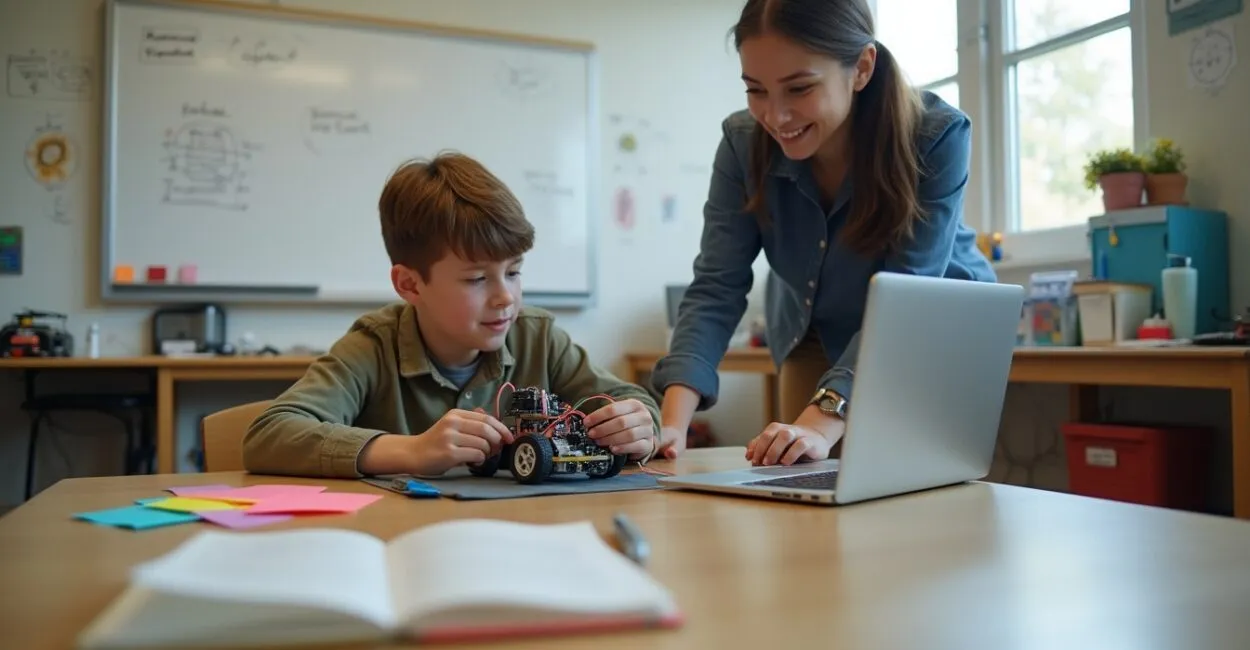
School innovation transforms traditional teaching practices into more meaningful, connected, and student-centered learning experiences. By integrating active learning, educational technology, and adaptive curriculum design, school innovation boosts motivation and improves academic performance from elementary school onward.
Today, schools face challenges such as student dropout, low engagement, and unequal access. School innovation offers an opportunity to rethink learning spaces, schedules, and the roles of teachers and students. This article explores practices, case studies, and ways to bring school innovation into the classroom, with practical steps, benefits, limitations, and recommendations.

Definitions and concepts of school innovation
- Active learning: project-based and inquiry-based learning.
- Technology integration: the instructional use of devices and platforms.
- Flexible curriculum: learning pathways, competencies, and interdisciplinary learning.
- Physical and virtual environments: maker spaces, labs, and hybrid classrooms.
- Formative assessment: ongoing feedback and digital portfolios.
What characterizes school innovation today
School innovation is characterized by a focus on processes that make students active participants in their learning, combining inquiry, collaboration, and problem-solving. In practice, this involves changing assessment practices, adopting active learning methods, and creating environments that encourage experimentation.
This transformation also considers equitable access to technology and ongoing teacher training as central to sustaining change.
Key elements: technology, pedagogy, and leadership
The key elements must be balanced: technology as an instructional tool, pedagogy that prioritizes competencies and critical thinking, and school leadership that supports innovation through policies, schedules, and resources. Each component needs strategic alignment to avoid one-off solutions that cannot be sustained.
Investments in teacher training, infrastructure, and impact assessment are essential to building a school innovation ecosystem.
Related terms and conceptual variations
Related concepts include blended learning, project-based learning, maker spaces, and design thinking applied to education. These approaches share an emphasis on active learning, interdisciplinary connections, and engagement.
Understanding these terms makes communication among teaching teams, families, and the community easier, helping ensure that school innovation efforts are seen as cohesive and guided by clear educational goals.
Putting school innovation into practice
- Assess needs: identify learning and infrastructure gaps.
- Train the team: provide ongoing professional development and communities of practice.
- Design learning experiences: create interdisciplinary projects with clear goals.
- Implement iteratively: pilot, evaluate, and expand based on feedback.
- Track results: use qualitative and quantitative indicators.
Strategic planning for schools
Strategic planning for school innovation requires a detailed assessment of current conditions, input from all stakeholders, and short- and long-term goals. An effective plan defines success indicators, a projected budget, and teacher training schedules. School leaders must provide materials and time for experimentation, as well as evaluation mechanisms that support continuous improvement.
Teacher training and professional development
Teacher training is essential: professional development in active learning, the instructional use of technology, and formative assessment can transform teaching practices. Effective programs combine in-person workshops, mentoring, and online learning communities. According to UNESCO, context-specific training makes teachers more likely to adopt new practices in their daily work, especially when accompanied by follow-up support and resources they can use in the classroom.
Engaging the school community
School innovation requires shared responsibility: families, administrators, and local partners contribute resources, feedback, and opportunities for real-world learning. Clear communication about goals and evidence of progress builds support. Participatory models, such as school councils and partnerships with businesses or universities, broaden the range of activities and ensure that innovation projects have social relevance.

Comparing innovation methods and models

| Method/Model | Focus | Best for |
|---|---|---|
| Project-Based Learning | Solving real-world problems | Collaboration and interdisciplinary learning |
| Blended Learning | Combining in-person and online instruction | Personalizing learning pace |
| Educational Design Thinking | Empathy and prototyping | User-centered innovation |
| Maker Spaces | Hands-on creation and prototyping | STEM and technical skills |
Choosing the right model for your school
Choosing a school innovation model depends on the context, including infrastructure, teacher skills, and student needs. A SWOT analysis can help identify strengths and limitations. In schools with reliable internet access, blended learning can support personalization; in settings focused on hands-on problem-solving, maker spaces and project-based learning may boost engagement. Ideally, schools combine approaches to meet their instructional goals.
Comparing impact and scalability
Each method involves trade-offs between immediate impact and scalability. Pilot projects can produce quick local results, but require resources and coordination to scale. According to the World Bank, well-evaluated programs combining teacher training and digital resources improved reading performance by up to 12% in selected settings (Source: World Bank). Scalability depends on public policy and sustained funding.
Practical examples and evidence of effectiveness
Success stories show increased engagement and learning when school innovation is implemented as part of an integrated approach. For example, schools that adopted project-based learning reported gains in problem-solving skills and student participation. According to an OECD study, 70% of schools that used active learning methods reported improved student motivation (Source: OECD). Evidence encourages replication, but adapting approaches to local needs is essential.
Advantages and benefits of school innovation
- Greater student engagement and motivation to learn.
- Development of social-emotional and 21st-century skills.
- Improved academic outcomes on formative assessments.
- Personalized instruction that addresses individual differences.
- Stronger relationships between schools and their local communities.
Impact on engagement and learning
School innovation often boosts engagement by making content relevant and interactive, which helps students retain what they learn. Active learning methods and real-world projects connect theory with practice, increasing classroom participation and students’ desire to explore topics further. In practice, teachers report more dynamic classrooms and students who are more willing to collaborate and take responsibility for their learning.
Social-emotional and behavioral benefits
By prioritizing teamwork, autonomy, and ongoing feedback, school innovation fosters social-emotional skills such as empathy, resilience, and communication. These skills are critical to academic and personal success. Programs that incorporate mentoring and self-assessment help students develop greater self-awareness, reduce conflict, and improve school climate, which can affect attendance and retention rates.
Academic outcomes and impact measurement
Well-designed assessments combine formative assessments, portfolios, and participation indicators. According to a study by the National Institute, schools that introduced innovation alongside teacher training and ongoing assessment saw reading and math results improve by 8–15% over two years (Source: National Institute for Educational Studies). Measuring impact makes it possible to adjust practices and demonstrate return on investment.
Methods, tools, and technologies in practice
| Tool | Use | Limitation |
|---|---|---|
| LMS platforms | Managing content and assessments | Requires a stable internet connection |
| Maker spaces | Prototyping and hands-on projects | Requires investment in equipment |
| Video conferencing tools | Live classes and remote interaction | Can cause screen fatigue if used poorly |
Digital platforms and resources
LMS platforms, digital repositories, and educational apps make it easier to personalize and track learning, offering adaptive learning paths and dashboards for teachers. Selection should prioritize ease of use, data privacy, and integration with instructional practices. In areas with limited connectivity, offline solutions and supplemental printed materials help keep projects going and support digital inclusion.
Maker spaces and tools
Maker labs and robotics kits support hands-on, interdisciplinary learning and encourage experimentation and prototyping. These spaces develop technical skills and critical thinking, making them well suited to STEM projects. School leaders should consider equipment maintenance, safety, and facilitator training to maximize the educational potential of these environments.
Formative assessment and digital portfolios
Formative assessment and digital portfolios document progress and enable ongoing feedback, which is essential for adjusting the learning process. Digital tools make it possible to record work, support self-assessment, and collect different types of evidence, including videos, projects, and reflections. Establishing structured feedback routines improves retention and clarifies learning goals for students and families.
Risks, limitations, and challenges of school innovation
- Unequal access to the internet and devices.
- Insufficient ongoing professional development for teachers.
- Resistance to change in school culture.
- Insufficient funding for maintenance.
Structural and infrastructure barriers
Inequitable access to internet connectivity and equipment limits the equitable implementation of school innovation. Inadequate infrastructure, such as poorly ventilated classrooms or insufficient materials, undermines learning experiences. Overcoming these barriers requires partnerships, subsidies, and budget planning to ensure that projects do not widen existing inequalities.
Cultural resistance and change management
Adopting new practices can meet resistance from teachers, families, and administrators accustomed to traditional routines. Change management should combine clear communication, stakeholder participation, and small pilot projects that demonstrate results. Building consensus and celebrating incremental progress makes cultural change easier and encourages broader adoption of school innovation.
Costs, sustainability, and scalability
Upfront costs include training, equipment, and planning time; ongoing maintenance requires a recurring budget. According to a public policy report, 60% of initiatives that fail cite financial sustainability as a cause (Source: Education Report). Scalable models therefore account for local resources, train-the-trainer programs, and public-private partnerships to ensure continuity.
Recommendations and best practices
- Start with 3–6-month pilot projects and evaluate the results.
- Prioritize ongoing teacher training and mentoring.
- Engage families and the community from the assessment stage.
- Use data to adjust practices and demonstrate impact.
- Document and share evidence to support replication.
How to scale successful projects
To scale school innovation, formalize protocols, standardize indicators, and train internal champions. Establish documentation and evaluation processes so lessons learned can be replicated. Partnerships with education departments and teacher-training institutions broaden reach, while scalable funding supports ongoing efforts. A phased strategy makes it easier to expand without compromising instructional quality.
Measuring impact and key indicators
Indicators include participation, attendance, formative assessment performance, and social-emotional skill development. Set qualitative and quantitative metrics, with quarterly monitoring cycles. Clear reports help school leaders make decisions and communicate results. Using data guides resource allocation and helps prioritize actions that deliver the greatest educational return.
Strategic partnerships and funding
Partnerships with universities, nongovernmental organizations, and the private sector expand the resources and expertise available for school innovation. Funding models can combine public funds, grant programs, and sponsorships. Transparent management and outcome monitoring keep partners engaged. According to an industry study, schools with structured partnerships increased the number of innovative projects by 30% in two years (Source: Industry Study).
In short, school innovation requires planning, training, and ongoing assessment to transform classroom learning and increase engagement and achievement. By aligning technology, pedagogy, and leadership, schools can create more effective and equitable learning experiences. Start with small pilot projects, clear measures, and community involvement to scale efforts sustainably.
Frequently Asked Questions
What is school innovation?
School innovation refers to deliberate changes in teaching, curriculum, and organizational practices designed to improve learning, engagement, and equity. It involves adopting active learning methods, integrating technology, using formative assessment, and building collaborative networks among teachers, students, and the community. The goal is to transform teaching processes and environments to meet today’s needs and develop essential skills.
How does the school innovation implementation process work?
The process begins with an assessment, followed by strategic planning with clear goals and teacher training. It is implemented through pilot projects, data collection, and iterative adjustments. The process includes monitoring educational indicators and involving the community. School leaders must provide resources and time to ensure continuity. The key is to test, evaluate results, and expand what works while maintaining a focus on equity.
What is the difference between active learning and traditional instruction?
Active learning puts students at the center of the learning process, encouraging inquiry, problem-solving, and collaboration, while traditional instruction tends to rely on a lecture-based, passive model. Active learning activities require greater autonomy and ongoing formative assessment; traditional instruction focuses on content delivered by the teacher. The approach affects engagement, retention, and the development of social-emotional skills.
When should you use active learning methods or educational technology?
Use active learning methods when the goal is to develop critical thinking, collaboration, and the practical application of knowledge; they work especially well for interdisciplinary projects. Educational technology is recommended for personalizing learning paths, expanding resources, and tracking progress, particularly when adequate infrastructure is available. Combining the two is often most effective, while taking students’ contexts and accessibility needs into account.
How much does it cost to implement school innovation at an elementary school?
Costs vary depending on scale, infrastructure, and training needs: basic pilot projects may cost between R$5,000 and R$30,000 for materials and training, while broader implementation can exceed R$100,000 when equipment and renovations are included. Costs depend on partnerships and subsidies. Phased plans and partnerships can reduce upfront expenses, and investments in training are essential for sustainability.
Sources and further reading: UNESCO, OECD, World Bank.
Artigos Relacionados
 The Classroom of the Future: Emerging Technologies Transforming Education
 Social-Emotional Learning in Schools: Transforming Learning and Whole-Child Development
 Technology in Agriculture: Innovation Transforming Modern Farming
 Livestock and Technology: Innovations Transforming the Farm
 School Meals: Trends and Innovations for 2025
 Interactive Math Activities With Technology in the Classroom
