
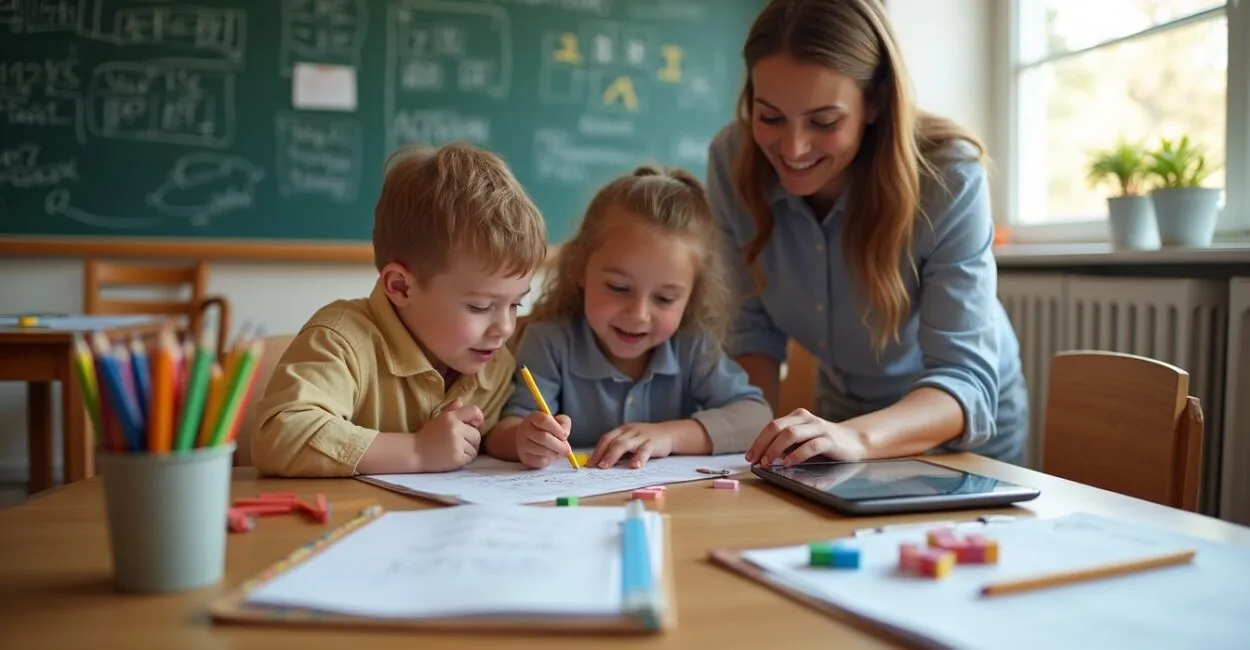
Elementary education is the foundation of a student’s academic development, essential for building cognitive, social-emotional, and practical skills. It matters because it lays the groundwork for literacy, numeracy, and critical thinking—starting with active teaching methods makes learning more meaningful and practical.
Understanding the elementary education landscape reveals challenges such as student disengagement, low motivation, and learning gaps. At the same time, digital resources, projects, and formative assessment create opportunities for instructional innovation. This article presents techniques, activities, and practical examples to make elementary education more engaging and effective.

Foundations of Elementary Education
Core Concepts and Goals
Elementary education is expected to strengthen reading, writing, and basic math skills while developing social skills and critical thinking. Goals include achieving strong literacy skills in the early grades, making progress in problem-solving, and developing responsible, engaged citizens.
Integrating the curriculum, assessment, and inclusive practices helps students from diverse backgrounds make progress with confidence and independence.
Curriculum Structure and Grade Levels
Elementary education is typically divided into grade bands: the early grades (K–5) focus on literacy and numeracy, while the later grades (6–9) expand subject knowledge and skills. Carefully sequenced lesson plans support cognitive development and interdisciplinary learning.
Thematic units and projects make transitions between grade bands smoother and connect learning to students’ lives.
The Roles of Teachers, Families, and the Community
Teachers guide learning, use formative assessment, and adapt instruction; families support practice and motivation; and the community provides resources and real-world contexts. School-community partnerships increase engagement and make learning more relevant.
Programs that involve parents and local projects can reduce dropout rates and expand opportunities for learning connected to students’ lives.
- Integrated literacy instruction
- Development of logical and mathematical reasoning
- Social-emotional skills and citizenship
- Ongoing formative assessment
Active Teaching Methods in Elementary Education
Project-Based Learning (PBL)
PBL puts students at the center of investigative projects connected to the real world, encouraging collaboration, research, and creation. In elementary education, projects about the environment, health, or local history encourage students to apply reading, writing, and math skills in context.
This approach improves retention and the ability to apply knowledge by connecting curriculum content to real-world problems.
The Flipped Classroom and Technology
In a flipped classroom, students study content at home through videos or readings; class time is then devoted to hands-on activities and answering questions. Digital tools (platforms, short videos, quizzes) enhance this approach in elementary education, allowing teachers to provide individualized support during collaborative and hands-on activities.
Gamification and play-based learning
Gamification turns lessons into challenges with goals, feedback, and rewards, boosting motivation. Educational games, team missions, and point-based activities work well in elementary education, encouraging spaced repetition and deliberate skills practice.
Games also promote engagement and positive behavior when paired with clear goals.
- Set clear goals for each project.
- Prepare digital tools and hands-on materials.
- Break tasks into steps with deadlines.
- Make time for reflection and formative assessment.
Formative Assessment and Monitoring Student Learning

Tools and Practices for Ongoing Assessment
Formative assessment in elementary education uses observations, portfolios, progress charts, and self-assessment to monitor student development. Simple tools such as checklists and rubrics make it possible to provide timely, actionable feedback.
Opportunities for reassessment and timely interventions can help 90% of students catch up on early learning gaps when instructional support is provided quickly (according to UNESCO).
Using Data to Differentiate Instruction
Collecting and analyzing performance data helps identify patterns and individual needs. Ability-based groups, personalized learning plans, and targeted practice ensure that students receive appropriate support. According to estimates from INEP, Brazil’s National Institute for Educational Studies and Research, data-driven interventions can reduce grade retention rates by up to 15% when implemented with ongoing monitoring (INEP).
Effective Feedback and Student Engagement
Feedback should be specific, actionable, and focused on progress; combine written comments, verbal feedback, and short-term goals. In elementary education, feedback might include writing revision examples, step-by-step problem-solving, and brief tutoring sessions. Involving students in setting goals increases their sense of ownership and improves short-term learning outcomes.
| Assessment Method | Focus | Recommended Frequency |
|---|---|---|
| Portfolios | Progress and work samples | Monthly |
| Rubrics | Clear criteria | Per activity |
| Observations | Behavior and participation | Weekly |
| Formative quizzes | Immediate retention | After each unit |
Materials, Resources, and Hands-On Activities
Hands-On Activities and Concrete Materials
In elementary education, concrete objects (counters, abacuses, maps, science kits) help students build abstract concepts. Hands-on activities improve spatial and numerical understanding. For example, science projects with simple experiments help students develop hypotheses, record data, and communicate results in ways that integrate with the curriculum.
Reading, Writing, and Creating Texts
Encourage reading circles, writing workshops, and publishing projects (newspapers, school blogs). Creative, collaborative work helps build fluency and comprehension. In elementary education, activities using real-world formats (letters, recipes, news articles) connect language skills to practical purposes, boosting motivation and mastery of conventions.
Read also: Why Formative Assessment Matters in Elementary Education
Integrating Arts and Physical Education
Visual arts, music, and movement strengthen self-expression, memory, and motor coordination. Integrated activities address learning goals in creative ways, such as interpreting texts through dramatization or representing fractions with music and dance. These practices support inclusion and give students multiple ways to demonstrate learning in elementary education.
- Science experiments using recycled materials
- Math games with cards and board games
- Reading clubs and creative writing
- Civics and community projects
Comparing Teaching Methods in Elementary Education
Traditional and Contemporary Approaches
Traditional methods prioritize direct instruction and a sequential curriculum, while contemporary approaches emphasize projects, differentiation, and technology. In elementary education, a balance is often most effective: explicit instruction for foundational concepts and active learning for applying them. Choosing methods based on local evidence and student performance helps improve outcomes.
Read also: Bullying in Elementary School: Warning Signs and How Schools Can Respond
A Practical Comparison of Strategies
Comparing strategies helps educators choose interventions that fit their goals: accelerating literacy may require systematic phonemic awareness instruction, while critical thinking benefits from discussions and projects. Adapting approaches to each subject and age group is crucial for effective elementary education and stronger student engagement.
Recommendations for a Phased Rollout
Implement changes in phases: 1) teacher training; 2) classroom pilots; 3) monitoring and adjustments; 4) gradual expansion. This process reduces resistance and helps ensure quality. According to an OECD report, phased initiatives are 25% more likely to succeed when ongoing professional development is provided (OECD).
| Method | Main Advantage | Limitation |
|---|---|---|
| Direct instruction | Efficient for initial learning | Limited active engagement |
| Project-based learning | Greater motivation and real-world application | Requires time and planning |
| Flipped classroom | Effective use of class time | Depends on access to technology |
Benefits, Limitations, and Classroom Management in Elementary Education
Key Benefits of Active Learning
Active learning increases engagement, retention, and social-emotional skills, supporting deeper learning in elementary education. By connecting content to real life, it promotes independence and teamwork. These methods also create more opportunities for formative assessment and for developing practical skills needed in the 21st century.
Common Challenges and Limitations
Limitations include inadequate infrastructure, insufficient teacher training, and unequal access to technology. In resource-limited areas, activities must be adapted to use locally available materials. Overcoming institutional resistance and ensuring time for planning are practical challenges that require administrative support and public policy.
Classroom Management and Engagement Strategies
Arrange flexible spaces, clear routines, and learning stations to make the most of class time. Assign student roles, use timers, and establish visual routines. These practices reduce downtime and increase participation. Setting individual and group goals also helps maintain focus and accountability throughout the learning process.
- Increased engagement and retention
- Development of critical thinking
- Improved collaboration among students
- Connections between content and real life
- Greater independence and initiative
Implementation, Costs, and Sustainability
Budget Planning and Required Resources
Costs vary by scale; initial investments include teacher training, materials, and basic technology. Small-scale interventions may cost between R$500 and R$5,000 per class, depending on equipment and training needs. Phased projects and partnerships with universities and nonprofits reduce costs per student and improve sustainability.
Funding Models and Partnerships
Public-private partnerships, municipal grants, and federal programs can fund elementary education initiatives. Local organizations and volunteers can also contribute materials and expertise. Seeking grant opportunities and collaborating with universities increases the chances of securing funding and providing teacher training.
Implementation Limitations and Risks
Risks include a lack of continuity, policy changes, and implementation without evaluation. Programs without monitoring may fail to scale. Mitigate these risks with pilot programs, clear goals, and impact measures. According to studies, projects with external evaluations are 30% more likely to continue beyond their first three years (source: independent education studies).
- Dependence on infrastructure
- Need for ongoing professional development
- Risk of inconsistent implementation
Practical Tips and Best Practices for Teachers
Efficient Planning and Routines
Plan units with clear goals and formative assessments, and use weekly plans and predictable routines. Set aside time for feedback and reteaching. In elementary education, breaking lessons into short blocks (20–30 minutes) and varying activities helps hold students’ attention and supports better learning.
Resources and Ongoing Professional Development
Invest in practical professional development and opportunities for teachers to share experiences. Use MOOCs, local courses, and professional learning communities. Sharing lesson plans and adapting materials improves quality. Free tools and resource libraries can help reduce costs and expand teachers’ instructional toolkit.
Inclusion, Differentiation, and Formative Assessment
Adapt activities for different skill levels, offering both support and challenge. Use collaborative groups, alternative materials, and varied assessment methods. Differentiation in elementary education ensures that students with diverse needs receive appropriate support and that individual progress is recognized.
- Set clear, measurable goals
- Use ongoing assessments and portfolios
- Promote collaborative teacher development
- Adapt materials to support inclusion
- Monitor data and adjust practices
Conclusion: Elementary education is most effective when it combines explicit instruction with active learning methods, formative assessment, and classroom management designed to foster engagement. Investing in teacher training, partnerships, and the smart use of resources improves outcomes and reduces inequities. Try pilot programs, measure their impact, and scale successful practices—the next step is to plan a pilot intervention at your school.
Frequently Asked Questions About Elementary Education
What is elementary education?
Elementary education is the stage of basic education that builds literacy, basic math skills, and social-emotional competencies. It includes early and later grades and lays the foundation for academic and civic skills, guiding students’ progress through school and preparing them for the next levels of education. In practice, it includes an integrated curriculum, hands-on activities, and ongoing assessments that guide instructional interventions.
How does formative assessment work in elementary education?
Formative assessment monitors progress through observations, quick quizzes, portfolios, and rubrics, providing ongoing feedback. In elementary education, it identifies learning gaps and guides immediate reteaching, making personalized plans possible. Teachers use the data to organize support groups, adjust activities, and involve families, helping students catch up and continue progressing.
What’s the difference between project-based learning and direct instruction?
Project-based learning emphasizes investigation, collaboration, and practical application, while direct instruction focuses on clear explanations of concepts and guided practice. In elementary education, direct instruction builds foundational skills (literacy and math), while projects apply and deepen learning. The two approaches complement each other when combined in a carefully planned sequence to maximize learning.
When should you use games and gamification in the classroom?
Use games to increase motivation, build fluency, and reinforce concepts through spaced repetition. In elementary education, games are useful after initial instruction to practice skills, review content before assessments, and support collaborative work. Choose games that align with learning goals and provide immediate feedback to keep students focused on learning.
How much does it cost to implement active learning methods in elementary education?
Costs vary: small-scale activities may cost between R$500 and R$5,000 per class, including materials and training; larger initiatives involving technology may require greater investment. Partnerships, grants, and reusing resources can reduce costs. Plan in phases, prioritizing teacher training and reusable materials to support sustainability and impact.
Artigos Relacionados
 Active Learning Methods: Strategies to Engage Students
 Active Learning Methodologies in Teacher Education: How to Apply Them
 Active Learning in Lesson Planning: Strategies and Examples
 Play-Based Activities for Elementary Education
 Active Learning: Practical Techniques to Engage Students
 Improving Basic Education: Practical, Measurable Strategies
