
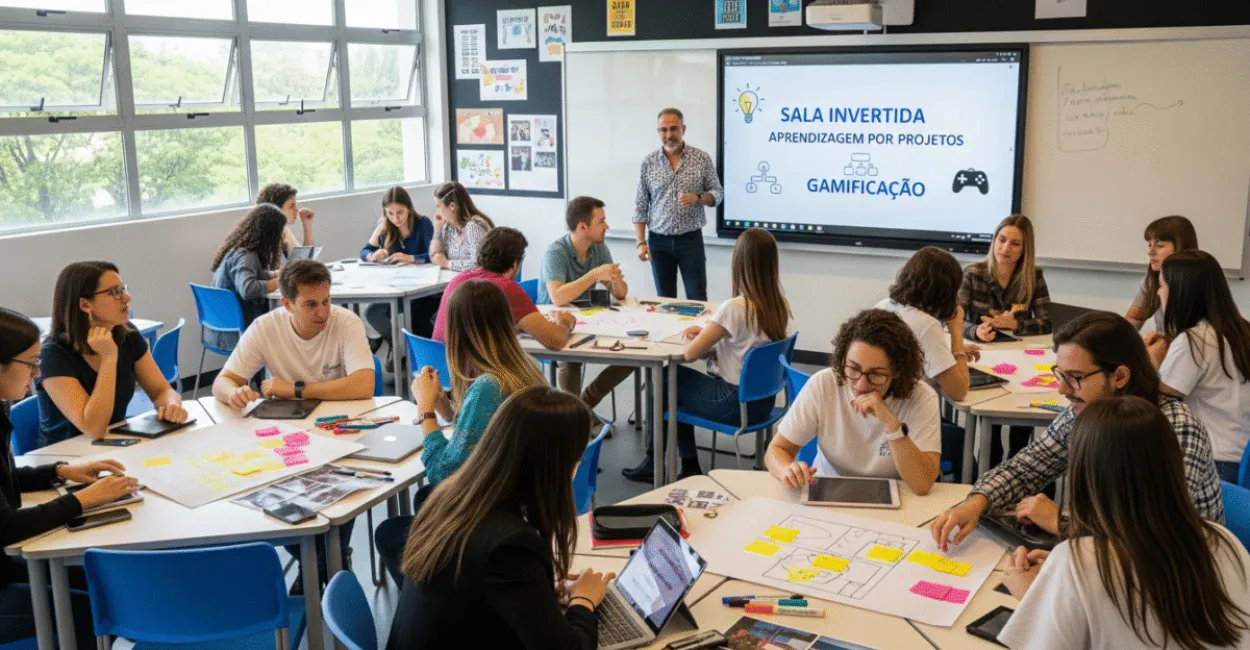
Active learning methodologies transform teaching by putting students at the center of the learning process. They encourage greater engagement, autonomy, and the development of critical skills, making them essential for preparing teachers to work in complex and diverse settings.
In teacher education, adopting approaches such as the flipped classroom, project-based learning, and gamification offers an opportunity to refresh teaching practices, connect theory with practice, and support meaningful learning. Implementing these methodologies takes planning, resources, and a shift in mindset among both instructors and participants. This article explains how to apply methodologies in teacher education, covering practical steps, tools, assessment, and implementation examples. We’ll explore strategies, resources, comparisons, and recommendations to help courses, graduate programs, and continuing education integrate active learning methodologies consistently.

Active learning methodologies: concepts and foundations
What methodologies are and the principles behind them
Active learning methodologies are teaching approaches that value students’ active participation in building knowledge. Their basic principle is student-centered learning, in contrast to traditional lecture-based instruction. These methods encourage critical thinking, problem-solving, and collaboration while connecting theory with practice.
In teacher education, these principles call for reflection on curriculum, formative assessment, and classroom management that supports inquiry-based practices. Related concepts include collaborative learning, problem-based learning, and blended learning, which deepen our understanding of these methodologies. To put the principles into practice, instructors need to design authentic tasks, provide ongoing feedback, and ensure that technology and teaching resources support interaction. This requires planning, initial teacher preparation, and an institutional culture that welcomes innovation.
Theoretical foundations and evidence of effectiveness
Education research indicates that active learning methodologies improve content retention, engagement, and the development of social-emotional skills. Studies of project-based learning and the flipped classroom show gains in autonomy and academic performance when these approaches are implemented well. The evidence underscores the importance of aligning objectives, activities, and assessment.
In teacher education, systematic reviews indicate that active learning practices help teachers apply pedagogical knowledge in their day-to-day work at school. Case studies, simulations, and microteaching are often associated with better teaching practice and greater professional confidence. Sources such as institutional reports and academic research confirm that effectiveness depends on ongoing professional development, institutional support, and access to resources. Consult materials from Brazil’s Ministry of Education (the federal agency responsible for national education policy) and university research to explore the theoretical foundations and best practices in more depth—for example, reports from universities and education research centers.
Skills developed through these methodologies
Active learning methodologies foster cognitive and social-emotional skills, including critical thinking, creativity, communication, and collaboration. For teachers, they also build skills in planning, formative assessment, and managing instructional projects. These abilities are essential for working with diverse classrooms and meeting the demands of today’s education landscape.
In addition, approaches such as gamification and project-based learning strengthen digital and instructional design skills, both of which are important for blended learning. Related concepts include digital literacy, authentic assessment, and differentiated instruction, which broaden teachers’ repertoire. When planning teacher education, include activities that allow for deliberate practice, structured feedback, and critical reflection. This ensures teachers not only understand concepts but can also apply and adapt them in different school settings.
- Map: Identify learning objectives and teachers’ needs; record skill gaps.
- Select: Choose methodologies (flipped classroom, projects, gamification) that fit the objectives and context.
- Design: Plan the sequence of activities, resources, and formative assessments; define success criteria.
- Implement: Work in short cycles, collect evidence, and encourage experimentation in real classrooms.
- Evaluate: Use rubrics, portfolios, and feedback to refine practices; document results and reflections.
Instructional design and preparation for active learning
Curriculum planning focused on active learning
Curriculum design for active learning begins with clearly defining learning outcomes and skills. Planning should connect the sequence of content with hands-on activities, formative assessment, and supporting resources. When incorporating projects and the flipped classroom, align topics with objectives and include opportunities for teacher reflection.
Use learning maps and lesson sequences that include an introduction, development, and synthesis. It is essential to account for student diversity and inclusive teaching practices. Related concepts such as learning objectives, skills, and integrated curriculum can help structure the planning process.
In teacher education programs, offer modular units that allow for gradual implementation. This makes experimentation easier, reduces resistance, and supports adjustments based on evidence of learning and participant feedback.
Resources, technology, and support tools
Digital tools extend the reach of active learning methodologies: learning management systems (LMSs), video recording for flipped classrooms, gamification apps, and resource repositories. When choosing tools, consider usability, teachers’ access, and privacy. Incorporate tools that support collaboration, assessment, and instructional facilitation.
Along with technology, analog resources such as project kits, hands-on materials, and flexible spaces are important. Related terms include blended learning environments, multimedia resources, and mobile learning, which broaden the range of available resources. Provide technical and instructional training on how to use these tools. Hands-on training, tutorials, and technical support reduce barriers and help teachers feel more confident implementing these methodologies effectively.
Comparison table of instructional design models
| Model | When to use it | Key advantage |
|---|---|---|
| Adapted ADDIE | Projects and long sequences | Clear stages and assessment |
| Backward Design | Competency-based education | Focus on end results |
| Design Thinking | Instructional innovation | User-centered solutions (for students) |
The flipped classroom and teaching practices

Implementing the flipped classroom in teacher education
The flipped classroom requires making instructional content available before in-person sessions, reserving synchronous time for hands-on activities and discussion. In teacher education, this gives future teachers a chance to practice facilitation strategies during in-person sessions and learn how to organize tasks and assess learning. Plan short videos, guided readings, and diagnostic quizzes to ensure participants are prepared in advance. Related terms include asynchronous content, flipped learning, and pre-class work. These elements ensure in-person time is devoted to application and critical reflection.
Assess participants’ prior understanding with quick check-ins, then use in-person sessions for real-world problem-solving, microteaching, and peer feedback. This routine strengthens reflective practice and the ability to adapt activities to different school settings.
Hands-on activities and microteaching
Microteaching consists of short sessions in which teachers use a strategy with their peers, who act as students and evaluators. This practice encourages specific feedback, builds classroom management skills, and helps teachers refine instructional materials. Include clear rubrics and time for reflection after each session.
Activities should simulate real-world scenarios: solving problems, guiding projects, and leading discussions. Approaches such as peer learning, role-playing, and simulations can diversify hands-on activities. Document evidence for later formative review.
Build cycles of practice, feedback, and refinement, emphasizing differentiation strategies, formative assessment, and the use of supporting technology. This turns theory into skills teachers can apply in their everyday work at school.
Engagement and follow-up strategies
To maintain engagement in the flipped classroom, use motivational strategies such as authentic tasks, challenges, and light gamification. Monitor asynchronous participation with quizzes and discussion forums, and provide ongoing feedback. Related concepts include student engagement, formative monitoring, and instructional presence.
Follow-up should include participation records, diagnostic assessments, and teaching portfolios. For teachers in training, supervision and regular mentoring help build skills and address implementation challenges. Include opportunities for metacognition so teachers can reflect on their instructional choices. This strengthens their ability to plan and adapt methodologies to the real-world context of each school.
Project-based learning and inquiry
Planning instructional projects
Project-based learning connects curriculum topics to real-world problems, encouraging inquiry and collaborative work. When planning, define an authentic problem, expected deliverables, assessment criteria, and a timeline. Assign clear roles for students and plan strategies for teacher guidance.
Relevant terms include interdisciplinary projects, final products, and assessment rubrics. In teacher education, propose projects that allow participants to test lesson sequences, materials, and assessment tools, making it easier to transfer what they learn to their teaching practice.
Read also: Soft Skills in Teacher Education: More Than Technical Knowledge
Ensure there are enough resources and time, and involve the community and partners whenever possible. Documenting the process and conducting ongoing assessment are essential for demonstrating learning and adjusting the project’s complexity.
Action research methodologies in teacher education
Action research combines research and practice, allowing teachers to investigate instructional challenges in their own schools and implement interventions. This approach strengthens critical reflection and continuous improvement by connecting theory and practice through cycles of planning, action, and reflection. Related terms include practitioner research, reflective cycles, and learning data. In teacher education, support inquiry groups with methodological guidance and help collecting and analyzing evidence, such as observations and portfolios.
Action research findings can inform curriculum changes and teaching practices. Encourage teachers to publish reports and present at academic events to expand the work’s impact and strengthen professional learning networks.
Project activity checklist for teacher education
- Identify a relevant problem: List school-related questions worth investigating.
- Form teams: Group participants based on shared interests and complementary skills.
- Define the final product: Set clear deliverables and assessment criteria.
- Plan the timeline: Set phases, milestones, and responsibilities.
- Implement and document: Collect evidence, observations, and reflections for analysis.
Gamification and game-based learning
Gamification concepts and applications
Gamification uses game elements (points, levels, challenges) in educational settings to increase motivation and engagement. In teacher education, it can be used to simulate classroom scenarios, guide learning pathways, and encourage healthy competition among peers. Related terms include game mechanics, experience design, and instant feedback. When incorporating gamification, prioritize instructional objectives and avoid letting the game take center stage at the expense of meaningful learning.
Create progress maps, badges, and challenges aligned with teaching skills. Pair the reward system with qualitative feedback so gamification contributes to meaningful, reflective professional development.
Recommended tools and platforms
A variety of platforms support gamification and educational game creation: gamified learning management systems, quiz creation platforms, and simulation apps. The right choice depends on the context, audience, and available resources. Prioritize tools that provide reports and make it easy to monitor progress.
Related terms include educational platforms, adaptive learning, and engagement reports. Provide training on these tools and ensure they are accessible to all participants, taking devices and internet access into account. Combine digital tools with in-person activities, such as educational board games and role-playing. This integration expands opportunities for hands-on learning and develops facilitation and classroom management skills.
Comparison table of tools and objectives
| Tool | Objective |
|---|---|
| Gamified LMS platform | Learning pathways and progress tracking |
| Quiz apps | Formative assessment and instant feedback |
| Simulators and serious games | Practice classroom decision-making |
Formative assessment and evidence of learning
Assessment models that support active learning
Formative assessment focuses on progress and continuous improvement, incorporating feedback, rubrics, and portfolios. For active learning methodologies, prioritize tools that capture both processes (journals, classroom recordings) and products (projects, reports). This makes it possible to assess complex skills as well as memorized content.
Related terms include analytic rubrics, authentic assessment, and digital portfolios. These tools make it easier to track teacher development over time and make evidence-based instructional decisions. Include self-assessment and peer assessment to encourage metacognition and accountability. Make sure criteria are clear and shared from the start to guide teaching and learning.
Practical assessment tools and rubrics
Rubrics should be specific, measurable, and aligned with relevant skills. For projects, include criteria such as planning, collaboration, use of evidence, and the quality of the final product. For the flipped classroom, assess preparation, participation, and the teacher candidate’s ability to facilitate learning.
Related terms include performance criteria, descriptive scales, and observable indicators. Use editable templates that can be adapted by subject and grade level, making them easier to reuse and refine.
Provide training on interpreting rubrics and using documentation tools such as checklists and observation forms. This improves assessment consistency and makes feedback more useful for teaching practice.
Using data to guide instructional decisions
Data collected through formative assessments and digital tools should guide instructional adjustments. Analyze patterns in performance, participation, and engagement to identify needs for additional support or curriculum changes. Related terms include learning analytics, dashboards, and instructional indicators.
In teacher education, encourage triangulating evidence (observations, products, and self-assessments) to support decisions. This strengthens a culture of continuous improvement and helps sustain the methodologies being used.
Document results and share effective practices across the institution to support broader adoption. Use reports to justify resources and inform continuing education policies across school systems.
Scaling, policies, and sustainability
Adoption and scaling models
Scaling methodologies calls for strategies at different stages: pilot, expansion, and institutionalization. Start with pilot projects in classes or schools, evaluate results, and document processes before expanding. Related terms include gradual implementation, controlled pilots, and sharing practices.
Build networks of teacher leaders and provide ongoing training to sustain adoption. Documentation tools and repositories of lesson plans make it easier to replicate and adapt practices across different settings.
Monitor impact and cost indicators, adjusting the implementation model as needed. Clear communication with stakeholders and involvement from the school community are vital for securing institutional support.
Public policy and institutional incentives
Education policies that support continuing education, instructional innovation, and funding for resources are essential to sustaining these methodologies. Incentives may include scholarships, time for professional development, and funding for educational technology.
Related terms include teacher education policies, education funding, and professional certification. Align teacher education initiatives with curriculum guidelines and education goals to ensure relevance and institutional support.
Build partnerships with universities, education departments, and research institutes to support external monitoring and validate practices. Links to official agencies and research strengthen the credibility of these initiatives and support fundraising (Brazilian Government Portal, UNESCO).
Practices for ensuring sustainability
To ensure sustainability, invest in ongoing training, communities of practice, and process documentation. Create technical and instructional support systems that reduce reliance on individuals and foster an institutional culture of innovation.
Related terms include learning communities, in-service training, and knowledge transfer. Use regular evaluation and review cycles to adapt practices as educational and technological needs evolve.
Encourage the publication of results and success stories to increase visibility and support replication. Partnerships with higher education institutions and research centers can provide methodological support and evidence to expand impact.
Conclusion
Active learning methodologies offer an effective way to renew teacher education by promoting engagement, skill development, and meaningful learning. Integrating the flipped classroom, projects, and gamification takes planning, resources, formative assessment, and institutional support, but it can have a lasting impact on teaching practice.
When applying these methodologies, focus on instructional design, ongoing training, and using evidence to refine your approach. Methodologies can transform teacher education—try them, assess the results, and share what you learn to expand their reach. Ready to get started? Try a pilot and build a community of practice at your institution.
Frequently asked questions about methodologies
What are active learning methodologies, and why are they important in teacher education?
Active learning methodologies put students at the center of the learning process, encouraging participation, reflection, and problem-solving. In teacher education, they are important because they give teachers firsthand experience with instructional strategies, develop facilitation skills, and connect theory with practice. Through hands-on experiences such as microteaching, projects, and action research, teacher candidates gather evidence of learning and learn to adapt their practices to real-world settings, strengthening their professional autonomy and capacity for innovation.
How do you launch a flipped classroom pilot in a teacher education course?
Start by setting clear objectives, preparing asynchronous content, and planning in-person activities focused on application. Communicate expectations, provide technical guidance, and track participation with diagnostic quizzes. Conduct microteaching sessions and collect participant feedback to refine the model. Document results and develop rubrics to assess the skills participants build. Begin with a short module to test the process and measure impact before expanding to other courses or subjects.
Which digital tools work best for gamification in teacher education?
Gamified LMS platforms, quiz apps, and simulators are effective options. Choose tools that track progress, generate reports, and integrate with in-person activities. Accessibility and training are essential. Combine digital resources with in-person activities to increase instructional impact. Also consider tools for creating badges and personalized learning pathways to recognize the skills teachers develop during training.
How do you assess the effectiveness of methodologies used in teacher education?
Use a variety of tools: rubrics, portfolios, observations during microteaching, self-assessments, and platform participation data. Use ongoing formative assessment to guide improvements and action research to explore causes and effects in greater depth. Analyze qualitative and quantitative evidence to identify progress in teaching skills, engagement, and the transfer of learning to school practice. Share results across the institution to support scaling and teacher education policies.
What are the biggest challenges to scaling methodologies across school systems, and how can they be overcome?
Common challenges include limited time for training, cultural resistance, scarce resources, and uneven technology infrastructure. To address them, run well-documented pilots, build networks of teacher leaders, provide ongoing training, and involve administrators. Seek partnerships and funding, adapt methodologies to local contexts, and use assessments to demonstrate impact. Transparent communication with stakeholders and institutional incentive policies are also essential to establishing these practices and ensuring their long-term sustainability.
Artigos Relacionados
 Active Learning in Lesson Planning: Strategies and Examples
 Collaborative Learning in Early Childhood Education
 Innovative Pedagogy in Higher Education: New Methodologies
 Active Learning Pedagogy in Extracurricular Activities: Engagement and Learning
 Educational Technology and Blended Learning: The New Normal in Education
 Digital Transformation in Education: How to Revolutionize Learning
