
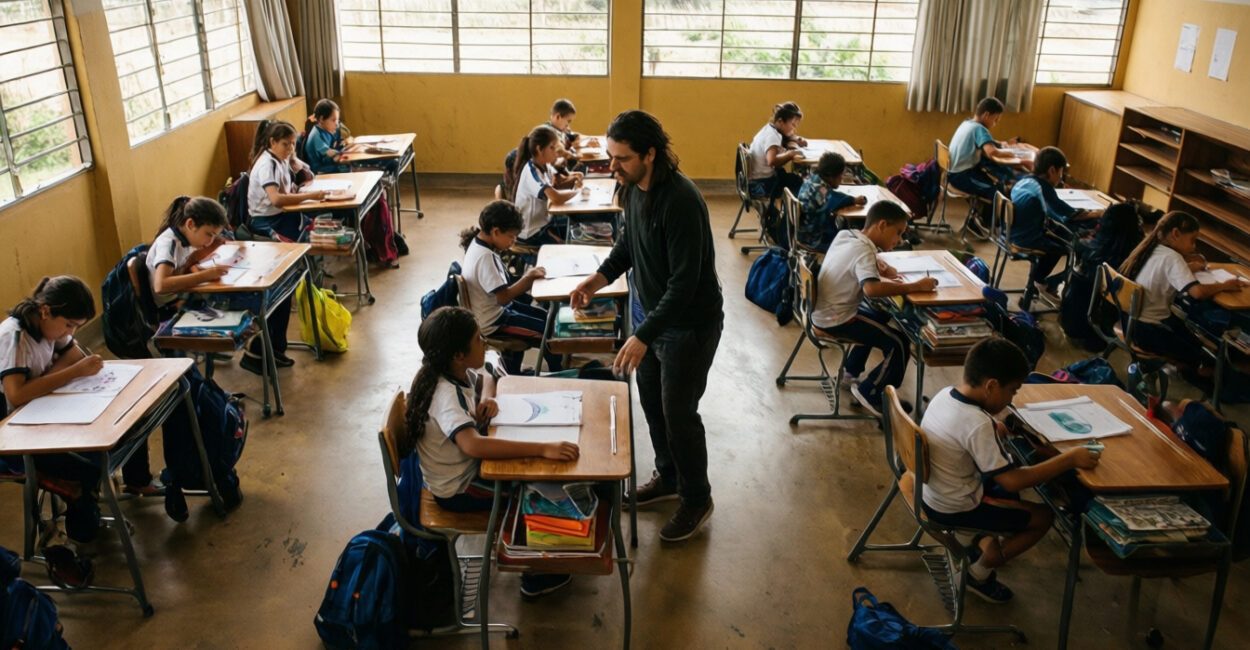
A student can be sitting in the classroom and still be unable to follow the lesson, access materials, or show what they have learned. An inclusive classroom is a learning environment designed to reduce these barriers and increase participation among students with different characteristics and needs. The support provided depends on the individual, the activity, and what educators observe in day-to-day classroom life.
This takes decisions about movement, communication, materials, instruction, and assessment. There is no single room layout or set of resources that works for every class. Instead, educators can identify obstacles, try supports, and check whether they help.

What Makes a Classroom Inclusive
An inclusive classroom is an educational environment organized so students with different disabilities, support needs, sensory profiles, and learning styles and paces can access instruction, take part in activities, and demonstrate what they have learned. Supports are chosen based on observed barriers and the goals of the activity.
In practice, the school looks at what prevents each student from keeping up and adjusts the environment or instruction. Physical presence alone does not guarantee access to the lesson, interaction with classmates, or an opportunity to respond.
Adaptations can be part of planning for a general education classroom. That’s why “general education classroom with adaptations” and “inclusive classroom” are not necessarily opposing categories.
A multifunctional resource room is a space that can support students’ education, and Atendimento Educacional Especializado (AEE), Brazil’s Specialized Educational Assistance service, is intended to work in coordination with the classroom. Neither one replaces, by itself, access to instruction and interaction in the general education classroom. For guidance on education, see the MEC inclusive education policy and the Base Nacional Comum Curricular (Brazil’s national curriculum framework). UNESCO also treats inclusion as part of ensuring accessible and equitable education.
Taking part means having access to the activity and a way to contribute to it.
Organize the Space for Access and Orientation
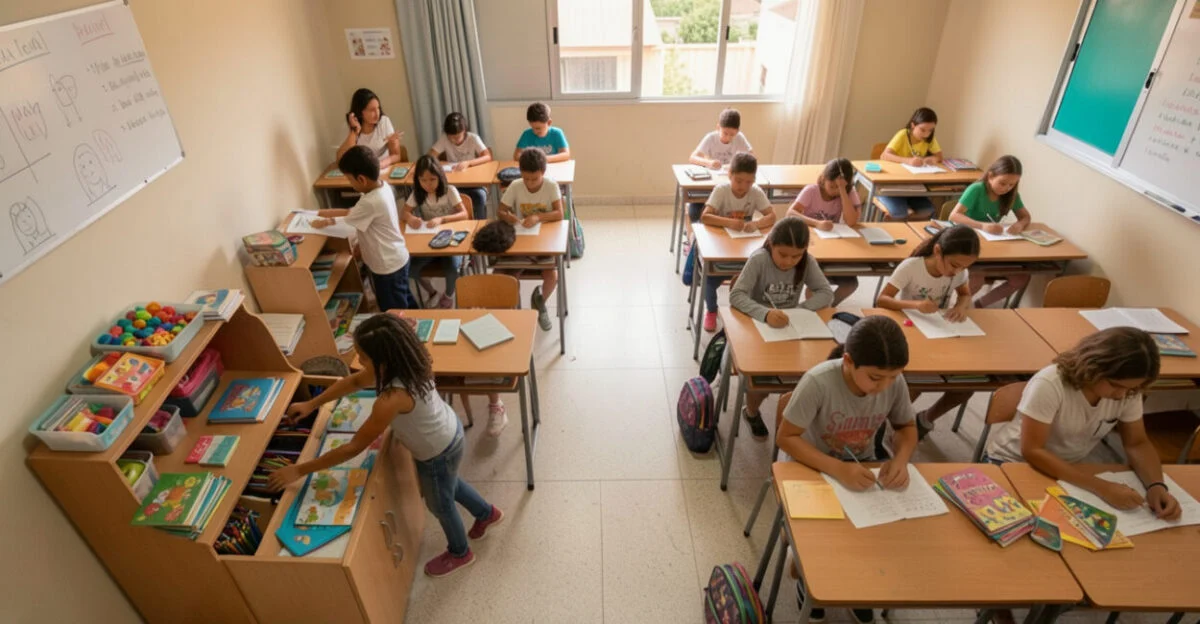
The classroom layout should let students reach materials and follow what’s happening, taking the activity and their needs into account. Sitting near the board may help in some situations, but it doesn’t solve issues with visibility, hearing, communication, or interaction on its own. It’s also worth checking whether students can follow the teacher and classmates without being isolated.
Noise, too much visual stimulation, and unexpected changes can make it harder for some students to concentrate. The team can reduce stimuli unrelated to the lesson and offer an agreed-upon option for taking a break or self-regulating when appropriate. This arrangement won’t prevent every instance of discomfort and should be reviewed with the student, rather than used to exclude them from an activity for convenience.
Classroom Environment Checklist
- Are pathways clear for everyone using the room?
- Can students reach the materials they need?
- Are visual directions easy to understand and clearly visible?
- Does the seating arrangement support following the lesson and interacting with classmates?
- Are the environmental stimuli appropriate for the activity?
- Is there an option to take a break when appropriate?
There is no universal measurement or layout that answers all these questions. The team should check the space during actual activities, since a clear pathway in an empty room may become blocked when materials are handed out or students form groups.
Choose Materials, Communication Supports, and Assistive Technology

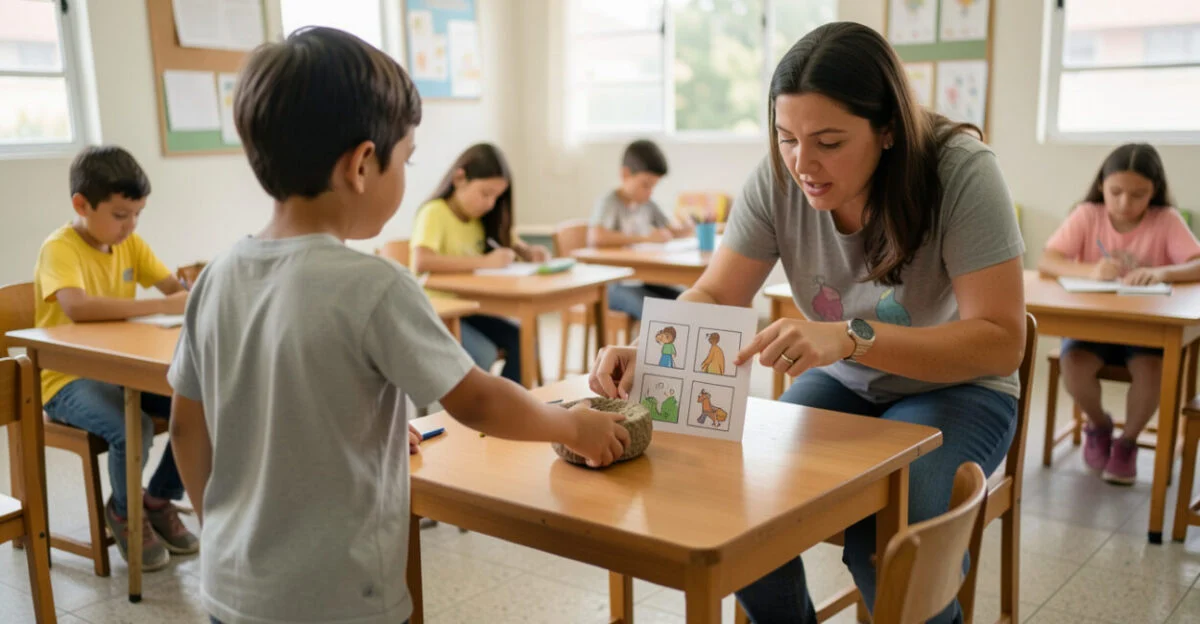
Adapted materials change how content is presented or handled. Augmentative and alternative communication (AAC) supports help people who need other ways to understand or express messages. Assistive technology includes tools and strategies that increase functionality, independence, and participation. These categories can overlap, but choices should start with the barrier identified.
Visual directions, accessible text formats, tactile objects, or digital tools may be useful in specific situations. For deaf students, the team needs to consider access to communication and instruction, and coordinate appropriate supports for the situation. A resource room alone does not remove communication barriers in the general education classroom.
People searching for “inclusive classroom materials,” “AEE classroom resources,” or “AEE classroom kits” may find product lists, but no standardized kit can replace planning. Before buying anything, determine what the student needs to access and how the team will tell whether the resource helped.
Example of Choosing a Resource
Observed barrier: The student misses steps in an activity explained only verbally.
Support to consider: Brief, sequential directions with visual support or a demonstration.
Observed need or barrier Support to consider How to check the effect Difficulty following directions Written steps, images, or a demonstration, as appropriate Observe whether the student understands what to do and starts the activity Communication barrier Communication support chosen with the student and team Check whether the student can express choices, questions, or answers Difficulty accessing materials Accessible format, tactile support, or another way to present the content Observe whether the student can locate and use the intended content Too much sensory input Adjust stimuli or offer a break, when appropriate Check whether the support helps the student return to or participate in the activity
Read also: Classroom Layout: Models and Practical Examples
Plan Lessons for Different Ways of Participating
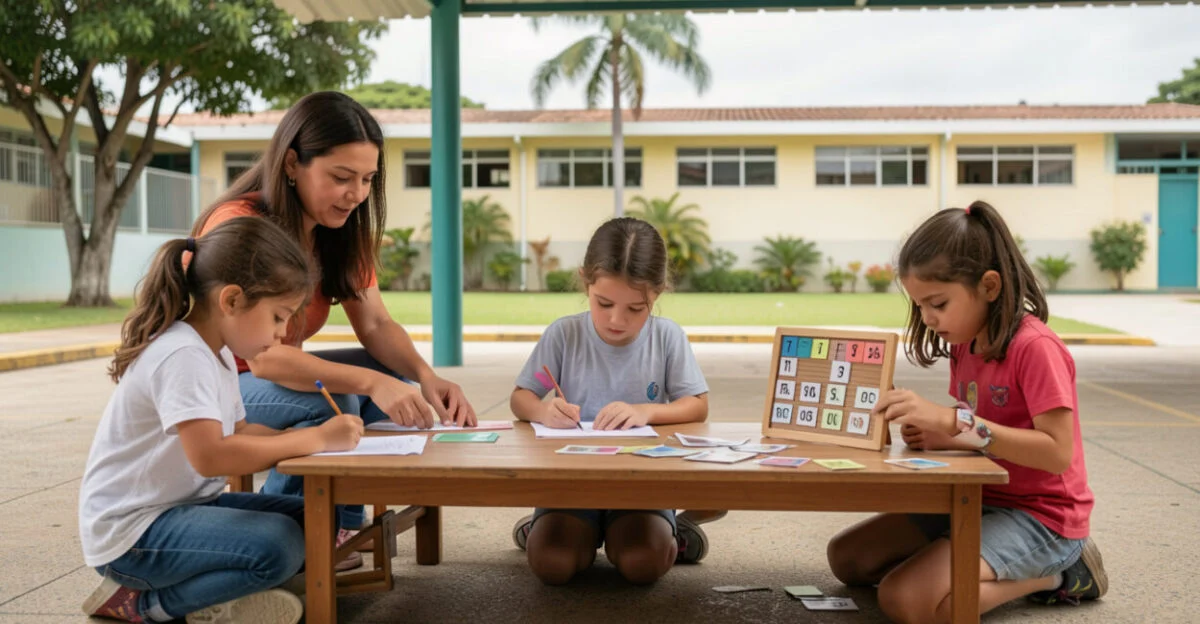
Clear directions work best when they explain what to do, in what order, and what the expected outcome is. Breaking a task into steps, previewing vocabulary, or demonstrating an action can help students who have difficulty following lengthy explanations. Accessible communication also means checking whether directions were understood instead of assuming they were because the student stayed quiet.
If the goal is to assess understanding of a concept, students may respond orally, in writing, visually, or with a communication support, as long as the chosen format preserves the learning objective. Changing how students respond does not automatically mean lowering expectations for the content. Learning can be demonstrated in different ways, as long as the criteria are clear.
Routines and advance notice of transitions help some students stay oriented, but they should remain flexible. If the lesson plan changes, explaining what changed and what will stay the same can prevent confusion without turning the routine into a rigid rule. Lighting also deserves attention when glare or low contrast makes materials and the board hard to see.
Learning objectives guide instruction; ways to access and respond can vary according to students’ needs.
Check Whether Supports Are Working
An adaptation works when it increases access or participation in relation to the identified barrier. To check, record brief facts tied to the goal, rather than vague impressions like “it went better.” One change or an unusual day isn’t enough to conclude that a support worked; consider the activity, the context, and the student’s perspective.
- Observed barrier.
- Support used.
- Situation in which the support was used.
- Observable participation or response.
- Decision: keep, adjust, or replace.
For example, if a visual checklist was introduced to support a task, the team can observe whether the student can find the steps, begin working, and make progress. If the checklist doesn’t help, check whether it is readable, understandable, and available at the right time before replacing it with another support. Monitoring should inform instructional decisions, not create universal numeric targets.
Coordinate the General Education Classroom, AEE, School Leadership, and Family
Classroom planning and AEE have related but distinct roles. The teacher plans instruction and monitors participation; the AEE professional can help identify appropriate supports; school leadership provides working conditions and coordination; and the family shares relevant information about communication, preferences, and needs.
Understanding what a school resource room is also means distinguishing the physical space from the support provided for students’ education. Knowing how to work in a resource room involves coordinating goals, materials, and ways to monitor the student among the professionals involved. When searching for “multifunctional resource rooms: AEE in action,” the useful question is how the support contributes to access and participation in the classroom.
Roles and requirements may depend on current regulations and district guidance. For decisions about organizing AEE or educational rights, the team should consult current official legislation, including the Lei Brasileira de Inclusão (Brazilian Inclusion Law) and the regulations of the Conselho Nacional de Educação (Brazil’s National Education Council), rather than relying only on summaries or outdated materials.
Avoid Common Mistakes and Start with Priorities
Some common mistakes leave barriers in place even when the intention is to include: having a student present without access to the task, giving everyone the same resource, separating a student from the group without a pedagogical reason, buying materials before identifying the problem, or placing all responsibility on AEE. The problem often starts when a school chooses a solution before observing what is making participation difficult.
To get started, choose an activity and follow a simple sequence:
- Observe when the barrier occurs.
- Ask the student what makes participation easier or harder.
- Prioritize a barrier that affects access to the activity.
- Choose a practical support, which could involve rearranging the space or giving clearer directions.
- Agree on what to observe and when the team will review the measure.
- Review the outcome and keep, adjust, or replace the support.
Changing how materials are arranged or how directions are presented can be a first step; other situations call for specialized resources and coordination among professionals. What is appropriate depends on the student and the context. To connect a support proposal to a specific need, describe the barrier and the effect you want to observe before choosing a solution.
Frequently Asked Questions
Do I need a lot of expensive resources to get started?
No. Observing the activity, rearranging materials, and making directions clearer can reveal initial supports that don’t require a purchase. Consider specific resources when they address a barrier those steps don’t resolve.
Does every student with a disability need the same adaptation?
No. People with the same disability may have different needs, and one person may need different supports depending on the activity, environment, or communication method. The team should confirm the need with the student and monitor the effects of the support.
Does inclusion in early childhood education require the same routine for every child?
No. A routine can provide predictability while allowing adjustments so every child can participate. The sequence and advance notices can be presented in different ways, depending on the activity and the group’s needs. For a related reference, also see early childhood education.
Artigos Relacionados
 Foundations of Cognitive Development: Essential Concepts
 Database Administrator: A Complete Guide to This Essential IT Career
 Infectious Disease Specialist: Essential in the Fight Against Infectious Diseases
 Construction Foreman: A Complete Guide to This Essential Career
 Professional Cameras for Educators: Essential Tools for Digital Learning
 Paramedic: The Complete Guide to This Essential Healthcare Profession
