

It is the systematic process by which professionals and learners review performance, goals, and evidence of learning, comparing practices against established criteria to drive continuous improvement. I view it as a formative tool that combines data and reflection to inform action.
Self-assessment has gained importance as institutions face growing demands for educational accountability and effectiveness. It requires valid tools and a culture of feedback, including peer assessment and quantitative evidence. Challenges include bias, lack of standardization, and cultural resistance.

Key Takeaways
- I combine qualitative and quantitative methods to support robust interpretation of results.
- I define clear criteria and observable evidence to reduce bias in self-reflection.
- I use short feedback cycles to accelerate improvement and curriculum adjustments.
Self-Assessment: Foundations and Essential Concepts
I start with the fundamentals to explain how self-assessment draws on learning theory and models of professional development. I cover instrument validity, ethical data interpretation, and alignment with institutional goals—topics that provide context for these practices and guide their practical application.
Underlying Theories and Models
I’ve found that the theory behind self-assessment combines metacognition, formative assessment, and improvement cycles, providing an epistemological framework for interpreting evidence and guiding educational actions. This includes triangulating assessments with learning objectives. I explain how models such as the PDCA cycle and instructional design shape assessment tools by enabling rapid iterations and adjustments to strategies, resulting in better alignment between educational intent and observed outcomes.
I examine the institutional impact, showing that consistent adoption reduces variations in practice, improves curricular coherence, and builds professional confidence, benefiting learner retention and instructional quality.
Operational Definitions and Critical Variables
I identify critical variables that determine the quality of self-assessment, including measurable criteria, sources of evidence, collection frequency, and external validation mechanisms. I emphasize accuracy and reproducibility in interpretation. I explain how to distinguish process indicators from outcome indicators, since this distinction guides corrective action and prevents methodological confusion that can undermine educational decisions and resource allocation.
I discuss practical implications for evaluators, including the need for training in data analysis and professional ethics, which supports methodological sustainability and institutional trust.
Quality and Validity Measures
I outline criteria for assessing instrument validity, including internal consistency, sensitivity to change, and relationships with external outcomes. These measures determine diagnostic value and support well-informed decisions. I describe verification methods such as correlations with external assessments and expert review, including statistical procedures and qualitative analyses that strengthen the reliability of interpretations.
I conclude that investments in validation reduce the risk of misinterpretation, improve the precision of interventions, and increase educational impact at both local and systemic levels.
Designing Tools and Collecting Evidence
I explore self-assessment tools ranging from detailed rubrics to digital portfolios, covering the selection of indicators and collection methods that balance validity, reliability, and operational feasibility, with a focus on practical use by teachers and administrators.
Rubrics and Observable Criteria
I recommend designing rubrics with clear descriptors, behavioral scales, and illustrative examples. These guide judgment and reduce ambiguity, improving comparability across observations and consistency in feedback. I explain how to map descriptors to specific competencies and connect performance evidence to learning goals and proficiency levels, enabling precise monitoring of individual and group progress.
I emphasize the practical impact on decision-making: well-designed rubrics can serve as the foundation for professional development plans and targeted instructional interventions.
Portfolios and Qualitative Evidence
I value portfolios because they bring together artifacts, reflections, and indicators of progress, making it possible to triangulate practice and outcomes. This supports well-documented, contextualized accounts of development. I describe how to organize digital portfolios using metadata, finalized evidence, and guided reflections that make searching, comparing, and longitudinal analysis easier, while addressing data security and privacy.
I point out the methodological benefits: robust portfolios promote self-awareness, inform career decisions, and serve as documentation for accountability and institutional accreditation.
Quantitative Measurement and Data Analysis
I emphasize the use of standardized metrics and statistical analysis to identify trends, detect intervention effects and significant variations, and distinguish noise from real changes in performance. I explore techniques such as sensitivity analysis, source triangulation, and data visualization to support interpretation, including integration with educational information systems and dashboards for faster decision-making.
I show the impact on curriculum management: decisions based on quantitative evidence improve efficiency, guide professional development, and justify investments in education.

Practical Implementation in Educational Settings

I address practical implementation in light of institutional culture, ongoing professional development, and operational adjustments. I highlight strategies for integrating self-assessment into instructional routines, supervision, and professional development to support sustainability and scale.
Training and Professional Development
I recommend training programs that combine theory, practice, and mentoring, because developing assessment skills depends on deliberate practice, calibrated feedback, and expert-guided reflection. I describe sequences of workshops, peer observations, and applied case studies, including the use of real-world evidence to build judgment and increase teachers’ confidence in assessment processes.
I examine the institutional impact, showing that training reduces resistance, improves the accuracy of self-assessments, and creates a virtuous cycle of continuous improvement and professional accountability.
Integrating Peer Assessment and Supervision
I advocate integrating self-assessment with peer observation. Complementary perspectives enrich diagnosis and reduce individual bias while encouraging the shared development of standards for good practice. I explain procedures for constructive feedback, including observation protocols, the use of objective evidence, and mentor facilitation, which increase receptiveness and keep the focus on improvement efforts.
I discuss the impact on organizational culture: collaborative practices strengthen professional trust, instructional alignment, and consistent learning outcomes.
Scaling and Sustainability
I identify factors that support sustainability, including governance, technical support, and integration with management systems. Maintaining initiatives at scale requires alignment among policy, resources, and ongoing training. I present strategies for gradual scaling, including controlled pilots, iterative tool development, and evidence documentation to justify expansion across departments or institutions.
I argue that well-planned scaling creates economies of scale, makes it easier to transfer effective practices, and builds professional learning networks that last beyond one-time initiatives.
Digital Tools, Privacy, and Interoperability
I analyze technology solutions that support self-assessment, from LMS platforms to portfolio apps. I discuss data interoperability, privacy compliance, and integration with institutional systems to ensure security and usefulness.
Platforms and Data Integration
I examine criteria for selecting platforms, including compatibility with standards such as LTI and xAPI, ease of integration with school systems, and the ability to export data for advanced analysis. I describe processes for mapping metadata and information flows, since proper data structuring ensures traceability, reproducibility, and effective use of evidence in educational decisions.
I highlight the impact on governance: interoperable platforms reduce maintenance costs, simplify reporting, and support accountability and continuous improvement policies.
Privacy, Security, and Compliance
I emphasize legal and ethical requirements for protecting sensitive data, recommending anonymization, access controls, and clear retention and sharing policies—all essential to user trust. I discuss technical safeguards such as encryption and audit logs, as well as contracts and terms of use that define responsibilities between institutions and technology providers.
I point out the effects on adoption: strong privacy protections increase participation, reduce reputational risks, and help ensure initiatives are sustainable.
Visualizations and Dashboards for Decision-Making
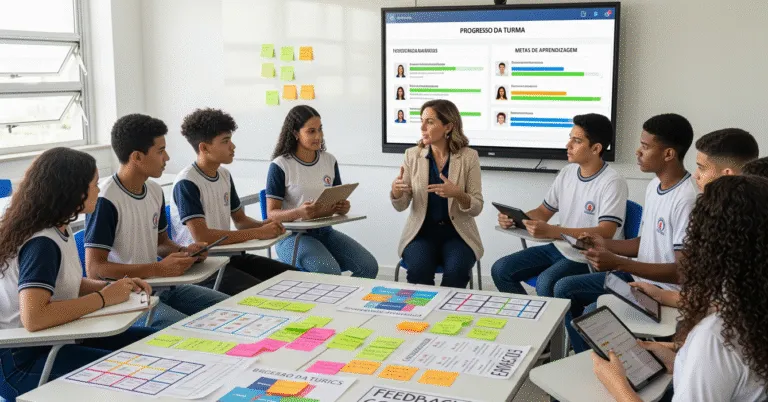
I explore dashboard design principles that prioritize clarity, granularity, and the ability to filter by variable, as well as the integration of process and outcome indicators to support tactical decisions. I describe key metrics and visualizations that guide administrators and teachers, including trends over time, class comparisons, and alerts for significant deviations.
I point to the operational benefits: effective visualizations reduce analysis time, keep attention on corrective action, and enable quick responses to emerging needs.
Impact Evaluation and Empirical Studies
I present approaches for evaluating the impact of self-assessment programs, including experimental and quasi-experimental designs, outcome metrics, and causal analysis. I emphasize methodological rigor to support policy and practice recommendations.
Experimental Designs and Causal Evidence
I recommend using control groups, randomization when possible, and difference-in-differences analysis to estimate the effects of interventions. These designs strengthen causal inferences and reduce bias. I detail how to address confounding variables and conduct sensitivity analyses, including adjustments for baseline characteristics and subgroup analyses to understand variation in effects.
I explain the impact on decision-making: robust causal evidence supports resource allocation and guides training policies and the expansion of effective practices.
Case Studies and Qualitative Evidence
I value case studies for their ability to capture context, mechanisms, and trajectories of change by combining interviews, observations, and document analysis with quantitative evidence. I describe thematic analysis and triangulation techniques that improve interpretive validity, highlighting practice-based accounts that show how and why interventions work in specific settings.
I discuss their relevance to scaling: understanding the mechanisms at work makes it possible to adapt solutions to different circumstances, increasing the likelihood of success in new implementations.
Read also: BIM in Construction: Benefits and Practical Implementation
Outcome Metrics and Success Indicators
I identify relevant indicators for measuring impact comprehensively, including learning gains, adoption rates, implementation fidelity, and observed changes in instructional practice. I outline methods for setting goals and benchmarks, including the use of historical data and comparisons with national or international standards, to help set realistic expectations.
I conclude that clearly defined metrics make it easier to monitor progress, evaluate continuously, and communicate results to internal and external stakeholders.
Policy, Governance, and Systemwide Scale
I analyze how public policy and institutional governance shape the adoption of self-assessment practices, including funding, curriculum guidelines, and accountability responsibilities, all of which affect feasibility and sustainability.
Governance and Accountability Models
I explore governance structures that align educational goals, accountability mechanisms, and incentives. Clear responsibilities make it easier to implement practices consistently and meet goals. I describe responsibilities at different levels, including central coordination, local supervision, and teachers’ role in validating evidence, which reduces duplication and improves efficiency.
I analyze the impact on practice, showing that clearly defined governance promotes transparency, strategic use of data, and stronger educational outcomes.
Funding and Financial Sustainability
I address funding models that account for training, technology, and maintenance costs, suggesting a mix of public funding, partnerships, and external financing to ensure continuity. I discuss cost-benefit analysis and investment priorities, including return-on-investment analysis in terms of learning and teacher productivity.
I emphasize that strategic resource allocation supports scalability, reduces the risk of initiatives being abandoned, and helps effective practices take hold over time.
Public Policy and Evidence-Informed Decision-Making
I argue that policies should be informed by rigorous evidence, including independent evaluations and research syntheses, to guide decisions about adopting and regulating assessment practices. I mention partnerships with research centers and universities for validation and monitoring, citing examples of initiatives that have benefited from technical collaboration.
I point out that evidence-based policies improve effectiveness, allocate resources more effectively, and support systemwide change in education.
Ethics, Bias, and Fairness in Self-Assessment
I discuss ethical issues and cognitive biases that can undermine the validity of self-assessment, and propose safeguards to ensure fairness, equity, and respect for diversity—essential elements of legitimate and inclusive processes.
Cognitive Biases and Mitigation
I identify biases such as overconfidence, confirmation bias, and the halo effect, and propose ways to mitigate them, including peer calibration, external review, and the use of multiple sources of evidence to validate judgments. I describe anonymization and triangulation procedures that reduce the influence of expectations and personal relationships, contributing to more objective and reliable assessments.
I explain the impact on decision quality: mitigating bias improves the fairness, legitimacy, and effectiveness of educational interventions.
Fairness, Inclusion, and Accessibility
I argue that assessment tools should account for cultural diversity, language differences, and special needs, adapting criteria and evidence to ensure inclusion and fair comparability across settings. I point out adaptation and cultural validation practices that preserve the integrity of assessments and respect the rights of those being assessed, including stakeholder participation in tool development.
I highlight the positive social impact: fair practices expand access to development opportunities and reduce inequalities in the education system.
Informed Consent and Data Use
I emphasize obtaining clear consent for data collection and use, along with policies that define purpose, retention, and sharing to ensure transparency and respect for privacy. I detail institutional responsibilities and data governance mechanisms, including ethics committees and review processes for secondary uses of information.
I conclude that ethical practices build trust, increase participation, and ensure that the benefits of assessment are distributed responsibly.
- Common mistakes: unclear criteria, sporadic evidence collection, and lack of triangulation.
- Validation methods: peer review, correlations with external outcomes, and independent audits.
- Operational priorities: ongoing training, technology interoperability, and clear governance.
These points reflect recurring problems that undermine effectiveness. They also offer guidance for immediate corrections that improve the reliability and impact of assessment practices.
- Recommended tools: LMS platforms with portfolio support, xAPI solutions for tracking, and analytics dashboards.
- Adoption practices: pilots, local benchmarking, and data analysis training.
- Key stakeholders: teachers, administrators, researchers, and legal guardians.
Selecting tools that meet institutional needs and training users are essential steps in turning data into actionable, sustainable decisions.
Comparing Models and Tables
I compare self-assessment approaches, outlining their advantages, limitations, and operational requirements to help readers make informed choices about models suited to their institutional context and improvement goals.
| Model | Strength | Limitation |
|---|---|---|
| Structured rubrics | High objectivity | Requires calibration |
| Digital portfolios | Rich qualitative detail | Requires time for curation |
| Standardized metrics | Comparability | Less sensitive to context |
Cost Comparison
I analyze the direct and indirect costs associated with each model, including licenses, training, and teacher time, because understanding total costs is essential for sustainable decisions and investment priorities. I also consider expected returns, such as learning gains and administrative efficiency, which help justify resource allocation for assessment initiatives.
I recommend a hybrid approach when resources are limited, since combining tools can maximize benefits and reduce financial risk.
| Item | Initial Cost | Recurring Cost |
|---|---|---|
| LMS platform | Medium | Medium |
| Training | Low | High |
| Data maintenance | Low | Medium |
- Key indicators: learning gains, implementation rate, and methodological fidelity.
- Adoption metrics: participation rates, regularity of uploads, and use of rubrics.
- Initial recommendations: prioritize training, validate tools, and ensure technical support.
Defining clear indicators from the outset is essential for assessing progress and adjusting strategies based on evidence, leading to more precise decisions.
External Resources and Supporting Evidence
I draw on reliable sources to ground these practices and broaden the perspective, connecting recommendations to official documents and key studies that provide benchmarks and evidence for comparison and practical context.
Guidelines and Regulations
I cite official documents and technical guidance that establish assessment and quality standards, and include relevant links for reference and alignment with current policies, strengthening institutional foundations. For example, government documents set out metrics and responsibilities, while academic guides detail validation methods, providing technical support for sound implementation.
These references strengthen credibility, facilitate compliance, and align institutional practice with regulatory requirements.
Academic Publications and Studies
I highlight research demonstrating the effects of formative practices and self-assessment approaches, bringing together international and local evidence to inform methodological choices and contextual adjustments. Longitudinal studies provide indicators of lasting impact, while systematic reviews synthesize evidence on the effectiveness and limitations of assessment interventions.
Citing this body of research strengthens rigor and helps administrators make informed decisions tailored to local conditions.
Authoritative Links
For practical and regulatory guidance, I recommend consulting official and academic resources, including Brazil’s Ministry of Education and university repositories that offer tools and implementation evidence. I also summarize materials from major websites covering formative assessment and suggest working with research centers on external evaluation and technical training.
Bringing these sources together strengthens technical reliability and supports adaptations based on nationally and internationally recognized standards.
Monitoring, Adjustments, and Continuous Improvement
I conclude with monitoring practices and adjustment cycles that support sustainable progress. These include review mechanisms, performance indicators, and update protocols to keep assessment initiatives relevant and effective.
Feedback and Iteration Cycles
I recommend regular feedback cycles that include evidence analysis and rapid adjustments, since ongoing iterations allow teams to address specific issues and continually improve practices and tools. I describe ways to prioritize corrective action, including impact analysis and bottleneck identification, with a focus on practical, measurable solutions that improve effectiveness.
This creates a steady pace of improvement that strengthens assessment culture and supports consistent results over time.
Audits, External Reviews, and Communication
I recommend combining internal audits with independent external reviews to ensure transparency and technical quality, and communicating results clearly to relevant stakeholders to build legitimacy. Communications should be evidence-based and action-oriented, avoiding technical jargon that prevents nonspecialists from understanding the findings.
Transparency and accountability build greater public trust and better alignment between expectations and outcomes.
Adjustment Metrics and Replanning
I define metrics to guide replanning, including outcome elasticity, intervention sensitivity, and cost per learning gain, to inform decisions about whether to continue or adjust programs. I incorporate risk analyses and future scenarios to help anticipate failures and redirect effort toward areas with the greatest potential educational return.
Adopting this systematic approach improves efficiency, reduces waste, and maximizes the impact of assessment efforts in diverse settings.
Get Started Today: Put What You’ve Learned into Practice
My experience shows that starting with small, well-structured pilots focused on validation can deliver quick gains and practical lessons, generating evidence to support responsible expansion and continuous improvement. I recommend prioritizing training, transparency, and technology integration to turn assessment practices into strategic tools for professional development and better educational outcomes.
I’m Maria. I’m 38 and have been a teacher for 16 years. I write from a foundation of hands-on experience and applied research, offering practical guidance for professionals who want to implement self-assessment rigorously and effectively. I’ve found that combining sound methods with the right culture is what separates one-off initiatives from lasting change. So invest in training, evidence, and governance to achieve lasting results.
Frequently Asked Questions
What Makes a Self-Assessment Valid and Reliable?
A valid self-assessment has clear criteria, observable evidence, and validation procedures that confirm alignment with learning objectives. This includes triangulating multiple sources and conducting peer review, which improves reliability and practical usefulness.
How Can Teachers Reduce Bias in Self-Assessment?
Bias can be reduced through calibration among evaluators, the use of multiple sources of evidence, and external review, as well as specific training in assessment judgment. These practices promote greater objectivity and more accurate interpretations.
Which Tools Work Best in Low-Resource Settings?
In settings with limited resources, I prioritize simple rubrics, selected portfolios, and short feedback cycles. These tools are low-cost and offer good value when implemented well and paired with training.
How Can Self-Assessment Results Be Integrated into Institutional Policy?
Integration requires aligning local indicators with institutional goals, clearly defining responsibilities, and establishing governance mechanisms that use evidence to guide training and resource allocation, ensuring impact and accountability.
What Technology Measures Are Essential for Data Protection?
Essential measures include data encryption, role-based access controls, retention policies, and anonymization when necessary, as well as clear terms of use and compliance with current regulations to protect participants and build trust.
Artigos Relacionados
 Formative Assessment: Practices to Improve Teaching
 Formative Assessment: Practical Methods for Teachers
 Formative Assessment in Elementary School: How to Use It
 Formative Assessment: Integrating It Into Lesson Planning
 5 Sustainable Practices That Transform Small Farms
 Integrated Curriculum: How to Plan Lessons in Practice
