
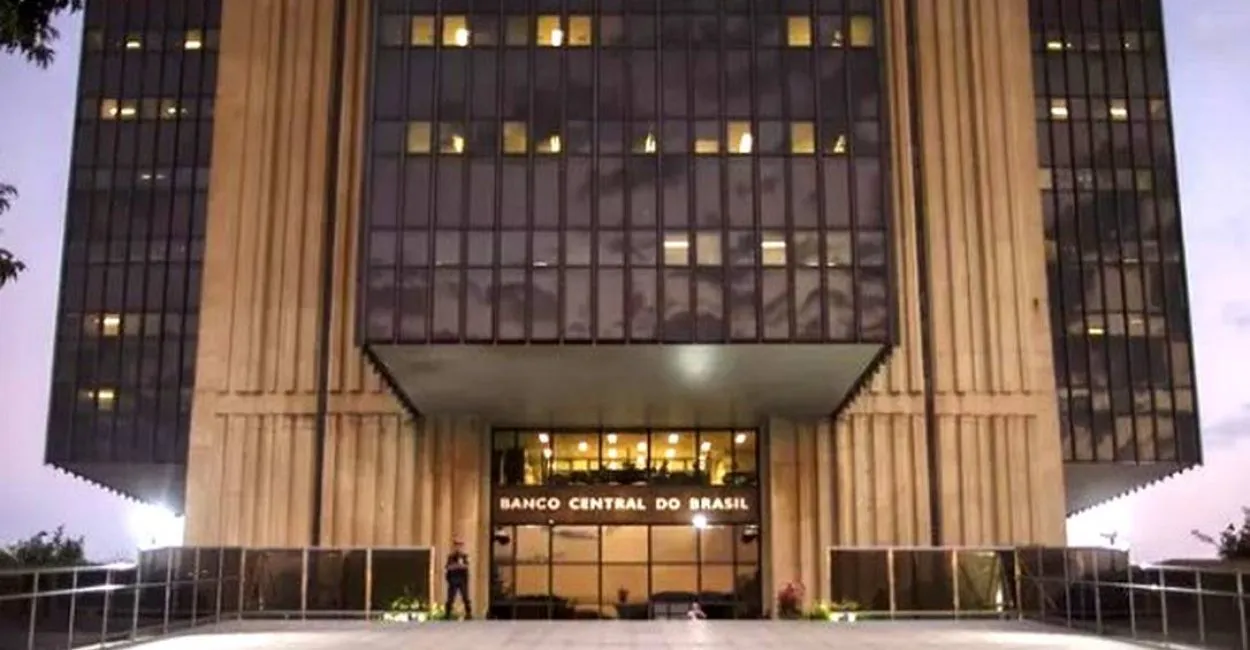
The Central Bank of Brazil kept the Selic rate at 12.75% a year on Wednesday at the final 2025 meeting of its Monetary Policy Committee (Copom), in Brasília. The decision was announced after a two-day meeting at the central bank’s headquarters, with the statement and macroeconomic forecasts released immediately.
Copom justified holding the rate by pointing to a combination of slowing inflation and signs of weakening economic activity, reducing the need for further tightening. The minutes noted that the inflation forecast for 2026 fell by 0.8 percentage point, potentially creating room for gradual easing next year.

Selic Stays at 12.75%; Decision Passes by a 6–1 Vote
The committee voted 6–1 to keep the benchmark rate at 12.75% a year. The dissenting member called for a 25-basis-point hike, citing the risk of inflationary pressure from the services sector.
The decision reflects an assessment that the monetary tightening cycle, which began in 2021, has reached levels consistent with controlling inflation.
The technical rationale cited slower recent IPCA readings. The IPCA is Brazil’s broad consumer price index. The committee also pointed to market expectations moving closer to the target, administered-price trends, and a slowdown in core inflation.
These factors helped build majority support for keeping the rate unchanged at the year’s final meeting.
2026 IPCA Forecast Falls 0.8 Point; 3% Target Remains Challenging
The Focus Survey, a weekly survey of market expectations published by Brazil’s Central Bank, shows that the median inflation forecast for 2026 fell by 0.8 percentage point since the previous meeting. The new forecast puts next year’s inflation closer to the midpoint of the target, though it remains above the official goal in some scenarios.
Copom said that expectations moving closer to the target are a positive sign for keeping inflation expectations anchored.
Compared with the consensus three months ago, expectations for 2026 fell by 1.2 percentage points, reflecting the combined effects of a stronger real and slower demand. Market analysts viewed the revision as a reason to expect gradual rate cuts to begin in 2026, provided economic activity data do not come in unexpectedly strong.
The Central Bank, however, maintained a cautious tone and said future changes would depend on sustained evidence that inflation is falling.
Dollar Falls 2.1% in the Month; Stronger Real Eases Imported Price Pressures

Since Copom’s last meeting, the U.S. dollar has fallen 2.1% against the Brazilian real, according to interbank market data. The stronger real helped ease price pressures on imported goods, shaping the committee’s assessment of exchange-rate pass-through risk.
The statement specifically cited the dampening effect of the stronger real on prices for industrial and automotive goods.
Experts warn, however, that exchange-rate movements can be volatile and depend on foreign capital flows and global interest-rate conditions. The minutes noted that a more favorable global backdrop, combined with capital inflows, provided temporary relief. For 2026, the Central Bank signaled that it would watch exchange-rate volatility and its potential effect on inflation expectations.
2025 GDP Growth Estimated at 0.9%; Economic Activity Slows in Third Quarter
The Central Bank’s macroeconomic forecasts put 2025 gross domestic product (GDP) growth at 0.9%, down 0.4 percentage point from the September estimate. The downgrade reflects third-quarter data showing slower consumer spending and investment. The Central Bank said economic activity is heading toward a more moderate pace as the year ends.
Copom attributed the slowdown to temporary factors and the gradual withdrawal of monetary stimulus over the course of the year. Weakness in durable goods and slower credit growth were cited as key factors. In a report, the Central Bank said a recovery in 2026 would depend on stronger investment and less restrictive credit conditions.
Fiscal Risks Remain High; Markets Seek Adjustments to Prevent Inflation Pass-Through
The Central Bank’s statement identified persistent fiscal risk as a concern for price stability, citing uncertainty about public spending in 2026. The Central Bank warned that deteriorating public finances could push inflation expectations higher, requiring a monetary policy response. The warning adds pressure on the government to present credible fiscal adjustment measures.
Analysts estimate that a fiscal deterioration equivalent to 1% of GDP could raise inflation risk by 0.3 to 0.5 percentage point over a two-year horizon. The financial sector began pricing in a higher risk premium on government bonds after recent budget debates. The Central Bank said it would continue monitoring how fiscal headwinds affect interest-rate curves and market expectations.
Core Inflation Rises 0.4% Over the Quarter; Services Remain a Source of Pressure
Core inflation rose 0.4% over the past three months, driven by services, according to indicators cited by Copom. The Central Bank noted that services inflation, although slowing, remains high enough to warrant attention. The committee said room for rate cuts would depend on a sustained downward trend in this component.
Compared with the same period in 2024, core inflation has slowed by 0.6 percentage point, helping explain why the rate was left unchanged. The Central Bank stressed, however, that wage increases and a narrow output gap could reverse the improvement. The meeting’s final statement left the door open to gradual rate cuts, conditional on how core inflation and the labor market evolve.
Outlook: 2026 Rate Cuts Depend on Data; Next Meeting Scheduled for February
The Central Bank kept its language conditional on possible rate cuts, saying reductions in the Selic would depend on consistent inflation and economic activity data. It scheduled Copom’s first 2026 meeting for February, when it will release a new set of forecasts. The tone suggests that any easing will be gradual and guided by the data.
Markets now expect rate cuts to begin in the second quarter of 2026, with a cumulative reduction of 150 basis points over the year if the data remain favorable. The Central Bank warned that any sign of renewed inflationary pressure would put that path in jeopardy. For now, investors and businesses are adjusting their expectations to a new normal of higher interest rates and fiscal volatility.
Methodology and sources: This report is based on Copom’s statement and meeting minutes, the Central Bank’s macroeconomic reports, and foreign exchange and inflation data released this week. The forecasts cited reflect market medians and figures published by the Central Bank at the end of the meeting.
Artigos Relacionados
 Central Bank Holds Selic at 12.75% at Its Final 2025 Meeting as Inflation Forecast Falls 0.8 Percentage Point
 Complete Feijoada: A Practical Guide
 Guided Self-Assessment in Formative Evaluation Practice
 Quick and Easy Lesson Planning Tips for Beginners
 Turn Your Coffee Shop Into a Profitable, Popular Coffee School
