
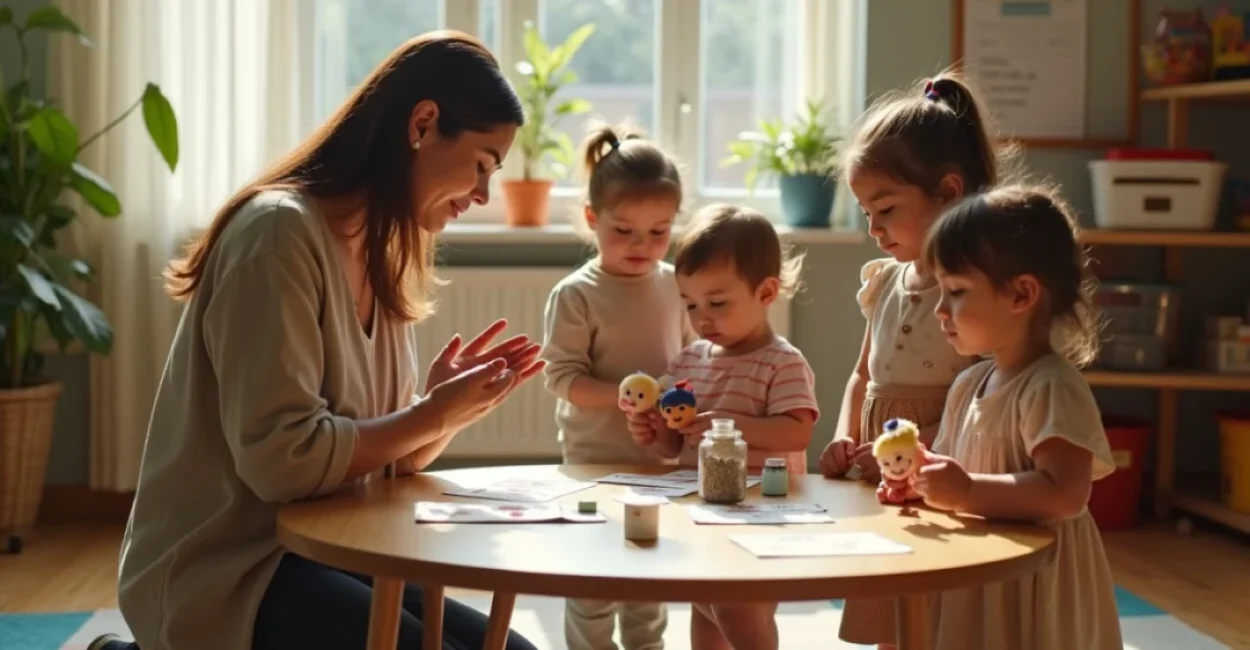
This refers to the set of skills that enable children to recognize emotions, regulate their behavior, build positive relationships, and make responsible decisions. In early childhood education, it brings social and emotional learning into the school routine through consistent practices that foster empathy, self-regulation, and a sense of belonging.
This development matters because social-emotional skills support academic performance, mental health, and democratic participation. Schools that make these skills a systematic part of education reduce conflict, improve engagement, and promote equity.

Public policies and research, including research from CASEL and the OECD, show measurable impact when programs are implemented effectively.
Key Takeaways
- A school-based social-emotional development program reduces behavior problems and improves academic performance when teachers receive training and the curriculum is consistent.
- Core skills include emotional awareness, self-regulation, empathy, assertive communication, and conflict resolution. Each skill requires specific classroom strategies.
- Assessment should include structured observation, validated scales, and qualitative records. The data can inform adjustments and school policies.
- Integration with the academic curriculum and family involvement improve effectiveness; occasional activities in isolation have limited impact.
Why Social-Emotional Development Shapes School Success in Early Childhood
Social-emotional development shapes a child’s ability to learn in a group, follow instructions, and persevere through challenges. In the classroom, these skills directly affect attention, motivation, and interactions with teachers and peers.
The Connection Between Social-Emotional Skills and Learning
Longitudinal studies show a correlation between self-regulation in preschool and higher grades in elementary school. Self-regulation improves focus and reduces distraction, supporting stronger outcomes in reading and math.
Investing in social-emotional development is therefore an investment in academic skills.
Contexts That Support or Hinder This Development
Children in high-stress family environments may struggle with self-regulation. By contrast, consistent routines, responsive adults, and opportunities for play with rules can lead to rapid progress.
School policies that provide teachers with training and support can mitigate the negative effects of a child’s circumstances.
Core Competencies: Which Skills to Prioritize and Why
Prioritizing competencies means choosing skills that can be applied across settings and measured. In early childhood education, I recommend focusing on five areas: emotional awareness, self-regulation, empathy, social skills, and perspective-taking.
Emotional Awareness and Self-Regulation
Emotional awareness involves naming feelings and recognizing triggers. Self-regulation includes physical and cognitive strategies for calming intense emotions. Teaching breathing techniques, taking breaks, and using language to describe emotions gives children practical tools.
Empathy, Communication, and Conflict Resolution
Empathy develops through stories, role-play, and guided discussions. Assertive communication and conflict resolution should be taught with scripts and gradual practice. Concrete tools help children apply these skills in real-life situations.
Classroom Practices That Work: Proven Methods and Routines

Effective practices combine direct instruction, structured routines, and opportunities for social practice. Evidence-based methods include community circles, explicit social-emotional instruction, and cooperative games.
Community Circles and Brief Lessons
Community circles foster belonging and provide practice in listening. Sessions as short as 10–15 minutes can lead to gains when held regularly. Guided questions and assigned roles help every child participate.
Guided Play and Scripted Routines
Guided play with social-emotional goals lets children practice through play. Scripts for asking for help, waiting for a turn, and handling frustration make expected behaviors clear. Teachers model and reinforce these skills consistently.
Practical Assessment: How to Measure Progress Without Losing Sight of Childhood
Social-emotional assessment requires tools that combine systematic observation with reports from adults. Use validated scales, incident logs, and behavioral portfolios to track change over time.
Read also: Social-Emotional Development from Birth to Age 6: A Practical Guide
Recommended Tools and Assessment Frequency
Use a standardized scale (such as the SDQ or adapted subscales) along with observations every two weeks and monthly records. School data on attendance and incidents can round out the assessment. Avoid labeling children; focus on developmental goals.
How to Interpret and Use the Data
Use data to adjust practices, identify classes that need support, and plan teacher training. Share results with families in clear language. When measures show no progress, investigate contextual factors before changing the program.
Curriculum Integration: Connecting Social-Emotional Skills to Academic Content
Integration means designing activities in which social-emotional skills are both a learning goal and a way to learn. This keeps social-emotional development from feeling like a separate activity and makes the most of classroom time.
Practical Examples by Subject
In language arts, use stories to explore emotional identification and perspective-taking. In math, focus on collaborative problem-solving to practice negotiation and perseverance. Every subject can offer real-life scenarios for practicing these skills.
Planning and Sequencing
Map desired competencies for each grading period and align them with academic goals. Use brief lesson plans with clear social-emotional goals. This makes assessment and communication with staff and families easier.
Teacher Training and Family Engagement: Foundations for Sustainability
Programs fail without ongoing teacher training. Teachers need practical tools, coaching, and time to reflect. Family involvement helps turn school learning into everyday practice.
Content and Format for Effective Training
Training should include a brief overview of the theory, classroom demonstrations, practice with feedback, and on-the-job coaching. Training programs that run for 3–6 months and include observation and feedback increase adoption and implementation fidelity.
Strategies for Engaging Families
Personal invitations, brief workshops, and practical materials in accessible language encourage participation. Connecting school practices to specific situations at home helps families keep them going. Don’t just send home flyers; make time for conversation and support.
| Component | Practical example | Success indicator |
|---|---|---|
| Emotional awareness | Daily feelings circle | 80% of children can name emotions |
| Self-regulation | Calm-down corner with instructions | 40% reduction in aggressive incidents |
| Empathy | Guided reading and role-play | More helping behavior among peers observed during activities |
For reference materials and evidence, see CASEL resources (casel.org) and OECD studies on social-emotional skills (oecd.org/education). Data from IBGE, Brazil’s national statistics agency, on family conditions can also help inform interventions (ibge.gov.br).
Next Steps for Implementation
Start with an initial needs assessment, teacher training, and a 3–6-month pilot. Set clear goals and simple indicators. Begin with daily routines and integrate activities into the curriculum to keep them relevant.
Schedule quarterly reviews with staff and families. Adjust practices based on data and observations. Sustainability depends on institutional commitment, not just individual enthusiasm.
How Can You Launch a Low-Cost Pilot?
An effective pilot can start with two daily practices: a 10-minute circle and a calm-down corner. Train teachers in an introductory session and provide coaching every two weeks. Use simple logs to track attendance and incidents. This provides enough data to expand the program if results are positive.
What Implementation Mistakes Should You Avoid?
A common mistake is treating social-emotional learning as a standalone activity. Another is providing training without hands-on follow-up. Also avoid relying on questionnaires alone; supplement them with observation. These missteps reduce impact and frustrate staff.
Frequently Asked Questions
How Is Social-Emotional Learning Different from Behavior Management?
Social-emotional learning focuses on developing internal skills such as awareness and self-regulation, while behavior management focuses on correcting behavior. The former uses direct instruction, practice, and reflection; the latter uses rules and consequences. In the classroom, combine both: set clear limits while also teaching children the skills they need to manage emotions and resolve conflicts. This approach reduces punishment and supports lasting learning over time.
Which Simple Indicators Should You Track at the Start of a Program?
Start with attendance, the number of disciplinary incidents, participation in group activities, and children’s ability to name emotions during a circle. These indicators are easy to collect and show trends. Record them weekly and review them monthly. Use the data to adjust routines and priorities. Avoid complex inventories at the outset; choose measures staff can maintain without an administrative burden.
How Long Does It Take to See Measurable Results?
Visible improvements in behavior and classroom climate may appear within 3 to 6 months when the program is consistent. Academic changes and achievement gains take longer, generally 12 to 24 months, because they depend on ongoing practice and external factors. The key is to maintain fidelity: daily practices, training, and data reviews. Frequent interruptions undermine gains and lead to limited results.
How Can You Engage Families Who Are Hesitant or Short on Time?
Offer flexible options: brief workshops, five-minute videos, and practical tips by text message. Value families’ knowledge and invite them to take part in hands-on activities during open-house events. Turn concepts into simple things families can do at home, such as games for naming emotions. Share local data showing the program’s impact; evidence of improved behavior can encourage participation. Respect families’ limitations and focus on building the partnership gradually.
Which Digital Resources Are Appropriate for Early Childhood Education?
Resources should be brief, interactive, and designed for use with an adult facilitator. Story videos, guided breathing apps, and printable materials work well. Use technology to support, not replace, human interaction. Check resources for educational quality and data privacy. Build digital tools into the lesson plan: after a digital story, lead an in-person activity that gives children a chance to practice together.
Artigos Relacionados
 Extracurricular Activities for Social-Emotional Development at School
 Social-Emotional Learning in Schools: Transforming Learning and Whole-Child Development
 Social-Emotional Skills: Effective Practices in Whole-Child Education Today
 Sustainable Agriculture: A Path to Sustainable Social Development
 Practical Resources for Building Student Autonomy Into the School Day
 Household Chores That Build School Independence Early
