
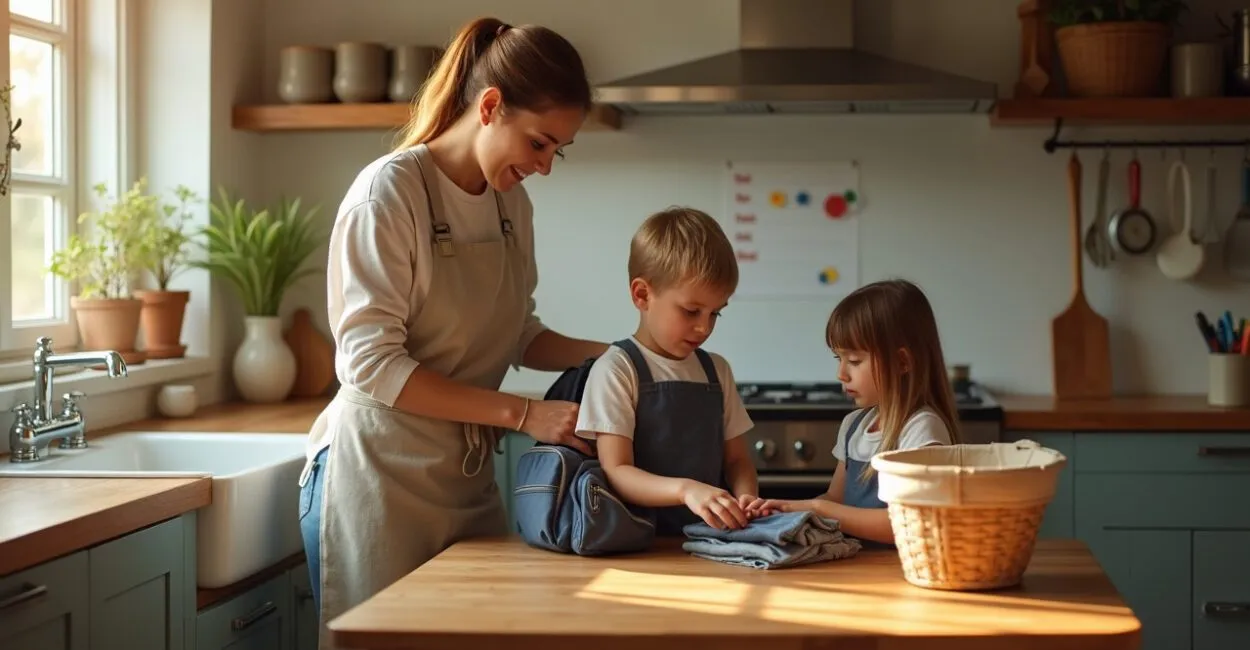
These are regular activities performed at home to maintain cleanliness, order, meals, and the smooth running of the household. They include tasks such as making the bed, washing dishes, sweeping, cooking, doing laundry, and organizing school supplies. Essentially, they are practical routines that support daily life and develop behavioral skills.
Key Takeaways
- Assigning household chores at an appropriate frequency builds independence and improves school routines by teaching planning, follow-through, and responsibility.
- Age, complexity, and frequency should guide which chores children take on: simple tasks from ages 2–3, independent routine tasks from ages 7–10, and greater responsibilities during adolescence.
- Tracking progress with visible routines, weekly check-ins, and specific feedback helps children apply these skills to academic performance.
Why Household Chores Build Skills for School
Household chores exercise executive functions: planning, working memory, organization, and inhibitory control. These functions are key to paying attention in class, meeting deadlines, and studying independently.

Developmental neuroscience research points to a correlation between regular household routines and improved attention and self-regulation in children and adolescents.
Executive Functions and Routines
By following the steps of a task—for example, sorting, washing, and putting away clothes—a child practices sequencing and prioritization. These skills carry over to organizing a backpack, managing study time, and reviewing schoolwork.
Repetition turns conscious processes into habits, reducing cognitive load in academic settings.
Taking on Responsibility
When household responsibilities are introduced gradually and measured, children learn to estimate the time and effort required. This helps them make realistic estimates for school projects. Without this practical training, students often underestimate deadlines and rely on outside supervision.
Which Chores to Introduce at Each Age
Choosing age-appropriate chores respects a child’s motor and cognitive development. Well-matched responsibilities prevent frustration and encourage repeated success, which is essential for building self-esteem and academic confidence.
Ages 2–5: Simple, Hands-On Tasks
Young children can put away toys, take dirty clothes to the hamper, and help set out napkins. These tasks develop coordination and a basic sense of responsibility. Use short instructions and visual demonstrations.
Ages 6–10: Independent Routines
At ages 6–10, introduce making the bed, washing a few dishes, organizing school supplies, and folding simple items of clothing. Greater independence at this age improves daily organization and self-control, with a direct impact on turning in schoolwork.
Ages 11–17: More Complex Responsibilities
Teens should take on preparing simple meals, managing their laundry, cleaning shared spaces, and planning grocery shopping. These tasks teach long-term planning, budgeting, and division of labor—skills that are useful in school and adult life.

Recommended Frequency and Levels of Complexity

Balancing frequency and complexity prevents overload and maximizes learning. Use three levels: daily (habits), weekly (larger tasks), and monthly (projects). Clear schedules make it easier to track progress and encourage accountability without micromanaging.
Daily Tasks
Short activities that take 5–20 minutes: making the bed, putting away supplies, and washing a few dishes. They are essential for building discipline. Daily repetition makes habits stick.
Weekly and Monthly Tasks
Deep cleaning, vacuuming, doing laundry, and organizing closets. These tasks require planning and breaking the work into steps. Weekly routines develop time-management skills; monthly ones build the ability to plan ahead.
How to Delegate: A Practical Method and Examples
Delegating is about more than assigning chores; it’s a way to teach. Use clear instructions, demonstrations, visual checklists, and measurable goals. The aim is to gradually reduce supervision while monitoring quality and consistency.
Steps for Delegating
1) Describe the goal of the task; 2) Demonstrate how to do it; 3) Create a step-by-step checklist; 4) Set a schedule and deadline; 5) Review the work and give feedback. This cycle turns a chore into a skill.
Practical Example
Example: “Organize your backpack”—step 1: check the planner; step 2: sort supplies by subject; step 3: check for pencils and notebooks; step 4: put everything in an easy-to-reach place. Time the task for 5–10 minutes and assess how efficiently it was done.
Tracking Progress and Making Adjustments
Tracking progress creates concrete accountability. Use simple systems: visual charts, checklist apps, or spreadsheets. Combine frequency measures (how often the task was completed) with quality measures (an objective assessment). The data can guide adjustments to difficulty and rewards.
Useful Metrics
Track the weekly completion rate, average time per task, and number of errors. For students, include the effect on school performance: on-time submissions, project grades, and class participation.
Adjusting Based on the Data
If the completion rate drops, simplify the task or increase support for 2–4 weeks. If quality improves, add responsibility or introduce a new task. Regular adjustments prevent progress from stalling.
Common Mistakes and How to Avoid Them
Delegating poorly is more common than most people admit. The main pitfalls are unrealistic expectations, insufficient instruction, punishment instead of feedback, and inconsistent rewards. Addressing these issues preserves motivation and supports learning.
Punishment vs. Feedback
Punishment encourages avoidance; constructive feedback helps children improve. Be specific: explain what was done, what was missed, and how to do better. Praise effort and accuracy to reinforce the behavior.
Setting Appropriate Expectations
Set an acceptable standard for each age. Taking a photo of a completed example can reduce ambiguity. Adjust deadlines to fit the school schedule and the family’s available time.
Evidence of Impact and Practical References
Studies link regular household routines with better academic performance and self-regulated behavior. Data from IBGE, Brazil’s national statistics agency, and education research point to a relationship between household responsibility and study habits. Practical programs in schools and homes have shown measurable gains in organization and average scores on internal assessments.
Studies and Sources
Child development reports from UNICEF and reviews of executive function in neuropsychology journals support the effects attributed to household chores. Use these sources to inform family and school policies.
Putting It into Practice at School
School programs that combine organizational lessons with practical tasks have shown fewer absences and improved assignment submission rates. Build partnerships between families and schools to reinforce these skills consistently.
Next Steps for Implementation
Turn recommendations into a routine: choose three chores per child, document the steps, and track progress for four weeks. Review simple metrics and adjust the difficulty. Have family and school use the same language around responsibilities to reinforce learning in both settings.
Take action now: make a visual chart of daily and weekly chores, set a time limit for each task, and schedule a 10–15-minute weekly review. This short cycle allows for quick adjustments and builds independence without conflict.
What Should You Avoid When Getting Started?
Avoid overwhelming children with too many new chores at once. Introduce one at a time and look for small wins. Don’t replace conversation with messages; explain things face-to-face and demonstrate the tasks.
What Is the Recommended Minimum Age for Starting Household Responsibilities, and Why?
Children ages 2–3 can already take part in simple tasks such as putting away toys and taking clothes to the hamper. These activities encourage a sense of participation and develop motor coordination. Starting early helps children connect actions with outcomes, which is essential for building habits. Keep the workload minimal, use visual instructions, and supervise. Introduce more complex tasks as cognitive abilities develop. Expecting too much too soon can cause anxiety and resistance, making the practice less effective.
How Can You Tell Whether Chores Are Improving School Independence?
A practical assessment uses three indicators: household chore completion rate, quality of task execution (tracked with a checklist), and school impact (assignment deadlines and grades). Record completion and time spent each week. Compare these with school measures, such as the number of on-time assignments and assessment performance. Look for correlations over 4–8-week periods. If home organization improves but school performance does not, review how the skills transfer: the child may need explicit help applying the same steps to schoolwork.
What Simple Tools Can Help You Assign and Track Chores?
Visual charts, printed checklists, timers, and chore apps are all you need. A chart with step-by-step photos reduces confusion. Apps such as Habitica or Google Keep can track tasks and send reminders, but they don’t replace a person’s review. Timers teach time management. For young children, stickers on a calendar offer visible reinforcement. Choose tools that fit your family’s routine and require little upkeep so the system is less likely to be abandoned.
How Can You Balance Household Chores and Schoolwork Without Overloading a Child?
Set a daily time limit for chores (10–30 minutes, depending on age) and prioritize schoolwork during exam periods. In weeks with heavier school demands, scale back chores to basic upkeep and gradually resume the usual routine afterward. Try this rule of thumb: for every extra hour of study, cut 10–15 minutes of light chores. Clear communication about priorities prevents conflict and keeps expectations realistic. Adjust the plan in cycles and watch for signs of stress.
Which Rewards and Consequences Work Best for Building Household Habits?
Consistent positive reinforcement works better than punishment. Immediate, concrete rewards, such as extra time for a favorite activity or taking on more responsibility, reinforce behavior. Specific praise for effort and accuracy is more effective than vacant grades. Consequences should be educational and proportionate, such as repeating the task with guidance. Never withhold basic necessities like meals. The key is predictability: clear rules and consistently applied consequences help children internalize the behavior.
Artigos Relacionados
 Morning Habits: 7 Routines That Build School Independence
 School Entrepreneurship Builds Independence and Creativity
 School Autonomy: How to Build Independent School Routines
 Play at School: Bringing Free Play Into the Early Childhood Curriculum
 Phonics Teaching Methods That Build Fluent Decoding Skills
 Preschool Activities That Build Social Skills Every Day
