
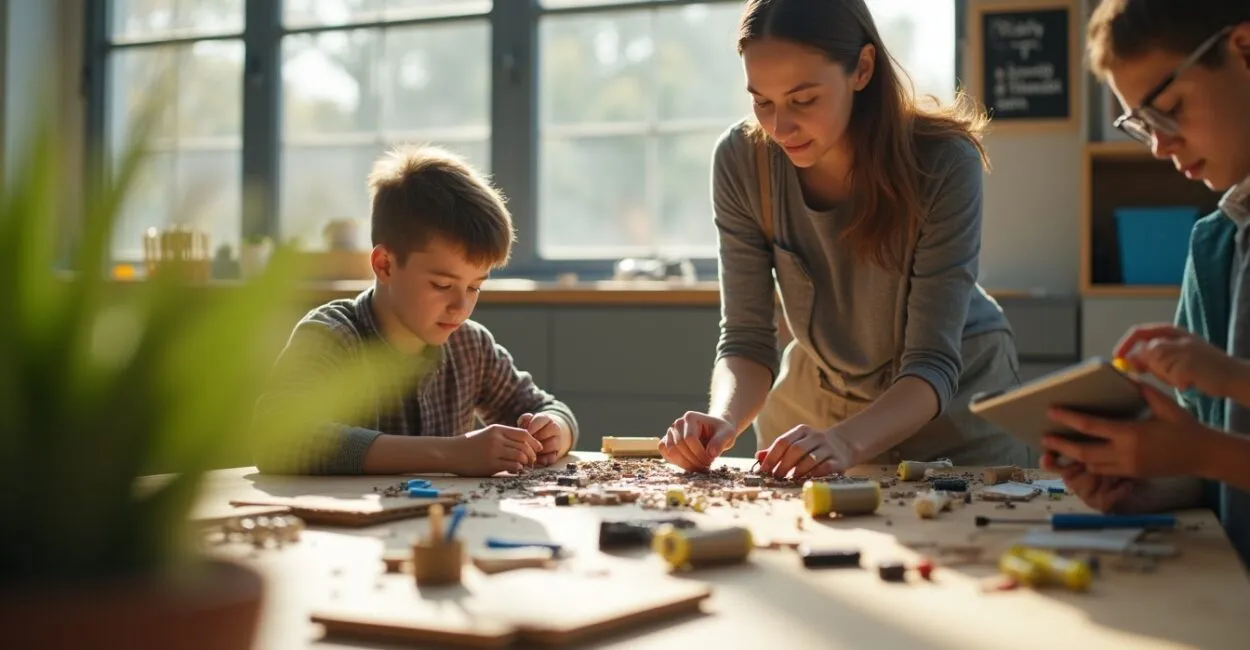
School entrepreneurship is an educational approach that develops independence, critical thinking, and creativity in students from early childhood through high school. It matters because it prepares students to solve real-world problems, work in teams, and create projects with social and economic impact. To get started, schools can integrate hands-on activities into the curriculum, host idea fairs, and involve families and the community.
Many schools face the challenge of turning theory into practice: limited resources, curriculum alignment, and teacher training are common barriers. School entrepreneurship offers concrete opportunities for active learning, interdisciplinary work, and the development of social-emotional skills. This article explores how to launch initiatives, project examples for different age groups, assessment strategies, community involvement, and low-cost tools for fostering an entrepreneurial culture at school.

School Entrepreneurship and Skill Development
Building Independence and Initiative
Promoting independence means creating environments where students make decisions and take responsibility. School entrepreneurship projects give students opportunities to plan, carry out, and assess their work, strengthening initiative, self-management, and critical thinking. Activities such as mini-businesses and idea labs encourage calculated risk-taking and learning by doing, both essential to student leadership.
When students work toward clear goals, they learn to prioritize tasks, organize schedules, and delegate responsibilities within teams. This practice connects social-emotional competencies with technical skills, preparing young people for professional and community settings. Teachers serve as facilitators, offering constructive feedback and giving students room to iterate on their projects. The teacher’s role shifts from delivering information to guiding learning, strengthening a culture of responsibility and student independence.
Applying Critical Thinking
Critical thinking in school entrepreneurship means analyzing problems, comparing solutions, and testing hypotheses using data and observations. Project-based inquiry develops evaluation criteria, logical reasoning, and the ability to make evidence-based arguments—all essential to preparing reflective citizens and agents of change. Approaches such as design thinking and project-based learning help students identify real needs, prototype solutions, and test hypotheses. This broadens their understanding of markets, sustainability, and social impact.
Combining research, interviews, and simple metrics turns ideas into informed decisions, contributing to more consistent results and lasting learning at school.
Encouraging Creativity and Innovation
Creating safe spaces for experimentation is central to school entrepreneurship. Activities that encourage rapid prototyping, structured brainstorming, and experimentation foster creativity. These practices support originality, adaptability, and innovative solutions to local problems.
Using recycled materials, digital tools, and co-creation with the community expands opportunities for low-cost innovation. Treating failure as part of the process builds resilience and a habit of continuous learning.
By valuing diverse, interdisciplinary ideas, schools turn creativity into a practical skill that students can apply to community projects, science fairs, and student-led business ventures.
Hands-On School Entrepreneurship Projects
Early Activities for Building Entrepreneurial Habits
Simple activities introduce school entrepreneurship concepts in the early grades. Simulation games, swap tables, and small fairs teach the basics of supply, demand, and collaboration. These hands-on experiences encourage independence and decision-making in a playful setting.
- Swap fair and recycled toys
- Small healthy-food stand
- Idea journal and weekly challenges
- Workshops on prototyping with everyday materials
These activities foster creativity, problem-solving, and students’ confidence in proposing solutions, building entrepreneurial habits from an early age.
Interdisciplinary Projects and Fairs
Interdisciplinary projects connect math, science, language arts, and visual arts, showing how school entrepreneurship brings different subjects together. Entrepreneurship and innovation fairs showcase prototypes, business plans, and applied research, connecting schools with families and the community.
By setting assessment criteria and goals, projects promote evidence-based learning and skills such as communication, leadership, and resource management.
Documenting processes and outcomes makes it possible to reflect, make ongoing improvements, and track social and academic impact.
Assessing Entrepreneurial Skills
Assessing school entrepreneurship goes beyond grades. It involves rubrics that consider creativity, collaboration, problem-solving, and responsibility. Tools such as portfolios, self-assessments, and peer assessments capture the development of social-emotional and technical skills.
Detailed rubrics help teachers measure progress and offer constructive feedback, aligning expectations with learning goals.
Combining qualitative and quantitative evidence—reports, prototypes, and impact metrics—makes it possible to assess students’ entrepreneurial growth holistically and continuously.
| Project type | Age group | Skills developed |
|---|---|---|
| Mini-business | Middle school | Management, basic finance, communication |
| Idea fair | High school | Research, prototyping, presentation |

Curriculum Integration and Teaching Methods

Design Thinking and Project-Based Learning
Design thinking provides a structured approach to problems in school entrepreneurship, moving through five stages: empathy, definition, ideation, prototyping, and testing. This approach encourages creativity, field research, and validation with users, bringing theory and practice together in the curriculum.
Project-based learning brings subject matter together around a real-world question, promoting interdisciplinary work and authentic assessment. Students experience the full cycle of an educational venture, from idea to impact measurement.
This integration builds skills such as complex problem-solving, communication, and critical thinking, all aligned with the demands of the 21st century.
Lesson Plans and Learning Sequences
Lesson plans that incorporate school entrepreneurship should map out objectives, hands-on activities, resources, and assessment criteria. Learning sequences connect academic skills to real-world tasks, ensuring instructional coherence and a clear progression of learning.
Setting schedules, interim goals, and deliverables makes project management and teacher oversight easier. Support materials, guides, and checklists give teachers more independence.
Documenting practices makes them easier to replicate and scale across a school district, encouraging ongoing professional development and the sharing of experiences among educators.
Formative Assessment and Feedback
Formative assessment in school entrepreneurship prioritizes ongoing feedback, rubrics, and time for reflection. Self-assessment tools and peer review encourage metacognitive learning and ownership of the process.
Regular check-ins, sprint reviews, and checkpoints make it easier to adjust projects and improve them continuously. This makes assessment part of the learning process rather than an endpoint.
Constructive feedback guides improvement, builds resilience, and helps turn mistakes into opportunities for learning and innovation.
Low-Cost Resources and Tools
Reusable Materials and Maker Solutions
Maker activities using recycled materials can expand school entrepreneurship without requiring a large investment. Scrap materials, cardboard, basic electronic components, and affordable educational kits make rapid prototyping possible and offer hands-on lessons in design and sustainability.
This approach encourages creativity and environmental awareness, showing that innovation can start with simple resources. Maker workshops promote collaboration and ongoing experimentation.
Partnerships with local universities and businesses can expand the supply of tools and materials, strengthening a do-it-yourself culture at school.
Free Digital Platforms and Apps
Free online tools support planning, communication, and prototyping, including presentation software, survey forms, collaborative spreadsheets, and visual prototyping platforms. These technologies make it easier to manage projects and document the process.
Simple design apps and free image libraries help students create pitches and promotional materials, introducing them to real-world business practices.
Incorporating digital tools into everyday school life develops essential digital skills and extends the reach of student ventures.
Read also: Entrepreneurship for kids: activities for early childhood education
Local Partnerships and Creative Funding
Partnerships with local businesses, community organizations, and universities can provide resources and mentoring for school entrepreneurship initiatives. Microgrants, grant programs, and crowdfunding campaigns can help fund prototypes and small-scale production.
Involving the community increases social impact and builds support networks for students, families, and teachers. These connections also create opportunities for learning grounded in real-world contexts.
Leia também: Continuing Professional Development: Options for Teachers
Documenting and sharing results increases the chances of securing additional support, helping build a culture of collaboration and financial sustainability at school.
| Tool | Practical use |
|---|---|
| Collaborative spreadsheet | Cost and schedule management |
| Presentation software | Pitch and promotion |
Projects by Age Group: Examples
Elementary School: Hands-On Introduction
In elementary school, the focus of school entrepreneurship is sparking curiosity and building collaborative habits. Simple projects such as school gardens, swap tables, and small art fairs introduce ideas like process, value, and cooperation without requiring complex financial planning.
Playful activities with clear goals and simple records help children understand work sequences and responsibility. Teachers guide discussions about impact and lessons learned.
These early experiences build self-esteem and a sense of belonging, laying the groundwork for future skills in more structured projects.
Middle School: Prototyping and Markets
For middle school students, projects become more complex, incorporating prototyping, user research, and basic financial concepts. School entrepreneurship can include creating sustainable products, community services, and supervised microbusinesses.
Hands-on activities develop critical thinking, feasibility analysis, and persuasive communication. Digital tools and agile methods make iteration and testing with real audiences easier.
This stage prepares students to make decisions and work in teams, connecting classroom learning with real local needs.
High School: Incubation and Impact
In high school, school entrepreneurship can progress to incubation, with business plans, impact metrics, and external partnerships. Projects focused on social innovation, technology, and sustainability allow students to apply their academic skills in depth.
Mentoring from professionals, participation in grant programs, and regional fairs expand opportunities for growth and hands-on learning. Students develop the independence to manage risks and take responsibility for tangible results.
These experiences improve career readiness, sense of purpose, and the ability to move between education and the workplace, strengthening students’ future pathways.
Family and Community Involvement
Strategies for Engaging Families
Engaging families in school entrepreneurship strengthens support at home and helps families understand the educational goals. Open workshops, project presentations, and regular communication channels show the value of the work and invite families to participate actively.
Give parents clear roles in projects, such as mentoring, donating materials, or serving on assessment committees. This builds a sense of belonging and continuity between school and home.
Simple reports on learning and impact help demonstrate the value of the practice and build support for future initiatives.
Partnerships with Businesses and Nonprofits
Partnerships expand resources, expertise, and opportunities for students. Businesses can provide mentoring, internships, and materials, while nonprofits can contribute methods and support networks. These connections strengthen the school entrepreneurship ecosystem.
Set clear agreements, shared goals, and joint assessments to ensure mutual benefits and meaningful impact for students.
Collaborative projects with businesses also raise visibility and create opportunities to continue successful initiatives.
Community Events and Local Fairs
Fairs and events open to the community showcase school entrepreneurship, allowing students to get real feedback and public recognition. These events strengthen relationships, attract support, and create opportunities to sell products or raise funds for projects.
Planning, promotion, and logistics give students real management and communication tasks, deepening hands-on learning and their sense of responsibility.
Successful events can become school traditions, encouraging new groups of students to take part and improve entrepreneurial initiatives.
Assessment and Impact Measurement
Learning and Impact Indicators
Assessing school entrepreneurship requires indicators that combine academic learning, social-emotional skills, and social impact. Metrics such as participation, user satisfaction, revenue reinvested, and demonstrated skills provide a broad picture of success.
Use rubrics, portfolios, and impact reports to document progress and tangible results. This data can guide instructional decisions and project adjustments.
Measuring impact makes it easier to communicate with stakeholders and increases the chances of securing funding and institutional recognition.
Practical Assessment Tools
Tools such as skills rubrics, reflective journals, peer assessments, and interviews with beneficiaries capture different dimensions of school entrepreneurship. Simple, repeatable tools ensure consistent assessment over time.
Schedule retrospectives to identify lessons learned, setbacks, and next steps, turning assessment into a tool for continuous improvement.
Standardized documents make it easier to compare classes and projects, supporting school policies and implementation decisions.
Reports and Sharing Results
Clear, visual reports on projects and outcomes increase transparency and engagement among the community and partners. Charts, testimonials, and summary metrics show impact and help justify investments.
Sharing lessons learned at meetings, on social media, and through educational websites highlights students’ work and strengthens the school’s reputation.
Structured communication helps sustain projects and attract new supporters and funding.
Conclusion
School entrepreneurship builds independence, critical thinking, and creativity by connecting learning with real-world challenges, collaborative practices, and formative assessment. By integrating projects into the curriculum, using active learning methods, and involving families and the community, schools create environments that prepare students to act with responsibility and innovation.
Start with small, low-cost initiatives, document the results, and gradually expand your efforts. Here’s one final suggestion: launch at least one pilot project this year and see how school entrepreneurship transforms learning and relationships at your school.
Frequently Asked Questions
What Is School Entrepreneurship, and Why Adopt It?
School entrepreneurship integrates practices that develop independence, creativity, and critical thinking in school settings. It strengthens social-emotional skills, prepares students for real-world challenges, and brings schools and communities together through applied, collaborative projects.
How Can You Start a School Entrepreneurship Project with Limited Resources?
Start with low-cost activities: maker workshops using recycled materials, idea fairs, school microbusinesses, and free digital tools. Involve families and local partners for support, mentoring, and material donations, then scale up based on results.
Which Teaching Methods Support School Entrepreneurship?
Design thinking, project-based learning, and active learning methods support school entrepreneurship. These approaches encourage research, prototyping, user validation, and reflection, connecting curriculum content to real-world challenges and building practical skills.
How Can You Assess Students’ Entrepreneurial Skills?
Use rubrics, portfolios, self-assessments, and peer assessments, combining qualitative and quantitative indicators. Measure participation, creativity, collaboration, and project impact, using reports and simple metrics to track progress and guide improvements.
How Can You Involve the Community, Businesses, and Universities in Projects?
Formalize partnerships with collaboration agreements that define roles, goals, and mutual benefits. Invite mentors, host public events, and share impact reports to attract support. Partnerships expand resources, expertise, and opportunities for students and schools.
Sources and recommended reading: UNESCO, British Council Brazil.
Artigos Relacionados
 Entrepreneurship Education Transforms Schools and Communities
 How to Create an Entrepreneurship Project at School
 Career Counseling for High School Students: Planning Ahead
 Technical Education in High School: Benefits and Pathways
 Fun Classroom Activities: 8 Quick Ideas for School in 20 Minutes
 How the Digital Economy Strengthens School Projects Today
