
Ever feel like you’re short on time, ideas, or supplies to get a “wow” out of kids during playtime? I know how frustrating it is to see their eyes glaze over in 10 minutes, when you could have an entire afternoon of discovery.
Here are 8 creative play activities that really work, organized by age group, with clear learning goals, adaptations for large groups, and easy-to-find materials. Read through, save the two that best fit your group, and start turning free time into active learning today.

Creative Play Activities to Spark Imagination
Each activity includes a learning goal, an age range, and a version for larger groups. Which one would you like to try first?
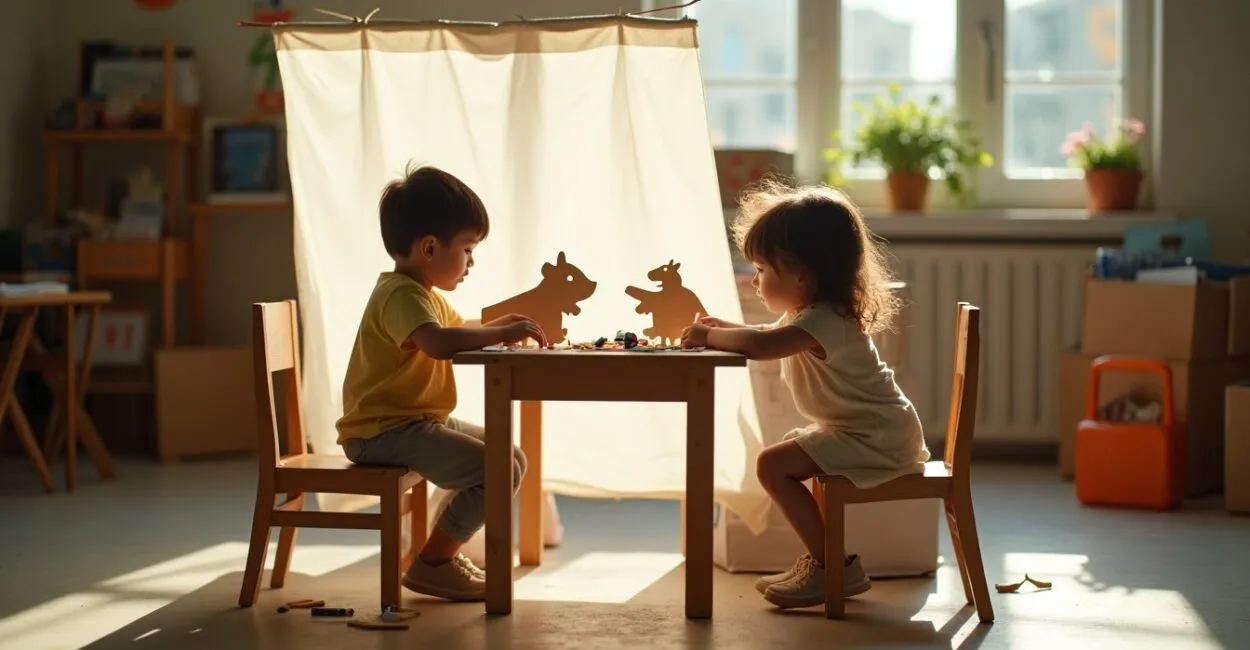
- Activity: Shadow Theater
- Age: 3–7 years
- Materials: flashlight, cardboard, craft sticks
Shadow theater builds language skills and narrative sequencing. For a large group, set up creation and performance stations. Use extra boxes and flashlights to keep groups rotating quickly so everyone gets a turn.
The Story Map
Learning goal: build storytelling and critical-thinking skills by turning ideas into a visual map. Perfect for ages 6–10.
- Easy-to-find materials, such as poster board, stickers, and colored pencils
- For a large group, divide kids into teams of four and assign roles (mapmaker, illustrator, storyteller)
- Expected result: a map with a beginning, a conflict, and a resolution
This activity helps kids organize their ideas and use cause-and-effect vocabulary. Here’s the secret: the map becomes a script for short scenes that build confidence with public speaking.
Leia também: Maker Education: 5 Easy Projects to Start Today
Invention Workshop

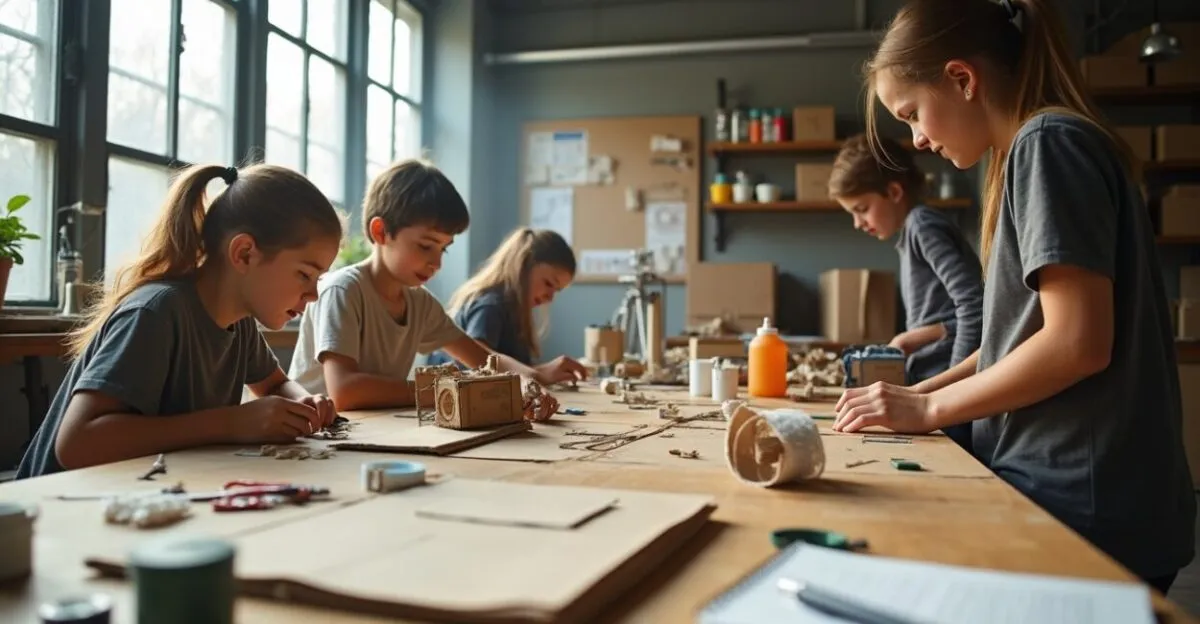
Want kids to solve real-world problems creatively and hands-on? The Invention Workshop is perfect for ages 8–12.
| Element | Individual version | Group version |
|---|---|---|
| Time | 30–40 min | 50–60 min |
| Materials | Recyclables, tape, scissors | Large boxes, extra materials |
| Assessment | Working prototype | Team demonstration |
With the table above, you can quickly put together a workshop using supplies from around the house. But don’t stop there: encourage kids to document their process, which builds metacognitive skills.
Leia também: The Reggio Emilia Approach: The Secret to Creative Classrooms
Sound Scavenger Hunt
Perfect for ages 2–5, this game sharpens listening skills and builds vocabulary. Use bells, containers, and recorded music.
- Create simple sound clues
- Ask kids to imitate sounds before finding the object
- Try it indoors and outdoors
This activity takes just minutes to prepare. Kids learn to identify patterns and build their vocabulary by describing each sound, making it a fun way to practice paying attention.

Class Newspaper
Learning goal: develop writing, express opinions, and work collaboratively. Best for ages 7–12. Create sections, conduct interviews, and add illustrations. To publish, use a school bulletin board or a simple Google Doc—this digital step connects the project to the real world. You can also find ideas for educational journalism projects from the BBC and Brazil’s Ministry of Education, the federal department responsible for education.
Large groups work well with rotating sections, with each child in charge of one part. Small responsibilities lead to big engagement.
Common Mistakes to Avoid
- Assuming expensive materials guarantee success
- Expecting presentations to be perfect
- Spending too much time planning a single activity
Avoiding these mistakes helps kids stay engaged and reduces frustration. They respond better to quick experiments and positive feedback. If something doesn’t work, adjust the rules and try again—that’s part of the learning process.
Investigation Games
Perfect for ages 9–14, these games encourage critical thinking, forming hypotheses, and testing ideas. Create simple mysteries with clues kids can observe.
- Inexpensive materials, such as magnifying glasses, paper, and tape
- For large groups, form teams and assign roles such as detective, witness, and analyst
- End with a presentation of the solution
Investigation games teach kids to interpret evidence and make an argument. Here’s the key: turn mistakes into intentional clues to teach the scientific method in a fun way. Ready to give it a try? Pick two activities, adapt them to the supplies you have, and watch those curious eyes light up again. You don’t have to be perfect—just curious.
Give these activities a try, make adjustments, and share what worked. If you’d like, tell me the age group and I’ll put together a minute-by-minute plan for your class.
Frequently Asked Questions
What’s the Best Creative Play Activity to Start With for Young Children?
For young children, Shadow Theater and the Sound Scavenger Hunt are ideal. They require few materials, hold kids’ attention for short periods, and build language and listening skills. Use a sheet, a flashlight, and simple cutouts. Start with 10–15-minute sessions and extend them as interest grows, asking questions that encourage kids to describe what they see and use their imagination.
How Can You Adapt Creative Play Activities for Large Groups?
Divide the class into stations or teams with assigned roles to keep everyone organized and involved. Have duplicate supplies ready and use a timer to manage rotations. For activities like the Invention Workshop or Class Newspaper, assign clear roles and 20–30-minute goals. Wrap up with group feedback that encourages responsibility and collaboration.
What Affordable Materials Work Best for Creative Play?
Recyclables, poster board, masking tape, safety scissors, and everyday household objects are all you need. Try containers, lids, paper towel tubes, and flashlights. The goal is to encourage reuse and creativity, not spend a lot. With just a few supplies, kids can come up with clever solutions and practice critical thinking while learning about sustainability through hands-on activities.
How Can You Measure the Learning Benefits of These Activities?
Look for progress in vocabulary, storytelling, and problem-solving. Track growth with before-and-after photos, short recordings, or written portfolios. Ask kids about their process and have them explain their choices to reveal their reasoning. Qualitative feedback is an effective way to assess short-term growth in language and critical thinking.
Can You Use Technology Without Losing the Essence of Creative Play?
Yes. Use technology to document and present the work—for example, record the Class Newspaper on a phone or use Google Docs to edit stories. Technology should enhance hands-on activities, not replace them. Combine offline projects with brief digital sessions to share the results or create an online portfolio; this can boost motivation and make the work more visible.
Artigos Relacionados
 Educational Toys: 9 Options That Inspire Creativity
 Creative Extracurricular Activities for Five-Year-Olds
 Preschool Activities That Build Social Skills Every Day
 Creative Curriculum: 7 Hands-On School Activities for 2025
 Sensory Activities: Creative Learning in Childhood
 Creative Technology: Tools That Transform Teaching
