
Extracurricular activities for five-year-olds are essential for supporting well-rounded development. They build motor, language, and social skills while complementing a child’s school routine. These activities matter because structured, play-based experiences at this age can accelerate coordination, vocabulary, and independence. Start by choosing simple, consistent activities for home or school.
This article offers practical, creative ideas for extracurricular activities for five-year-olds, along with guidance on adapting each activity for home, affordable materials, and safety tips. The goal is to help educators and families put these ideas into practice right away, with a focus on meaningful results and child development.

Physical and Motor Activities for Five-Year-Olds
Games That Build Coordination and Balance
Activities involving jumping, balancing, and throwing help build gross motor skills. Set up obstacle courses with pillows, cones, and ropes to jump over and crawl under—these activities improve proprioception and posture. At school, set up rotating activity stations. At home, use sturdy furniture and supervise closely to prevent falls.
Vary the difficulty: walk along a line of tape on the floor, hop on one foot, or walk with a book on your head. These tasks strengthen the core, feet, and ankles, which are essential for good posture and running. Add rhythm games to combine coordination and rhythm.
Set small goals and recognize progress to keep children motivated. Use a simple timer to turn an activity into a personal challenge, while respecting each child’s limits and offering a sensory break when they get tired.
Fine Motor Activities with Everyday Materials
Activities involving tweezers, gluing, and kneading dough build manual dexterity and a fine pincer grasp. Have children thread pasta onto yarn, fold paper, and cut out simple shapes. These exercises help prepare them for writing and pencil control while improving hand-eye coordination.
For activities at home, gather safe materials: child-safe scissors with rounded tips, glue sticks, and large beads. At school, set up themed stations that encourage children to follow steps and instructions, which also builds attention and motor planning. Check their posture—children should sit with back support at a table of an appropriate height. Adjust activity time to prevent fatigue, and alternate with gross motor activities to balance the systems.
Sensory Activities That Incorporate Movement
Sensory activities involving textures, sounds, and light support sensory processing and self-regulation. Create a path with different surfaces (rugs, bubble wrap, fabric) for children to walk on barefoot. Add obstacle-course games to combine touch and movement. Use sensory bins filled with colored rice, sand, or water for children to explore during motor breaks. These experiences improve tactile discrimination and attention, while also helping children calm down after active play.
Consider hygiene and allergies when choosing materials, and maintain close supervision and regular cleaning routines. Adjust the intensity of sensory input to each child’s needs to prevent overstimulation or aversion.
Play-Based Activities for Language and Emergent Literacy
Oral Games and Rhymes to Build Vocabulary
- Sing children’s songs with hand motions
- Play rhyming games and finish words
- Ask simple riddles about everyday objects
- Tell interactive stories with questions
Oral language games are essential for emergent literacy because they build phonological awareness and auditory memory. Rhymes and songs help children distinguish sounds and recognize syllable patterns. In the classroom, set aside time for a daily group circle; at home, sing together while driving or walking.
Encourage children to make up verses and short stories. This builds vocabulary, helps them organize their ideas, and develops storytelling skills. Use visual aids and gestures to support understanding and active participation.
Books and Shared Reading Activities
Dialogic reading builds comprehension and expression. Choose books with clear illustrations and short sentences, and reread stories to strengthen memory. Ask open-ended questions about characters and settings; invite children to predict how a story will end or describe how characters feel. At school, create cozy reading corners with pillows and puppets for acting out stories. At home, establish a bedtime reading routine that includes conversation and encourages children to take an active role in the story.
Choose books about familiar topics to connect language with everyday life, then gradually introduce stories with new vocabulary. Explain unfamiliar words and relate them to hands-on experiences.
Prewriting and Phonemic Awareness Activities
Free drawing, tracing with chalk, and word-segmentation games help prepare children for formal writing. Have them trace curved and straight lines, connect the dots, and use a finger to copy large letters in sand. These activities build fine motor control and phonemic awareness.
At school, use partner activities to encourage peer feedback and social reinforcement. At home, turn tracing into a playful challenge, such as “draw a road for the toy car” that follows letters on the floor. Add sensory games that connect sounds and letters, such as matching letter cards with objects, to strengthen letter-sound connections before formal reading instruction.
| Activity | Skill Developed | Time |
|---|---|---|
| Singing rhymes | Phonological awareness | 10–15 min |
| Shared reading | Comprehension and vocabulary | 15–20 min |
| Tracing in sand | Fine motor skills | 8–12 min |
Artistic and Creative Activities for Five-Year-Olds

Visual Arts with Simple Materials
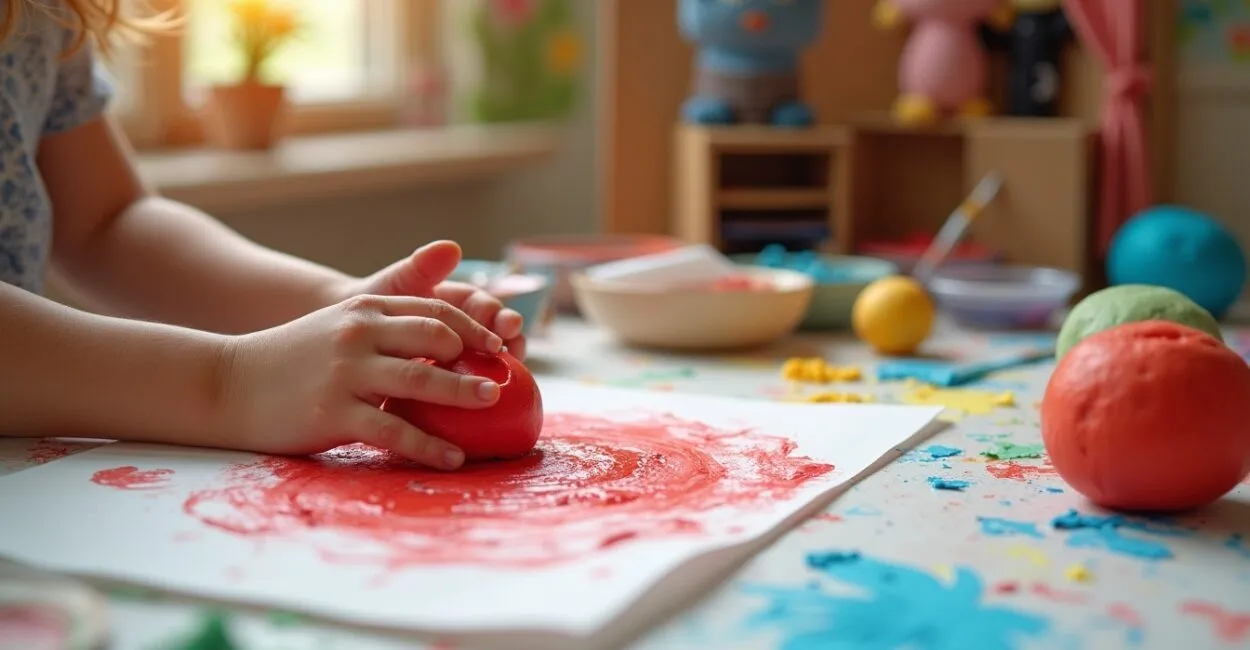
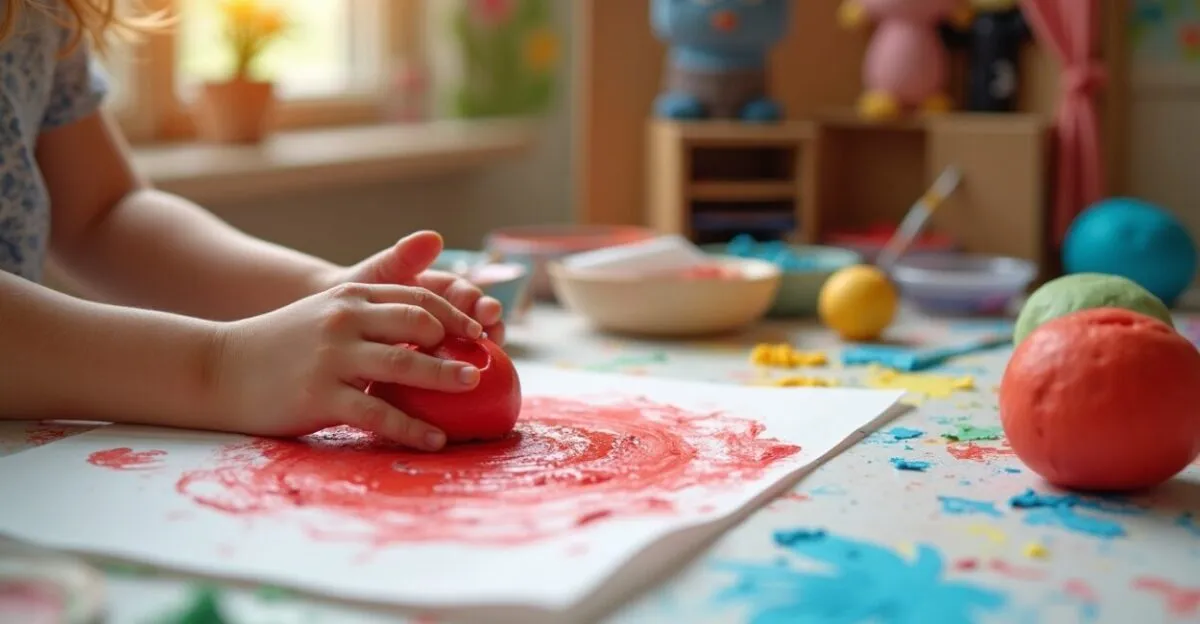
- Tempera paint on large sheets of paper
- Collages with fabric scraps and colored paper
- Potato or sponge stamps
- Modeling with homemade playdough
- Free drawing with crayons
Art activities encourage self-expression and develop fine motor skills. Offer a variety of safe materials and encourage children to experiment with colors and shapes. Ask them to describe what they’ve made to build language skills and self-esteem.
At school, display children’s work on a bulletin board to celebrate their achievements. At home, set aside a protected area for painting and drying artwork. Don’t focus on the finished product—value the creative process and the child’s choices.
Theater and Role-Play for Social Expression
Role-play with puppets and short plays builds language, empathy, and social skills. Suggest familiar scenarios to act out, such as going to the grocery store or caring for a pet, so children can explore different roles and emotions in a safe setting. Theater activities build vocabulary in context and help shy children express themselves. At school, create short, repetitive scripts. At home, use familiar stories to make acting them out and remembering the lines easier.
Add music and movement to enrich the sensory experience and build coordination, rhythm, and teamwork.
Creative Projects That Encourage Problem-Solving
Short projects, such as building a bridge with blocks or creating a scene with recycled materials, develop critical thinking and planning. Break the project into steps and encourage children to test and adjust their ideas, building persistence. At school, organize group projects to teach cooperation. At home, offer weekly challenges using recyclable materials. Document the process with photos so children can revisit their plans and reflect on their work.
These projects combine creativity, fine motor skills, and language by encouraging children to describe their choices and explain changes they make to their designs.
Educational Games and Structured Social Activities
Cooperative Games for Socialization
Games that require cooperation, such as putting together a puzzle with a partner or playing catch with simple rules, build social skills and conflict-resolution skills. These games develop empathy, turn-taking, and clear communication between peers. Organize activities with rotating roles so each child gets a chance to lead and follow instructions. In the classroom, use discussion circles to talk about feelings after the game and reinforce social language.
Adjust the rules to include children with different ability levels, and always value teamwork over intense competition.
Group Activities That Encourage Speaking and Listening
Games such as telephone, collaborative storytelling, and quick question games build active listening and oral language. These activities practice auditory memory and sequencing in narratives, both essential for language learning at school. In the classroom, set a short time limit for each participant and use guiding questions to encourage complete answers. At home, make mealtime a chance to ask questions and take turns speaking.
Offer positive feedback to encourage quiet children, and model phrases to help them give longer, more detailed answers.
Activities That Build Rule-Following and Self-Control
Games with simple rules, such as “Simon Says” and waiting games, build self-control, impulse inhibition, and an understanding of social norms. These skills are the foundation for formal learning and getting along in groups. Explain the rules clearly, practice them repeatedly, and praise children for following them. At home, use visual routines to help children remember the steps. At school, create posters with symbols showing expected behaviors.
Pair these games with opportunities to regulate emotions, such as guided breathing, to teach self-regulation and calming strategies for moments of frustration.
Leia também: Immune System: Natural Ways to Strengthen Your Health
Science and Sensory Activities to Explore the World
Simple Experiments That Spark Curiosity
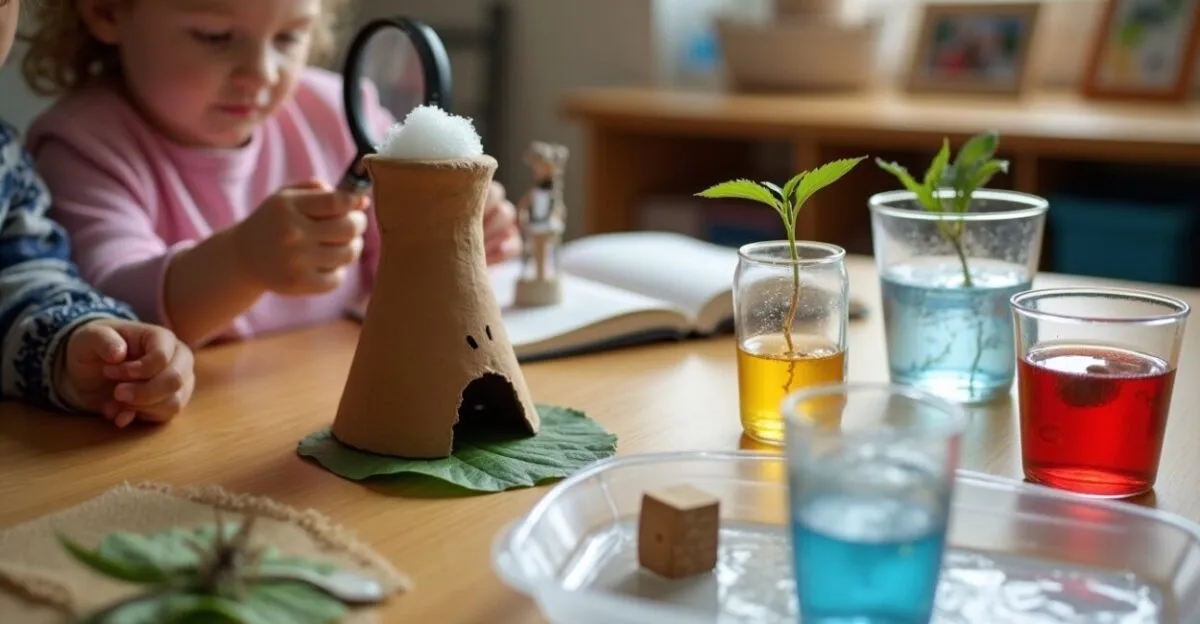
- Baking soda and vinegar volcano
- Planting seeds in cups to observe germination
- Testing whether different objects float or sink
- Observing insects with a magnifying glass
Simple experiments encourage investigation and logical thinking, introducing the basics of the scientific method: observe, predict, test, and discuss results. Use age-appropriate hypotheses and document discoveries with drawings and photos.
At school, set up stations with written steps. At home, supervise the use of substances and explain each stage of the experiment. Encourage questions and comparisons between objects and results.
Leia também: Art: The Essential Expression That Transforms Society and Education
Sensory Exploration to Connect Perception
Science-based sensory activities, such as mixing colors, testing textures, and listening to different sounds, refine perception and categorization skills. Offer a variety of tactile materials and encourage children to describe what they feel: hot or cold, rough or smooth, loud or quiet.
Document each child’s sensory preferences and adjust the intensity of activities, especially if they’re sensitive to certain stimuli. In groups, encourage children to share their impressions to build language and empathy.
Use these experiences to introduce simple scientific concepts, such as physical properties and changes of state, with accessible language and hands-on observations.
Outdoor Activities and Time in Nature
Outdoor outings offer opportunities for hands-on learning: collect leaves, identify birds, and observe shadows to explore basic concepts in ecology and physics. Nature encourages curiosity, motor development, and emotional regulation.
Plan short outings outside the classroom or home with clear goals, such as collecting five types of leaves. At home, keep a small area with plants where children can observe daily growth.
Make sure children are safe with sunscreen, water, and supervision, and use the opportunity to incorporate picture books and stories about the natural world.
| Activity | Goal |
|---|---|
| Planting seeds in a cup | Observe germination and practice care |
| Homemade volcano | Understand reactions and make predictions |
| Leaf scavenger hunt | Classify and compare |
How to Adapt Activities for Home and School
Adapting Activities for Small Spaces
Activities can be adapted for small spaces by using compact materials and setting time limits. For example, you can make an obstacle course with pillows in a hallway and do art projects on trays to keep things organized. Plan short, clearly defined time slots for each step.
At school, rotate groups to make the most of the space. At home, rotate activities by day to avoid a buildup of materials. Simplify the goals without losing the main areas of focus: coordination, language, and interaction.
Prioritize safety and easy cleanup by choosing washable materials and protecting surfaces. Pair motor activities with sensory breaks to support self-regulation.
Strategies for Inclusion and Individual Differences
Adjust sensory input, intensity, and pace to suit children with different needs. Offer simplified versions or visual supports, such as picture sequences. Use short instructions and mark steps with cards to encourage independence.
Offer different ways to participate (active observer, helper, or leader) to respect each child’s comfort level in social settings. At school, create mixed-ability groups that encourage children to learn from one another.
Watch for signs of overstimulation and offer a quiet alternative. Stay in touch with families to coordinate strategies and share information about the child’s sensory history.
Simple, Low-Cost Materials and Safety
Use recyclable materials, homemade playdough, paper, tape, and safe household items to keep costs down. Avoid small pieces for children who still put objects in their mouths. Choose scissors with rounded tips and nontoxic paints.
Store materials in labeled bins and teach children to put things away to encourage responsibility. At school, keep an inventory of materials and check for allergies before using food products in activities.
Keep a first-aid kit accessible and supervise children at all times. Explain safety rules in a playful, repetitive way to reinforce safe habits.
Planning and Assessing Activities for Five-Year-Olds
How to Set Clear Goals and Objectives
Set measurable goals: improve balance, add X new words to a child’s vocabulary, or complete tracing exercises with control. Use systematic observations and small weekly goals to track progress. Clear goals help guide activity selection and assessment.
Build a bank of activities aligned with motor, language, and social skills, prioritizing repetition and gradually increasing variety. Document evidence with photos, notes, and children’s work.
Share goals with families to help keep home and school activities aligned and consistent. Adjust goals based on each child’s responses and emerging interests.
Simple Tools for Ongoing Assessment
Use checklists, observation notes, and photo portfolios to document progress. Track key behaviors, participation frequency, and levels of independence in each activity to guide future interventions.
Combine qualitative indicators, such as descriptions of participation, with quantitative ones, such as the number of new words used or the length of time a child can maintain balance. Collect data at regular intervals to plan adjustments.
Invite children to take part in a simple self-assessment, such as choosing their best work of the week, to encourage reflection and a sense of accomplishment.
Home-School Partnership and Continuity
Communicate frequently with families: send home activity ideas, document progress, and ask about children’s preferences. Consistency between settings helps reinforce motor, language, and social skills.
Offer simple weekly mini-activities that are easy to do at home, require few materials, and take only a short time. Explain the goals and how caregivers can play along so they feel confident taking part.
Schedule regular meetings to share strategies and discuss results, strengthening the support network for children’s development.
This concludes our key ideas and practical guidance on extracurricular activities for five-year-olds. The suggestions covered motor, language, art, and science activities, with ideas that are easy to adapt for home and school. Use them to plan weekly routines, track progress, and adjust activities to match children’s interests.
By using these activities, you support well-rounded development, encourage independence, and create opportunities for socialization and meaningful learning. Try one activity each week, observe and reflect on progress, and share what you learn with families to extend its impact.
Frequently Asked Questions
Which Activities Are Most Effective for Improving Motor Coordination?
Activities that combine balance and handling objects, such as pillow obstacle courses, hopping on one foot, and shaping playdough, are effective. Gradual repetition, appropriately adapted challenges, and close supervision help children build skills without becoming overwhelmed.
How Can I Adapt Sensory Activities for Children Who Are Sensitive to Stimuli?
Reduce the intensity of sensory input, offer choices for participating, and use predictable materials. Introduce textures gradually, allow time for breaks, and provide a quiet space. Work with families and professionals to adapt activities to each child’s needs.
What Weekly Routine Do You Recommend to Balance Motor Skills, Language, and Socialization?
Schedule three to five short sessions a day: motor activities in the morning, reading and language activities after lunch, and social games in the late afternoon. Vary the formats and include free time for unstructured play and rest.
What Safe, Inexpensive Materials Can I Use at Home?
Use paper, boxes, tape, homemade playdough, chalk, plastic containers, and pasta for threading. Avoid small pieces for children who put objects in their mouths. Choose scissors with rounded tips and nontoxic paints.
How Can I Involve Families Without Overwhelming Them?
Send simple mini-activities that take 10–15 minutes and require few materials, with clear instructions. Share the goals and ask for brief feedback. Offer alternatives for different family routines, and recognize everyday moments as learning opportunities.
Sources and recommended reading: World Health Organization, UNICEF, and educational studies published by universities for further reading.
Artigos Relacionados
 Creative Curriculum: 7 Hands-On School Activities for 2025
 Elementary School Activities: Creative, Practical Ideas
 Active Learning Pedagogy in Extracurricular Activities: Engagement and Learning
 How Extracurricular Activities Drive Educational Innovation
 Extracurricular Activities: Benefits and How to Choose the Best Ones
 Sensory Activities: Creative Learning in Childhood
