
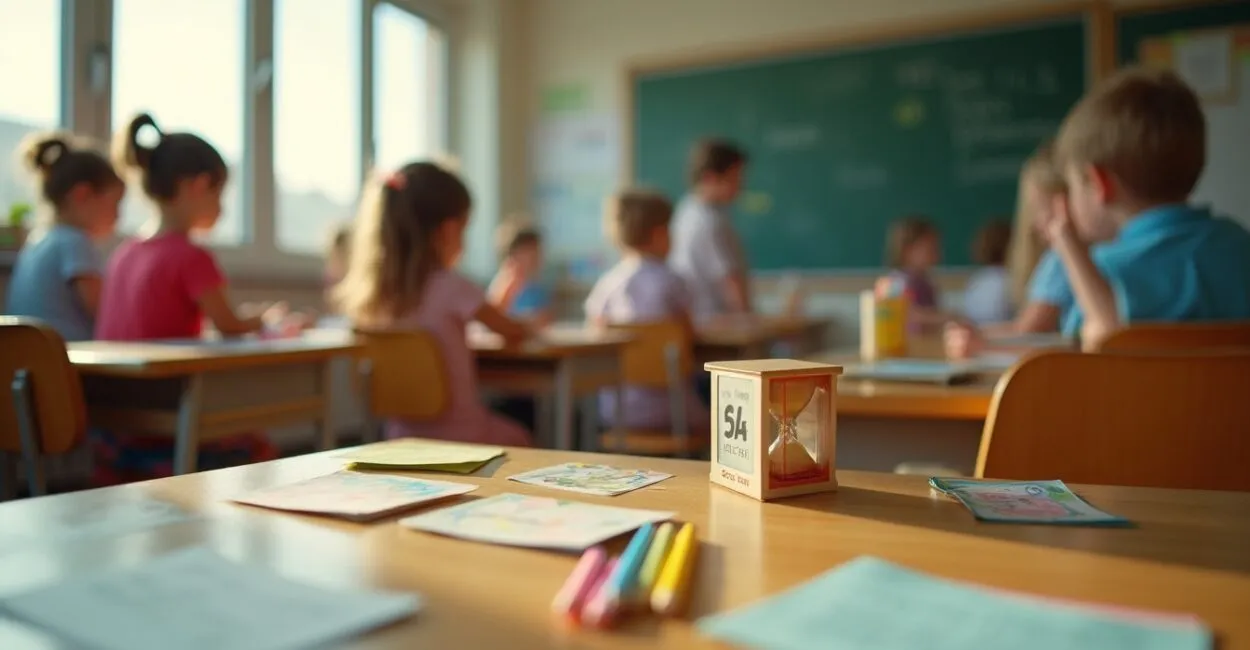
Have you ever felt like a lesson could use a breath of fresh air, but you’re short on practical ideas? I know—being stuck with slides and boring worksheets wears you and your students out. Here’s an immediate solution.
I’ll show you 8 fun, 20-minute activities you can use tomorrow, with simple materials, grade-level variations, and tips for fitting them into your curriculum. Read through, pick one, and see the classroom’s energy shift today.

Fun Classroom Activities That Really Work in 20 Minutes
Start with something that gets everyone engaged in two minutes and holds their attention through the end. Here’s the secret: clear rules and a visible goal.
- Quick-fire language game
- Team math challenge
- Guided sensory experience
These activities are short, repeatable, and easy to adapt—ideal if you need a quick impact without extensive preparation.
Language Games to Encourage Reading and Speaking
Looking for something to warm up students’ reading and speaking skills in minutes, without a spreadsheet? Try “Mixed-Up Mail,” where the class creates a group story in 90-second rounds.
How to Use It in the Early Grades
Use pictures, keywords, and rhyme cards. In 20 minutes, children practice vocabulary, pronunciation, and active listening. Variation: ask each pair to work in a new adjective.

Math Challenges That Feel Like Games

Think about it: equations come to life when they become a friendly competition. A speed quiz on the board or in Google Forms picks up the pace.
Leia também: Principles of Outcome-Based Education
- Mini operations tournament
- Number hunt with clues
- Pair up to create problems
The round-based format can be adapted for different grades while keeping the core skill in focus and avoiding repetitive practice.
Sensory Experiences: Learning by Doing
Sensory experiences connect information to the body, helping children remember more. Use textures, smells, and sounds to reinforce science and art concepts in 20 minutes.
Leia também: Improving Basic Education: Practical, Measurable Strategies
Simple, Safe Materials
Paper, water, flour, plastic cups, and small boxes are all you need. In just a few minutes, you can set up sensory stations that encourage students to make predictions and jot down quick observations.
Collaborative Activities for Group Work
The key is to pair a clear purpose with a time limit. In 20 minutes, groups can solve a real-world challenge and give a brief presentation, building accountability and public speaking skills.
| Activity | Time | Materials |
|---|---|---|
| Mixed-Up Mail | 20 min | Cards, pencils |
| Number hunt | 20 min | Printed clues, classroom |
| Sensory station | 20 min | Containers, textured items |
This table makes it easy to choose an activity based on the materials you have, without interrupting the flow of your lesson.
Ways to Fit Activities into Your Curriculum
Want to connect an activity to Brazil’s BNCC, the national curriculum framework, or a school project like STEM or art? Adapt the final product for formative assessment, ask students for a short written response, and you’re all set.
- Turn results into a portfolio
- Use simple rubrics
- Connect activities to social-emotional skills
These adaptations make a fun activity more than just entertainment—they turn it into concrete evidence of learning.
What to Avoid to Make the Most of Your 20 Minutes
- Confusing rules that take too long to explain
- Materials that are difficult to hand out
- Activities with no clear learning objective
Avoiding these common mistakes saves time and preserves your class’s energy. The difference between success and failure comes down to clear instructions and smooth logistics: keep everything you need to run the activity to a minimum.
Resources and Links for Further Reading
For references and educational foundations, consult reliable resources that can help you structure assessment and keep activities safe.
Good sources include Brazil’s Ministry of Education and active-learning websites. Here are a couple of examples.
Brazil’s Ministry of Education and UNICEF Brazil offer guides and recommendations to help you validate your classroom activities.
Ready to try one in 20 minutes? Choose one of the eight activities, gather the materials during a break, and give it a try. You’ll notice more engagement, less distraction, and a more meaningful wrap-up. Come back and share which one worked and how you adapted it for your class. It could become a small innovation ritual that helps carry you through the semester.
Frequently Asked Questions
How Much Preparation Does Each Activity Require?
Preparing any of the suggested activities takes about 5 to 10 minutes, depending on the class size. Use recycled materials and set up stations before class. The goal is to keep setup to a minimum, make instructions simple, and post the rules where everyone can see them. That way, you spend less time explaining and get the full 20 minutes for practice.
Can I Adapt These Activities for Students with Special Needs?
Yes. Almost all of these activities can be adapted for different sensory needs and paces. Simplify instructions, allow more response time, and provide tactile or visual materials as needed. Work with a support teacher on specific accommodations, and explain to students how they can participate so every adaptation supports inclusion and clear learning goals.
How Can I Document What Students Learn in These 20 Minutes?
Use quick records such as photos, 30-second audio clips, a sticky note with the key answer, or a class chart of takeaways. These artifacts serve as formative assessment evidence and can be added to digital portfolios or assessed with a simple rubric focused on participation and understanding rather than perfect answers.
Can These Activities Be Easily Connected to the BNCC?
Yes. Each activity can target a simple competency, such as oral “communication,” problem-solving, or scientific inquiry. State the competency at the start, ask students to create an aligned final product, and document the results. This turns a fun activity into evidence of learning aligned with Brazil’s official curriculum.
What Are the Best Ways to Get Started if the Class Is Very Distracted?
Start with a two-minute activity that gets students moving or laughing, set clear rules, and give them a visible goal. Keep the pace brisk, offer small rewards, and establish predictable routines. This quickly builds focus and positive anticipation for the next 20-minute activity.
Artigos Relacionados
 Elementary School Activities: Creative, Practical Ideas
 6 Interdisciplinary Projects for Schools: Quick Models
 Extracurricular Activities for Social-Emotional Development at School
 Supporting Emergent Literacy Through Playful Classroom Activities
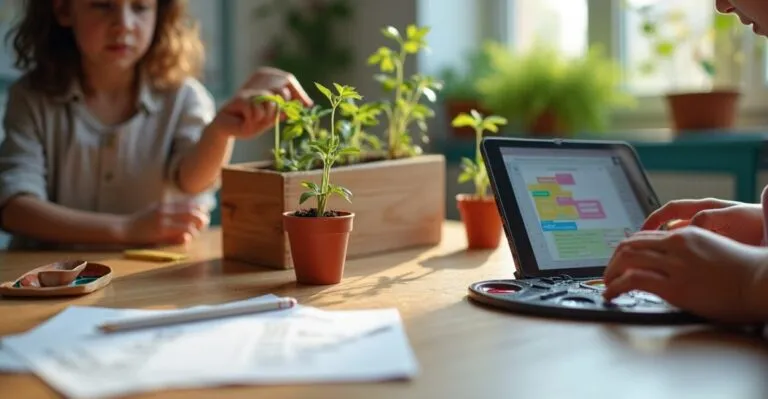 Creative Curriculum: 7 Hands-On School Activities for 2025
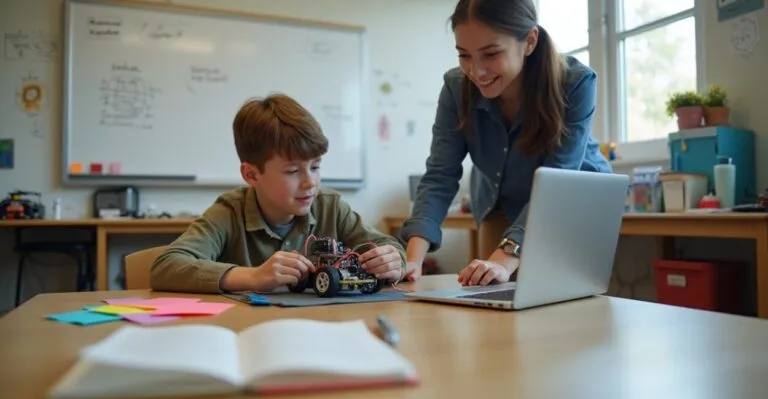 School Innovation: Transforming the Classroom
