
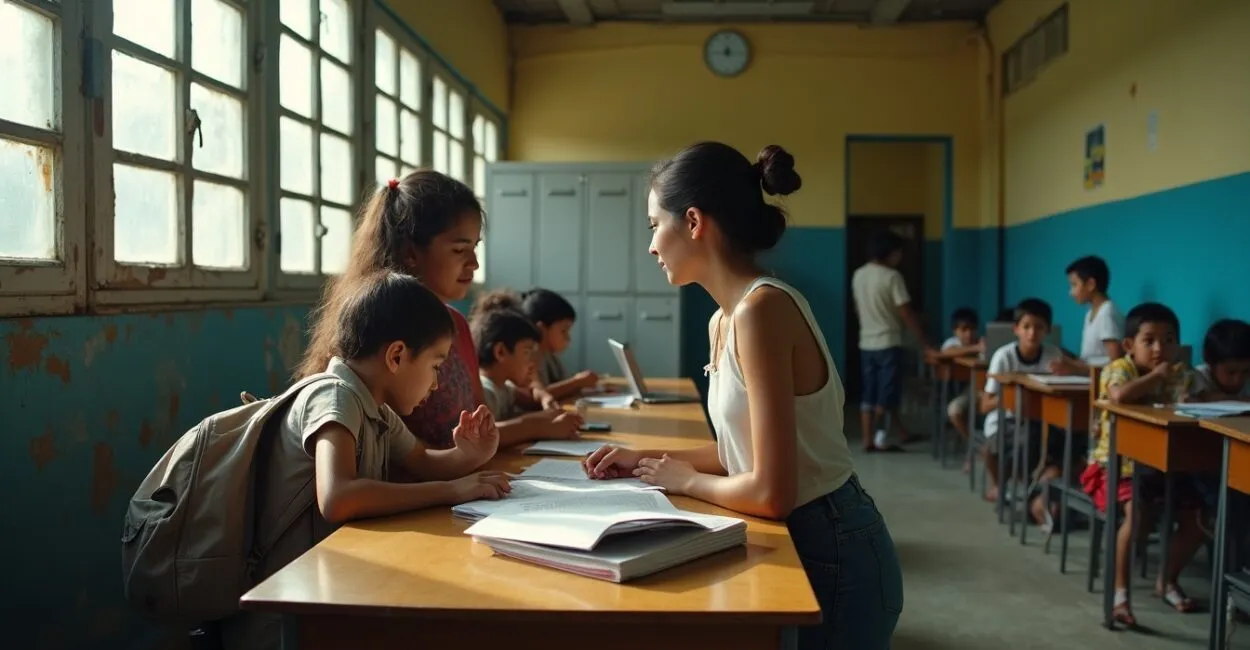
A public school is an educational institution funded by the government and intended to provide free, universal education while promoting basic education, citizenship, and social inclusion for children, teenagers, and young adults from diverse socioeconomic backgrounds.
As a key player in national education, the public school system has weathered historical cycles, administrative challenges, and educational reforms. Its social role is intertwined with public policy, funding, and the collective pursuit of equal opportunity.

Key Takeaways
- The history and evolution of public schools in Brazil.
- Contemporary structural and educational challenges.
- Public policy, funding, and ways to improve the system.
Chapter I: The Origins of Public Schools
The Historical Roots of Public Schools
The development of the idea of public schooling dates back to government efforts to teach people to read and prepare them for citizenship. From colonial-era initiatives to policies introduced under the republic, its history reflects tensions between elite education and universal access. Over time, the public school became central to nation-building, serving as a means of social inclusion and mobility, even as regional and racial inequalities shaped its reach.
This history is a story of collective aspirations and institutional failures. Understanding it sheds light on contemporary decisions about curricula, teacher preparation, and public funding.
Political Change and Public Schools
Education reforms have radically affected public schools. Curriculum changes, decentralization, and large-scale assessments have reshaped expectations and measures of quality, with each reform bringing tangible gains and losses. Democratization and social policies expanded enrollment, but also exposed shortcomings in facilities and teacher preparation, requiring sustained, systemic responses to fulfill the promise of public education.
In this story, policymakers, unions, and school communities play different roles. The interplay between expertise and politics is where public schools are continually reshaped.
Key Players in the History of Public Schools
Teachers, administrators, students, and families are central figures in the story of public schools. Their voices and advocacy shape everyday practices and reforms, often amid scarce resources and high expectations. Civic organizations, universities, and international bodies have also served as catalysts for innovation and accountability, influencing agendas and fostering collaborative networks to strengthen public education.
This network of people and organizations reveals the institutional and human complexity that sustains public schools, where administrative decisions affect individual and collective lives.
Chapter II: The Challenge — Structural Issues Facing Public Schools
Facilities and the Reality of Public Schools
In many areas, school facilities remain inadequate, with overcrowded classrooms, no science labs, and limited accessibility. These conditions undermine the quality of education and affect the daily lives of school communities. Addressing physical shortcomings requires sustained investment and effective management. Without them, the promise of safe, stimulating public schools is compromised, deepening educational inequality.
The call for decent school facilities is also a call for equity, because physical conditions affect learning and students’ sense of belonging at public schools.
Teacher Preparation and Practice in Public Schools
Teacher preparation is a structural challenge: inadequate programs, declining working conditions, and a lack of ongoing professional development weaken instruction. Strengthening the profession is essential to revitalizing public schools. Investing in training, mentoring, and competitive pay broadens teachers’ instructional skills and encourages innovation. Without this investment, public schools risk repeating lecture-based, disconnected teaching practices.
Policies that improve the teaching profession and connect theory with practice can restore teachers’ central role in public schools, turning classrooms into places of discovery.
Management, Funding, and Sustainability in Public Schools
Unstable funding and fragmented management create maintenance and budget execution problems in public schools. Spreadsheets and budget cuts often clash with the real needs of school communities. Financial sustainability requires transparency, carefully balanced autonomy, and public oversight to ensure resources go toward learning and facilities.
Without a secure funding base, public schools are vulnerable to political cycles and short-term promises, putting long-term educational projects at risk.
Chapter III: Public Policy and Initiatives in Public Schools

Support Programs and the Evolution of Public Schools
Federal and state programs have sought to reduce inequality in public schools through initiatives such as school meals, transportation, and scholarships that improve access and help students stay in school in underserved communities. These programs are essential, but they require monitoring and coordination to be effective. Weak implementation can limit their positive impact on the quality of public education.
Ongoing evaluation and program adjustments are essential for public schools to fulfill their role in promoting equality and human development.
Curriculum Policy and Innovation in Public Schools
Curriculum revisions and educational experiments aim to modernize public schools by introducing social-emotional competencies, digital skills, and active learning methods that connect school with the world of work. Innovation in public schools requires training, materials, and time to experiment. Policies without practical support can discourage teachers and school administrators.
When implemented effectively, these policies turn public schools into laboratories for the future, preparing young people for complex and uncertain challenges.
Assessment, Indicators, and Accountability in Public Schools
International and national systems of assessment have brought public schools under scrutiny, driving goals and indicators that guide resource allocation and policy. This visibility creates pressure to deliver results. Indicators help identify inequalities, but measure only part of the educational process. Public schools need metrics that account for context, culture, and social-emotional learning.
Balancing accountability with technical support is essential to help public schools improve outcomes without penalizing historically underserved communities.
Chapter IV: Promising Practices and Initiatives in Public Schools
Community Projects and the Power of Public Schools
Local initiatives, such as community libraries and school gardens, strengthen ties between public schools and their communities, fostering engagement, relevant learning, and a sense of belonging. These projects demonstrate institutional and civic creativity, showing that public schools can become hubs of social change when people mobilize and build lasting partnerships.
A successful project can inspire other school districts, encouraging the exchange of ideas and adaptation to the diverse realities of public education.
Using Technology in Public Schools
Digital technology has expanded teaching and learning opportunities in public schools. Educational platforms and multimedia resources can personalize learning and promote digital inclusion.
Read also: The Educational Process: A Practical Guide to Learning
However, unequal access to internet service and devices highlights the need for policies that provide infrastructure so technology can benefit the entire public school system. Used effectively, technology can make public schools places for active learning, but this depends on teacher training and reliable technical support.
Partnerships and Collaborative Networks in Public Schools
Networks connecting schools, universities, and nonprofit organizations strengthen public schools by sharing expertise, training teachers, and carrying out projects that require scale and technical knowledge. Strategic partnerships expand resources and provide support in areas such as action research and curriculum development, bringing evidence to inform effective practices in public schools.
Read also: The Challenges of Modernization and State-Building in Brazil
Cooperation can turn isolated challenges into shared solutions, establishing public schools as a common good supported by local and national partnerships.
Chapter V: A Comparative Assessment of Public Schools
| Aspect | Rural public school | Urban public school |
|---|---|---|
| Facilities | Limited; transportation is a major challenge | Better facilities, but overcrowded |
| Educational resources | Scarce; reliant on individual initiatives | More available, but unevenly distributed within the city |
| Performance | Variable and affected by local conditions | Greater socioeconomic variation |
Metrics and Outcomes in Public Schools
Comparisons across school systems reveal patterns: performance and access vary according to socioeconomic context, facilities, and local policies. Understanding these patterns is essential to developing effective responses for public schools. National indicators provide an overview, but decisions require disaggregated analysis so public schools receive interventions tailored to each community’s needs.
Only with detailed data can public schools direct resources and practices equitably and efficiently, achieving measurable results.
Equity Policies for Public Schools
Compensatory measures, such as targeted funding and programs, seek to address disparities among public schools, recognizing that equal opportunity may require different support based on need. Well-designed policies promote educational justice, improve the quality of public schools in historically underserved communities, and strengthen the right to education.
This approach narrows gaps and reinforces the promise that public schools can promote social mobility and inclusion.
International Comparisons and Lessons for Public Schools
International models offer approaches to funding, teacher preparation, and assessment that can inspire public school reforms without relying on one-size-fits-all solutions. Adapting them to local contexts is essential. Studying experiences elsewhere can help public schools adopt successful strategies, such as ongoing professional development and local governance, while respecting national differences.
This openness to comparison builds internal capacity and points to ways of turning evidence into effective policies for public schools.
Chapter VI: What to Avoid in Public School Management
- Centralizing decisions without listening to school communities.
- Cutting teacher training to balance the budget.
- Prioritizing short-term goals over deep learning.
- Overlooking facilities and teachers’ working conditions.
Avoiding authoritarian practices and damaging budget cuts is essential to preserving the quality of public schools. Decisions that disregard dialogue and long-term planning erode trust and weaken the effectiveness of education policies.
Shared Governance and Organizational Culture in Public Schools
Shared governance strengthens public school leadership by involving teachers, families, and community members in decisions that affect learning and the school environment. This builds engagement and collective responsibility. Changing organizational culture requires leaders who encourage dialogue, continuous learning, and innovation, while recognizing the value of public school staff.
Without meaningful participation, policies and reforms are likely to fail because public schools are built through the everyday collaboration of many voices.
Monitoring, Evaluation, and Continuous Improvement in Public Schools
Monitoring and evaluation tools guide adjustments and improvements in public schools. Creating feedback cycles turns data into effective instructional and management decisions. When we assess to learn rather than to punish, we strengthen public schools’ ability to respond and innovate, supporting evidence-based policies.
This culture of continuous improvement is essential for public schools to become resilient and respond to emerging challenges.
Chapter VII: The Way Forward for Public Schools
Long-Term Visions for Public Schools
Building a future for public schools requires strategic vision, investment in teacher preparation and facilities, and a commitment to equity. Long-term planning turns promises into sustainable practices. This vision combines measurable goals with flexibility for local innovation, allowing public schools to respond to technological and social change without losing sight of education.
Coordinating people and resources through systemic projects helps public schools make lasting, unified progress for the benefit of future generations.
Systemic Innovation and Scalability in Public Schools
Scaling successful practices requires policies that support adaptation and replication, as well as ongoing technical and financial assistance. Public schools need mechanisms to turn isolated initiatives into effective public policy. Open innovation and prototyping allow public schools to test solutions and learn from mistakes, developing approaches that can be replicated while remaining responsive to local needs.
In this way, innovation becomes a core part of improving public schools rather than an exception, expanding their impact and sustainability.
A Call for Collective Action to Support Public Schools
Strengthening public schools takes a collective commitment: civil society, government, and families must work together to secure funding, policies that value teachers, and dignified learning environments. Informed engagement and democratic dialogue are powerful tools for turning policies into concrete, accountable action in public schools.
By recognizing public schools as a social asset, we can build a future in which education leads to justice and human development.
- Strategic partners: universities, nonprofits, and local education agencies.
- Funding tools: targeted funds and tax incentives.
- Effective practices: ongoing professional development and locally relevant curricula.
Lists like this summarize potential ways to strengthen public schools, highlighting measures that combine resources, expertise, and governance to create systemic, lasting impact across school systems.
- Clear communication with families.
- Transparency in resource allocation.
- Ongoing use of formative assessments.
Putting these practices into action builds trust in public schools and makes it easier for stakeholders to work together, resulting in interventions that are more effective and relevant to each school community.
In discussions of funding and policy, official documents and academic research are essential to making informed decisions. Consult reports from Brazil’s Ministry of Education and studies by UNESCO for technical references and comparative data.
Frequently Asked Questions
What Exactly Is a Public School, and What Is Its Mission?
A public school is an institution funded by public resources with a mission to provide free, universal education, promote equity, and develop critical thinking and citizenship. Its role extends beyond formal instruction to include social inclusion and civic development in diverse contexts.
What Are the Biggest Challenges Facing Public Schools Today?
The biggest challenges include inadequate facilities, insufficient teacher preparation, unstable funding, and regional inequalities. Together, these factors affect learning and school attendance, requiring coordinated policies and greater support for teaching and learning.
How Can Public Policy Improve the Quality of Public Schools?
Effective policies include predictable funding, ongoing teacher professional development, formative assessment, and responsible school autonomy. Combining investment with shared governance and evidence-based monitoring helps deliver lasting results across public school systems.
What School Practices Can Transform Public Schools?
Promising practices include student-centered teaching, community projects, educational technology, and collaborative teacher development. When coordinated with the community and evaluated by their results, these practices strengthen learning in public schools.
How Can Civil Society Help Strengthen Public Schools?
Civil society can help through partnerships, oversight, volunteering, and advocacy for public policies. Informed, collaborative engagement improves quality and holds administrators accountable, encouraging investment and practices that benefit public schools.
Artigos Relacionados
 Public School Purchasing: Bringing Local Farmers Onboard
 School Health and Physical Activity: Policies and Programs
 School Technology Management: Policies and Digital Security
 School-Community Partnerships: How to Engage Your Community Today
 Family Engagement in Schools: Effective Strategies
 School Toy Library: How to Create an Inspiring Space
