
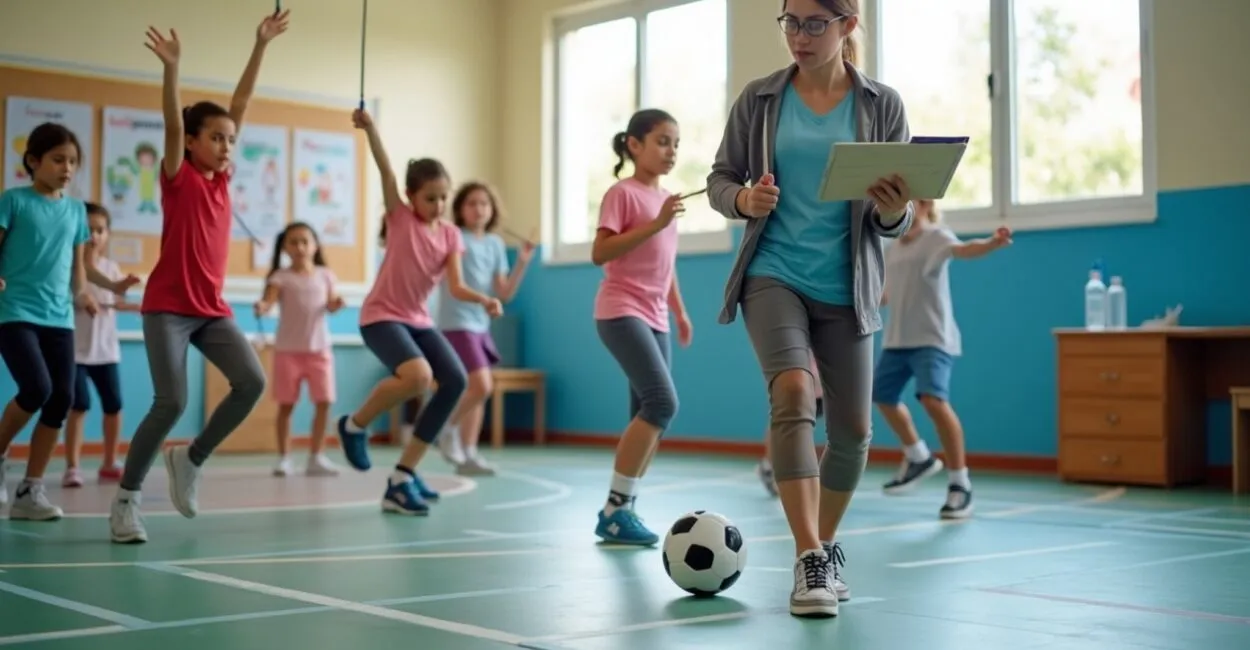
School health connects education and child well-being, helping transform classrooms into safer, more active, and more productive environments. This article explains what school health is, how it affects learning, and which public policies, programs, and coordinated efforts promote physical activity in schools.
Focusing on evidence and practical strategies, we examine government programs, local initiatives, school protocols, and cross-sector approaches that promote health through physical activity. You’ll find practical guidance, examples, and a step-by-step plan for school leaders and educators.

Explore practical models, success indicators, and ways to integrate physical education, healthy habits, and public policy to strengthen the impact of school health on students’ lives.
The current landscape and public policies that support school health
School health is shaped by laws, national programs, and state guidelines that inform physical education, the promotion of physical activity, and basic health services. The connection between education systems and public health directly affects daily life at school.
Laws and guidelines
Laws and regulations set goals for physical activity, nutrition, and basic health services. They guide curricula, facility planning, and professional development.
National programs
Federal and state initiatives support schools with materials, teacher training, and funding. Pilot projects often bring education and health departments together to implement physical activity programs.
Cross-sector collaboration
Partnerships among health, education, and social services can strengthen prevention, rehabilitation, and healthy-habit programs in schools.
School program models that promote physical activity
Successful programs combine physical education classes, active recess, and after-school projects to engage students, families, and the community. These models prioritize inclusion, a variety of activities, and ongoing evaluation.
Expanded physical education
Curricula that increase instructional time and offer a wider range of sports can boost participation and improve physical fitness and mental health.
Active recess and movement breaks
Short movement breaks and well-planned recess can reduce sedentary behavior, improve focus, and decrease risky behaviors among students.
Clubs and after-school programs
Sports clinics and community clubs near schools reinforce regular physical activity and strengthen social connections.
How to integrate school health into the curriculum and school management

Integrating school health requires curriculum planning, teacher training, and management strategies that prioritize well-being. This integration helps connect academic content with health-promoting practices.
Curriculum planning
Cross-curricular lessons and interdisciplinary projects make it possible to teach movement, nutrition, and mental health with clear, measurable objectives.
Teacher training
Ongoing training in active teaching methods, fitness assessment, and behavior management is essential for carrying out consistent programs.
Management and facilities
Resources, appropriate spaces, and flexible schedules are essential for implementing regular, safe activities.
Read also: Creative After-School Activities for Five-Year-Olds
Assessing impact: indicators and evidence for promoting physical activity
A thorough school health assessment uses indicators such as physical activity frequency, cardiorespiratory fitness, anthropometric measures, and related academic performance. Data can guide improvements and funding decisions.
Behavior indicators
Tracking activity time, sedentary behavior, and participation reveals behavioral patterns and shows how well interventions are working.
Read also: 5 Mental Health Essay Topics to Practice
Health indicators
BMI, flexibility, and endurance measurements can help assess the physical impact of programs.
Educational outcomes
Well-structured programs are often associated with better focus, academic performance, and attendance.
Best practices and coordinated school initiatives
Best practices bring together instruction, the school environment, and the community through movement breaks, school nutrition, training, and family engagement. Coordinated efforts can multiply results and support long-term success.
A supportive environment
Outdoor spaces, simple equipment, and well-organized recess make it easier for more students to participate.
Nutrition policies
Healthy school meal programs and nutrition education complement physical activity initiatives and can improve overall student outcomes.
Community engagement
Partnerships with clubs, health professionals, and families expand opportunities and help sustain these practices.
Resources, funding, and examples of local initiatives
Public funding and private partnerships help make school health initiatives possible. Successful local projects show how to tailor programs to the needs of the community.
Funding sources
Municipal funds, state grant opportunities, and cross-sector agreements are common ways to finance programs.
Practical examples
Local projects that renovated schoolyards, introduced movement periods, and trained teachers have reported increased participation and well-being.
Tools and materials
Teaching guides, activity kits, and online platforms support teachers and school leaders in their daily work at school.
How to launch a physical activity program at your school: a step-by-step guide
Promoting school health through physical activity is a practical process involving planning, training, implementation, and evaluation. Here’s a straightforward guide to getting started or improving existing efforts.
- Assess the current situation: Identify schedules, spaces, and student interest.
- Set clear goals: Define targets for participation, frequency, and health indicators.
- Train your team: Provide training on activities, safety, and assessment.
- Launch pilot activities: Start with small interventions and adjust based on feedback.
- Track results: Record indicators and adapt the program monthly.
- Expand and engage the community: Build partnerships and secure resources to sustain the program.
| Component | Indicator | Suggested target (6 months) |
|---|---|---|
| Physical education classes | Hours/week per student | ≥ 3 hours |
| Movement breaks | Students participating | ≥ 70% |
| After-school activities | New participants | +20% participation |
- Train teachers with practical courses and ready-to-use materials.
- Adapt spaces with low-cost equipment (cones, jump ropes, and marked activity areas).
- Share results with the community to build support and attract funding.
Reliable sources consulted: the World Health Organization and Brazil’s Ministry of Health, which provide guidance on school health policies and best practices.
Conclusion
Investing in school health through physical activity is an investment in the future: it supports learning, protects health, and strengthens community ties. As noted at the start, making schools active, healthy places takes strong policies, effective management, and a commitment to student well-being.
Putting these strategies into practice can produce measurable results that can be scaled up. With planning, training, and ongoing evaluation, any school can take concrete steps toward a healthier, more active routine.
Frequently asked questions
What is school health, and why does it matter?
School health encompasses the programs and policies that promote students’ physical, mental, and social well-being at school. It brings together prevention, health promotion, and basic care to address health issues that affect learning. Promoting physical activity, good nutrition, and psychosocial support can improve academic performance, reduce absences, and strengthen social and emotional skills. Coordination between education and health services leads to sustained practices that benefit students, families, and the community, making schools safer places that promote health.
Which public policies support physical activity in schools?
Public policies include national physical education guidelines, programs that encourage physical activity, and school health regulations that guide funding, instructional time, and professional training. These policies make it possible for education and health departments to work together and provide resources for facilities and teaching materials. State and local programs complement these efforts with training and evaluation. Effectiveness depends on cross-sector collaboration, adequate resources, and tracking indicators to adapt strategies to the needs of the school community.
How can you tell if a physical activity program is working?
Evaluation combines indicators of participation, fitness, and educational outcomes. Practical measures include attendance at activities, changes in physical fitness (endurance and flexibility), BMI changes, and reports on students’ attention and classroom behavior. Surveys, participation records, and attendance tracking can show progress. Regular data collection, feedback from teachers and students, and comparisons with established goals help refine interventions and demonstrate their impact to funders and school leaders.
What simple steps can schools take right away?
Low-cost steps include 5- to 10-minute movement breaks, planned active recess, after-school activities, and basic teacher training. Reorganizing the schoolyard, using simple equipment (cones, jump ropes), and adding movement to lessons in other subjects can also increase daily activity. Communication with families and local partnerships (clubs, physical education professionals) can boost participation. Combined with participation tracking, these steps can produce quick results and lay the groundwork for larger proposals and funding requests.
How can schools engage families and the community in school health initiatives?
Engaging families takes clear communication, participatory events, and opportunities to get involved. Hold workshops and activity days, and share results to demonstrate the benefits. Partnerships with sports clubs, health centers, and universities can expand resources and expertise. Encourage physical activity at home, provide educational materials, and invite parents to take part in assessments and events. An engaged community helps sustain programs, reinforce healthy habits, and contribute through volunteering, donations, or logistical support.
Artigos Relacionados
 Physical Activity: A Key to Getting More Out of Your Studies
 School Health: How Schools Promote Student Well-Being
 Architectural Accessibility in Schools: How to Adapt Spaces
 The Role of Schools and Families in Shaping Values: Foundations and Concepts
 Brazil’s LGPD in Schools: Protecting Student, Family, and Staff Data
 Social-Emotional Learning in Schools: Transforming Learning and Whole-Child Development
