
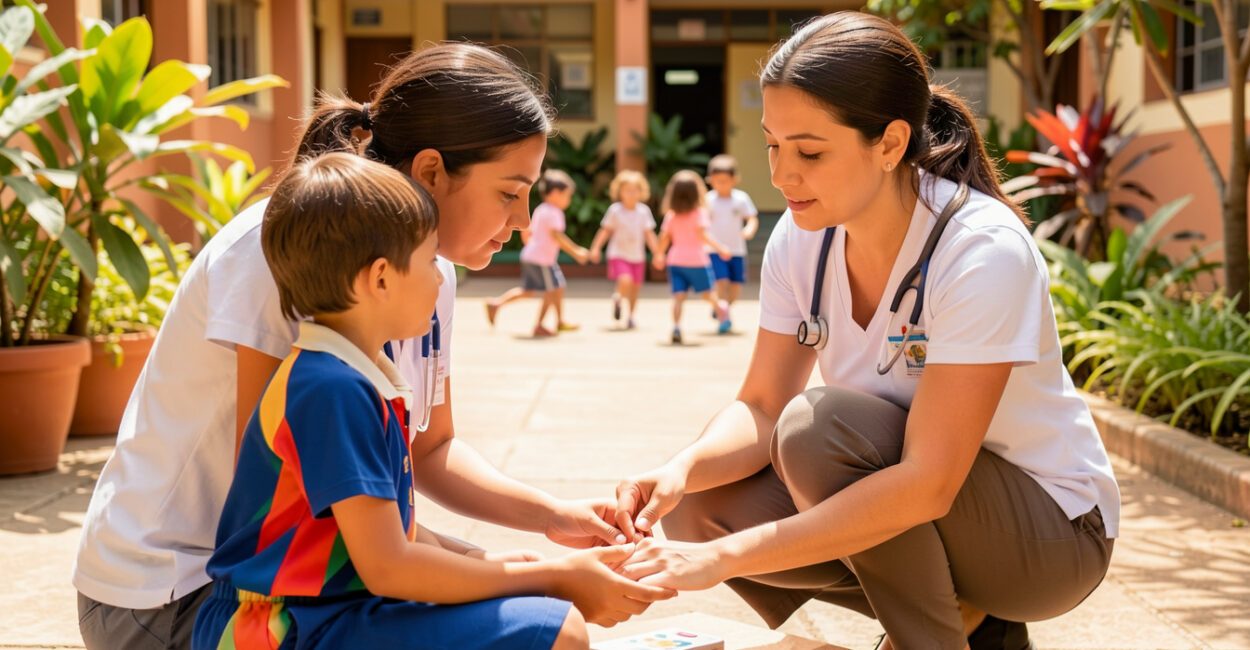
A recurring headache, withdrawing from others during recess, or difficulty keeping up with an activity can affect a student’s participation. School health brings together efforts to promote well-being, prevent health problems, and coordinate with health services, creating better conditions for learning and socializing. School staff observe and provide support; diagnosis and treatment are the responsibility of qualified professionals.
This care is part of everyday school life: in relationships among students, in opportunities for physical activity, and in how the school communicates with families. It may also include activities under the Programa Saúde na Escola (PSE), Brazil’s School Health Program, based on local needs and joint planning between education and health services. A well-organized project starts with an identified need and ends with a clear next step. This allows the school to act without exposing students or turning an educational activity into a clinical appointment.

Before planning, agree on these points
- What need has been observed, and who can help understand it?
- Which school and health professionals will participate?
- How will students’ privacy be protected?
- Which local service could receive a referral, if needed?
- What concrete change would show whether the effort was useful?
School health: definition, importance, and connection to learning
School health is a coordinated set of health promotion and disease prevention practices, along with connections to the healthcare network, that considers students’ living conditions and learning. In practice, this means creating an environment that supports well-being, identifying barriers to participation, and agreeing on educational responses or referrals with the people responsible. Student health is about more than the absence of illness. Hunger, emotional distress, vision problems, or a hostile environment can affect concentration and relationships. Staff do not need to identify the cause to take action: they can record what they observe, talk discreetly, and work with the family to consider the next step.
Health promotion involves conditions that support well-being, such as respectful relationships, nutritious food, and opportunities for physical activity. Prevention aims to reduce risks or help identify problems early, for example through guidance on vaccination and accident prevention. Both approaches can work together without turning the school into a clinic.
Careful observation can open the door to support, as long as it is paired with privacy, dialogue, and clear boundaries around the school’s role.
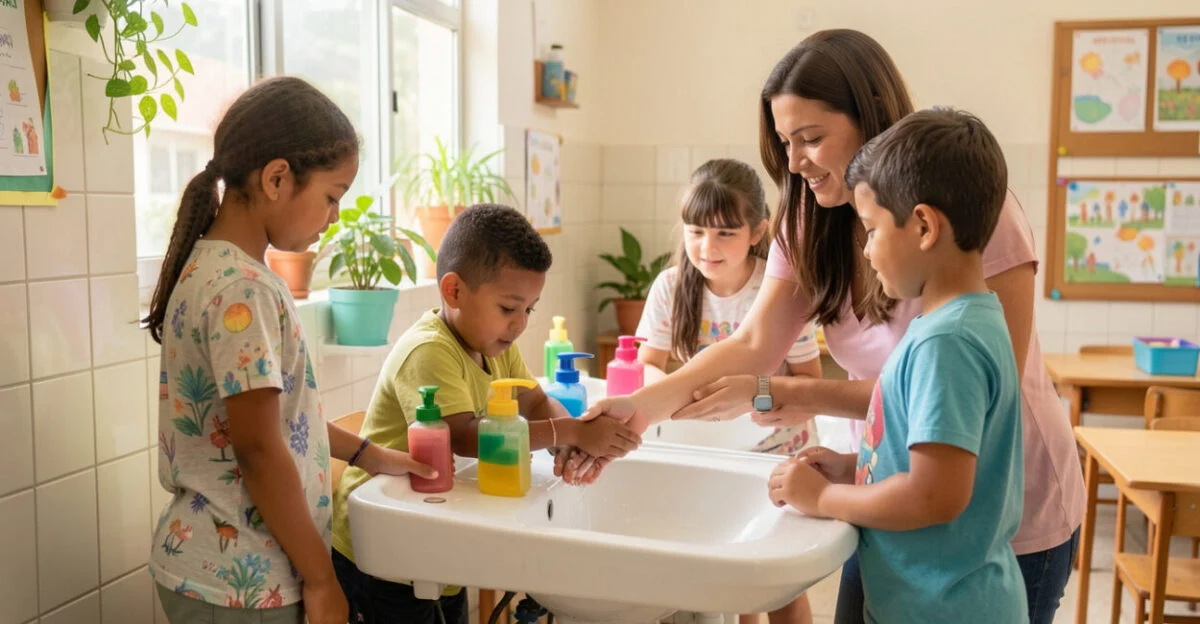
School Health Program: purpose, participants, and how it works
The Programa Saúde na Escola (PSE), Brazil’s School Health Program, is an intersectoral policy established by Decree No. 6,286/2007 and jointly run by the Ministries of Health and Education. Its purpose is to support the comprehensive development of public school students through health promotion, prevention, and care activities coordinated by schools and Primary Health Care teams.
The program was created by the federal government through the Ministries of Health and Education. Local officials handle participation and activity planning, so implementation depends on the community, identified needs, and current official guidance. For institutional information, visit the School Health Program page on the Ministry of Health website.
The school and health team jointly plan which topics to cover, who will lead each activity, and how follow-up will work. Activities do not have to take place all at once or in the same way at every school. Local conditions, the population served, and agreements between the sectors all shape the choices.
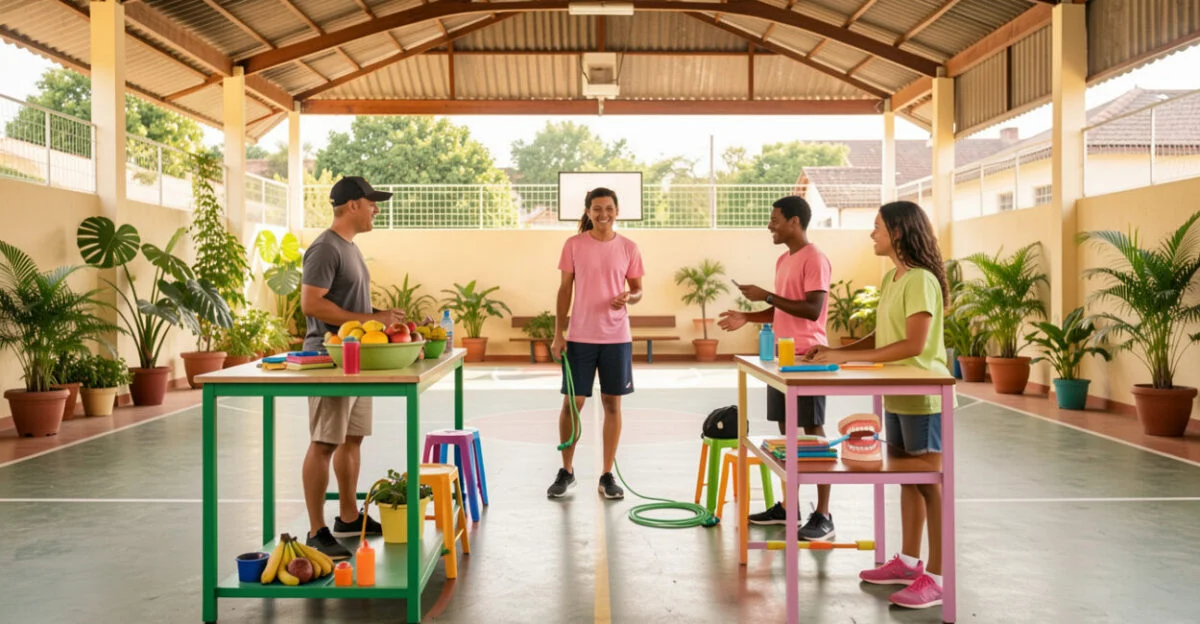
What are the PSE’s 12 areas of action, and how can they be organized?

The 12 areas of action outlined in PSE reference documents cover a range of topics and should be adapted to local plans. The list includes:
- Environmental health.
- Promotion of physical activity.
- Healthy eating and obesity prevention.
- Promotion of a culture of peace and human rights.
- Violence and accident prevention.
- Prevention of neglected diseases.
- Vaccination status checks.
- Sexual and reproductive health and STI prevention.
- Prevention of alcohol, tobacco, and other drug use.
- Oral health promotion and assessment.
- Hearing health promotion and identification of possible issues.
- Vision health promotion and identification of possible issues.
This list does not mean that every school should run 12 separate campaigns. The program’s activities and operational terminology may be explained in more detail or updated in program materials and cycles; teams should check current official guidance before presenting an activity as part of the PSE.
Read also: 5 Mental Health Essay Topics to Practice
A useful way to organize any topic is to record four elements: the need observed, who is responsible, possible referral options, and a follow-up indicator. For example, in an activity about vision health, the need might be difficulty seeing what is written on the board. The school can lead an educational discussion, inform the family privately, and let the health service advise on an appropriate assessment. The school does not determine the cause.
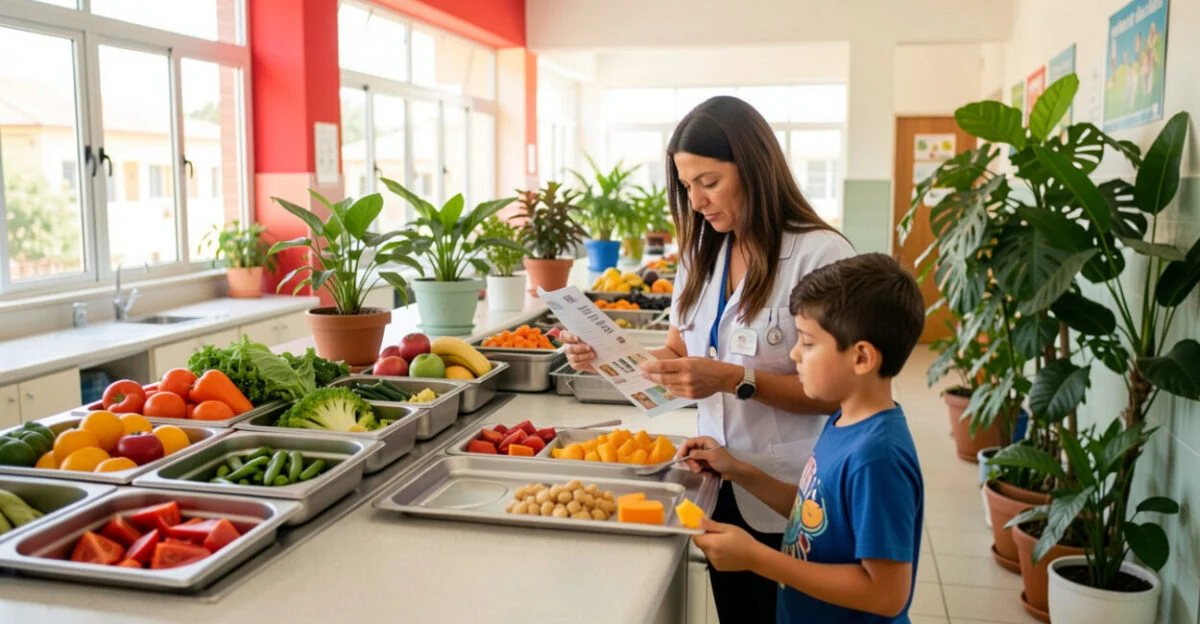
Nutrition, vaccination, and monitoring student health
When it comes to nutrition, schools can discuss food choices, food culture, and access to nutritious meals, while also identifying barriers to participation. These conversations should not blame students or families: financial circumstances, household routines, and individual needs all affect what is possible.
On vaccination, staff can share reliable information, encourage families to check vaccination records, and coordinate with the local health clinic on activities planned for the community. Checking records and taking any action related to immunization must follow the procedures of the responsible services, with due attention to authorization and privacy.
School follow-up may include observations about participation and well-being, but it does not replace a medical appointment, examination, or clinical assessment. If a concern persists, the school speaks with the family in a private setting and explains local care options without promising a diagnosis or treatment at school.
Mental health, relationships, hygiene, and physical activity
Mental health is also shaped by everyday relationships. Ongoing changes in participation, repeated conflicts, or social withdrawal call for a thoughtful conversation, not a label. Adults describe what they have observed, listen to the student in an age-appropriate way, and agree on next steps with the family and support network when needed.
Activities about hygiene, relationships, and movement work best when they fit into the school day and do not single anyone out. A class might discuss how to care for shared spaces, try active breaks, or create agreements to reduce aggression. If there is suspected abuse or an immediate risk, the school should follow local protection protocols and referral procedures rather than try to investigate on its own.
The physical environment matters, too: noise, lighting, accessibility, and layout can make participation harder. Changes to the environment and guidance on getting along can help, but they cannot by themselves address a clinical or social need that requires specialized care.
How schools, families, and health services work together
Collaboration works when each party understands its role and how to share information without unnecessarily exposing the student. School staff support students’ academic lives; families provide context and take part in care decisions; health services assess clinical needs and guide care.
Participant Responsibility Limits and referrals School Provide educational activities, observe changes, and offer support. Does not diagnose or disclose health information; contacts the family and follows agreed procedures. Family or guardians Discuss the student’s circumstances and take part in care decisions. Can contact the health clinic or another recommended service, depending on the need. Health team Guide health promotion and prevention activities and assess clinical issues within its scope of practice. Determines health-related care and makes appropriate referrals while respecting confidentiality. Local administrators Coordinate education and health, assign responsibilities, and support local procedures. Should check local requirements and the program’s official guidance.
When communicating across sectors, share only what is needed to coordinate care, using appropriate channels and communicating with authorized people. Respectful communication that protects privacy helps prevent a legitimate concern from turning into gossip or embarrassment.
How to plan a school health project and evaluate its results
A school health project can start small, as long as it addresses a real need and assigns responsibility. For each activity, record four things: what was observed, who will do what, what referral options are available, and how the team will tell whether the effort was useful.
- Listen and define the need. Gather input from students, families, and professionals without discussing individual cases in open meetings.
- Consult the local network. Coordinate with Primary Health Care on possible topics, the activity’s limits, and referral options.
- Choose the activity and assign responsibilities. Select an age-appropriate format and educational materials, and decide who will lead each part.
- Protect privacy. Avoid public student lists, images without permission, and questions that require anyone to share personal information.
- Follow up and make adjustments. Observe participation, recurring questions, and identified barriers; use these signs to plan what comes next.
Example: Teachers notice that some students sit out during recess.
The school talks with the class about getting along and involves students in planning accessible games.
The team records overall participation without naming students or assigning diagnoses.
If an individual situation continues, the school contacts the family privately and checks local support options.Educational materials should support the conversation, not replace planning. Before using PSE materials, check the author, intended audience, and date. For program activities, review guidance from the Ministry of Health and the planned coordination with education. Decree No. 6,286/2007 established the program and defines its intersectoral approach.
A common mistake is to choose a ready-made campaign first and look for a need to justify it later. This can lead to an activity that does not fit the school’s routine. If the team cannot identify a referral option or a safe way to track results, it is worth scaling back and agreeing on those points before getting started.
- Map: Record recurring situations without exposing students, and consult the school community.
- Prioritize: Choose an issue the school can address or refer, considering urgency and available resources.
- Coordinate: Set up a partnership with the health clinic, assign activity leads, and choose a way to communicate with families.
- Evaluate: Check whether the activity took place, who was able to participate, and what barriers remain; adjust the plan accordingly.
Frequently asked questions
Can a school that does not participate in the PSE promote health activities?
Yes. Schools can offer educational and well-being activities that fall within their responsibilities, coordinating with the local network when needed. To present an initiative as a PSE activity, the school should confirm participation and applicable local guidance.
How can you tell if a school activity needs support from a health service?
Contact the health team when a need involves a clinical assessment, professional guidance, or a referral beyond the school’s educational role. If there is an immediate risk or suspected abuse, follow local protection protocols without waiting to evaluate a project’s results.
What topics can a school well-being project cover?
Nutrition, vaccination, mental health, relationships, oral health, hygiene, physical activity, and environmental health are all possibilities. The choice should be based on an identified need and take students’ ages, context, and available reliable materials into account.
How can you evaluate a project without collecting sensitive student data?
Track group-level indicators such as participation in activities, questions raised, and changes to the daily routine. There is no need to record diagnoses or expose individual cases to decide whether the approach needs adjustments.
Where can you find official guidance on the School Health Program?
Consult the PSE page on the Ministry of Health website and official documents for the current program cycle. Local health and education teams can also explain which activities have been agreed on for the community and which referral procedures are in use.
Artigos Relacionados
 Industry-School Partnerships: Benefits for Students and Businesses
 Mental Health for Civil Service Exam Candidates: Essential Strategies for Staying Well
 Endocrinologist: A Complete Guide to Hormone Health Specialists
 Assessing Learning: Modern and Innovative Methods for Students
 School Bullying: A Complete, Practical Guide
 Mental Health for Rising Professionals: Effective Strategies for Managing Stress
