
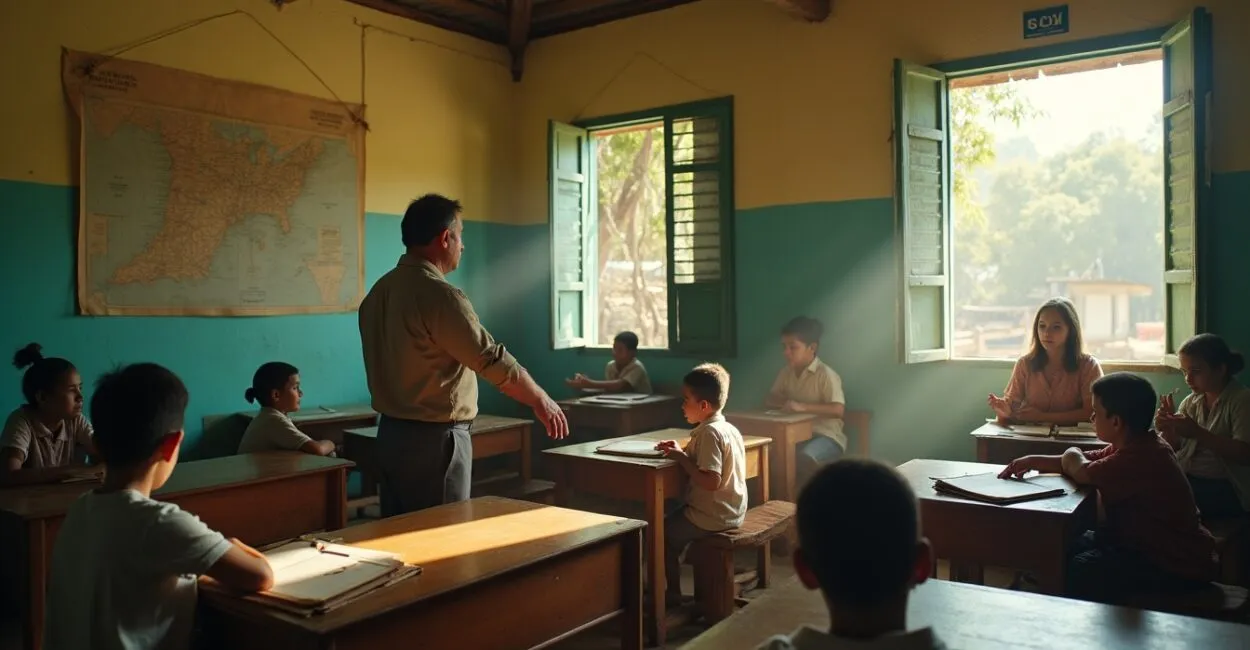
Colonial education refers to educational systems established by colonial powers in their colonies for administrative, civic, and assimilationist purposes, shaping identities and social hierarchies through curricula and policies.
At the outset, missionaries, bureaucrats, and military officers designed schools that translated power into alphabets and catechisms, creating pathways to knowledge that privileged European languages and perspectives over local knowledge.

Key Takeaways
- Colonial education sought social control and the development of pro-colonial elites.
- It had lasting effects on languages, curricula, and educational inequality.
- Local resistance and cultural blending created alternative forms of learning.
Origins and Motivations of Colonial Education
Political Motivations Behind Colonial Education
The political motivations behind colonial education centered on the need to govern distant territories through aligned local elites. Schools trained literate officials who could reproduce the bureaucracy of the colonial power, reducing the cost of governance and consolidating its authority. This instrumental education aimed to shape loyalties and introduce legal and linguistic norms, promoting a version of modernity that served colonial interests while marginalizing Indigenous knowledge.
At the same time, schools became symbolic spaces where cultural domination was normalized, transforming the daily lives and aspirations of colonized populations.
Religion, Missionaries, and Colonial Education
Missionaries played a central role in spreading colonial education, using schools as tools for conversion and acculturation. They introduced alphabets and religious texts that reshaped local cosmologies and traditional educational practices. The intertwining of religious missions and schooling created a pedagogy of obedience and morality aligned with the colonial power, strongly influencing languages and school calendars.
The missionary presence left institutional and material traces, including libraries, which both educated people and erased Native knowledge, creating an ambivalent legacy.
Economics, Labor, and Colonial Education
At the heart of colonial education’s economic purpose was training a skilled workforce for markets modeled on those of the colonial power. Curricula emphasized trades useful for resource extraction and intercolonial trade. Technical schools and vocational programs were designed to meet immediate economic needs, while higher education remained out of reach for most, reinforcing structural inequalities.
In this way, the school system linked economic extraction with cultural reproduction, shaping career paths and limiting social mobility.
Power, Control, and the Tools of Colonial Education
Administration and Colonial Education as a Tool
Colonial administrations used education to standardize languages, records, and civic practices, turning local schools into extensions of the state apparatus that reinforced cultural authoritarianism and institutional legitimacy. Documents, exams, and certificates became tools of selection and exclusion, creating educational hierarchies that favored assimilated populations and marginalized groups on the periphery.
This educational administration created bureaucratic legacies that continue to influence postcolonial education systems, making it necessary to reassess inherited models and move beyond them.
| Aspect | Colonial Approach | Consequence |
|---|---|---|
| Language | Imposition of the colonial power’s language | Displacement of local languages |
| Curriculum | Eurocentric content | Loss of traditional knowledge |
| Access | Restricted to elites | Educational inequality |
Curricula and the Narrative of Colonial Education
Colonial curricula told a story that cast the colonial power as the source of civilization, excluding local ways of knowing and legitimizing teaching practices centered on European content and imported assessment models. Schooling thus functioned as a technology for shaping identity, forming citizens who internalized racial and cultural hierarchies through texts, maps, and memorization exercises.
Challenging this narrative requires deliberate curriculum policies that value multilingualism and local knowledge, helping repair generational divides.
Institutional Resistance to Colonial Education
Despite intense control, communities and educators resisted colonial education by creating underground curricula, community schools, and teaching strategies that preserved local languages and histories, subverting assimilationist aims. These acts of resistance were crucial to maintaining cultural identities and generating hybrid forms of knowledge, showing that education was also a site of struggle.
Recognizing these networks of resistance is essential to understanding how colonized populations negotiated and reshaped colonial education.
Resistance, Cultural Blending, and Alternative Narratives

How Local Communities Reshaped Colonial Education
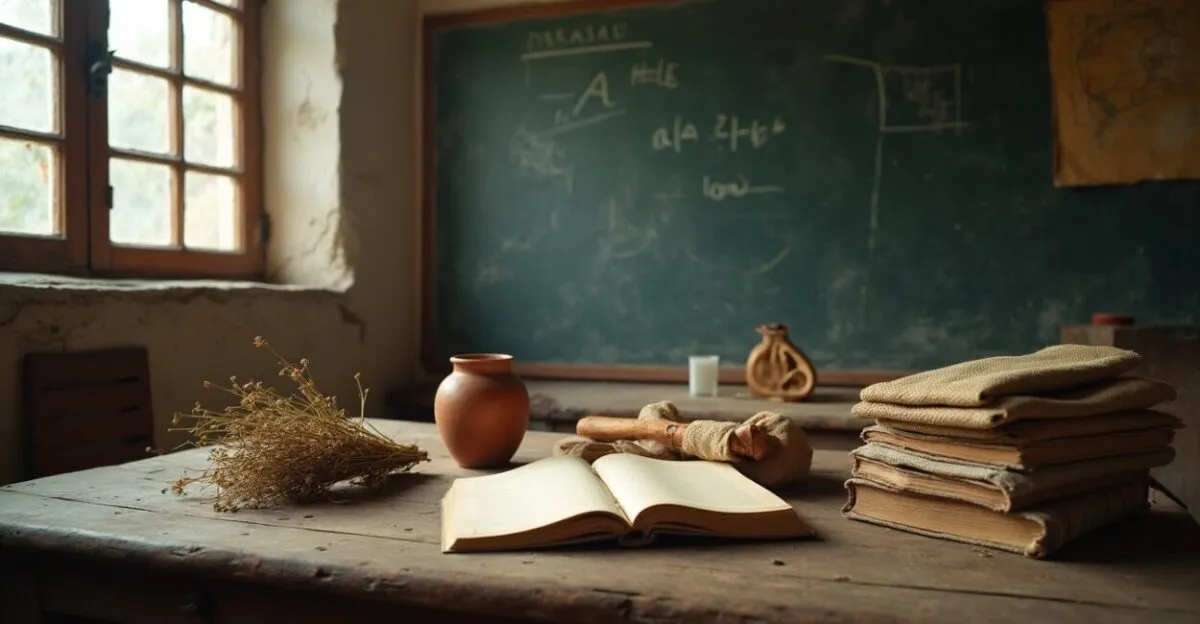
Communities reshaped colonial education by blending traditional teachings with formal content to create learning spaces that preserved memory and identity in the face of imposed homogenization. Indigenous schools and community centers served as living archives, where songs, farming practices, and medicinal knowledge were passed down alongside reading and arithmetic, ensuring cultural continuity.
These practices show how educational power was negotiated, paving the way for more inclusive and pluralistic postcolonial models.
The Role of Language in Resistance to Colonial Education
Preserving local languages was a direct act of resistance to colonial education because language carries thought and memory. Communities that maintained their languages challenged the colonial power’s assimilationist logic. Though often introduced late, bilingual programs and language revitalization initiatives demonstrate ways to reclaim identity and confront centuries of institutionalized linguistic marginalization.
Valuing local languages is a necessary step toward dismantling the remnants of educational colonialism and advancing epistemic justice.
Stories of Teachers Who Challenged Colonial Education
Local teachers and dissenting missionaries played complex roles: some reinforced colonial education, while others subverted it by including local content, adapting teaching methods, and protecting students from discriminatory practices. These figures were unsung heroes in the struggles of everyday life, using the classroom as a space for resistance and care and building bonds that transcended imposed curricula.
Sharing these stories sheds light on critical teaching approaches that address contemporary needs for inclusion and redress.
Educational Legacies: What Endures and What Changes
The Positive and Negative Legacies of Colonial Education
The legacy of colonial education is complex: it established school infrastructure and administrative systems, but also perpetuated exclusion, institutional racism, and the erasure of Indigenous knowledge, making critical examination essential. Some benefits, such as literacy and school networks, were adapted after independence, but systems of selection and inequality still require deep structural and curricular reform.
These legacies shape current debates about inclusion, language policy, and recognition of cultural rights in education.
Read also: Inclusive Education in Schools: Transformative Paths for Every Student
| Legacy | What Persists | Possible Intervention |
|---|---|---|
| School infrastructure | School buildings and universities | Curriculum reorientation |
| Inequality | Differences in access | Affirmative action policies |
| Curriculum | Eurocentrism | Inclusion of local knowledge |
Public Policies That Address the Traces of Colonial Education
Governments and civil society organizations have introduced policies recognizing cultural identities, bilingual education, and historical redress to mitigate the effects of colonial education, though implementation often faces institutional resistance and limited resources. Bills, decentralized curricula, and critical teacher training are among the strategies used to challenge colonial practices and promote educational justice.
These policies require funding, community participation, and political will to transform entrenched structures of exclusion.
Read also: The Governor-Generalship: A Key to Understanding Colonial Brazil
What to Avoid in Postcolonial Reform
- Imposing models from the colonial power without local consultation.
- Ignoring Indigenous languages and knowledge in curricula.
- Reducing reform to symbolism without changing teaching practices.
- Underestimating the need for ongoing training for local teachers.
Avoiding these common mistakes is crucial because superficial reforms reproduce inequality. Real change requires active listening, sustained funding, and co-created curricula that value diverse ways of knowing.

Policies, Reform, and Memory
Official Documents and the Memory of Colonial Education
Official documents preserve narratives of colonial education, from decrees establishing official languages to mission reports. Analyzing these archives reveals the political intentions and administrative procedures that shaped generations. Archives and memory help us recognize injustice and guide educational redress, enabling modern policies to confront hidden histories and make curricula more equitable.
Historical transparency is a key step toward policies that foster recognition and restore silenced knowledge.
Curriculum Reform in Light of Colonial Education’s Legacy
Curriculum reform must decentralize content, incorporate intercultural teaching, and value local ways of knowing to repair divisions created by colonial education and support relevant, context-based learning. This means revising materials, training teachers, involving communities, and adopting assessments that prioritize local cultural and historical competencies.
Transformation takes generations, but well-designed policies can reduce inequality and broaden representation in schools.
International Partnerships and Postcolonial Challenges
International partnerships can support educational rebuilding, but they must avoid creating new dependencies. Collaborative models that respect local priorities build capacity without reproducing colonial power relations. Universities and multilateral agencies can provide resources and expertise, but co-creation is essential to legitimize interventions and ensure their sustainability.
Connecting global evidence with local solutions can foster responsible innovation in postcolonial contexts. UNESCO and university reports offer models and data. For relevant resources, see official websites such as UNESCO and the World Health Organization (WHO), which discuss education and health as interconnected factors.
Paths to Reconciliation and the Future
Educational Redress and Historical Justice
Educational redress involves official acknowledgment of harm, the inclusion of suppressed narratives, and investment in schools in marginalized communities. The goal is to heal wounds left by colonial education and restore cultural dignity. Measures such as counter-narrative curricula, restorative teacher training, and scholarship programs can expand opportunity and help rewrite the intergenerational paths disrupted by educational domination.
These efforts require government commitment and community engagement, turning education into a tool for healing and social emancipation.
Educational Innovation Beyond Colonial Education
Educational innovation means adopting active, intercultural, and technology-supported approaches that engage with local knowledge, break from traditional formats inherited from colonial education, and give students a stronger voice. Community learning labs, open curricula, and education connected to local practices create relevance and empowerment, contributing to critical and pluralistic citizenship.
These innovations require ongoing professional development, interdisciplinary partnerships, and funding that prioritizes equity and sustainability.
A Vision for the Future: Decolonized Education
A decolonized vision of education calls for schools that celebrate diverse ways of knowing, promote bilingualism, and recognize multiple histories, turning the legacy of colonial education into a source of thoughtful, productive learning for all. This future requires political patience, dialogue across generations, and policies that combine redress with innovation to create fairer, more creative educational ecosystems.
The journey is long, but successful examples of participatory reform show that education can be reimagined as a tool for freedom and social renewal.
Conclusion: The Journey Continues
A Narrative Summary of Colonial Education’s Impact
The history of colonial education is a journey marked by imposition and resistance, loss and reinvention. Schools served both as tools of domination and stages for cultural resistance, shaping societies in profound and contradictory ways. Recognizing this complexity is essential to public policy and teaching practices aimed at equity, pluralism, and historical redress, while supporting local efforts to reclaim knowledge.
Telling this story as a collective hero’s journey helps us identify the people, conflicts, and potential solutions that point toward transformative change.
A Call to Action for Educators and Policymakers
Educators and policymakers are called to listen to communities, co-create curricula, and prioritize teacher training that challenges the remnants of colonial education, advancing epistemic justice and meaningful inclusion in the classroom. Practical commitments include reviewing materials, supporting local languages, and implementing access policies that address inequality, with participatory monitoring and clear equity goals.
Only coordinated action grounded in historical awareness can transform schools into tools for emancipation and the recovery of memory.
Hope and Historical Responsibility
Despite the scars, there is hope: community initiatives, progressive policies, and academic movements point toward an education that learns from the colonial past to build fairer, more pluralistic, and sustainable futures. Historical responsibility requires societies not only to document injustice but also to act to remedy it, ensuring that all people enjoy cultural and educational rights.
Along this journey, education can serve as a vehicle for collective healing, transforming lessons of domination into practices of emancipation and solidarity.
Frequently Asked Questions
What Was Colonial Education, and Why Is It Relevant Today?
Colonial education was a set of educational practices imposed by colonial powers to govern and assimilate colonized populations, with the aim of developing loyal elites and a useful workforce. Its relevance today lies in the policies, inequalities, and curricula it left behind, which still shape education systems, making it essential to study as part of reform and redress.
What Were the Main Effects of Colonial Education on Local Languages?
Colonial education often subordinated local languages to the language of the colonial power, causing language displacement, loss of domains of use, and the vulnerability of knowledge passed down orally. Revitalization programs and bilingual education are essential to reclaim and value these languages and prevent cultural extinction.
How Did Communities Resist and Subvert Colonial Education?
Communities resisted through underground schools, blended practices, the preservation of local languages and traditional knowledge, and teachers who adapted curricula. These strategies preserved cultural identities and generated forms of education grounded in local contexts, offering models of pedagogical resistance.
What Public Policies Can Help Address the Legacy of Colonial Education?
Effective policies include bilingual education, inclusive curriculum reform, intercultural teacher training, infrastructure investment in marginalized communities, and scholarship and affirmative action programs. Community participation and sustained funding are prerequisites for legitimate, lasting reforms.
How Can Researchers and Educators Help Build a Decolonized Education System?
Researchers and educators can help by documenting local histories, co-creating curricula with communities, promoting critical teacher training, evaluating policies with equity measures, and supporting language revitalization efforts. Interdisciplinary action and ongoing dialogue with local stakeholders are essential for lasting change.
Artigos Relacionados
 Educational Technology and Its Impact on Higher Education
 Education and the Protestant Reformation: Historical Changes and Lasting Impact
 Social Media in Education: Key Impacts, Benefits, and Challenges
 AI in Education: Exploring Philosophical Impacts and Challenges
 Contemporary Education: Integrating Artificial Intelligence in Colleges and Its Impact on Careers
 Bilingual Education: Benefits, Challenges, and Impact on Learning
