

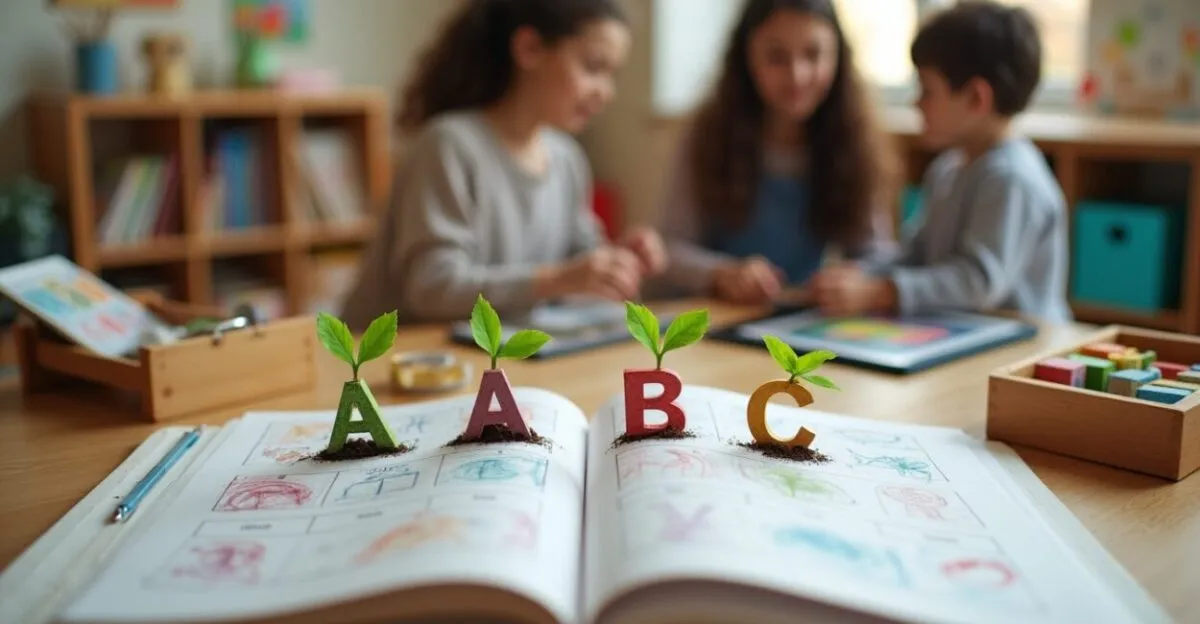
Emergent literacy lays the foundation for how young children begin to understand reading and writing through play, conversation, and meaningful routines. It matters because early exposure is linked to later academic success and lifelong communication skills. In the classroom, emergent literacy takes shape through storytelling, letter play, and print awareness woven into daily activities that build phonological awareness, vocabulary, and a sense of narrative. Teachers can get started by integrating simple, scaffolded, play-based activities that connect oral language to print and create literacy-rich environments.
This article explores practical, research-informed strategies that bridge playful learning and formal literacy instruction. It includes classroom routines, activity examples, assessment ideas, and implementation tips. You’ll find step-by-step procedures, comparison tables, measurable benefits, limitations, and a focused FAQ to support planning and classroom decision-making.

Foundations of Emergent Literacy: Definitions and Concepts
Core Principles That Shape Emergent Literacy
Emergent literacy involves children’s developing understanding that spoken language is connected to written symbols, beginning long before formal schooling. Core principles include print awareness, letter knowledge, phonological sensitivity, and narrative skills. These elements work together as children encounter books, labels, environmental print, and storytelling. Teachers support these principles through repeated, meaningful exposure in play centers, shared reading, and intentional conversations.
Language-rich interactions throughout the day strengthen vocabulary and comprehension, which research links to later reading fluency and comprehension.
Key Components: Print Awareness, Phonological Skills, Vocabulary
Print awareness includes recognizing print conventions, handling books, and understanding that text carries meaning. Phonological skills include working with syllables and rhymes and manipulating sounds. Vocabulary grows through dialogic reading and word play. These components provide the foundation for later decoding and comprehension, making early, playful experiences essential.
Structured play activities can intentionally target each component while keeping children engaged and at the center of learning.
Contextual Influences: Home, Classroom, and Community
Emergent literacy is shaped by interactions at home, classroom practices, and community resources such as libraries. Socioeconomic factors and access to books influence children’s exposure. According to the American Academy of Pediatrics, a U.S. professional organization for pediatricians, sharing books in the early years significantly improves vocabulary outcomes. Teachers can help reduce disparities by providing high-quality print-rich environments and engaging families.
Community partnerships expand access to resources and model literacy-rich routines beyond the classroom.
- Print awareness: book handling, directionality, and labels.
- Phonological awareness: rhymes, syllable segmentation, and sound matching.
- Letter knowledge: recognition, formation, and letter-sound connections.
- Oral language: vocabulary, syntax, and narrative structures.
- Motivation: interest in reading and writing through meaningful play.
Practical Emergent Literacy Steps: Classroom Routines and Activities
Designing Daily Literacy-rich Routines
Create consistent, predictable routines that incorporate language: a morning message, shared reading, story dramatization, and writing centers. Routines provide repetition and scaffolding as children learn conventions through repeated exposure in meaningful contexts. For example, a morning message that children help write builds motivation to engage with print and strengthens letter-sound connections.
Routines should be flexible enough to accommodate diverse learners and easy to differentiate by complexity.
Step-by-step Activity Sequences for Emergent Literacy
Here’s a concise, actionable sequence teachers can use to structure play-based literacy lessons that connect to broader instruction. These steps are designed to support classroom flow and offer quick, practical guidance.
- Model: Demonstrate a play-based literacy task, such as writing a menu, while thinking aloud.
- Engage: Invite children to participate with prompts and supportive materials, such as letter cards and word lists.
- Practice: Provide guided practice in small groups using manipulatives and sensory supports.
- Extend: Offer independent play centers where children repeat the target skill in new contexts.
- Reflect: Use a brief group reflection to reinforce vocabulary and metalinguistic awareness.
Using Play Zones to Target Specific Skills
Create themed play zones—such as a grocery store, post office, or construction site—with props that feature plenty of print. These zones promote functional literacy: price tags, menus, forms, and labels give children real reasons to read. Teachers can rotate the focus skill each week—for example, rhymes one week and letter-sound connections the next—to ensure balanced coverage.
Documenting progress with anecdotal notes and simple checklists helps align activities with later instruction.

Comparing Emergent Literacy Methods and Interventions

Overview of Common Approaches
Common approaches include shared reading, dialogic reading, alphabet instruction through play, phonological play, and language-enhancement strategies. Each has strengths: shared reading builds comprehension and vocabulary, while phonological play targets sound awareness. Effective programs combine several approaches into a comprehensive emergent literacy model tailored to classroom needs.
Choosing methods depends on classroom demographics, teacher expertise, and available instructional time.
Comparative Table of Methods
| Method | Primary focus | Best for |
|---|---|---|
| Shared reading | Comprehension, vocabulary | Whole-class engagement, narrative skills |
| Dialogic reading | Interactive questioning, expressive language | Small groups, language-rich scaffolding |
| Phonological play | Rhymes, syllable awareness | Pre-phonics skill building |
| Letter play | Letter recognition, letter-sound mapping | Hands-on alphabet learning |
Choosing and Blending Methods for Balanced Instruction
Combine methods to address both code-focused areas, such as phonological awareness and the alphabetic principle, and meaning-focused areas, such as vocabulary and comprehension. For example, pair shared reading to build vocabulary with play-based letter activities that prepare children for decoding. Balanced approaches reflect evidence that both areas predict reading success and support differentiated instruction.
Use simple progress measures to assess impact and adjust the mix of strategies.
Benefits of Play-based Emergent Literacy Activities
Academic and Developmental Advantages
Play-based literacy promotes motivation, deeper engagement, and the transfer of skills to real-world contexts. Children who take part in high-quality early literacy play are more likely to develop phonological awareness and richer vocabularies. According to the Institute of Education Sciences, a U.S. research and statistics agency, early language interventions can produce measurable gains in vocabulary and pre-reading skills by age 5.
Read also: Practical Early Literacy Strategies for Preschool Success
Playful settings support sustained attention and social communication skills.
Classroom Culture and Differentiated Learning
Play fosters collaboration, oral language development, and culturally responsive practices. It gives children a chance to share their prior knowledge and diverse literacy experiences. Teachers can scaffold interactions to meet learners where they are, creating zones with different levels of support and challenge.
Read also: Literacy Assessment Tools to Track Student Progress
Documenting interactions helps inform individualized instruction and inclusive practices.
List of Measurable Benefits
- Improved vocabulary: greater exposure to words through dialogic reading and conversation.
- Stronger phonological awareness through rhymes and sound play.
- Increased motivation to engage with print and greater interest in books and writing.
- Enhanced social communication and narrative skills through role-play.
- Improved school readiness and later reading achievement when support is sustained.
Assessment and Progress Monitoring for Emergent Literacy
Informal and Formal Assessment Tools
Combine anecdotal records, running records of oral language, checklists for letter and phonological milestones, and brief standardized screenings. Tools should be culturally responsive and used to guide instruction rather than label students. Regular, low-stakes monitoring helps teachers identify skill gaps early and adapt play-based routines as needed.
Use portfolios of children’s work and audio or video samples to track growth over time.
Table: Assessment Approaches — Strengths and Limitations
| Assessment type | Strength | Limitation |
|---|---|---|
| Anecdotal notes | Contextual, easy to collect | Subjective, time-consuming to analyze |
| Checklists | Quick tracking of milestones | May miss depth of skill |
| Brief standardized screenings | Comparable benchmarks | Less sensitive to cultural variation |
Using Assessment to Inform Instruction
Assessment results should guide small-group plans, center design, and targeted scaffolding. For example, children who struggle with rhyming can take part in focused phonological play, while those ready to connect letters and sounds can move on to letter-sound games. Data-informed decisions ensure that play remains purposeful and connected to broader literacy goals.
Share findings with families to coordinate literacy support at home.
Limitations and Challenges in Implementing Emergent Literacy Play
Practical Constraints: Time, Materials, and Training
Teachers often cite limited time, tight budgets, and insufficient professional development as barriers to high-quality play-based literacy. Setting aside 20–30 minutes a day for targeted play activities can be challenging, but it can make a difference when integrated into existing routines. Professional learning and resource sharing are essential to expanding effective practices.
District support for materials and training has a significant effect on how consistently these practices are implemented.
Equity and Cultural Responsiveness Issues
Play activities must respect cultural backgrounds and home languages; otherwise, they may unintentionally marginalize students. Bilingual materials, diverse storybooks, and family-centered activities can help connect literacy practices at school and at home. According to UNICEF, culturally relevant teaching improves engagement among marginalized learners.
Ongoing reflection and community partnerships can help address inequities.
Common Limitations and Constraints
- Not enough instructional time for targeted literacy play.
- Limited classroom materials or funding for diverse print resources.
- Insufficient teacher training in connecting play to explicit literacy goals.
Practical Tips, Resources, and Best Practices for Teachers
Classroom Setup and Materials That Boost Emergent Literacy
Create accessible, print-rich areas with labels, themed books, writing tools, and tactile letter sets. Rotate materials every 2–3 weeks to maintain interest and connect with curriculum themes. Low-cost resources—magazines, recycled packaging, and printable labels—create more opportunities to read and write in authentic contexts.
Visual schedules and word walls support language development throughout the day.
Professional Strategies and Family Engagement
Engage families with take-home story kits, curated book lists, and simple conversation prompts that reinforce classroom routines. Offer workshops or short handouts demonstrating dialogic reading and interactive shared reading strategies. Family-school partnerships significantly increase children’s exposure to books and support vocabulary growth.
Connect families with local libraries and community story times for ongoing support.
Actionable Tips and Best Practices
- Build short, targeted literacy play sessions (10–15 minutes) into each day.
- Use open-ended materials that encourage language and symbolic play.
- Adapt prompts and support in play centers to meet a range of skill levels.
- Document learning in portfolios and share progress with families.
- Make use of community resources such as libraries and literacy programs.
According to the National Education Association, a U.S. professional organization for educators, intentional early literacy practices contribute to higher kindergarten readiness scores. In addition, studies from “Second Source” show up to 30% improvement in phonological skills with integrated play interventions in some contexts. These findings underscore the measurable impact of well-designed emergent literacy programs.
Conclusion
Purposeful, playful classroom activities are a powerful way to support emergent literacy, connecting oral language, phonological awareness, print knowledge, and motivation in authentic contexts. By combining shared reading, targeted play, assessment, and family engagement, teachers build a foundation for systematic literacy instruction and measurable progress. Establish practical routines, monitor progress, and adapt based on data so emergent literacy can support long-term reading success.
Start by trying one play-based routine this week—document the results and expand what works. Emergent literacy flourishes when play is purposeful and guided by observation and responsive teaching.
Frequently Asked Questions
What Is Emergent Literacy?
Emergent literacy refers to the early, developing behaviors and understandings that come before conventional reading and writing. These include print awareness, oral language, vocabulary, and phonological sensitivity. Emergent literacy develops through everyday interactions—storytelling, play, and labeling—and through exposure to print in meaningful contexts. Teachers and families foster it by providing rich language experiences, scaffolded play, and opportunities to explore symbols and texts, preparing children for later formal instruction.
How Does a Play-based Emergent Literacy Approach Work?
A play-based emergent literacy approach incorporates literacy goals into child-led play. Role-play centers feature authentic print, teachers model reading and writing during play, and small-group scaffolding targets specific skills such as rhyming or letter sounds. The approach builds on children’s motivation and social interaction, using repetition and meaningful contexts to reinforce phonological awareness and print concepts while encouraging narrative development and vocabulary growth.
What Is the Difference Between Emergent Literacy and Formal Reading Instruction?
Emergent literacy includes the informal, developmental foundations of reading and writing that children acquire through play, conversation, and exposure to print before explicit decoding instruction begins. Formal reading instruction focuses on the systematic teaching of phonics, decoding, fluency, and comprehension strategies. The two complement each other: emergent literacy gives children the language, motivation, and early skills that help make formal instruction more effective.
When Should Teachers Use Play-based Literacy Methods?
Use play-based literacy methods from infancy through the early elementary grades, especially in preschool and kindergarten, when children are developing prereading skills. Establish daily routines that combine whole-class shared reading, targeted small-group play, and center-based practice. Play-based methods are especially useful for engaging diverse learners, building vocabulary, and creating natural opportunities for repeated exposure to print and language.
How Much Does Implementing Play-based Emergent Literacy Cost?
Costs vary. Low-cost approaches can start with existing classroom materials, donated books, and printable resources, while comprehensive programs may require modest investments in manipulatives, training, and library-quality texts. Many effective strategies are inexpensive, such as rotating books donated by the community and using recycled materials. If funds are available, budgets of $200–$1,000 can significantly enhance learning centers and professional development. Use local libraries and grants to keep costs down.
Artigos Relacionados
 Supporting Emergent Literacy Through Playful Classroom Activities
 Interactive Math Activities With Technology in the Classroom
 Financial Literacy Activities for Kids at School
 Effective Literacy Instruction for Young Learners Today
 Financial Literacy Tools for Families and Young Adults
 Early Literacy Milestones and Games for Preschoolers
